• Photography
  • Interviews
  • Business
  • Reviews

Tiffinbox

Inspiring Photographers

  • Home
  • About
  • Blog
  • Contact

A Manifesto: 10 Habits of Successful Professional Photographers

February 12, 2012 by Seshu | Editor & Publisher

Christa Meola just wrapped up a three-day seminar on boudoir photography on CreativeLive. Did you catch any of it? I checked out her website and stumbled upon her manifesto. It's both for herself and other professional photographers. It is lucid and succinctly written. It's a quick read. I encourage you to download it.

“I wrote this Manifesto for pro’s and newbies alike. As professional photographers, we all need to be reminded of good habits from time to time. For those just starting out, it’s great to encourage wise habits from the beginning.”

The 10 Habits of Successful Professional Photographers:

1. I Know Myself, My Brand and My Client
2. I Value My Talent and Time
3. I Show Up With All That I Am
4. I Know My Gear Inside and Out
5. I Shoot With Intention
6. I Adapt
7. I Embrace Collaboration
8. I Exceed Expectations
9. I Sell Experience and Emotion
10. I Believe In The Power of Imagery To Change The World

Christa Meola | Exposed: Redefining BoudoirChrista travels internationally for commissioned projects and conducts photography workshops and mentorship programs for fellow professional photographers. She’s written a book on how to photograph women, EXPOSED: Redefining Boudoir that includes a chapter for guys too. Follow Christa on Twitter or connect with her on Facebook.

If you missed any of Christa's presentation at CreativeLive, you can buy The Boudoir Workshop by 12 pm EST tonight for $99. (nope, not an affiliate link) If you miss that deadline the price reverts to $149. From my experience with CreativeLive seminars, though, that is still a very good deal.

Have you written a manifesto? Or, do you have a mission statement that guides you and your business? Share it below!

Filed Under: Business, Personal, Photography Tagged With: boudoir, boudoir photography, christa, christa meola, manifesto, manifestos, meola, photographer, pro photographer, professional photographers, pros, specialized, successful

9 Steps To Building A Better Photography Brand & Boosting Your Business

January 25, 2012 by Ellen Petty

This guest blog is by Ellen Petty, the Head Brandslinger at Identity Kitchen, a marketing and design studio specializing in photographers. She and her business partner Marty Thornley launched a new line of affordable all-in-one WordPress portfolio sites designed specifically for professional photographers at PhotographyBlogSites.com.

Just yesterday, they announced new lower pricing on their self managed, all-inclusive BlogSites. As a special thank you to the Tiffinbox audience, they would like to extend an extra $50 off your first year when you use the code TIFFINBOX50.

Let’s Start at the Beginning. What is Branding?

Your brand is your touchpoint. Everything from how you answer your phones to the auto-responder on your email. Yes, it’s the big picture items; your website, your business card, your space, but it is the cohesiveness, that glue that gives a clear picture to your potential clients. There are some companies, (Starbuck’s anyone?) They do this very, very well. Talk about the Starbucks cup, how it fits perfect in your hand. Not a waxy exterior, not styrofoam, a little thinner than a regular takeout coffee. How much planning do you think went into just the coffee cup? Now let’s talk interior, advertising, their charities, the music, the Wifi.

“That's great for Starbucks”, you say, but how can I create a killer brand for my photography business? Here are 9 steps to not only get you started, and make sure you stay on track.

1) What’s Your Mantra?

Your brand essence, sometimes called your brand mantra, is the heart and soul of your business. Sometimes defined in a few words. Your brand essence is “Who you are”. Try and define your brand in six words or less. If I said “Maiden voyage…iceberg…not enough lifeboats” you would know Titanic. How can you define who you are?

Start with describing your work, yourself, your approach. Ask, who am I, who is this business? Choose 5-6 words that best describe you and your business.

2) Who Am I?

This is your brand positioning; what makes my business different from my competition? Is it the service that you give? Is it the kind of photographs you take? Is it the kind of photographer you are?

One of the most important rules in positioning your business and your brand is to know your competition. Once you know what you are up against, once you understand your competition you can figure out how you are different AND create a unique business perspective and carve out your very own market share.

3) Define Your Target Audience?

Do you know your target customers? Who are you going after? Engaged couples? Parents? Parents to be? What is their demographic? How do you want to come across to them?

This is where you really think about who your client or potential client is. Where do they shop, what toothpaste they use, how much disposable income they have, are they like you are they not like you?

4) Get Inspired

Now that you know who you are, what makes you/your studio different, who your competition is and who you are talking to…it’s time to get inspired, and really push that creative envelope. Look to places outside the photography industry for inspiration. Fashion, architecture, music, fine art, even food. Wherever your muse lies, don’t be afraid to interpret. Pinterest is a fantastic place to create style boards and have a sneak peek into other creative formulas.

Below is an example of an inspiration board and how we translated it into the online brand design for Studio Diana.

Studio Diana - Fashion

Studio Diana - Wedding

Studio Diana - Wedding

5, 6 & 7) The 3 C’s; Get Creative, Make It Cohesive, Keep It Consistent

Ok, you have your strategy, you have your inspiration boards, now it’s time to get creative. Whether you are designing your brand yourself or hiring an outside designer, this is where the magic happens. The “Ah-­?ha” moment. The spark, that can be realized as your own personal touchpoint or brand.

Once you choose a design path make sure there is a thread or a few that keeps your brand cohesive and consistent across all mediums. Print, online, advertising, promotion, and sales. Don’t be afraid to loosen the reins on your brand as you move between mediums, keeping your brand consistent, does not mean choking it. This is where it may be helpful to bring in a professional.

Below are some examples of the creative process of Partridge Lane Studios. Also, an example of how we kept the look cohesive from printed material to the online presence.

Partridge Lane Logos Grouped

Partridge Lane Business Card

Partridge Lane Home Page

8) Choose Your Best Work

If you have completed the last 7 steps, we know you can make choices. Don’t question yourself now. It’s time to choose your best work. Go through your body of work and choose your best 5, 10 and 20 pieces. Those should always be front and center on all your promotional vehicles. Be strong, if you feel a piece does not live up to the standard of these choices, they should not appear in your portfolio. Your online galleries should be between 20 & 30 photos per gallery. Always aim to put your very best foot forward.

9) Be Unique

If you have followed these steps you should arrive at a brand that is unique, because it is you. If it is true to who you are as an artist, it is right.
One of my favorite sayings when it comes to finding your true voice in life and in branding is by Oscar Wilde, “Be yourself, because everyone else is already taken.

Filed Under: Marketing, Photography, Portraits, Weddings Tagged With: advertising, better photography, brand, brand positioning, branding, Business, business cards, business partners, communication, communication design, design studio, ellen petty, graphic design, identity design, Marketing, Photography Business, positioning, professional photographers, starbucks, studios, touchpoint

5 Questions For Strobox

December 29, 2011 by Seshu | Editor & Publisher

Images are created in fractions of a second and our memories are often too poor to remember how we set up a particular shot. Indeed there is a part of us that probably feels confident in achieving the same look and concept, if only we knew where and how the off-camera flashes were placed, how they were modified or what our settings on the camera were. Well, a couple of weeks ago I connected with Janis Lanka, who founded Strobox.

Strobox is a place for all types of photographers to share how they set up that amazing photo! The easiest way to learn is to look at photos and their lighting diagrams so you can see for yourself how they were created.

Here is a, um, snapshot of the questions I peppered Janis with during our conversation. If you have other questions for him, please post them in the comments section below.

1) It's great that in such a short span of time, you have been able to create a community of photographers interested in presenting their work and getting it critiqued. How do you, however, qualify the images? Is it a free for all – anyone can post to the site regardless of quality?

While currently there are few basic rules that I screen each photo for, we are continuously adding measures that help us filter through spam or unqualified photos. It's important to note that Strobox is about a community that raises everyone’s awareness about photography lighting, and as a such, the quality control should be a part of community effort. The ultimate goal is that work displayed is a result of a joint effort from our community rather than just from one or two individuals who happen to have access to MySQL db!

Janis Lanks | Strobox.com2) Tell us a little bit about yourself – are you a professional photographer? Why or rather how did you see the need to create a website like Strobox for photographers?

Just like most who reads this, photography has been a hobby of mine taught to me by my dad with a Zenit camera. Fast forward almost two decades, my learning curve needed some improvement and I purchased a book about portrait photography which explained how each photo was made by giving technical information as well as sketches of lighting diagrams. That is when I asked the question on why such a thing is not available online. The idea was born and it took another 2 years to make it happen. An iPhone app, a community site, and a book later I still see it as a fun experiment.

Currently my day job consists of being a Strategy Consultant at digital agency “Blast Radius” and by evening I'm trying to coordinate a group effort to make Strobox happen – someone from Canada contributes their design skills, from Slovakia their CSS skills, from Lithuania their programming skills, and from England their editor skills, etc. The Strobox core team members are volunteers and not necessarily professional photographers. We continuously need more help (PHP anyone?) so if you want to join us, let me know!

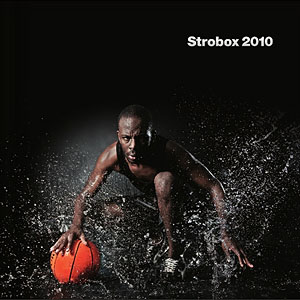
Strobox 2010 Book3) I received Strobox 2010, your first book which is more of a compilation of some of the best work your site has seen in 2010. Books aren't typically huge money makers for their authors. So why take that risk?

No, making a book has not been our revenue strategy. First and foremost it's a celebration of our community and their efforts to help each other raise awareness about photography lighting. While this was yet another one of those enthusiastic experiments which resulted in hundreds of hours spent trying to figure out different legal and logistical things in the book-publishing world, it was totally worth it! Not financially, but the emotional reward is there when you hold that book in your hands for the first time. This book seeks to showcase our community’s achievements during 2010, acknowledge our top contributors, and most importantly, attempting to help us financially sustain our online community. On top of that, we’re also sharing 40% of the book’s profit with the top ten photographers who joined us for this initiative. This has been our first attempt at publishing, and we hope that we'll be able to do this every year and show our appreciation to our community this way.

4) Technique and using tools is one thing. Being able to craft images by collaborating with your subjects is another story. Do you think your site will ever shift the focus every so slightly to discuss that collaboration? That almost intrigues me more than what kind of a light modifier was used in the process of creating an image. Am I in the minority on this?

You are probably in the right minority by asking this excellent question! I would say that story and emotional response it creates is what makes a photo stand out from the others. Lighting technique is merely a tool to help you with that goal. I love listening to other photographers share their techniques and stories of collaboration – those things can't be methodologically systematized as lighting diagrams can. So, in a rather simple way the Strobox community is trying to do one of those “un-sexy” things and geek-out about photography lighting to help each other get the basics right so that sites like yours could take them to the next level.

5) I suspect with sites like 500px.com and Sylights.com, competition keeps you in check. What would you say Strobox does differently and better than those other sites?

Both of your mentioned sites do an amazing job and each of them excel at different things. Without getting in too many details, focus of Strobox should be changing a bit so stay tuned! Additionally, because this is mostly a volunteer experiment that is not based on generating revenue or trying to entice customers, I would rather ask a question of what keeps us doing this. It's our community members who write us and thank us for a useful iPhone app, it’s our Facebook fans who encourage us and like to hear what we’re doing, and it’s our community members who help us with moderation.This started as an attempt to get educated about photography lighting by looking at other examples. But it has turned into a platform for learning. When you learn something, we’ve done well.

Thank you for help us not just create lighting diagrams but also curate them and share them with others. We'll be sure to follow you on Twitter to hear more of your experiments and new features on Strobox.

Filed Under: Lighting, Photography Tagged With: camera, diagrams, janis, lanka, light diagram, Lighting, photographer, Photography, photography lights, portrait photography, professional photographers, questions

Using Checkpoints For New Resolutions

December 23, 2011 by Aaron Hockley

This guest blog post is by Aaron Hockley, a professional photographer and writer who tweets too much and blogs a few times each week. His professional work finds him working with businesses for events, publicity, and editorial work; he also creates abstract and travel photos for leisure. In addition to photography for clients Aaron often works with other photographers to help them understand and refine their online and social media presence.

As we reach the end of 2011, we’ll be reading various articles online and in print about resolutions for the new year. Much like the proverbial gym membership which goes unused after the first few weeks of January, I’ve seen photographers drift away from their promises to change their practices once a new calendar begins.

Looking forward to 2012, I’d encourage folks to look at their photography world from two standpoints: that of the art and that of the business. If you’re a hobbyist, the business aspect is irrelevant. If you’re a professional, you’ll find that the art and business are intertwined. Instead of making a big list of resolutions, I’d suggest photographers pick a theme or two for their 2012 goals.

Baloon Burn at Lift Off | Aaron Hockley

An Artistic Resolution

From an art perspective, where do you want to go? Is it time to dive into the world of off-camera flash? Is this the year to spend some time learning how to make HDR images? Perhaps you want to get serious about black & white for output. It’s great to think about all of the things that you could do, but after that I’d challenge you to pick just one. Instead of a list, let’s choose one theme for the new year.

Getting Down to Business

If you’re a professional (either full or part-time), it’s also wise to make an objective evaluation of your business as we begin a new year. While each business is unique, here are a few items for evaluation:

• What aspect of your business brought in the most revenue in 2011?
• What aspect of your business brought in the least revenue in 2011?
• How much time and effort are required for each of the previous two answers? What’s the return on the time spent? We’re talking “bang for the buck.”
• What marketing are you performing, and what results can you attribute to each form of marketing?

After evaluating your current business situation, decide what will change in 2012. Pick a direction for a business change in the new year. Perhaps it’s the elimination of an unprofitable aspect to your business, or perhaps it’s time for something new. For my business, I’ve decided to begin marketing and selling my abstract photo art.

After the Theme: Action

So now we’ve picked a theme for something new or changed for the art and business of our photography. What next? Next is turning that big theme into actionable tasks. Sit down with your task planning system of choice. Perhaps it’s an application specifically for tracking tasks. Perhaps it’s a blank document in the text editor of your choice. Perhaps it’s a legal pad. It doesn’t matter.

Record your theme and then start brainstorming actions that will help you move towards that goal in 2012. The actions will be depend on your goal, but might contain:

• market research
• learning a technique
• going somewhere
• branding
• marketing plans
• studying others’ work
• connecting with other photographers in a genre
• outreach to past clients
• outreach to new clients

Massage your list into a plan. The next step is to do the work. Stop planning and start doing, starting January 1st if not before.

Empty Governance | Aaron Hockley

Checkpoints

Go to your calendar (again, either electronic or analog, it doesn’t matter) and add some items. Make a note to give yourself a checkpoint on your goals. Set checkpoints for at least once a month, with the first checkpoint no later than Janauary 15th. When you hit a checkpoint, take a look at your efforts and results. If you aren’t moving forward, why not? Do you need to adjust your goal?

Adjusting your goal based on situational feedback is fine and healthy. Abandoning your goal probably isn’t.

2012 can be a great year for your photography. I’d love to know what you’re planning to learn, explore, or change in the coming year. Sound off below in the comments section.

Filed Under: Call To Action, Photography Tagged With: aaron hockley, checkpoints, goals, Marketing, marketing plan, photographer, Photography, professional photographers, resolutions

Are You Really A Professional Photographer?

November 16, 2011 by Andy Bondurant

Some of you may recall Andy Bondurant's steamy blog post from almost a year ago called “What's Too Sexy For High School Seniors?“. Well he is back, with more advice for photographers. He is the co-founder and director of Senior Portrait Artists. You can find him on Twitter and Facebook.

I recently ran across a question on the question/answer/information site Quora. Here was the question, “How can I dress like a professional photographer?”

I can hear some of the responses some of you have come up with already. “Great, another amateur, jumping into photography taking more of my clients.” But wait just a minute more, because what I found truly disturbing was the first response.

You can visit the site for the full response, but here is the first line:

“This is an awesome question. In my experience shooting events, it's less important how you dress and more important how your equipment looks.”

What?

The right equipment for the right job can make a huge difference in getting the shot you want and need. By no means does it make you a professional. In fact, it may put you out of business quicker than anything else you could do. Professional equipment is expensive, and much of it is not necessary to begin a business.

Over the past 8-10 years, I've had the blessing of having multiple opportunities each year to watch great, professional portrait photographers work on location shoots. Most of the time they have exactly what they need, when they need it. However,many times I would hear things like, “Oh, I wish I had …” Then they move on to get a great shot without the piece of equipment they just mentioned.

So what is that makes GREAT photographers GREAT? It's not the equipment, and it goes beyond just training. Here are 3 qualities I've found seems to be similar among photographers who are professional.

1. Relationship.

The best photographers seem to be able to connect with their clients quickly and efficiently. If you want to get images that truly portray a subject's personality you need that person to trust you. You need them to believe you are going to make them look incredible.

If the client doesn't trust you it shows in their eyes. It shows in their body posture.

Personality is not necessarily the biggest factor in this either. Having a fun, outgoing personality helps, but I've seen more reserved photographers do just as well as larger than life photographers.

The key to building relationship is caring. Building trust means truly and genuinely caring for the client and how they look and feel.

2. Time.

Above, I mentioned greatness is more than equipment or training. Having the right equipment and training only take you so far. Having the right equipment without enough time using it will result in sub-par images. Having the correct training without time to practice and perfect that training will lead to a less than perfect product.

Malcolm Gladwell in his book Outliers calls this the 10,000 hour rule. His premise is anyone who excels in their field has spent 10,000+ hours perfecting it before they become “known” for their skill. He references The Beatles, Bill Gates and others who fit this theory.

There is no substitute for time in photography. The more time you spend shooting, editing and perfecting, the better photographer you will be.

3. Consistency.

John Pyle wrote an article for The Collective arguing that this one point is what truly makes a professional photographer professional.

The ability to get a great shot no matter the circumstances, time of day, or the not having the “right” equipment is what sets the pro apart from the amateur.

Consistency is directly related to #2. The more time you have doing photography the more consistent product you will create.

Let me wrap up by telling you one more thing.

I'm not a photographer. Before you completely forget what I've written based on that statement, think about this: Each one of the above points (relationship, time, consistency) applies to any profession.

I don't care if you are a doctor, lawyer, lock-smith, banker or pizza maker all 3 of these qualities will be found in the great ones. It will have nothing to do with the equipment they do or don't have.

It will be about creating relationships, having time invested in their profession, and consistently giving great service and/or creating a great product.

What do you think? Is Andy right on the money about this? Discuss below!

Filed Under: Business, Photography Tagged With: andy bondurant, consistency, factors, photographer, Photography, professional, professional equipment, professional photographer, professional photographers, professional portrait photographer, relationship, senior portraits, visual arts, visual journalism, Wedding Photography

  • « Previous Page
  • 1
  • 2
  • 3
  • 4
  • Next Page »

Subscribe To Tiffibox Treats!

Looking for a well-curated email newsletter that will leave you inspired and motivated about your photography business? Sign up below!

About Seshu

Seshu creates relaxed portraits of families and high school seniors in Avon, Connecticut. He also leads a successful headshot photography studio in Connecticut, helping professionals from a variety of disciplines project the very best versions of themselves. He created Tiffinbox as a way of inspiring photographers, to create better images and successful businesses. [Read More]

Email Templates For Headshot Photographers

Email Templates for Headshot Photographers

Recent Posts

  • How Capture One Changed My Event Photography
  • 10 Steps To Stay Positive In Times Of Great Stress
  • Why You Need To Read “Personal Branding For Photographers” Now
  • How To Master Your Website Content Step By Step?
  • Tony Taafe’s TNT Method For Headshot Photographers

Recent Comments

  • Stephen Davison on Are You A Business Owner Who Is Smart, But Stuck?
  • Ben A. on Don Giannatti Clinches The 8th Annual Tiffinbox Award
  • Dan on Don Giannatti Clinches The 8th Annual Tiffinbox Award
  • Donald Giannatti on Don Giannatti Clinches The 8th Annual Tiffinbox Award
  • Stephen Davison on G.E. Masana’s 6 Strategies For Wedding Photography Success
  • Naveen Kumar on Weddings In India Are More Than Being At The Right Place And At The Right Time
  • kartick on Weddings In India Are More Than Being At The Right Place And At The Right Time
  • Leonid Farbman on 6 Uncommon Trends To Grow Your Photography Business
  • Willow and Finch Wedding Photography on 11 Reception Tips To Help Your Wedding Photography
  • Web Designer Malaysia on How To Optimize Your Squarespace Website For Search Engines
  • Creastan on An Interview With Photojournalist G.M.B. Akash
  • Cindy Brown | Atlanta on An Open Letter To A Local Photographer

Become a Patron!

Copyright © 2026 · Tiffinbox · Site Design by Heather Mackan Creative · Built on Genesis