• Photography
  • Interviews
  • Business
  • Reviews

Tiffinbox

Inspiring Photographers

  • Home
  • About
  • Blog
  • Contact

How To Explore The Urban Landscape

August 10, 2012 by Brett Stoddart

Today's featured photographer and guest blogger is Appleton, Wisconsin based Brett Stoddart. He shoots abandoned buildings. He shoots people. Sometimes he combines the two. He is a husband. A father. A traveler. An art and music lover. He says he has a wicked sense of humor, albeit an odd one. Check out his blog. Follow him on Twitter and or friend him on Facebook.

Forsaken Beauty - Brett Stoddart

I have only been ticketed once.

I have only met a crackhead once.

I have only had an assault rifle pulled on me once.

Wish i could say the same about falling through rotten floors.

What would drive a person to put themselves into these situations? The answer is simple yet complex.

It is a love for capturing unique situations, locations, architectures, and going places most others would avoid at all costs.

My photographic passion involves exploring abandoned buildings. Modern parlance calls this urban exploration or urbex for short – though that is not a term I tend to throw around, mostly because urban encompasses only a small portion of what I capture.

These structures are the modern day equivalent of Greece's ancient ruins, or Europe's medieval ruins. While the rest of the world protects their treasures of days [eons even] gone by, we tend to reclaim, remediate or flat out knock down these treasures.

While most people would just see the decay and filth, I see beauty and uniqueness that only time and nature can create. These are my own little slices of ‘life after man'. I see first hand what happens when man no longer intervenes in nature's affairs and spaces are left to be reclaimed by their rightful owner.

[blogshow id=9ce0 player=1 autoplay=0 toolbar=1]

As a kid we thought nothing of going into old buildings that were no longer used. It was just another playground in the concrete jungle. We didn't know that there were risks and dangers. We were fearless. In college we would hang out in abandoned mines and think nothing of it. We were having fun and shrugged off the thought of danger.

Today I am a lot more cautious. The dangers are real; clear and present if sometimes unseen. Lead paint, asbestos and mold are among some of the ‘unseen' dangers. Some of the more apparent being rotten floors, unstable stairs and missing walls. All of these are equally dangerous in reality and one must protect themselves. Many of these buildings are 100 or more years old and have been subjected to the decaying forces of nature for 20 years or more.

I cannot pinpoint one singular event in my life that sparked my interest in exploring and photographing this subject matter. Rather, it was many small things that culminated and brought me to my present position. I was never without a camera and spent many hours on the road driving thru rural areas to and from work, never taking the same way twice, just to break up the boredom. Old farms and barns offered unique landscapes that I truly enjoyed.

I had always been attracted to textures, lines and colors and these old structures had them all. From there I was starting to notice more and more houses, farms, buildings, factories, etc., that were wide open and empty. Curiosity piqued, I ventured up and into them camera in hand. The interiors held more colors, more lines and more textures along with small little crusty details; peeling paint and wallpaper, forgotten furniture, electrical sockets and switches, clothing, etc.

I started out documenting these locations through a photojournalistic approach, taking it all in and showing everything. Eventually I transitioned into creating fine art from the ruins. Over the years my style has evolved and has been heavily influenced by a bevy of talented photographers before me, most notably my close and dear friend, Dave Jackson.

How exactly I find these locations is a question I am asked over and over again.

The answer: getting out and driving. Taking the ‘road less traveled'. Often new highways have cut off access to older areas, thus hastening the decline. It is important to take your time and look. If you are speeding down a country road at 80 miles per hour, you will miss most of what you pass. Winter is a good time for scouting, as everything is less concealed and it is more obvious when a place is no longer cared for.

Another big aspect is networking with other photographers and explorers – we trade locations like young kids trade baseball cards. And of course the Internet is a great resource tool if you know how and where to look!

Now I travel far and wide to see and shoot unique locations across the country. My first priority when planning any trip is finding abandonment to shoot. One could call it an obsession. I just call it a love of photography, and a slight case of eccentricity.

Shooting these types of locations has afforded me a greater appreciation of the technical and compositional aspects of photography. I have learned over the years to see the light as it plays across a scene. I never artificially light my scenes, rather I rely on the natural light. Everything is hand held as I prefer the grittiness that a higher iso gives me.

I was shooting abandonment for many years before I ever pointed my camera at a human subject. The last few years I have ventured into shooting portraits. I love combining the beauty of a fashion shoot with a dirty and decayed location. To me it is the perfect juxtaposition.

I will never stop shooting abandoned buildings, no matter where my photographic journey takes me. It has become that much a part of who I am as a photographer.

Do you photograph abandoned buildings? Does the urban landscape inspire you to create images? Share your thoughts below!

Filed Under: Photography Tagged With: adventure travel, beauty, brett stoddart, dave jackson, exploring abandoned buildings, human interest, jackson, psychogeography, subterranea, urban, urban decay, urban exploration, urban landscape

Delicious Dereliction, An Exploration Of Urban Decay Through Photography

November 15, 2011 by David Wares

This guest post is by David Wares. He is Based in the South East of England UK. He loves to photograph nature, landscape and over the last couple of years has become fascinated with the subject of Urban Exploration and dereliction. This year, he says,”I was lucky enough to win ‘The Portman Cup' for Best Image of 2010 at the Sussex Photographic Federation's Digital Projected Image competition.” He also writes the ‘Scenic Outlook' column for Current Photographer. Follow him on Twitter.

There’s something about places and objects that have fallen into disrepair that really intrigue me. I’m no historian by any means but I’ve always had an interest in visiting old ruins, such as the many medieval castles found across the UK. I can’t say exactly what it is that I find so fascinating; sometimes it starts me thinking about what may have gone on and sometimes it is merely the look of these old ruins. Again, it is hard to explain why something that is old and broken may be aesthetically pleasing, all I know is that it is.

So how does this all relate to me and my photography? When I started out I took the route that many others take, that of landscape photography. Quite often I love to visit the very picturesque Bodiam Castle, a classic castle ruin that is very well preserved and has an air of mystery about it during the early morning when shrouded by mist. It wasn’t until about three years ago that my interest in dereliction would take a new direction; Urban Exploration.

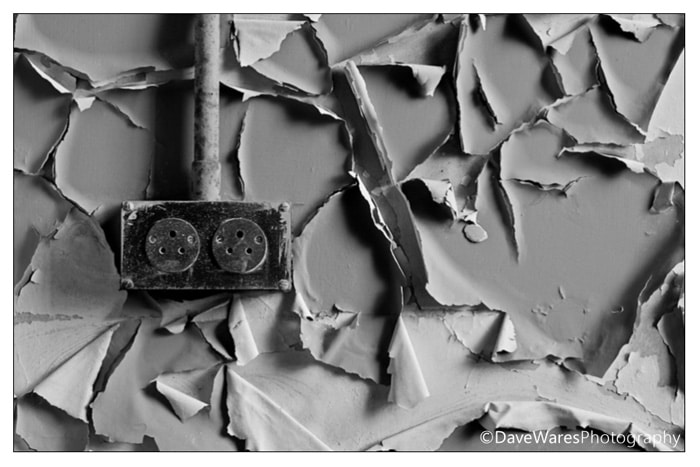
Urban Decay by David Wares

Urban Decay by David Wares

Far from the picturesque ruins I and most others are familiar with, Urban Exploration (or UrBex) involves going into more modern places that have been abandoned and become derelict for various different reasons. These tend to include old factories, hospitals, gas stations, fair grounds, manor houses and mansions; the list goes on and on. The term Urban Exploration itself is a bit vague but usually refers to people that frequent said abandoned buildings and tunnels (usually dangerous and off limits), however it could also be applied to places that the general public just don’t go to all that much, such as a junk yard or back alley for instance. Sometimes I take a trip down to our local beach where a small fishing fleet resides; you can find all sorts of rotten and rusty old worn out objects there.

Urban Decay by David Wares

Urban Decay by David Wares

The theme of dereliction will often result in your pictures having a much more sombre look and feel which in itself can be a really interesting avenue to explore. Not all pictures have to be bright and colourful. :)

Urban Decay by David Wares

Urban Decay by David Wares

I’m by no means advocating that everyone go out and start trespassing; that is something you need to take very careful consideration over, for both health and legal reasons. However, I do encourage everyone take the time to look in places that others avoid as there are so many artefacts that you can find and in the most accessible of areas that can and will make wonderful and interesting subjects for your pictures. Another great thing about dereliction is that in my view it’s an all weather activity. Whereas some other genres of photography can benefit from the ‘right’ kind of light, dereliction seems to lend itself to almost any lighting situation you can think of. Sunlight can bring out colours in rust etc while overcast or dull light can give bring an eerie or solemn feel to your pictures.

Urban Decay by David Wares

Have you explored your neighborhood? Does Urban Exploration intrigue you? Can you give yourself an assignment to photograph a place that has been abandoned in your neck of the woods? Come back here and share your images.

Filed Under: Photography Tagged With: david, dereliction, England, exploration, landscape photography, medieval castles, Photography, Sussex, urban decay, urban exploration, wares

Subscribe To Tiffibox Treats!

Looking for a well-curated email newsletter that will leave you inspired and motivated about your photography business? Sign up below!

About Seshu

Seshu creates relaxed portraits of families and high school seniors in Avon, Connecticut. He also leads a successful headshot photography studio in Connecticut, helping professionals from a variety of disciplines project the very best versions of themselves. He created Tiffinbox as a way of inspiring photographers, to create better images and successful businesses. [Read More]

Email Templates For Headshot Photographers

Email Templates for Headshot Photographers

Recent Posts

  • How Capture One Changed My Event Photography
  • 10 Steps To Stay Positive In Times Of Great Stress
  • Why You Need To Read “Personal Branding For Photographers” Now
  • How To Master Your Website Content Step By Step?
  • Tony Taafe’s TNT Method For Headshot Photographers

Recent Comments

  • Stephen Davison on Are You A Business Owner Who Is Smart, But Stuck?
  • Ben A. on Don Giannatti Clinches The 8th Annual Tiffinbox Award
  • Dan on Don Giannatti Clinches The 8th Annual Tiffinbox Award
  • Donald Giannatti on Don Giannatti Clinches The 8th Annual Tiffinbox Award
  • Stephen Davison on G.E. Masana’s 6 Strategies For Wedding Photography Success
  • Naveen Kumar on Weddings In India Are More Than Being At The Right Place And At The Right Time
  • kartick on Weddings In India Are More Than Being At The Right Place And At The Right Time
  • Leonid Farbman on 6 Uncommon Trends To Grow Your Photography Business
  • Willow and Finch Wedding Photography on 11 Reception Tips To Help Your Wedding Photography
  • Web Designer Malaysia on How To Optimize Your Squarespace Website For Search Engines
  • Creastan on An Interview With Photojournalist G.M.B. Akash
  • Cindy Brown | Atlanta on An Open Letter To A Local Photographer

Become a Patron!

Copyright © 2026 · Tiffinbox · Site Design by Heather Mackan Creative · Built on Genesis