• Photography
  • Interviews
  • Business
  • Reviews

Tiffinbox

Inspiring Photographers

  • Home
  • About
  • Blog
  • Contact

Why You Need To Read “Personal Branding For Photographers” Now

April 28, 2021 by Seshu | Editor & Publisher

It’s not easy to read a business book that is 250 pages long within a couple of weeks, much less read it twice.

But that’s what I did with Maurice Jager’s book, “Personal Branding For Photographers.”

Personal Branding For Photographers, by Maurice Jager

While there are webinars and courses for photographers to learn all about “personal branding”, Jager’s book is the first and most comprehensive book I’ve read on the topic.

According to Jager, “Branding is the process of giving people the opportunity to create a perception of who you are and what you offer; the creation of a brand experience.”

TL;DR – If being seen by your audience means anything at all for you, you can skip the review below and just buy the book and read it. It is required reading, which you will reference again and again as you change your personal branding strategy.

Reading “Personal Branding For Photographers”

The book is hefty, not just because of its length but also because of the content. Jager begins by walking the reader through the importance of taking stock in one’s own story and background. If you buy the electronic version of the book and print it, I am going to guess you will have copious notes on the margins of this section because Jager nudges all kinds of interesting questions I had never considered before.

This first section of the book really got me thinking about how I present myself to the world and why I have held back so much. I can shore it up to being shy or introverted, but to Jager’s point, I just need to get over that and do the work.

The questions Jager suggests come at a rapid-fire and if there is one thing I do wish for is a set of worksheets that could have accompanied the book that one could download. As I said, I would and could easily fill the pages I had printed but having something fresh to use would be helpful.

Once you have answered those questions, you can then embark on your “visual strategy”, which allows you to share “authentic and powerful content which reflects your personality, work, and process.” This process of repeatedly showing up online or in-person has a way of communicating to those interested in your work that you are an expert in the field.

Getting To The Heart Of Telling Your Story

Jager offers an in-depth framework for visual storytelling, making the six chapters the bulk of the book.

Here are the six chapters:

1. Who are you?
2. What’s your background?
3. How do people see you?
4. What do you want to achieve?
5. What are the details?
6. What do you sell?

These overarching questions are subsequently broken down with even more questions for us to consider. The amount of content you are going to generate from this exercise alone is massive and is going to take you some time, but Jager confirms that it will be all worthwhile in the end.

The responses to these important questions lead us to create our story and Jager provides a social media matrix where we can use the content we have created in a very methodical, yet creative manner.

Interviews That Bring It All Together

In addition to the many examples in the book, Jager deftly segues into lengthy but informative interviews with a variety of successful photographers. You’ll read perspectives from Andrew Sommeling, Clay Cook, Dani Diamond, Glyn Dewis, Emily Teague, Pratik Naik, Humberto Tan, Tony Taafe, John DeMato, and Peter Hurley. My advice: don’t skip these parts of the book. There is gold in there too.

Part of owning your own domain is to have an active blog. Given how lousy I have been on my commercial websites with blogging, I found this section particularly useful. My advice is to print Jager’s eight guidelines for publishing a blog and having it within arm’s reach when you are looking to publish a blog post. In fact, I used it to create this post!

There is a lot to read and do in “Personal Branding For Photographers.” It’s not a passive book. It’s only in your action that you will see results from this book. For folks like me who often get overwhelmed with ideas and not knowing which action to take first, second, or third, Jager’s book gives me structure and a sense of satisfaction when portions of it are done and I can move on to the next task. In some respect, it’s a workshop in a book form.

Seeing Proof!

After I read the book all the way through the first time, I wanted to see if some of the strategies mentioned in the book would work for me. I had almost never posted a selfie online, though I am warming up to the idea of having my photographs being seen online. So, on two recent photoshoots, I had someone photograph me working. I posted both to Instagram and was floored by the number of people liking the post.

Here are the Instagram links for you to check out!

https://www.instagram.com/p/CNkpYkBsC6Q/
https://www.instagram.com/p/CN787FAMCbo/

There is a lot more to “Personal Branding For Photographers” and I wish I could mention it all, but I hope I have whet your appetite a bit for it so that you can buy and read it. In addition to the book, Maurice Jager runs an active Facebook group, an annual conference, and a podcast.

Like anything he does, Jager’s heart and soul are in every venture, so, again if being seen and eventually hired to work with your audience is important for you, I highly recommend you read “Personal Branding For Photographers,” and also sign for the conference (coming July 2021) and subscribe to the podcast. I was honored to be on Episode #19.

Lastly, I love this quote in the book because ultimately this is what personal branding is all about:

When people already trust you, prospective clients have no reason not to trust you, too.

Why Should You Buy ‘Personal Branding For Photographers' Now?

So, why do you need to read Maurice Jager's book now? Two big reasons: As a photographer, you are looking for a way to stand out authentically within your community and what you will have is a playbook that walks you through the exact steps to present your brand in your own way. Do the work prescribed in the book, and success will find you. This is $30 investment is a no-brainer in my opinion.

Still on the fence? Watch this video to learn more from the author –
Filed Under: Books, Business, Marketing, Review Tagged With: internet, Marketing, Maurice Jager, Personal branding, personal branding for photographers, Photography

Photographing Kids In An Authentic Manner

May 22, 2020 by Seshu | Editor & Publisher

Learning To Photograph Kids

Photographing kids can be challenging. Be that they are your own, or your client's. You are going to pat yourself on the back when things go right and definitely question your ability (been there, done that) when things start to go south and quickly.

Thankfully, I can lean on some amazing photographers who have made it their life mission to only photograph kids. This is their specialty. So, truly, kudos to them for showing us all that there is a way to go about photographing children.

Who is Tamara Lackey?

One such amazing photographer is Tamara Lackey. One quick look at her website and you know she knows kids. She knows how to read them, interact with them and to photograph them.

And, she knows how to teach you to photograph them in a manner that is authentic to their personalities, too.

Sometime ago, I interviewed Tamara about her organization, Beautiful Together.

One of the organization's missions is the following:

“We work to identify and complete specific and measurable projects that tangibly improve the lives of orphaned children in the United States and Africa.”

Photographing Kids, © Seshu Photography, Avon, Connecticut

You've likely seen her present at conferences or, these days, online. She is a Nikon Ambassador and she has written several books on photographing kids and families –

Books About Photographing Kids

Art of Children's Portrait Photography, Capturing Life Through (Better) Photography, and Envisioning Family: A photographer's guide to making meaningful portraits of the modern family.

Just a few weeks ago, Tamara launched a new book, “The Posing Playbook for Photographing Kids,” published by Rocky Nook.

The Rocky Nook Interview

Mercedes Murray of Rocky Nook interviewed Tamara recently about the book. Give that presentation a listen here:

Buy The Book!

For a limited time use this code: PP4PK40 – to get 40% off the price of Tamara Lackey's new book.

Want to buy it on Amazon instead? Please remember to leave a 5-star review for my friend, Tamara Lackey!

Filed Under: Books, Home Middle Left Tagged With: authentic expressions, book about posing kids, celebrating kids, organic directional posing, photographing children, photographing kids, posing children, posing kids, Rocky Nook books, tamara lackey

Buy The Book: “For The Love Of The Photograph”

February 28, 2020 by Seshu | Editor & Publisher

For The Love Of The Photograph

For The Love Of The Photograph

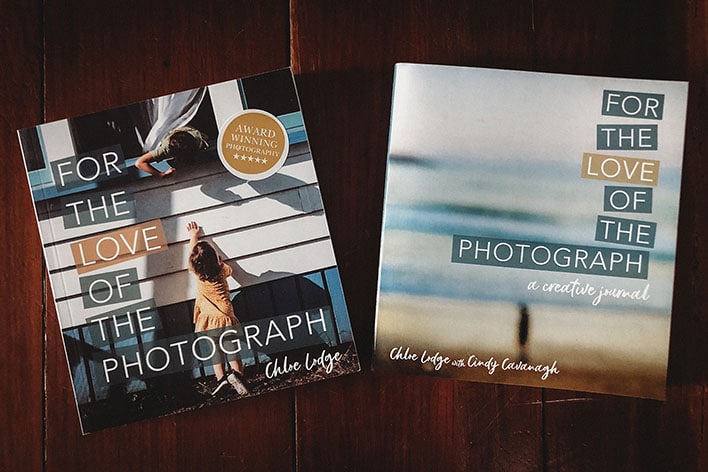
Let me cut to the chase. Buy Chloe Lodge's book, “For The Love Of The Photograph” now. In fact, on February 29th, New Zealand time, you can buy the book and the accompanying journal for $29 each.

If you are still looking for that #1 reason, it's built into the title of the book! It's a strong buy from me because you, like me, absolutely LOVE creating photographs.

Other Reasons You Will Want Chloe Lodge's Book

Now that I have the most urgent matter out of the way, let me give you my perspective on the book called “For The Love Of The Photograph“.

Most photography books are pedantic and pedestrian. Lodge's book, within arm's reach on my desk, is conversational and convenient. As you read along, it's as if a dear friend was sitting next to you to explain everything they know about photography.

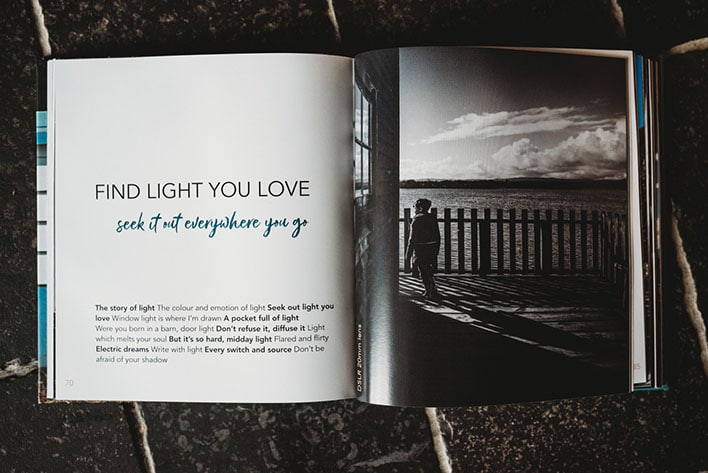
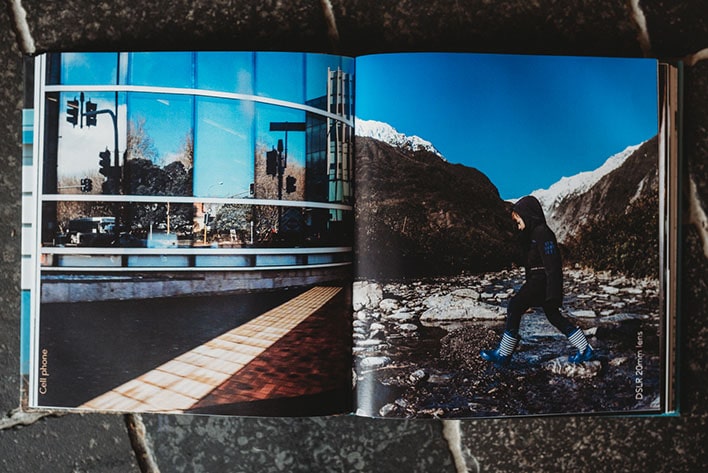
It's small form factor makes it supremely convenient to carry around town to a coffee shop. It's crisp printing and colorful photographs make the book very engaging. You turn the page and your are brought to a complete halt at Lodge's own gorgeous photography in and around her farm house in New Zealand.

For The Love Of The Photograph

My Takeaways From The Book

What did I take away from it? Be more present with light, to understand moment and gesture, to embrace color and to play to your heart's content with what and who you have right in front of you.

I assure you will be tickled by her observations and her insight. Having been in this business for about 20 years now, few things surprise me now. But Lodge's words reverberated within me, echoing as if I had said them myself at some point or another. It's a somewhat weird but welcome feeling.

Interview With Chloe Lodge

By now you know the drill. I look forward to speaking with photographers from around the world. It was quite easy to track Chloe Lodge down to see if she might be interested in talking about her book, “For The Love Of The Photograph.” So, give this chat between us a listen –

Buy The Book Today … Buy The Journal, Too

This book will inspire you for years to come. If you treat it as a “recipe book” you might just end up making one heckuva meal. There are 10 chapters in all. You are allowed to skip around if you wish. Come back and read something all over again, if you want. It's totally up to you.

What you will find, I suspect, is over time as your understanding and practice of photography grows, the words in the book will resonate within you even more. That's the beauty of this book. It's not a once-and-done type of book at all. It calls you back again and again, as it fills you up with a little different ingredient as you read it from a new perspective.

Yes, leap into photography with a book that will distinguish your work over time. I urge you to buy the book (no commissions being made here folks) and the journal that now accompanies it. Remember the special time limited flash sale on February 29th (it's New Zealand time and they are way ahead of us).

For The Love Of The Photograph

Filed Under: Books, Home Middle Right, Interviews, Photo Books, Photography Tagged With: books for photographers, british photographer, for the love of the photograph, foundations of photography, journal entries, learning photography, new zealand photographer, tracking progress

Are You A Business Owner Who Is Smart, But Stuck?

August 20, 2018 by Seshu | Editor & Publisher

Rajesh Setty, Author PortraitRajesh Setty knows you are smart. But he also know that you sometimes get stuck in business. He speaks from personal experience and he wants to help you get unstuck fast.

As a serial entrepreneur (see list below) and a book author based in the Bay Area, Rajesh encounters numerous examples of business owners initially enthusiastic about their project but who find themselves soon spinning their wheels.

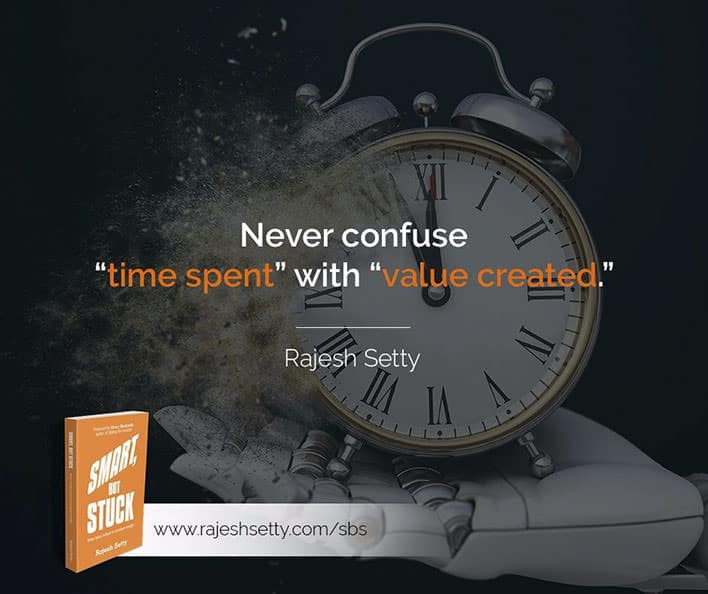
Speaking with him recently, I know he feels passionate about helping people in trouble. His latest book, “Smart, But Stuck,” outlines the problems most business owners face, and what he believes can be solutions to get them out of their own way.

Give this interview a listen to see if you can glean any nuggets from it that will help you get unstuck too!

Rajesh is crowdfunding the book, “Smart, But Stuck“. Supporting this self-publishing process not only helps Rajesh get his important and timely advice into the world, it also inspires other authors to step up and contribute to the business dialogue that is often sorely missing in the marketplace of ideas.

Learn more about “Smart, But Stuck,” here. To contribute to Rajesh's crowd-funding campaign, please go here.

Smart, But Stuck Book, Rajesh Setty

Here are some of the projects Rajesh has been involved in with over the years:

Witty Parrot
iCharts
Compassites
Jifflenow
ForesightPlus
Thoughtful Cards
Napkinsights

I hope you will step up and support the publication of Rajesh Setty's new book, “Smart, But Stuck” with me. The information and the steps outlined in the book could be priceless for your photography business. Isn't it time you invested in yourself?

Filed Under: Books, Business, Home Middle Left

The Red Cat & Other Stories – Ritesh Uttamchandani’s Book!

July 28, 2018 by Seshu | Editor & Publisher

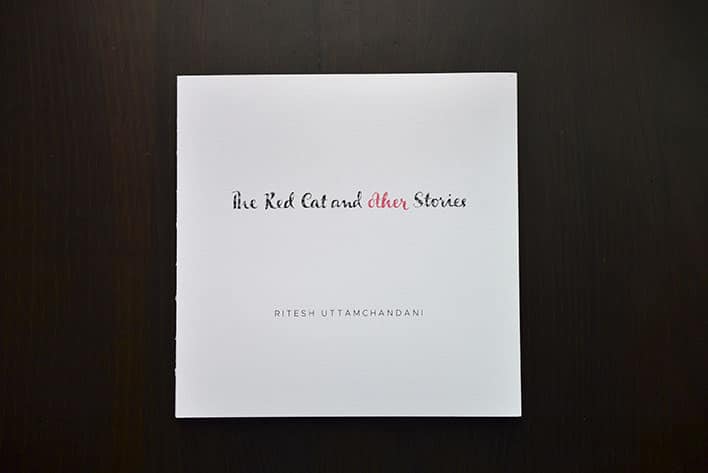
A few weeks back, I spoke with Ritesh Uttamchandani as he began promoting his new book, The Red Cat & Other Stories. Ritesh, a photographer based in Mumbai, India, dove into the production of this book despite the odds and the naysayers who rejected his book proposal. So he published it himself.

The Interview

Listen to why you should consider launching your own photo book project:

The Red Cat & Other Stories Book Cover

The Transcript

This transcript is made possible by Descript.

Tiffinbox:

Welcome Friends to another episode of Tiffincast and, Tiffinchat this time around as I talked to Ritesh Uttamchandani who was a photojournalist and an author based in Mumbai, India. Welcome to the show, Ritesh.

Ritesh:

Hello. Hi thank you for having me on the show.

Tiffinbox:

You’re welcome. You know, one of the things that uh caught my attention was that fact that you are not just a photographer you’re also an author and the book you’ve just published is called the Redcat and Other Stories, so, uh, obviously the title is very intriguing and for most of us who are not from India the the story of the red cat is probably something they may need to tell us about so tell us how the the title of the book came about.

Ritesh:

So, um around 2015. I was wondering whether I should be doing a book because I had a little bit, you know, I had things to say I had developed some sort of a vision some sort of a way of seeing and I realized that that way of seeing is very central to uh, the kind of fables my mother would tell me so the Red Cat essentially the fable that my mother used to tell me which is about an unusual friendship between a boy and a talking cat that he meets in the jungl. And I found that this fable is quite uh, you know, uh, I’ve used it as a metaphor for the city and you know, like when you’re new to a place, uh, how you meet certain strange characters and they kind of you know, they help you achieve certain goals. They help you be stand on your own feet.

And that’s what I guess is central, not just to Bombay but to most other cities in the world, I guess. So the so the book contains pictures of Bombay which are in turn, you know kind of held together by this fable.

Tiffinbox:

Oh wonderful. Okay, so the folks who know the story of the Redcat are they going to be able to sense the flow of the book through the story that they remember as well or are you leaving a lot sort of open ended?

Ritesh:

A lot of those open-ended open-ended but it kind of comes to it comes to a conclusion.

Tiffinbox:

Yeah

Ritesh:

And if I may say so the Redcat is a story that not many people might know because it is one of those fables that are passed on orally from one generation to another. So, um, a lot of people may not know it but um, it’s essentially a love story. You know.

Tiffinbox:

Is that right? Wow.

Ritesh:

Yeah.

Tiffinbox:

Okay.

Ritesh:

It’s a very progressive fable that you know, where in the you know, uh, there are certain things which I can’t let out but it was very progressive for me when I heard it when I was like, wow, you know fables can be this.

Tiffinbox:

Yeah

Ritesh:

This, forward and this, uh, beautiful at the same time.

Tiffinbox:

Sure sure. Now you mentioned something about uh, you know, the the fable as being a did you say it was a love story in a way?

Ritesh:

Yeah. Well, it culminates into a love story like most you know, most fables are

Tiffinbox:

Right and would you say that the love story that you’re trying to depict in the book is of you love of the city, is that fair?

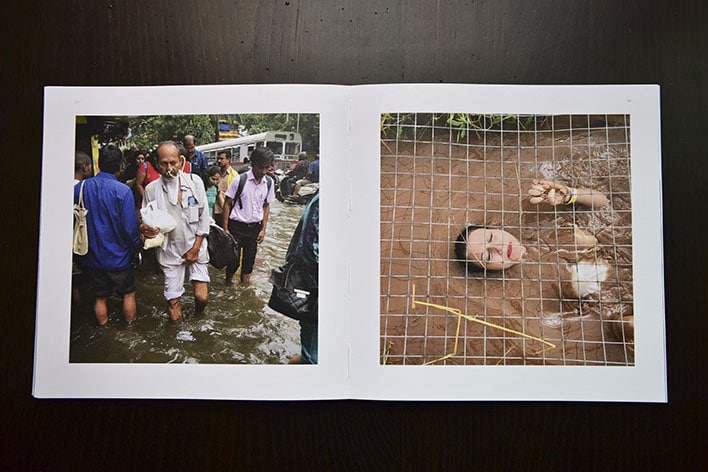
Inside The Red Cat & Other Stories

Ritesh:

It’s my love of the city. It’s my love of uh, you know, uh, my country it’s my love for images, but most importantly it’s my love for the generations that have come before us and the kind of things they pass on to us and you know, we’re at a very critical stage as far as images go, you know, we are constantly consuming things which are you know on the phone or on digital devices,

Tiffinbox:

Right

Ritesh:

And say 40 years from now somebody wants to you know know a little about my life or your life or anybody’s life. Um, they’re not going to scroll down somebody’s Facebook page, you know and go back in time and things like that. So I also felt like, you know, it’s a chance for us to look at what we are passing on, you know. It’s it’s it’s a tribute to you know, what was so meticulously handed over to us in such a casual manner like, you know, our parents reading us stories was a very, you know, a very simple affair but, and certain stories like this one, you know in my case I got the full grasp of it, uh at this stage in my life. So, you know, um, it’s also a tribute to the fact that there are so many simple things which is so difficult to make and so difficult to comprehend that we tend to not even, you know, notice the complexities in them.

Tiffimbox:

Explain that to me a little bit more if you don’t mind, what do you mean by that?

Ritesh:

Like, you know, it’s only at this stage at 35 that I realized that I could. You know, the fable has a mention of a house which has seven rooms and in the fable talks about climate change. It talks about uh, man-animal relationships. And when I was a child, I just used to think of it as you know, something, something entertaining but it’s only now that I understand that there are so many layers to the fable and I felt that you know in an age where uh, we complicate things needlessly at times, the simpler bits, you know, like the simple bits of our life or childhood memories, etcetera, you know, they have always informed my way of seeing but I have not really acknowledged them and this is more or less like an acknowledgment of that simplicity.

Tiffinbox:

That’s beautiful man. I’ll be honest with you. That’s a that’s a great way of tying, uh something that you grew up listening to to something that you’re doing at the moment, you know, um, most people most people probably gloss over that and don’t pay attention to that idea that you know, your your past can uh be a propeller of sorts into new ventures and uh is the book a new Venture for you in the sense? Uh, is this something that you like? Is this something that you’re going to be doing more off? I mean or is this just a let’s see what happens with one book and then you know …

Ritesh:

No, no, I’m completely smitten by the book form. Yeah, and I feel that a lot that you know, uh, uh, thanks to I mean, uh, the you know, Instagram Facebook digital, you know outlets are as much of a blessing as as much of a pain in the ass they are. So, I feel that the um, I think I’m gonna keep doing books. I there a good way to uh, say what I want to say. They’re a good way for people to experience images also and also, my book is not very big and you know, it’s not like one of those dead-weights that you keep, you know in the middle of your room or something.

My book is made to be kept by the bedside. You know, it’s it’s something that you treasure like the keywords for me when I was making the book were precious, empathy, humanity, and of course, you know love and you know all its in all its complexities with all it’s like, you know, a little bit of hatred a little bit of anger.

Tiffinbox:

Yeah.

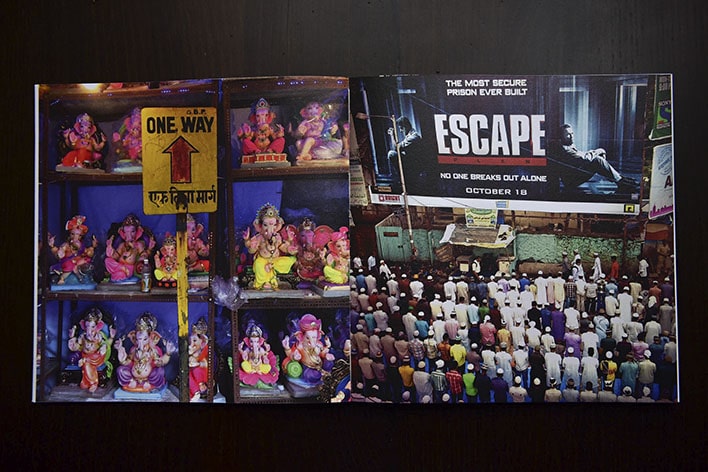
Inside The Red Cat & Other Stories

Ritesh:

So the book is like for me, formwise it’s precious. It’s white. It’s uh, it’s it’s entirely white so that it actually gets dirty. It gets a couple of you know, personalized stains on it and things like that. So I feel that this so much more that happens to a photograph for in a book form and especially when you string together certain images. And you know one leads to another, it almost has you know, not not just me but all books have a certain cinematic quality to them, you know, like like a certain image may be a little weaker than the rest but it’s very important for the narration to go through so that’s why it’s there.

Tiffinbox:

Right? Right, right. Yeah.

Ritesh:

And I think I think that helps you become a better storyteller. Become a better photographer and most importantly, it makes you I think in my case it makes you a better person because there are lots of people you have to take with a pinch of salt. There are lots of you know people who have their own flaws and their own this thing and I guess when you arrive at, you know, uh certain decision points in your narration where you have to let a weak image do the talking, it’s also a metaphor for how you deal with certain people who very easily get slotted as difficult and rejected. So I think there’s a lot to learn from the process of book making uh, not just as a photographer as a person also.

Tiffinbox:

Well, that’s pretty deep, Ritesh. I mean, uh, not very many people really sit down and think about a book and in those respect in that respect.

Ritesh:

I know

Tiffinbox:

Um, so I mean the idea of self publishing came to you obviously because uh, you must have felt that you you have uh, a good collection of photographs that sort of really beautifully tie together, um, especially because of your experiences living in Mumbai. Um, and and then you probably have been reminded constantly of this fable that your mom narrated it to you when you were a child and you were able to sort of bring both of those things together. Uh of the examples that you sent me.

Um, you know, there is that, you know, juxtaposition of words that you found, uh, really things that are already in existence in this in the frame and then something else that uh, sort of balances or imbalances the the frame in some way, you know, it could be a human element or it could be an idol of some sort.

Um talk to talk to us a little bit about your use of words and and photographs or words and other elements in the frame when you’re making photographs because that seems to be very intentional on your on your part.

Ritesh:

I’m actually, you know, since the book got shot with a cell phone. Uh, I actually managed to junk years of work and create something fresh. So, I began photographing for this book in 2014. And since it’s with a cell phone there is a definite physical closeness to all the situations that I’m, you know, kind of framing. Also, I’m not very like I’m. I don’t know. I don’t have uh an aversion to beauty but I feel like if something is too beautiful too saturated or you know, kind of it’s too pretty it’s like but I don’t know what to do with it. Like, you know, it’s not really a reflection of the kind of story that I want to tell so I kept like a lot of things like clutter trash etc, but in a dignified manner, I do I feel that you know.

As image makers, we have to be very careful about how we uh depict class and caste in our images because in India, uh, caste and class arer kind of omnipresent in all situations. They are there everywhere in the background or the foreground they are there they, so I have to be very careful in the way. I construct and frame the images and also because the story is about a man traveling through a jungle. I kind of imagine myself, uh walking through a trail in a forest and you know, what are the kind of things that would catch your eye? You know, the smaller things blink-and-miss appearances of animals and birds and people and signboards and that’s why the diptychs are not necessarily opposing each other at times. Sometimes they complete each other. Sometimes it’s like a panorama right? Like, you know, the the left seen merges into the right seen sometimes sometimes it’s just a, you know, a photograph on the left and a long passage of text on the right, which is basically a.

So in the title, it is the Red Cat and Other Stories. So there are 16 shots, you know, 16 photographs with their own text in the book. which is almost like see uh, when you’re walking through a place there are times when you sit down somewhere and you know, maybe the shop owner wants to talk to you. Maybe he wants to tell you a little about himself or maybe somebody, you know, a woman was you know, you know, She wants to ask you where you’re from etc. So you don’t get to really control these experiences. Right? You you you meet people who you know, like if you’re in a cab in Bombay The Gabby wants to talk to you and you can’t escape it, you have to indulge in that conversation.

Right? So these 16 conversations are staggered in such a way that they just suddenly come up and like there’s a man who sells donkey milk. Uh, you know, he walks around with a donkey across the city and he sells donkey milk to people who believe that donkey milk that feeding donkey milk to kids, infants especially makes them smarter in the long run.

Tiffinbox:

Oh boy. Okay.

Ritesh:

Yeah, and he does this very. You know, it’s strange ritual after the child has had the milk. You know, he tosses it around etc. Like almost like, you know, some black magic kind of thing. But it’s so it’s so it’s done in such a normal mundane manner. Everybody around him is so used to this happening for years and years.

Um, I felt that, you know, this man deserves an entire page, you know, it’s almost so all the text on the other page is where he talks about himself. He’s likeI was born etcetera etcetera. And this is how I do things and this is why I sell donkey milk. So the narration style is also almost like like as if you’re new to Bombay and you’re stepping out and you just accumulating experiences.

And that’s where you know the words, uh, the connection between photographs and words or uh, what can I say photos and text basically, uh is played to its maximum.

Tiffinbox:

Okay, but but you have a certain sense of uh, purpose behind it though, you know, it’s not a book of only photographs that sort of portray the city but you have certain ideas behind explaining what’s going on perhaps even right?

Ritesh:

Yeah, the core idea one of the many ideas that run along in the book is that I don’t want to tell you what it looks like because if you want to know what Bombay looks like you just need to Google up on a couple of things or you need to Instagram and see some of the you know, lots of people photograph Bombay as is. You know as representative, but because my investment of time and my investment of uh, you know, I’ve been living here for years. Uh, I want to get the reader close to what it feels like to be here. So, you know, I don’t have too many pictures of the conventional landmarks like Marine Drive and Gateway of India and all that, you know, you don’t need me for that.

Tiffinbox:

Yeah, exactly.

Ritesh:

What does it feel like like this photograph of um, so there’s an interesting situation I came across. There’s a man who had worked on the Gateway of India as a contractor. He was the lead, you know, he was the uh, man who executed, you know, the work of the building. So he had made a small little scale model; five feet high, with the same stone that is used in the Gateway of India.

And he’s got that little model sitting inside his parking lot in a garage and I was like, you know, these are things that I want to tell you, you know, if I’m an insider, this is my perspective, you know. If as an Insider, I’m going to show you seagulls fluttering about the you know, Gateway of India, that’s I think a disservice. I’m not really adding anything to your understanding of the space,

Tiffinbox:

Right? It’s an incomplete picture, in a way right?

Ritesh:

Yeah. Yeah.

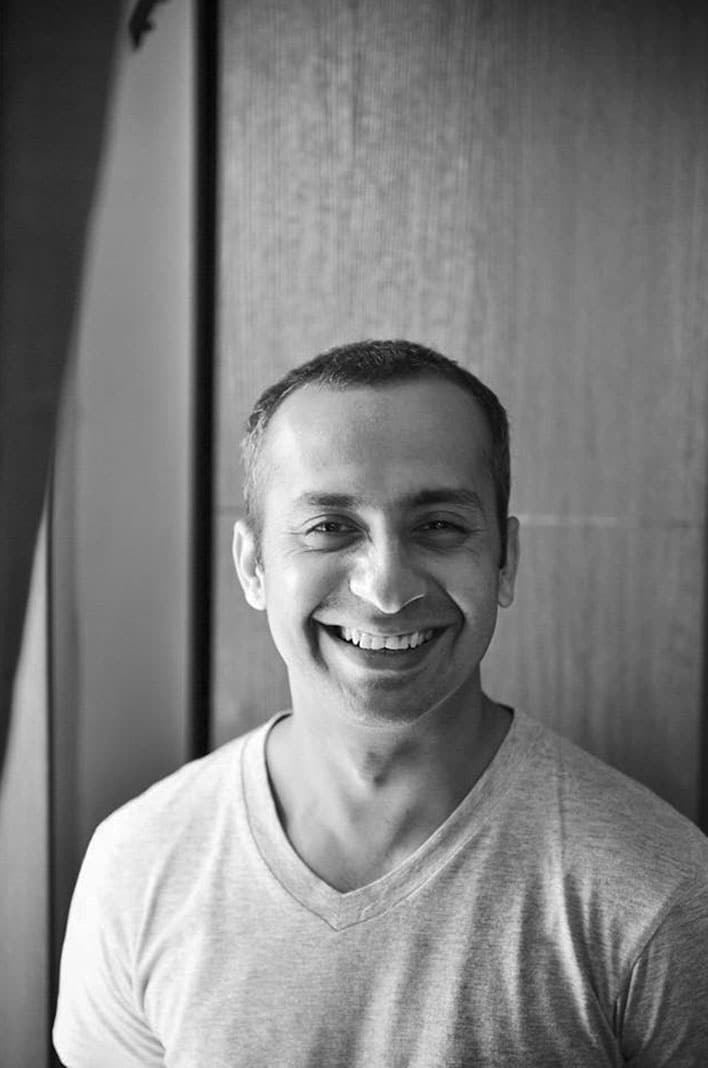
Ritesh Uttamchandani Portrait

by Vipurva Parikh

Tiffinbox:

Um talk to us a little bit about the uh, the challenges that you may have had producing this book. Uh, what were your challenges, uh in creating this book and this is your first book. So imagine you making a second third and fourth book, And what kinds of things you you are going to obviously know a lot more about when you uh start producing your second book.

Ritesh:

The biggest challenge was not having a publisher, you know show faith in the product, uh-uh-uh. There were lots of publishers who said very very nice things.

They were like “oh, this so different and so cool. But sorry we can’t back it. And then there was a small little publisher who was interested. But I somehow uh, I was also interacting with uh, you know a publisher in Tokyo, uh, not for production of the book but to understand the process a little better.

So that guy told me in one of the emails that you know, if this is your first one I suggest you do it yourself. So, um, Uh, they were also design issues. Like I was initially set. I don’t know design. I’m still not you know, it’s designed as a collaborative effort between me and some friends. We got together and just made it.

But one of the key inputs that somebody gave me, uh Hester Kaiser, she’s a curator in uh in Europe. When she saw the PDF, uh, Uh, actually she saw very old version of the PDF and things had changed by the time she responded to me, but she said that you know your choice of paper and the way you produce it, because these are such blink-and-miss scenarios. If you’re going to make this into like an art book, you know, like very expensive paper and hardbound and foldouts and you know, all those things, then it’s going to be a disservice. Then it’s it’s it’s going to feel something. It’s going to look something and it going to convey something together.

Tiffinbox:

Right? Right. Yeah.

Ritesh:

So that’s why I you know in the production stage. I like like having this feedback. I mean, it’s not like she told me use this. So use that or try this font try this thing, it’s that it helped me get rid of a lot of bullshit, you know. To produce something that looks fragile but is permanent in a way, uh, it’s exactly very very difficult.

Yeah, and uh more time consuming than producing something conventional,

Tiffinbox:

But you did find somebody locally to print it, correct.

Ritesh:

Yes, I I went to Pragati which is the – they are known to be the country’s best printing house, They are huge as in you know, my project is just like a drop in the ocean for them. But uh, they treat every customer on par so, I don’t think I would have got this kind of support from any other printer because I did my rounds of printing houses. I must have gone to about 70 odd printers.

Tiffinbox:

Oh my goodness, wow.

Ritesh:

Yeah, I got quotes and I got like, uh, you know paper samples etcetera because I kept looking I kept looking for you know, what’s the next?What’s the best what’s the next best thing I can get, and I stayed in Hyderabad. I saw the offset process entirely. I stayed there till be made about two proofs, which I came in, you know, which I got back home. And then the rest of the consignment came to me.

Tiffinbox:

Great. Um my last thought yeah, go ahead …

Ritesh:

And I think it’s important for any photographer to go through the process of how a book is made because I made so many last-minute changes and for the better not just like that but you know, it’s important to be part of the entire production also.

Tiffinbox:

I love I love your philosophy on this I completely agree with you and I hope uh more photographers who seriously, uh, you know looked at their either community or their town or village or city like you have uh will be able to produce something that says something a little bit different than the next photographer that also lives in the same town. I mean one of the things I love about uh photo books is that you know there. Take Paris, for example, you know, there’s lots and lots of photographs of Paris. But you know, there’s only uh a handful that have seen it really truly have seen it from the perspective of the people living there.

And I think that’s what I think you’ve done in producing this book. Um, what is it my last question to you? Uh, is this … Ritesh, what does it mean to you personally to have launched your first book?

Ritesh:

You know, there is a joke that used to go around about the Indian hockey team that they would get all these penalty corners and chances but they would be the worst at converting those into goals.

And I think you know, I have we live in a time where a lot of people do a lot of projects which don’t really see a conclusion or you know, and I speak for myself mostly that I do a lot of things that I feel like, oh I can. I do this I do this I just feel nice, you know, I’ve completed. I have a story to tell it’s out there and it’s almost like you know, again it goes back to childhood where our parents would be like, you know, they would just tell us the story. There’s no frills attached to it.

Okay. This is a story. I’m gonna tell you that’s it. So I feel like that sense of you know that sense of uh achievement that yes, I finished it and I’m. Like I’m being very honest. I’m not you know, it might sound a bit suicidal but I’m dying to do the next one already. That’s quite I don’t know what it’s I don’t know what it’s gonna be.

I don’t know what I’m gonna do. Maybe you sequel or whatever. I don’t know something or the other but I really feel like the book form is so addictive.

Tiffinbox:

That’s fantastic. That’s great. Um in some respects, I think you’ve you’ve inspired other photographers by doing this. I mean, I think uh, You know a lot of people would shy away from the process as it is challenging. There’s no doubt about it. But uh the end result is that you have something tangible in your hands that you can show as to as something that that is that you’re proud of and happy about and um, and then you say, you know several times you brought up Instagram and Facebook and all these other things.

Obviously, you know the minute you scroll past it’s gone. It’s a distant memory of what you’ve produced and nobody gives a shit, right, you know, so, you know, really, uh, but but when you produce a book, people will sit up and take notice. I think that’s what’s what’s going to happen. I am or is happening already.

Uh, so uh, congratulations with this. I mean really, this is amazing. I look forward to receiving my copy. I’m gonna I just thought of a way of getting my copy through my my folks in who live in Chennai so I’ll have them have them order it and. Have it delivered to them so then they can ship it back to New York.

I am planning a quick visit to the to see them too. So it might be a good time to pick it up. Pick it up at that time.

Ritesh:

Um lovely.

Tiffinbox:

Thank you so much for joining me today.

Ritesh:

I just … may I just just say one little thing, which is part of my experience is that you know, um, It’s often said that you know photographers in India do not buy other photographers books, which is kind of been proven wrong in my experience.

A lot of photographers have got my book. And uh, uh, a lot of them have said, that it encourages them because they have always relied on the west as a market. They always feel that some publisher from Europe or America will pick them up. Anyway, it’s like, you know, you’re throwing a line in the ocean, you know, somebody or the other will you know, some fish is going to come and they felt that you know, if they’re aligned with my thought that you know, if we can create an indigenous market for indigenous voices and there’s nothing like it. I mean we have always been consuming photography from a western perspective. You know, it came to us from the West, we see Indian photographers. Like there’s no real Indian-Indian aesthetic. But like, you know, it’s really nice to hear them say that you know, it kind of moves them to you know, begin thinking of presenting their work to their own audiences telling their own stories in a way they like.

You know, it’s I think you know community feeds itself. It’s like, you know, they inspire me, I inspire them. It works in a circular manner.

Tiffinbox:

Absolutely. I honestly from my perspective. I mean though I’m based in the US, uh, I freaking love the idea that you know, this is what’s happening in India now, you know. Uh, it’s truly an exciting time to see and um that you know, you’ve produced a book and I know of several others have also started working on you know publishing their own books and uh self publishing their books on and marketing and so, uh, I love the idea that that you are doing this, uh for your own audience. I think that’s really high time high time. So, uh bravo, Uh, thanks again for joining us today, Ritesh, ….

Ritesh:

Thank you so much.

Tiffinbox:

Yeah, absolutely and uh

Ritesh:

It was so nice talkin to ya. It’s like I know you from long long time.

Tiffinbox:

Well, I think we may have uh, we’ve never met but we’ve definitely you know, obviously connected and I look forward to meeting you in Mumbai. I plan on visiting that city as well. So, uh, I’ll be I will be in touch with you and let’s take it from there. Thanks a lot.

Ritesh:

Please do. Please do. Bye-Bye. Take care.

Where To Buy “The Red Cat & Other Stories”?

Those of you interested in buying Ritesh's book (I highly recommend it), The Red Cat & Other Stories, you should visit his website for some ordering options.

Your support of independent photographers like Ritesh creates a cascade of goodwill in the community, making it possible for him and others like him to add their perspective and tell their stories for an audience that is often left with very few or poor choices. Don't wait; buy the book.

Filed Under: Books, Home Middle Right, Photography Tagged With: books, documenting a city, India, life in India, Mumbai, photo books, Red Cat, Ritesh Uttamchandani, Street Photography

  • 1
  • 2
  • 3
  • …
  • 18
  • Next Page »

Subscribe To Tiffibox Treats!

Looking for a well-curated email newsletter that will leave you inspired and motivated about your photography business? Sign up below!

About Seshu

Seshu creates relaxed portraits of families and high school seniors in Avon, Connecticut. He also leads a successful headshot photography studio in Connecticut, helping professionals from a variety of disciplines project the very best versions of themselves. He created Tiffinbox as a way of inspiring photographers, to create better images and successful businesses. [Read More]

Email Templates For Headshot Photographers

Email Templates for Headshot Photographers

Recent Posts

  • How Capture One Changed My Event Photography
  • 10 Steps To Stay Positive In Times Of Great Stress
  • Why You Need To Read “Personal Branding For Photographers” Now
  • How To Master Your Website Content Step By Step?
  • Tony Taafe’s TNT Method For Headshot Photographers

Recent Comments

  • Stephen Davison on Are You A Business Owner Who Is Smart, But Stuck?
  • Ben A. on Don Giannatti Clinches The 8th Annual Tiffinbox Award
  • Dan on Don Giannatti Clinches The 8th Annual Tiffinbox Award
  • Donald Giannatti on Don Giannatti Clinches The 8th Annual Tiffinbox Award
  • Stephen Davison on G.E. Masana’s 6 Strategies For Wedding Photography Success
  • Naveen Kumar on Weddings In India Are More Than Being At The Right Place And At The Right Time
  • kartick on Weddings In India Are More Than Being At The Right Place And At The Right Time
  • Leonid Farbman on 6 Uncommon Trends To Grow Your Photography Business
  • Willow and Finch Wedding Photography on 11 Reception Tips To Help Your Wedding Photography
  • Web Designer Malaysia on How To Optimize Your Squarespace Website For Search Engines
  • Creastan on An Interview With Photojournalist G.M.B. Akash
  • Cindy Brown | Atlanta on An Open Letter To A Local Photographer

Become a Patron!

Copyright © 2026 · Tiffinbox · Site Design by Heather Mackan Creative · Built on Genesis