• Photography
  • Interviews
  • Business
  • Reviews

Tiffinbox

Inspiring Photographers

  • Home
  • About
  • Blog
  • Contact

Escaping Cliches In Photography

June 22, 2010 by Guest

Divya Manina, AvatarThis is a guest post by Divya Manian, a standards-based web designer who now lives in Seattle. She publishes her own blog, Nimbupani.

What pictures come to mind when you think of India?

Wait, I do not need to ask you, all I need to do is to look at Flickr search results and it is obvious what India means to photographers. What about Africa?

India, is much more than vermilion, yellow, vibrant colors and dark women. It is now a land of high-rises, malls, and industrial pollution. Unfortunately, this is not a popular stereotype and rarely highlighted in photography. It perpetuates a myth of poverty and rustic living that is now not true for most of India. Similar is the case with African countries. The greatest catastrophe is the grouping of so many different countries into one ideal “country” called Africa. Africa's landmass can contain China, US, and more in terms of land area. There are people of several cultures within a single country in Africa and African towns and cities have a lot more technology than popular photographs indicate.

A photograph is a slice of time which exaggerates the importance of the captured moment, just like a painting. Photographs have been used to perpetuate myths as well as facts. They alter public opinion with force that is unseen in the written text. As in the movie Spiderman, Uncle Ben says, “With great power, comes great responsibility” and here I would like photographers to use this power wisely.

It is easier to shoot photographs that match a popular stereotype than to go against it. Many times, a popular stereotype reinforces the familiarity of a shot and makes a photograph appealing. Unfamiliarity with the subject being photographed can cause this too. Sometimes, it invokes a sense of nostalgia for a time that could have been or sometimes, a sense of relief for not being in that position, or there can be simply nothing else to do (e.g. Taj Mahal, or birthday parties). Still, stereotypes pander to an opinion that already exists and brings nothing new to life, and I consider that an opportunity lost. A popular cliche these days is a religious priest with a “hi-tech” gadget.

Buddhist Monks With Telephones

This is a call to all photographers to look beyond the stereotypes, or to use stereotypes wisely. For example, Mr. Oochappan takes great photographs of a part of Tamil Nadu that is rarely seen by the city dwellers. His photographs revels in the stereotypes so much that the pictures bring out unseen facets of Tamil culture. See this image in particular of a man dressed like the Hindu deity Shiva.

Akshay Mahajan usually take photographs that go beyond the stereotypical shots:
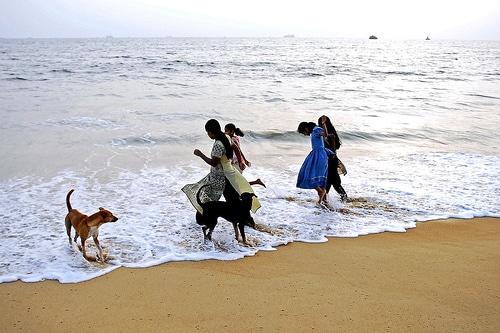
People On The Beach In India

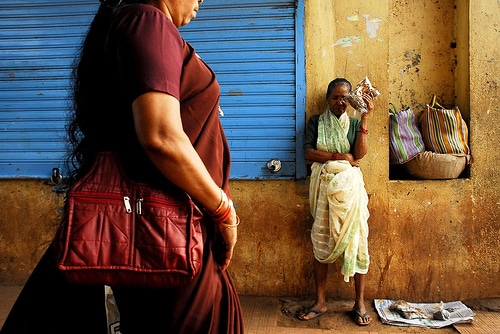
Woman Selling Food In India

I don't mean to hold these two as extreme examples and not all of their photographs fit into the boundaries I have drawn around them. It may not be possible to escape the cliche, but as photographers we must try.

How do you know if you are subscribing to a cliché? Simple, if a shot looks “perfect”, ask yourself why you think so. Is it because it fits into a known stereotype of a “perfect” shot for that place/occasion/people? Or is it because that shot tells an unusual story? Whatever it is, before you take or share a photo you have taken with the world, spend some moments thinking about the story the photograph tells and let it not be “perfect”.

What do you think? Ink your thoughts below in the comments section.

Filed Under: Commentary, Photography Tagged With: Clichés, Exotic, India, Photography

How Can Photographers Become Go-Givers?

June 8, 2010 by Guest

Alicia Candelora, AvatarThis is a guest post by Alicia Candelora, a wedding photographer based in Connecticut.

I was raised in a family where we were taught from a young age that you should give and share with others as much as humanly possible. As the eldest of three, that principle is not always something I liked following. After all, what kid enjoys sharing things with their younger siblings? My parents not only consistently taught us to do so through their words, but also through their actions. They have spent their lives helping others and giving to others. I remember many times where we had young mothers, or families in need come live with us. We always hosted dinners for people.

When I was 15 I decided to go on my first missions/relief trip to Guatemala. I did not know anybody else who was on the team, but I was excited to be the first in my family to leave the USA! During that trip, my eyes were opened to a world that I never dreamed was possible. I witnessed children living in the most primitive of conditions, many of them not knowing where their next meal would come from. I met people who had never seen a flushing toilet, a car, or a computer – things that we “can’t” live without here in the USA. My world was rocked. My life was changed. From that point on, I realized that I could no longer live my life just for ME. I had to have more purpose than just fulfilling my own hopes and dreams, because there was a world out there of people who are starving, dying, and without hope.

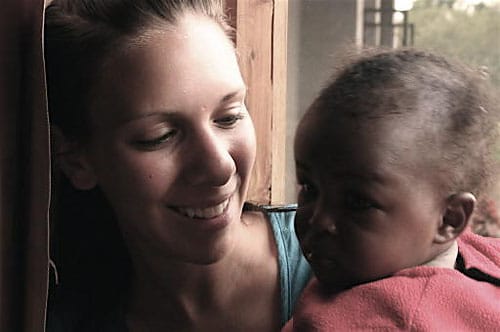
Alicia Holding A Baby

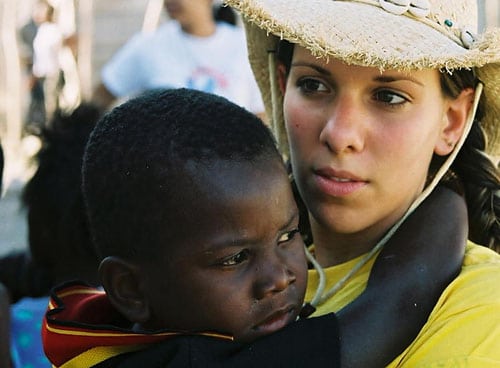
Alicia's Portrait With Kids

Alicia Holding A Baby 2

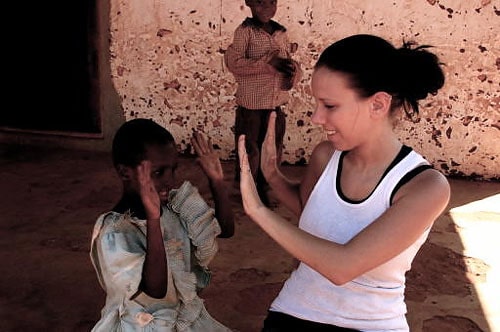
Alicia Playing With Kids

At the age of 18 I went to school to study bible and theology, while still staying very active in relief work in third world countries. After 3 and a half years of studying, I had an opportunity to move to Copenhagen, Denmark to teach leadership classes and to lead teams into third world countries doing relief work of various sorts. This was, and continues to be my heart and my passion.

About a year ago I decided to move back to the USA, after living in Denmark for 4.5 years, to pursue photography while still staying active with relief work. When I opened my business, I wanted to base the business model on the theory that “giving is better than receiving.” I had a lot of people tell me that I should not start a business that way, as I would quickly end up in debt. Most of us are taught that in order to “make it” in the business world, we have to adopt a In a dog-eat-dog mentality. From a young age we are urged to be a better “go-getter.” I want to challenge you for a few moments tonight to open your mind to the possibility of, instead, becoming a go-GIVER.

Recently I stumbled across a book written by John Mann and Bob Burg called The Go-Giver: A Little Story About a Powerful Business Idea. This book has since become my business bible, as it clearly and practically outlines the principles that I had already been living by and running my business by. Through a compelling narrative, the author outlines the “Five laws of stratospheric success” as follows:

The Law of Value: Your true worth is determined by how much more you give in value than you take in payment.
The Law of Compensation: Your income is determined by how many people you serve and how well you serve them.
The Law of Influence: Your influence is determined by how abundantly you place other people’s interests first.
The Law of Authenticity: The most valuable gift you have to offer is yourself
The Law of Receptivity: The key to effective giving is to stay open to receiving

Alright, so some of you might be thinking “This all sounds good in theory, but how does this apply to ME?” Well I am glad you asked! I have compiled a list of what it looks like on a practical level to be a go-giver.

Ten ways to spot a go-giver:

1. A Go-Giver does you a favor and is not looking for compensation.
2. A Go-Giver helps you just because they want to and is not keeping score.
3. A Go-Giver listens carefully to how your day was, or how a project is going.
4. A Go-Giver helps you without caring whether your status is high or low in life.
5. A Go-Giver makes connections for you because they believe in you.
6. A Go-Giver over-delivers on a job because they want you to be happy (and tell your friends).
7. A Go-Giver recommends a competitor if they are a better fit.
8. A Go-Giver is someone that others spontaneously and enthusiastically rave about.
9. A Go-Giver goes out of their way to help others.
10. A Go-Giver always seem to be connecting with the right people to make good things happen.

In conclusion, I have to ask myself – what would it be like if we adopted the mindset of being a go-giver? What would happen to our businesses, our careers, our marriages, and our relationships in general? My challenge for you is this: Become a go-giver and watch it drastically revolutionize your business and your life.

As always, your comments are welcome. Tell us about how you give back. You may be featured in our sister blog, OpenShade, if you are currently pursuing a community project or a cause that is near and dear to your heart.

Filed Under: Commentary, Culture, Photo Biz

The Wedding Photography Industry: A Rebuttal

May 8, 2010 by Don Giannatti

This is a guest post by Don Giannatti, a photographer and teacher based in Phoenix, Arizona. The opinions expressed in this post are his alone and I am only providing him this space to hear his perspective on a rather tempestuous blog post by Gary Fong, also a photographer and now entrepreneur.

I am not a wedding photographer, but I flirted with it a bit from 2005- 2008. It didn't end up being my cup-o-tea. So understand where I am coming from – a commercial photography background of 35 years. I teach lighting workshops now, and mentor photographers wanting to get into the world of commercial photography. I am not the one to come to for wedding photography information, but this post by a celebrated wedding photographer kinda got me thinkin'. And that can be a scary thing sometimes.

1] “Prices are low because photographers are terrified of being asked the question – “how much do you charge?” Because you're afraid of rejection, (and you want to get hired) you either a) publish a artificially high price, then let the client negotiate you down (this is a snowball of trouble) or b) find out what the competition is charging, and charge less, and throw in a free engagement session.”

Well, not always. Sometimes markets change. I know several high-end shooters who are doing well… because they are damn good at what they do. Perhaps the clients are getting more savvy in what they want and maybe they don't want to spend $5K on a wedding photographer who isn't worth it. The recent downturn in the economy has hit upper-middle class people the hardest in many ways, and finding a way to lessen the cost of an already rediculously expensive party is not something that is only borne out in photographers. Offering free engagements is marketing 1.0. By maximizing the value to the client without incurring much out of pocket is a time honored tradition of marketers in all kinds of genres. We got a fee printer and an iPod Touch last year when we bought my daughter's MacBook. To the point of being terrified of the “how much do you charge” question, it is a matter of personal fortitude. Personal comfort. If one is confident in one's price, there is no terror. Walk into a Ferrari dealer and ask how much the red one is. They do not feel terrified at all. Confidence in one's work will take one past the terror and into the garden of being paid what one wants to be paid. By the way, I paid $2400 for my first Macintosh (1986). In today's money, that is about $10K. Why? Competition, cost of entry, supply and demand… so many reasons. Or – even more terrifying… maybe the work isn't worth the price being quoted. Yeah. Tough nut to swallow, but if no one is buying the price is too high for the value perceived. Simple.

2] “Photographers do so much post-processing, they don't work hard to obtain the PRICELESS moment.”

This seems non-sequitur to me, but I think I know what you mean. A photographer who shoots shit and just believes it is fine – “I'll fix it in Photoshop” may be dealing a lot with your first point (see above)… ya know.

3] “I remember when I started photography, “filters” were all the rage. Shooting a beach? (Half Tobacco filter). Shooting a unity candle lighting ceremony? (star filter). Shooting a portrait? (Don't forget your vignetting filter). Photographers went out of their way to find situations where they could use their filters! This is what happens when you take your bride and groom into an alley and make them wear sunglasses and jump in the air. Barf.”

So if your client asks for that shot (agreed – stupid) what would you say? As a vendor to a client who is presumably paying you a lot for your time and art?

4] “Jumping in the alley? My God, you two bumpkins are so lame? Such a stupid idea for a shot… I mean, really… gotta barf now.”

OK. I think I would try to lead them to another shot, but in the end, they are the client.

5] “You know what happened to those images? They're laughed at today because they're as outdated as orange shag carpet. Same thing with Photoshop actions. If you process your actions with photoshop-heavy gimmicks (I especially am befuddled by the aged-film action, this is so fake looking) then someday the grandkids will point to your silly over-processed, over-saturated, over-sharpened, barbie-doll skinned looking face images and giggle, and go gramps, your wedding photos are silly. Face it. They are.”

Avocado Green appliances.?
Mullets
Fu-Manchu mustaches
Big Hair?
Wide Belts on poofy skirts?
Hot Pants?
Smoking
?Hose with seams up the back
Leisure Suits ?
Velour “Jogging” wear?
Real Fur

Your point? Things and styles change. What is cool now may not be cool then. Shooting for the clients needs means following some trends the client wants. If you are shooting and showing a more traditional style of photography and getting the gigs you need, then what does it matter? If you are shooting and manipulating the hell out of the images and getting the gigs you need, what does it matter? Point is that there are all kinds of things that go in and out of style. Just a facet of time that catches up with all of us. I have been married for nearly 30 years. My kids howl at the wedding photos… not because of the cheesy photography (and it sucks big time) but because of the way we looked and what we wore.

I don't remember the hairdressers or the tux folks worrying about what that would look like in 20 years back then. Only what looked good on the ‘special day' that was planned. It would be great to be able to look into a crystal ball and make all the necessary changes in today to fit tomorrow's needs, but… well, that is not part of our world right now.

6] “And photographers who know they're going to sit on Photoshop for three weeks gimmicking up their images with cartoonish looking effects typically rely too much on the processing and not trying really hard to let the impact of the moment sell. THIS by the way is what rich people want.”

Then I hope to hell it is in the portfolio of the photographer looking for someone to shoot their rich people's wedding. Whatever a photographer does, it must be in the portfolio that they show. If you are a bumpkin on Pshop and do most of your work there, with only ‘fodder' from the camera, and people like what you are doing, then you are – well, good to go. Right?

I will no way believe that ‘rich people' are stupid enough to hire someone who they haven't reviewed. They know what you do, and how you do it before you get to come over to the ‘rich people' house and shoot the ‘rich people' wedding with all the ‘rich people' guests. They look at your book. They see other weddings you have done. They make decisions.

They're ‘rich people' not ‘stupid people.'

7] “In case you're wondering. Rich clients don't want a photo of them holding hands over a train track or standing in front of a graffiti wall. Rich clients do not want their wedding photos to look like a senior high school portrait session. Rich clients do not want their wedding photos to look like a modeling portfolio. They want to say to you – “how the hell did you capture that moment?” For that, they'll pay dearly.”

Then by all means if you want to be a ‘rich people' photographer do not do the shots in front of a graffiti wall with caution tape and train tracks and stripper heels… oh wait, that's Model Mayhem. Sorry.
And if ‘rich people' will pay dearly for ‘that', then why are they buying the cheesy stuff… and if they aren't buying the cheesy stuff, what was the point?

How the heck does someone speak for rich people who haven't spoken for themselves. And what rich people are getting the graffiti images and the caution tape and the jumping in the alley shots – hating them – and then breathlessly calling their friends to tell them how wonderful the photographer is. Seems like a Straw Man argument to me.

8] “For your silly look-like-everybody fake punchy Photoshop filter, the simple-minded client will find the cheapest person who looks like you do.”

Well, that is a good point. Mediocre is mediocre and that means NO ability to stand out from the crowd. I totally agree. Want better clients? Shoot better images. A lot better images. Is that hard? You bet your ass it is. That is why there is so much mediocrity killing mediocrity in the worlds of photography. No secret there.

I will address this though … the thing that rubs me wrong about so much of what is discussed in forums and online. The point of ‘rich people' being the only clients worth servicing. And the notion that people of smaller means are ‘simple-minded' just knocks the breath out of me. I cannot even describe the sadness that something so elitist would be said about good, hard working people who may not have the disposable income to present a $45K wedding to their daughter. My oh my.

I am not an elitist, but I do have my price point. And no, when I did shoot weddings it was mid-stream in my town (around $3500 per with no addons). I don't shoot $750 weddings and give people the images on CD. Never did, never will.

But I truly hope the young people who are trying to bootstrap a wedding for only a couple of thousand get a good shooter who will. I don't want them to not have pictures because they are not ‘rich people.' I don't want the industry to turn into some sort of elitist entity that exists totally for the Tony Class who have the ‘big bucks” – the ‘rich people.' That thought sorta makes me want to – well – barf.

9] “Your signature look should be the fantastic moment. Like this series below taken by our awesome wedding photographer Jessica Claire:”

OK.

10] “I am just waiting for the day when I see a bride and groom sitting in a white high-key background leaning on the numbers 2010. I'm sure somebody has already done it.”

And that means what to you? That the photographer is lame and stupid? That the couple is lame and stupid for doing that? Why does everybody want to impose their notion of what is good on other people? What makes it anyone elses business what kind of work the bride and groom want and get… as long as they are happy. Who gives a shit if the 2010 is pink? If I had a nickel for every lame ass photograph out there, I wouldn't have time to do this. I would be speeding around the world on my own jet trying to find the perfect vinyl copy of “A Love Supreme” for my $5M stereo system. Stupid shot idea? You bet. My business? Nope.

If it sucks, and the clients hate it, and he gets no clients…well – “Hello, Welcome to WalMart”…

Will the destruction of the photographer bring you great joy? Will it make the industry better? Will his/her demise be something to cheer? Maybe for Judge Joe “I Gotta Pelican Case” Brown, but not for me.

Instead of laughing… help. Instead of condescending humiliation, offer guidance and mentorship.

11] “Shoot-to-burn DVD's – standard going rate around L.A. is about $750 for a DVD of high – res images.”

For some people, that may be the limit of their expenses. Is that a problem for anyone? “Fkn cheap ass poor people…”

Do prospective brides from Beverly Hills and Santa Monica (where, you know, the ‘rich people' live) shop Craigslist for their photographer? Is Denis Regie feeling the heat from $750 wedding shooters?

12] “Photographers say they shoot over 3,500 images. That's 20 cents an image. Why not charge that instead? Why not tell the client – “I charge 20 cents an image – and you get to keep the original file!” Are you freaking kidding me? How about be the photographer that works hard, anticipates the moment, IS PERCEPTIVE, captures the mood and the story and gives the image unmodified? I've seen many of your images. I'd pay 20 cents for them, and not a penny more. That's how bad some of you suck. Sorry.”

Well … there you have it. Work for poor people and provide a service to them and you ‘suck'. If you are in East LA and are a wedding shooter who does a great job for your neighbors who can barely afford $5K for their entire wedding – you ‘suck.'
Now, unless I am not understanding the way things work, most people look for people who are like them, or provide something to them that they need. I see this so much on the forums… “cheap CL shooters are ruining the business”.

Bullshit.

Lexus dealers are not sitting around worrying about the Hyundai dealer down the road. People who sell $2500 wedding dresses are not sweating the cheaper stores or online. Bakeries are not vying for a chance at the bottom of the pile… I know, I was just involved in finding a cake with a client. Damn!

I must say that last time I was in LA there were several people driving Kia's and Focuses… you must suck too. Sorry.

13] “Do you know what I think of your silly Photoshop action-look? It reminds me of one of those Hyundai Sonatas that have been lowered with neon lights in the undercarriage, a big ass subwoofer booming, spinning wheels and sparkle paint. Yes, someone had to say it, and I'm saying it. To a person of taste, if you overgoof your photos, that's what your images look like.”

Well, not everyone has the same taste level. Sinatra/Kanye – Spring Strings/Philadelphia Strings – banjo music/jazz.
And where I may – or may not – agree with your assessment of that kind of imagery, I have little desire to humiliate those that like that stuff.

14] “Negotiating your fees – this is big. Photographers put up a fake “big number” so they can look ultra-cool in front of their peers. “My packages start at $5,000” No they don't. You start at $3,500 and will put on a suit and charge your batteries for less if it's “off-season”. Or you will book your associate shooter and promise the client that you will come as well.”

I have nothing to say about that. I have no idea what you are talking about, so I have no comment. Have heard of negotiations though. There's even a book or two on the subject. Maybe.

15] “Dude, a few years ago, I know of someone who said, “I didn't start doing well until I raised my fees to $20,000″ Oh really? Do you think that would work in today's market?”

What? Not enough ‘rich people' I guess. And now I am confused. Prices too low? Prices too high… it is all going round and round for me.

16] “Get real. Have reasonable prices and do NOT let your client bargain you down. That's the beginning of a nightmare for both you and the client. The minute you say, “OK, I'll give you a reduced rate” your credibility goes down. How would you feel if your brain surgeon said – well, since it's you, I'll take 20% off, or – throw in a tattoo at no charge.”

Well, I am agreeing with you there. Creating a sensible price structure and holding to it is a very important part of finding out where you are, and where you belong. If you can't get what you charge, then maybe you aren't worth what you charge. Simple simple.
Idea for tattoo: “I wanna be a ‘rich person' so I am getting this tattoo.” Or, “Look at My Cool Tattoo, I Must Seem Like A “Rich Person” to you.” I dunno, I kinda suck at making tattoo statements cause I friggin' hate tattoos. Don't care at all if you get one or love them… just don't mean anything to me.

17] “Proclaiming Jesus in your work – any ethnic group bargains itself down. I'm serious. I grew up with Koreans. They are the worst. Oh I know a good KOREAN dentist and they will do your braces for a deal. Oh I know KOREAN movers, let's use them to save money. Same with mormons, jews kill each other with deal-making. But the Christians as a group – (I'm burping my ribs as I type this) use this to try to sway people in a cheap way to get jobs. Grow some gonads and ditch the Jesus thing in business. Just shut up about it. Seriously, shut up. You will lose all non-believers and your fellow church-goers who say “God is so good”. Oh just shut up. Do business. Get great images. Book weddings because of your STRONG IMAGES and not your proclaimed faith. Be neutral. Can you imagine what a wreck my Lightsphere business would be if I put a Christian fish on every box? Picture it. Would I sell a half million of these things? Hell no. The Europeans would fall off their chairs laughing at me. The Japanese would look at it and make the face a dog does when it doesn't understand the sound you just made. And for those I did sell, would my fellow Christians go – ooh! I want to buy this because he's CHRISTIAN. Please. Shut up. OK just shut up.”

Ummm… I got nothin'.

18] “Workshop Bullshit – I honestly have never seen such a carnival circus of posers in my life trying to pitch “education” on business success. These people don't earn jack at photography. The ones who do earn – shoot. They're too busy to stop what they're doing and write an outline and create the class materials to give a good class. Next photo event you go to – PLEASE. ASK THE SPEAKER WHAT THEY EARNED IN PHOTOGRAPHY.”

Agreed… there are some pretty bad ‘workshops' out there. And there are some pretty good ones out there. The ability for the workshop to be successful has very little to do with the income generated by their work. It has more to do with preparation, hierarchal information, skills with people, a devotion to the wonderful art of teaching and a real connection to those they are teaching. Even ‘rich people' who do occasionally take a workshop when not polishing their Rolls.

Ask the professors in your University how much money they made in Astro Physics before they taught it? Ask your music teacher at the University how much money they made composing before they decided to teach it.

Teaching is an art in itself. And there are damn great teachers out there who pride themselves in being a teacher. When did teachers become so low on the priority list of some people?

Man – some people are just totally hung up on money – ‘rich people' and I get that. But denigrating people with that time-worn BULLSHIT phrase about ‘those that can do and those that can't teach” is such a total slam at the people who work hard to make other people better. I hate that phrase and I believe that people who repeat it are more bitter and small than the ones they are demeaning.

19] “Do it right there in front of everybody. Watch that person squirm because they talk about business success, and they've never achieved it. Doing great in the business of photography is very very tough, but it's totally possible. You HAVE to be the person who NAILS the unforgettable moment, tells the true story, helps people relive memories.”

And one who “NAILS the unforgettable moment, tells the true story, helps people relive memories”… cannot teach?

Really?
Really really?

20] “It is not going to be easy to be successful if you try to copy somebody's blog images by buying a set of Photoshop actions and copying poses. This is not the stuff that memories are made of (oh we will never forget how we sat on that park bench back-to-back). It's the memory-making photographer that will get the loyal following and earn the high income, which I believe, is still possible (but it will never again be like the hey-day, not with digital cameras getting more advanced every year). But if you can be a master of the moment, people will beg to hire you – at your fee structure.”

Hokey Dokey.

Offend, denigrate, humiliate, insult – and inspire. Sort of.

21] “This is not the stuff that memories are made of (oh we will never forget how we sat on that park bench back-to-back). It's the memory-making photographer that will get the loyal following and earn the high income …”

It is the photographer who delivers superior work, listens to the clients, leads by example, and builds a strong, steady business will succeed. Digital has opened a lot of what we do to people who were not trained as we were trained. And some of them suck, and some of them are kicking our asses. The ones that suck, well – they suck, so who cares.

The ones that are kicking asses need to be listened to, and push those of us who are getting our asses kicked into a new place. Happens all the time. Makes hanging a shingle out after buying a ‘Blad and a Norman system and being ‘in business' seem a little lame. I agree… we will not be going back there. Ever.

But I harbor no resentment to those who are entering and kicking ass. They are the beginnings of a new order. And that is what it is.
BTW… “and earn the high income” may not be the reason I would ever suggest for someone getting into the photography business.

From Seshu: Care to comment? I would value your perspective in the comments section below.

Filed Under: Commentary, Photo Biz Tagged With: Buisness, Don Giannatti, Gary Fong, Industry, Photographers, Pricing, Wedding Photography

Confessions Of An Emerging Professional Photographer

April 22, 2010 by Guest

Hemant Naidu, Saskatoon, Canada photographerThis is a guest post by Hemant Naidu, an emerging photographer based in Saskatoon, Canada.

About six months ago I had a thought of entering the professional photography scene. Call me stupid, but that idea started to blossom into something more than just something in my head. The thought of shooting professionally has been a dream of mine for sometime, but I just never could get over that hump to make it a reality. Did I really want to run a business, something I didn't really know much about despite having a business degree? And being thirty-five with a wife, a mortgage, two dogs, and a baby on the way, did it really make sense to think about starting a business?

Jorja in Dads Hands by Hemant Naidu

Diving In

After answering “yes” to those questions there was still a few other questions that kept running through my mind. The first was whether I was even good enough. I think this is a question that all photographers struggle with throughout their career and I'm pretty sure that it's an impossible questions to ask. It wasn't that I didn't have confidence in my work, but I would always find myself trying to compare my shots to other photographers in the area. I had to make a conscious effort to stop doing this and to just trust that I was in fact “good enough”.

Is It Just A Job?

The second question that worried me slightly was whether I would lose my passion for photography if it became a job. Just because you love something as a hobby doesn't necessarily mean that it is a going to be a good career fit for you. It took me a while to realize that if I let this fear stop me from giving it a try I may end up robbing myself of a career that I have dreamed about.

As much as I wanted to pursue a career in photography I did want to minimize my risk as much as possible. I currently work as an Agile Team Lead for a software development company which involves me managing a group of programmers. I enjoy the job greatly and welcome its challenges so keeping my day job for now is not a problem. The thing is that if I start to see a significant increase in my photography contracts I am going to become incredibly busy very fast. I often think about the logistics of managing a full time job, a part-time photography gig, and a family life.

The “2 Year Plan”

Despite all of these fears I decided to take the plunge, and got the ball rolling on setting up a small business. Who would have thought that after all of the complicated paperwork that would be the easy part? With the business now set up I had to devise a way to get my name out there. Even though Saskatoon, Canada isn't a massive city it still has a fairly competitive photography industry with a huge range of talent. It was at this point that I really started to think about my “2 year plan” and how I was going to set myself apart from other photographers in the area.

It's All About WOM

It seemed to make most sense for me to rely on word of mouth marketing. If I could leverage the people I already knew to get the word out I was sure that opportunities would start to materialize. I found the book “Word of Mouth Marketing” by Andy Sernovitz to be an invaluable source in planning a word of mouth marketing campaign. If I wanted people to talk about me I would need to give them interesting things to talk about, meaning that I needed something unique to set me apart from the rest of the crowd.

Peeking Out by Hemant Naidu

Something I noticed in my market was the relatively low use of social media outside of Facebook. Twitter is very popular in Saskatoon, but seems to have been adopted by only a small amount of the photographers. I was already an avid Twitter user from a personal perspective, but I thought it was important to also manage an account for my business. I put a lot of importance in using Twitter as a marketing tool and have been slowly creating a group of followers, while also trying to connect with local photographers, and some heavy hitters in the industry. Because my network is still relatively small, Twitter gives me a unique opportunity to reach far more people, in a shorter amount of time, and with much less effort than traditional networking.

Going Fusion

I also see an opportunity to be one of the first photography studios in the area to take advantage of the convergence of photography and video with the new DSLRs. From what I can tell the fusion of these two formats is few and far between in my market. I understand that utilizing and producing quality video with these cameras is not trivial, but I am definitely up to the challenge. It is still breaking in here and I would love to be the one that leads the way.

Other Challenges

Despite moving past my three main fears I mentioned earlier (or at least learning to cope with them) there is another topic that I continue to struggle with. I understand that there is a lot of discussion about so-called “Uncle Henry's” and “weekend warriors” coming into the scene, undercutting professionals, and devaluing the profession. This is the last thing I want to do and I certainly do not want to be viewed this way by established pros in Saskatoon. My desire is to have them view me as a colleague as opposed to an enemy, and I am doing all that I can to ensure that I go about establishing my business in the proper manner.

On Stage by Hemant Naidu

Pricing Strategy

I think like many new photographers in the industry finding a reasonable pricing strategy is a source for many headaches. I know it has been difficult for me, and has caused me to constantly evaluate and compare it to others. It's hard to measure one's skills and put a price on it, but it still needs to be done. I have found resources online such as goingpro2010.com and photofocus.com to be invaluable in helping me in this area. For now I am comfortable with my pricing structure based on what I see other new “responsible” photographers in the area charging. Despite this I can't help but always have that idea in the back of my mind that someone out there is cursing me as that darned weekend warrior. All I can do ensure that I am putting out quality work and providing a pleasant experience for my clients. Hopefully that will speak for itself.

Chugging Along

It has been about five months since Naidu Photography was officially registered as a legal business and I've spent the majority of my time networking, building and tweaking a concrete business plan, trying to facilitate a word of mouth marketing campaign, and getting my head around the accounting nuances that come with the territory. Sure I've had shoots which have been fabulous, but now I am really starting to see what I've heard so much about running a photography business – it's twenty percent photography, and eighty percent business management. Fortunately this hasn't stopped me from driving forward, but has only made me hungrier to get this business off of the ground and flying.

I welcome your comments below! Tell us what challenges you have faced when starting your business. What would you like to learn from other emerging professional photographers?

Filed Under: Business, Commentary, Photography

When Did Teaching & Learning Photography Become Such A Controversy?

April 19, 2010 by Guest

Jigar Champaneria This is a guest post by Bay Area-based wedding & portrait photographer, Jigar Champaneria.

Those of us in the world of wedding photography have been following a growing controversy about the variety of workshops offered to help photographers with everything. Whether it's marketing materials, technical proficiency, or general “awesome-ness,” there seems to be a workshop for it.

I can't say that I've taken many workshops or attended many seminars. Not because I think they're a waste of money, but because I personally need to experience things and work through them myself. For the most part, I openly rely on the generous sharing of knowledge from friends and colleagues who take the time to honestly share their experience. And after 6 years of photographing weddings, I'm trying to share as much as I can locally and on the web.

Bridegroom At Indian Wedding

So where's the controversy? Well, people like wedding photographer and entrepreneur Gary Fong and Pictage CEO, Jim Collins have blogged about it. For me, it boils down to trying to take that generous sharing of knowledge & experience and monetizing it. Don't get me wrong, I see nothing wrong with charging people for your time and experience, especially if you can teach students well. But as Jim Collins alludes to in his blog post, many of these workshops are ill-conceived for one of two reasons:

1) The workshop leader has great experience to share, but isn't a great teacher so it's difficult to impart the information well.

2) The workshop leader is just full of him or herself and thinks he can teach anyone how to be a great photographer who's radtastic in every sense of that made-up word.

Hmm … did that sound sarcastic enough? :)

Well, my sincere belief is that EVERYONE has something significant to share. They may not be able to easily explain themselves, but they've got something to share (heck, we all love to give advice, don't we?!). The leader who falls into “Reason A” above can pretty easily be identified: sincere, always has something helpful to contribute, BUT doesn't seem to plan things well or is unclear on what they're trying to teach someone. So even though this person has something significant to share, it's probably not worthwhile to attend a workshop lead by such a person. How do you know for sure? Well, check out the agenda of the workshop. If there isn't a written agenda, that's your first clue! If the agenda seems vague and the leader is unable to clarify, that's another sign to stay away. If the leader doesn't have many positive reviews of previous workshops he has lead, that's yet one more clue.

Indian Wedding By Jigar Champeneria

A few of these leaders will certainly fall into “Reason B” above. It may actually be pretty easy to tell these people from the rest, but let's try to stay away from the cynicism and just being labeled a “grumpy”. I think the main way to identify such a person is from the sincerity they exude. It's a gut feeling, but if you don't see sincerity coming from such leaders, then you may want to think a few times before signing up for their workshop. Sure, you might learn some great things, but I suspect you'll learn more  from the generous people across the web and in your PPA meetings who share their experiences with sincerity. I won't belabor descriptions of people who fall into “Reason B” since I really don't think we should dwell on it.

Before you click away from this blog post though, I want to mention something Jim Collins noted about “the sheep”. He certainly didn't call us photographers sheep, but in addition to calling out the rockstars, he called out the fanbois and fangirlz. And in many ways, we all fall into this category to some degree. We need to ask ourselves why we attend such workshops? Are we attending to bask in the glow of the rockstar? Are we going to learn how to be rockstars ourselves? Well, if there are enough of such attendees, is it really a surprise that there are workshop leaders who fall into “Reason B” above? So after reading this posting and the others around the web, we really need to look at ourselves and make sure we're attending workshops for the right reasons. And with that, here's a short list of questions that I think everyone should go through before signing up for their next seminar or workshop:

1) What do you want to learn? Portraiture? Off-Camera Lighting? Marketing yourself? If you don't know what you want to learn, well heck, maybe you need to think about things some more before spending hundreds of dollars.
2) Does the workshop you want to attend actually clearly indicate it will be teaching you such things? If not, ask the leader about that. They should be able to clarify what their workshop is about and hopefully they don't just promise you the world.
3) Does the workshop leader have experience teaching in the agenda topics? If not, then why are they charging?

If you don't feel comfortable with the answers to the 3 simple questions above, then I'd strongly suggest staying away from the workshop. Don't worry too much about bad-mouthing such leaders. The marketplace will take care of itself (eventually). And in the meantime, continue to share & learn openly with the wealth of websites, blogs, and twitter users out there. We're all here to help each other, even though we don't all charge for it.

Filed Under: Commentary, Photography, Workshops

  • « Previous Page
  • 1
  • …
  • 5
  • 6
  • 7
  • 8
  • 9
  • …
  • 20
  • Next Page »

Subscribe To Tiffibox Treats!

Looking for a well-curated email newsletter that will leave you inspired and motivated about your photography business? Sign up below!

About Seshu

Seshu creates relaxed portraits of families and high school seniors in Avon, Connecticut. He also leads a successful headshot photography studio in Connecticut, helping professionals from a variety of disciplines project the very best versions of themselves. He created Tiffinbox as a way of inspiring photographers, to create better images and successful businesses. [Read More]

Email Templates For Headshot Photographers

Email Templates for Headshot Photographers

Recent Posts

  • How Capture One Changed My Event Photography
  • 10 Steps To Stay Positive In Times Of Great Stress
  • Why You Need To Read “Personal Branding For Photographers” Now
  • How To Master Your Website Content Step By Step?
  • Tony Taafe’s TNT Method For Headshot Photographers

Recent Comments

  • Stephen Davison on Are You A Business Owner Who Is Smart, But Stuck?
  • Ben A. on Don Giannatti Clinches The 8th Annual Tiffinbox Award
  • Dan on Don Giannatti Clinches The 8th Annual Tiffinbox Award
  • Donald Giannatti on Don Giannatti Clinches The 8th Annual Tiffinbox Award
  • Stephen Davison on G.E. Masana’s 6 Strategies For Wedding Photography Success
  • Naveen Kumar on Weddings In India Are More Than Being At The Right Place And At The Right Time
  • kartick on Weddings In India Are More Than Being At The Right Place And At The Right Time
  • Leonid Farbman on 6 Uncommon Trends To Grow Your Photography Business
  • Willow and Finch Wedding Photography on 11 Reception Tips To Help Your Wedding Photography
  • Web Designer Malaysia on How To Optimize Your Squarespace Website For Search Engines
  • Creastan on An Interview With Photojournalist G.M.B. Akash
  • Cindy Brown | Atlanta on An Open Letter To A Local Photographer

Become a Patron!

Copyright © 2026 · Tiffinbox · Site Design by Heather Mackan Creative · Built on Genesis