• Photography
  • Interviews
  • Business
  • Reviews

Tiffinbox

Inspiring Photographers

  • Home
  • About
  • Blog
  • Contact

Why A Commercial Photographer Decided To Do More

October 17, 2013 by Pascal Depuhl

“Why?” That question still rings in my ear, as one of my client told his boss: “Pascal is going to Afghanistan, to film a documentary.”

Since late 2011, I still get that a lot. To be perfectly honest, those who ask “Why?” aren’t that far off – I mean what business does a commercial photographer from Miami have in the mountains of Afghanistan? After all I live at sea level for crying out loud. On top of that I’ve never made a documentary before, come to think of it, I’ve only been producing videos for my clients for six months at that point. Why on earth would I want to do this?
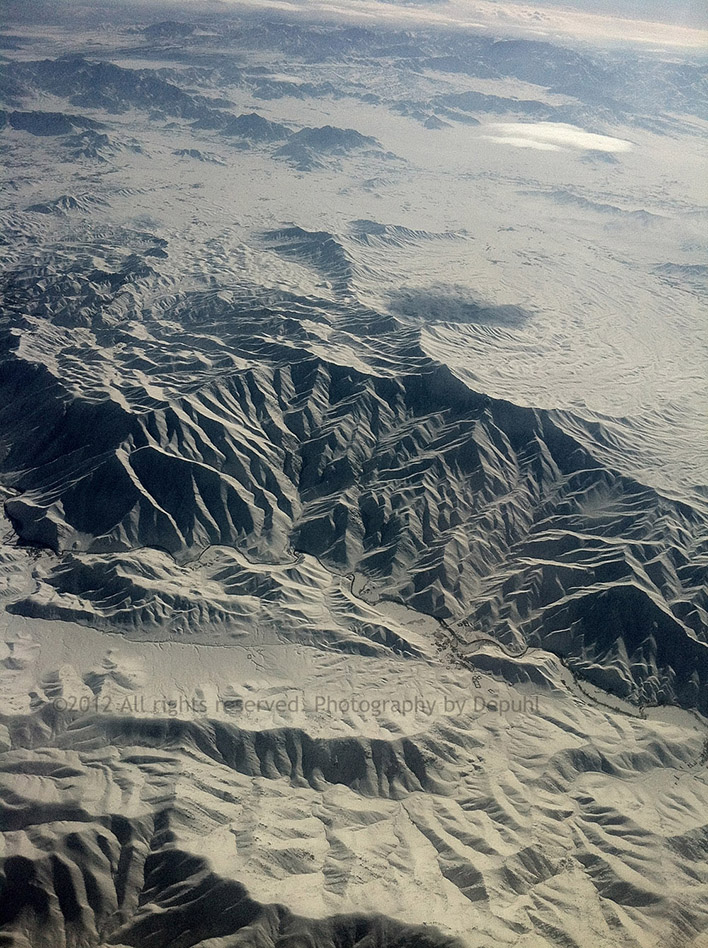
Afghanistan From 30,000 Feet

Why? Well, because I believe I have a gift. No, I’m not special, you do to. We all have and I’m not just talking about photographers. Accountants have a gift for numbers, teachers have a gift for teaching, nurses have a gift for caring. I’m talking about an ability your born with, a God-given gift, that innate talent you did not earn, acquire, purchase, but that you’re just good at. In my case that gift is the ability to communicate visually. Now I’ve honed that skill, trained my eye, learned my craft, but that underlying something is still there and I believe that something requires us to give back.

Please understand, I do that for my kids PTA, my church, local community groups with Pro Bono work, but in the summer of 2011 I had this little voice in my head that told me I should do more with my videos, than just make money – like helping my college buddy let others experience what he does for a living. The only catch: Daniel flies relief work in Afghanistan. For the past 14 years.

Anyway, I hear this little voice say: Do more and immediately I think ‘That’s too dangerous.’ About a week later, same little voice: Do more, like helping Daniel let others experience what he does for a living.

‘Yeah right. I’ve never done something like that before, it’s gonna be to complicated.’ Next week. Same voice. Do more … I’m thinking ‘Too expensive.’ Following week, same voice. Do more. And I think of another excuse, why I should not do this. You get the picture. This literally goes on for a month and a half ‘They don’t need a movie.’ ‘I don’t know how.’ '25 below zero – are you serious?’ ‘Don’t think my equipment can handle that.’ Always that same voice: Do more.

Finally I write an email to Daniel “I have this crazy idea …” (Seriously that’s what I titled the email) fully expecting at the very best a fully qualified maybe as an answer. ‘Maybe, but too dangerous, too complicated, too expensive, too unnecessary, too inexperienced, too cold.’ What I got was “Sure, we’d love to have you. It would be fun. Actually we need a movie, one of our major sponsors requires us to produce videos, so sure. Go ahead put together some numbers and let’s talk.” As I receive Daniel’s answer and read it, I’m thinking more along the lines of “What did I get myself into?” and then I remember: Do More. (Full disclosure they paid for my expenses, my time – that’s the two weeks filming and the year editing the video was pro bono.)
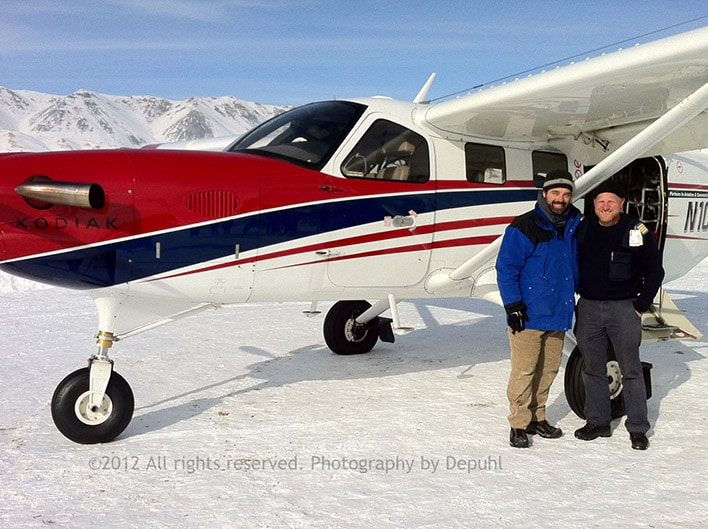
Daniel and Pascal In Lal, Afghanistan

There’s also a second reason I’m thinking of going. First of all I wanted to tell Daniel’s story. Those guys do some amazing work and it deserves to be told. Secondly I see this as a great opportunity for me to learn a new skill. I don’t know about you, but I learn best and fastest under pressure.

And filming in a country like Afghanistan, with it’s impenetrable terrain, extreme weather conditions, with a culture I don’t know and a language I don’t speak; creating a movie that is not scripted or storyboarded, but where you have to find the story as you go, flying around that country in small planes recording air to air from a chase plane, getting dropped off in remote (as in 40 day hike remote) landing strips in the Wakhan corridor and watching your ride take off and disappearing from sight, while you get ready to film take off and landings, kinda qualifies for pressure. Don’t you think?
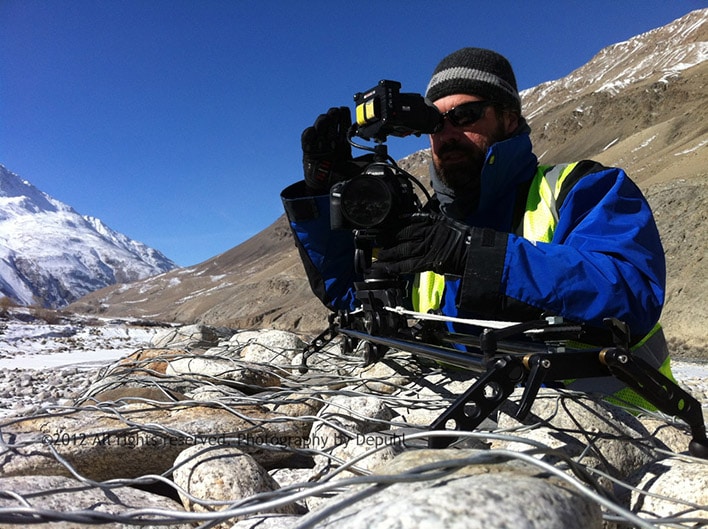
Pagasus In Kret

To make a long story short, six months after that email, I found myself kneeling on a snow covered runway filming a small plane buzzing four feet over my head in Lal, Afghanistan, situated at 9,200 feet elevation. The temperature was about -25ºC. That was by far my favorite day at work.

Why did I go? To do more. To help others. To learn. To hone my craft. To learn a new skill. Was it worth it? What do you think? How far have you gone to do more? What risk have you taken to honor your gift?
Read more about Pascal's work on his blog.

Filed Under: Featured Post of the Day!, Video Tagged With: A Commercial, Afghanistan, Commercial Photographer, Gift, photograph, Relief Efforts

The Power Of Photographs To Prime Emotions

June 27, 2013 by Kavetha Sundaramoorthy

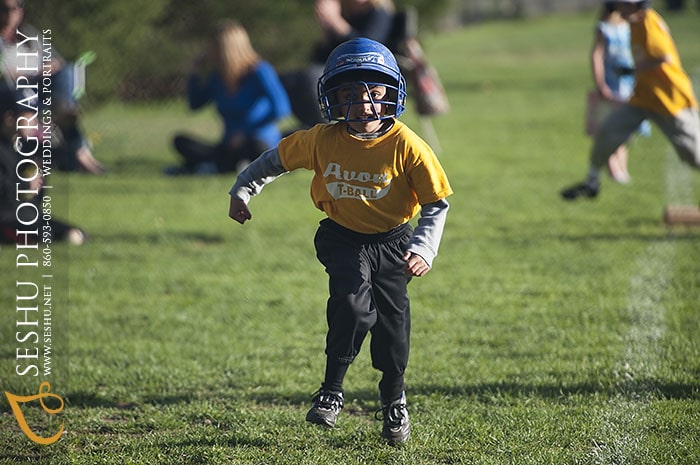
© Seshu Photography | Running Bases At Sperry Park In Avon, CT

What is the purpose of life?

Spirituality and philosophy have been trying to answer this question for centuries, so I don’t pretend to have a quick answer. I certainly don’t know what comes after life or why humans were made to exist.

But having worked as a psychiatrist for the past decade, I can tell you this: the one thing that gives meaning to life, in the here and now, is connection. Especially the connections you create with your immediate family.

Although we often hear about how one should behave to create closeness with loved ones, the field of psychology hasn’t done a good job of teaching families how their home environment can also make or break family bonds.

Why is this important? Because, our environments prime our moods.
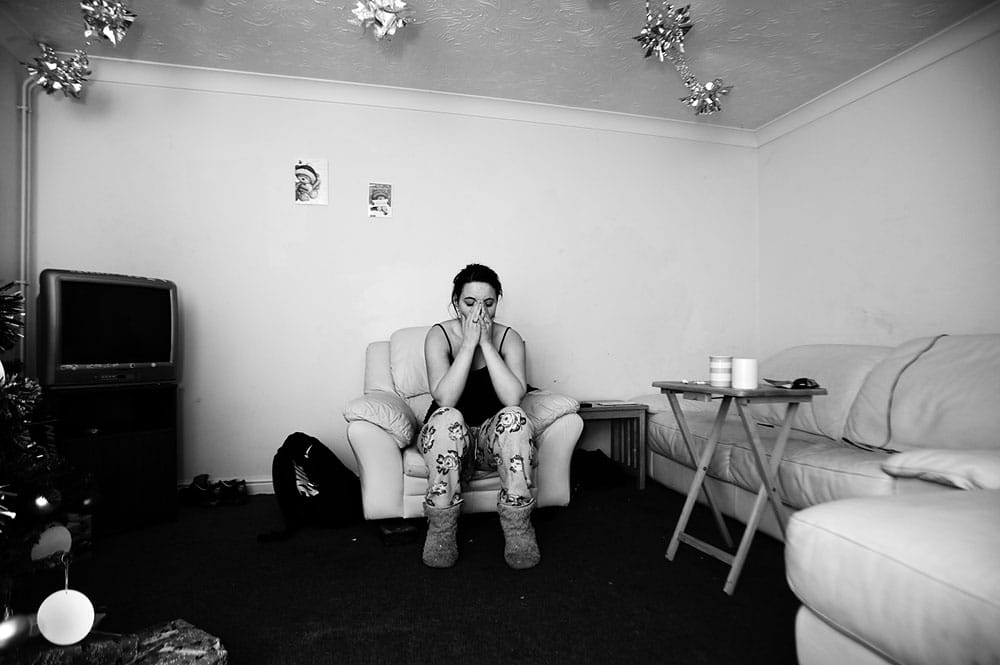
You see, our brains tend to pick up things in the environment and incorporate them into emotions almost unconsciously. For example, studies have shown that when people are in a room where, among many things, there is a computer with an image of money as a screen saver, we tend to become more self centered and less likely to help someone out. This is even when we have no conscious recollection of a monitor in the room!

In another example, a British University cafeteria kept an honesty box next to the coffee machine. The idea was that anyone who took a cup of coffee would be trusted to pay for it. A study then found that if a small image of a pair of eyes “watching” was placed above the coffee machine, more people tend to pay up!

If the power of an unconscious visual cue is so great on our self image and behavior, imagine how powerful real images, such as family photographs, could be?
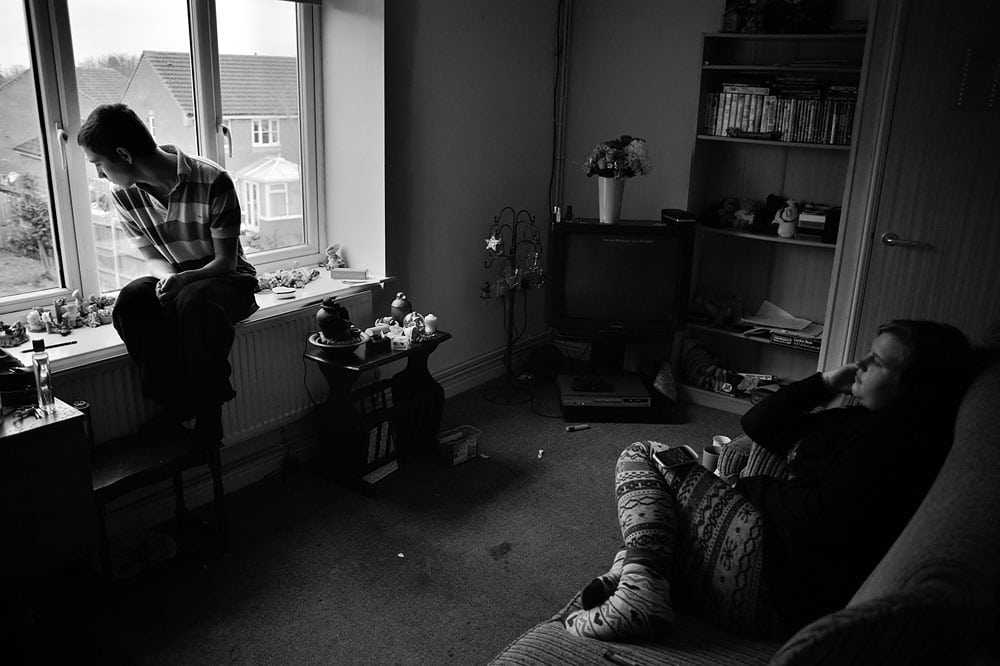
Dr. David Krauss, PhD has spent his life researching the ways photographs influence self image and family dynamics. Here are some of the ways:

I Matter: He says when parents choose to display pictures of their kids at home; it sends a powerful message to the children that they matter. They sense that their existence is important to their parents. After all, wall space is limited, and what you choose to give it up for says a lot about your priorities right?

I am growing: Photos often create a visual narrative of time. Children will enjoy seeing themselves growing up across the wall! This reinforces a healthy self image. I once had a nine year old patient tell me “When I look at all my photos at home, I know that even the worst thing will soon be okay and I’ll still make it and keep growing.”

I am loved: There are times in every family when the daily rush of life takes over and days go by with no time to express your love. But as we saw with the priming example, photos can be unconscious reminders, reassuring us even when words and actions are temporarily absent. In fact, a study by Open University found that people felt 11% happier just by looking at a photo of a loved one (TV, alcohol and even music didn’t have such a big impact!). And who wouldn’t like to feel 11% happier in an instant? I know I would!

I belong: Whenever I go back home to India, my siblings and I spend a lazy afternoon with my grandmother, looking through photos of the past fifty years, all the way from my great grandparents to today. It’s amazing the stories that come out of these sessions. And amidst the talking and laughter, I recreate my cultural roots and relearn family traditions. Knowing where you came from is very powerful. As much as possible, cherish your time this way with your older relatives and pass this gift on to your kids.

I can: There is a negative voice in everyone’s head that often makes us doubt if we are capable enough for something. Whether it’s to try out for the school drama or to work up the nerve to ask for a promotion, we all need reminders that can prime our brains to recall potential. Photos can be a rich medium for this.

Imagine having a picture of you climbing a mountain, graduating from college, proposing to your partner or your kid hitting a difficult shot; anything that truly took guts and skill. What a powerful reminder of potential that would be right?

So, these are all the ways in which real photos influence who we are.

But what about digital photographs?

With the ease of modern smart phones, we are all taking more photos than ever. Which is wonderful. But sadly, most of them are quickly forgotten in a computer drive or in your camera’s memory card.

Photos that don’t get looked at or talked about are almost useless. They lose their whole purpose.

Today, I invite you to take a look around your home. Does it make you feel happy, loved and connected? I look forward to hearing your thoughts below.

Kavetha is a psychiatrist who is passionate about all things brain/psychology related.

Filed Under: Photography Tagged With: emotions, Family Photographer, Fulfilling Life, photograph, Photograph Display, Prime

An Interview With Documentary Photographer Zun Lee

June 6, 2013 by Seshu | Editor & Publisher

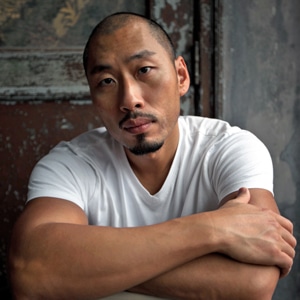
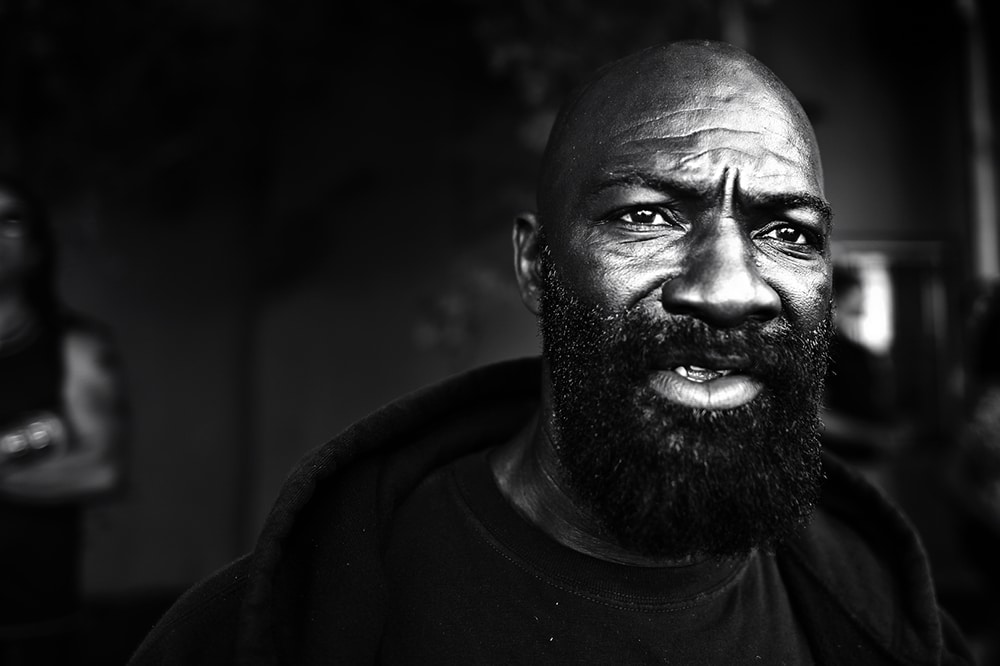
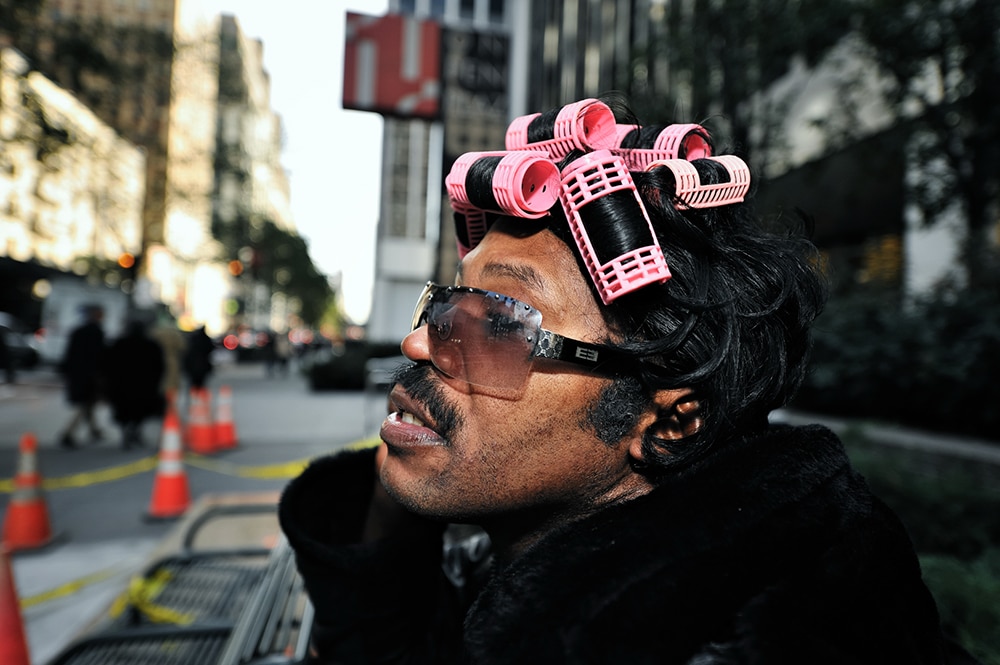
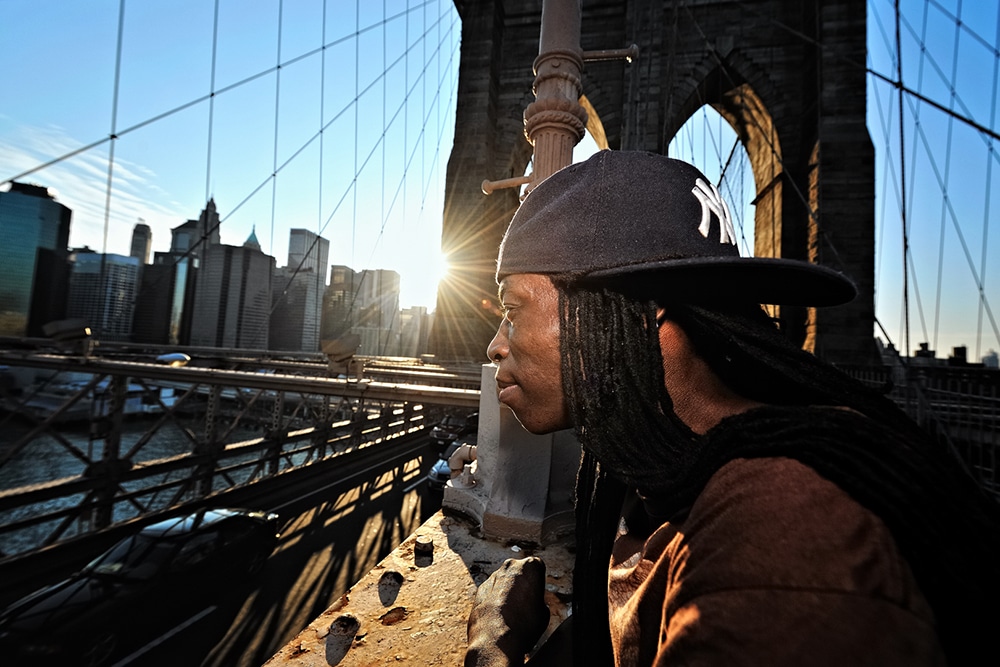
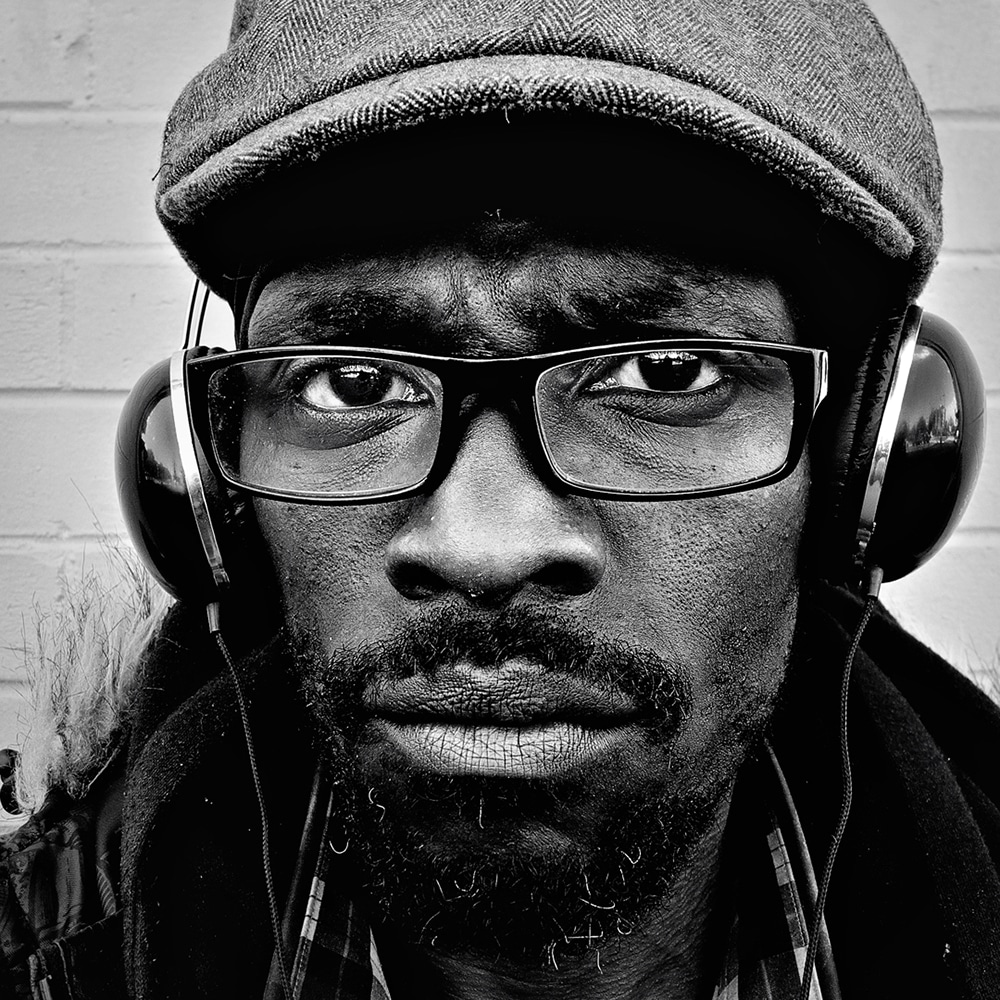
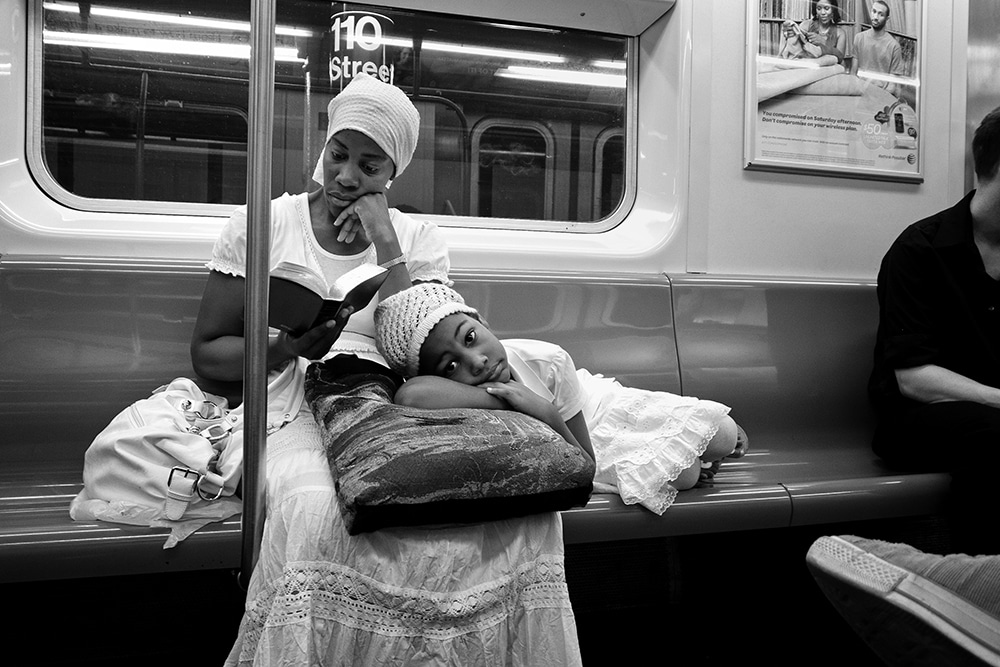
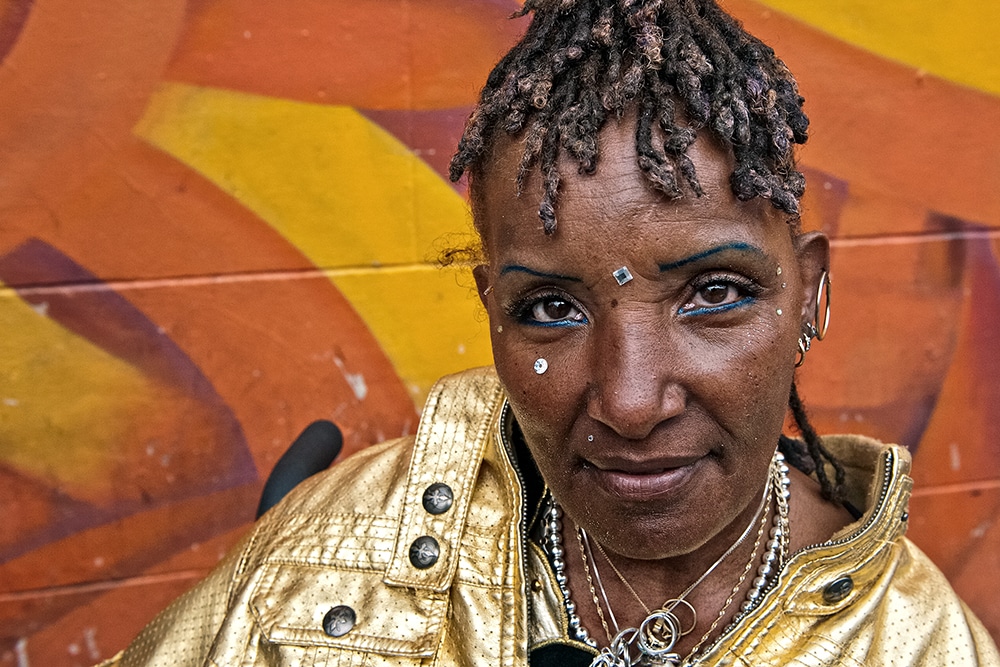
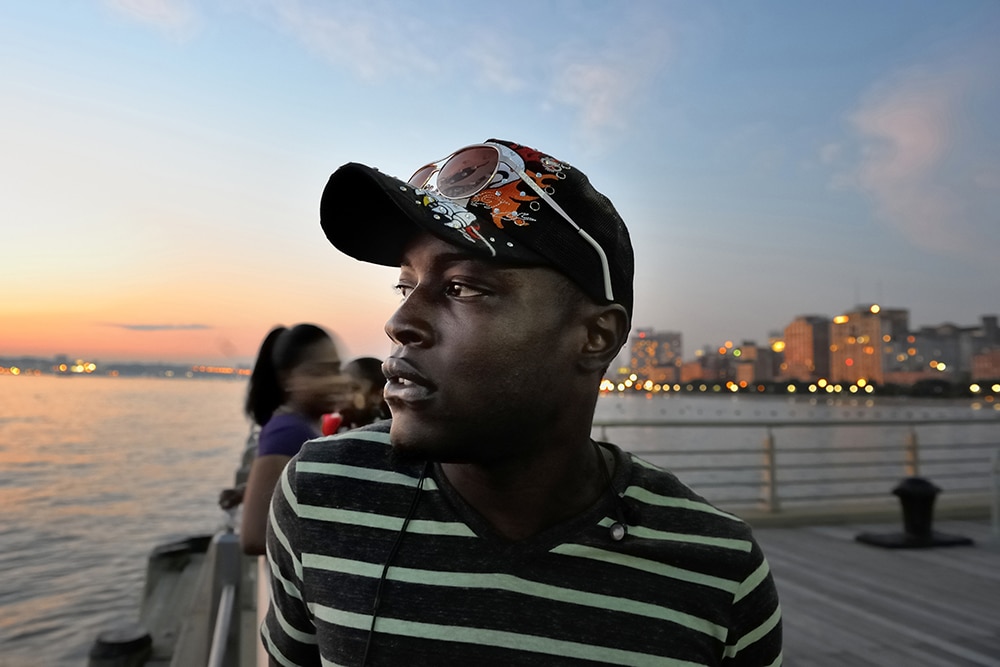
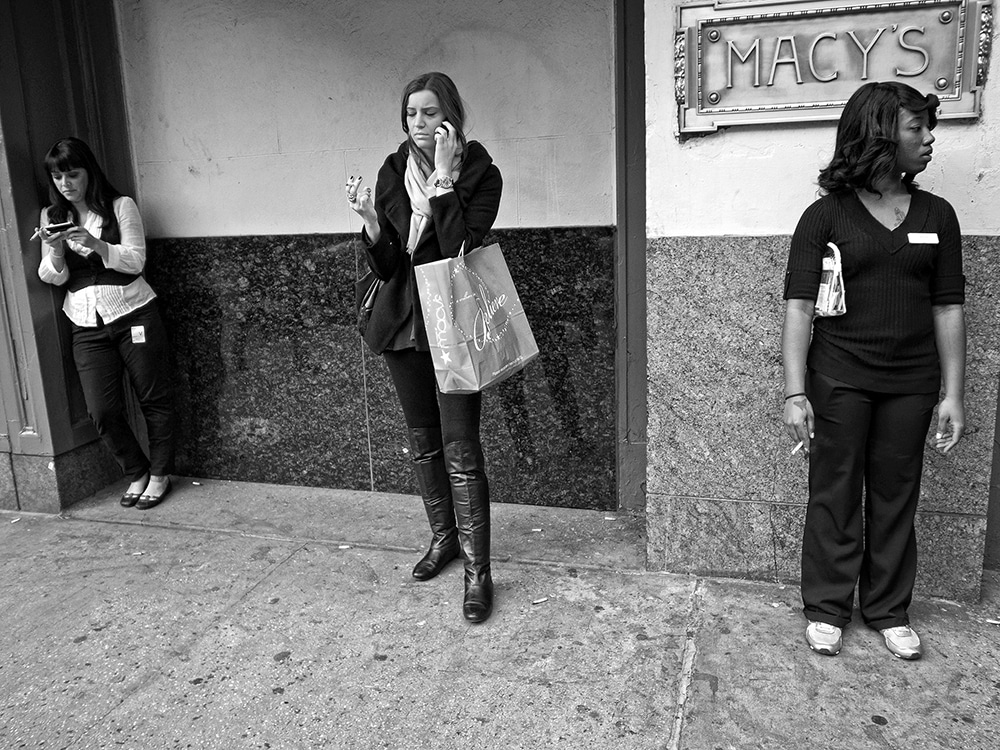
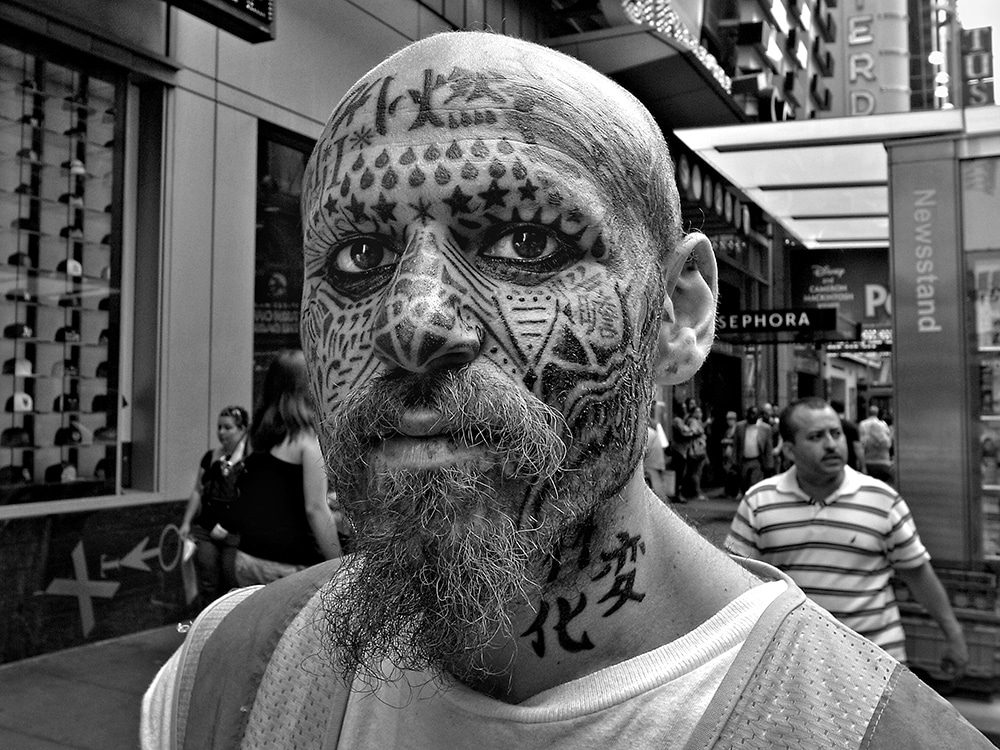
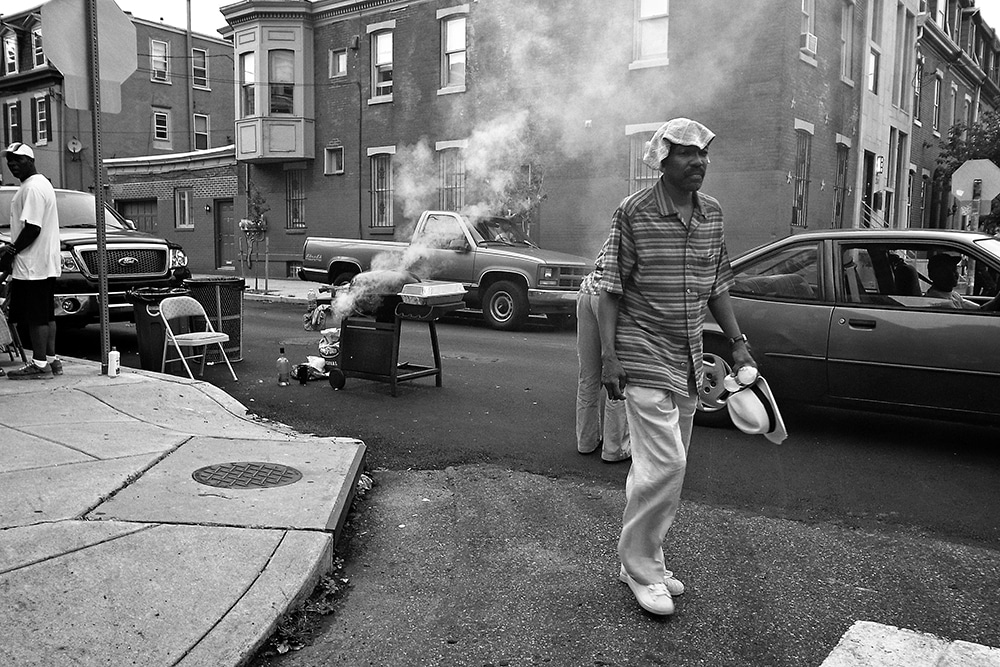
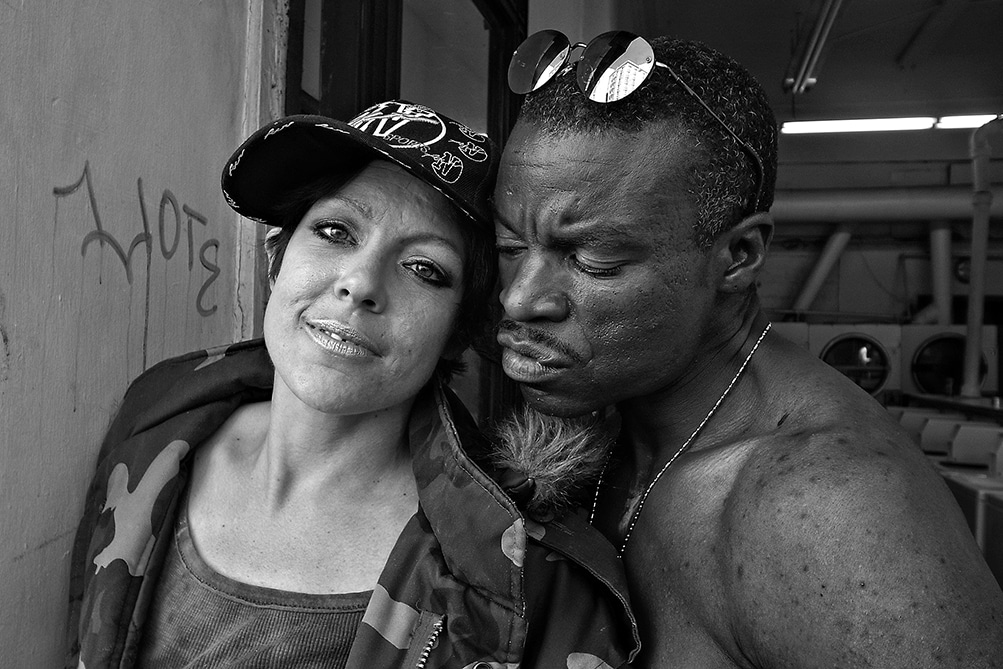
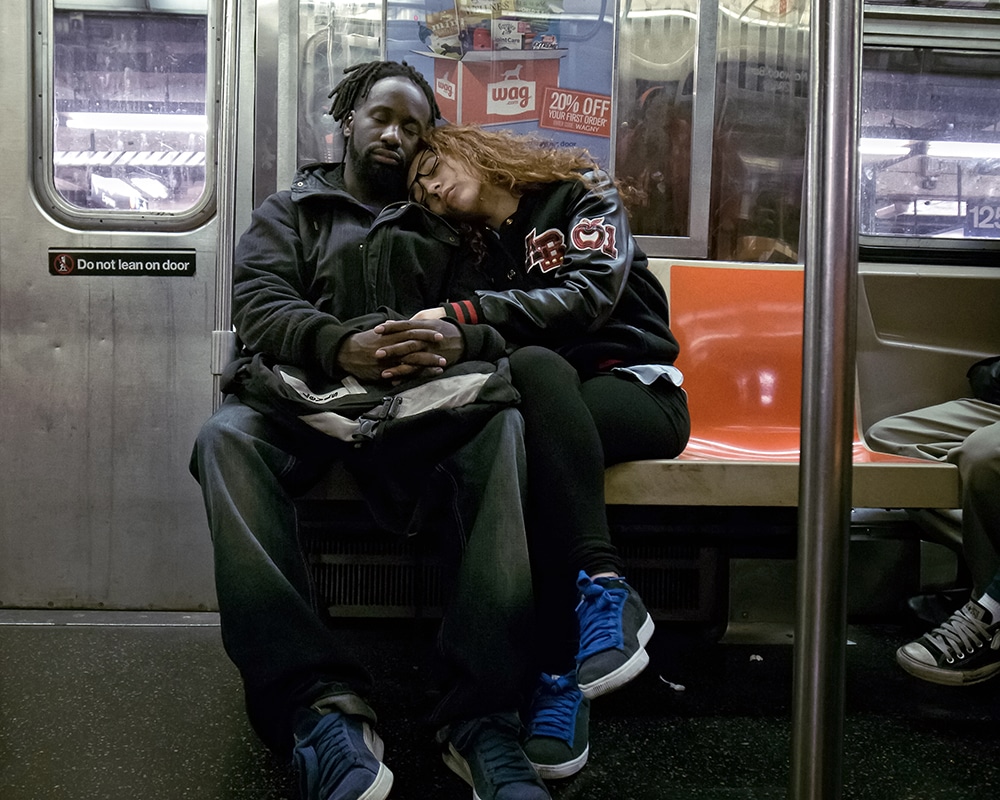
Zun Lee is a documentary photographer and a doctor. You can find some of his work also on this Flickr page. Zun was recently interviewed by New York Times about his project documenting African-American fathers and their relationships with their children. Check it out! Follow Zun on Twitter too!

Zun Lee | Documentary Photographer1) You say this in your bio: ” I was trained in a profession in which humans at their most vulnerable grant permission to a stranger to invade their privacy. As a result, I have always had an intense interest in the dynamics of power, trust and control when it comes to human interaction.” What profession is that? Are you referring to photography? Is this sense of vulnerability in the back of your mind every time you photograph someone – stranger or friend?

Being a physician definitely plays a part in how I go about interacting with people on the street. I’m not referring primarily to photography. For me, being a photographer is not something you “do”, it’s who you “are” as an artist and as a human being. So, yes, this notion of interaction and exploring aspects of vulnerability is constantly in the back of my mind.

When I refer to interaction between the photographer and the subject, I don’t necessary mean actual verbal communication taking place between two human beings. Even in street scenes or portraits featuring a single human being, the “subject” isn’t necessarily that human being. Our thoughts and behaviors are affected by how we move through the world, so the environment and how one relates to it at any given moment in time also play a part in that interaction.

Of course, the kind of interaction I seek on the street can take the form of actual verbal exchanges, and it is often the case for me. Sometimes, it’s subtler – a nod, a glance. But most of it happens invisibly – A feeling, emotion or state of mind you may become aware of in a particular moment and that you project into the world: in some cases, curiosity, empathy, love, optimism. In other cases discomfort, fear, doubt. Folks that know me personally often hear me talk about “energy”, something you intuitively feel in your gut as you survey your environment for picture-making opportunities.

Photographing people on the street, no matter how “interesting” or “beautiful” the subject, that alone doesn’t do it for me. I would like for the viewer to be able to discern what kinds of thoughts or emotions were involved when I pressed the shutter. Or at the very least, make up their own story about what is unfolding.

2) How do you approach strangers? What do you say to them? Or, do you simply watch, capture and move on like Bresson did? Indeed, I am curious to know how you operate. Tell us.

It’s not a one-size-fits-all approach. It all depends on who or what I see, and what that particular interaction may yield. Sometimes, it happens in a fraction of second – I snap and move on. Sometimes, it can take several minutes of striking up a conversation and then catching the individual in certain moments in which they share a part about themselves that wouldn’t have been easily evident otherwise.

“… Can I take your picture” is rarely a conversation starter. Getting creative is key. The subject also has to get interested in you – it works both ways. Humor helps a great deal. Being honest and upfront about who you are and why you’re doing this works most of the time. Rehearse your lines in front of the mirror or with friends – if they’re not buying it, you’re likely going to be in trouble.

Something that almost never works is being sneaky. Keep it natural and always be prepared to deal with rejection. And be courteous and thank them, even after a “no”. That’s the best policy.

3) What you and I share is this – and I hope I am on the right track about this – that there is innate beauty in everyday life that goes without being photographed or is not noticed by most. Do you agree?

Completely agree with you. I’m a strong advocate of finding beauty in the mundane, everyday scenes that unfold before us. That said, “beauty” doesn’t mean “beautiful”. I’m referring mostly to scenes or moments that remind us of how precious life is in all its facets – the good, bad and the ugly. And again, I think the best way to go about it is to approach the streets with a sense of wonderment and openness to its possibilities. Or, as one of my mentors once said to me, “Shoot with love, and you will shoot with purpose”.

4) Why is that we don't celebrate those moments where people reveal a little bit more about themselves for that split second? What causes us to cover ourselves up? Is it simply fear of being judged?

I think overall, vulnerability is seen as a weakness in our culture and surely, nobody wants to be judged as weak. We don’t publicly show and tell, we don’t give broadside. Also, I think life itself has gotten a lot tougher for most people in North America in the last few years – people generally have very little to smile about and lives have become increasingly hectic. When we get up and get dressed every morning and leave our homes to go to work or to run errands etc., the last thing on our mind is to reveal who we are and how we feel. We’re constantly stressed, have very little downtime, try to get from point A to point B quickly. We don’t stop to smell the roses, we have our game face on. We put forth this impenetrable façade to prevent us from sensory overload and avoid engaging with the outside world at any cost. Headphones on, eyes on our smartphones. Minds on our own business.

Zun Lee | Documentary PhotographerIf you think about the implications of that, today’s widespread notion of “candid photography” is really a misnomer. Think about the very definition of the word “candid” – frank, open, honest, transparent. Given what I just said above, people are anything BUT candid in public. Is taking pictures of people in that state of hurried indifference, without their knowledge and/or consent and without the subject looking into the camera really “candid”, then?

For me, candid means breaking through that emotional fortress and finding some kind of truth underneath that. Some wait for these decisive emotional moments. Others surprise and startle their subjects. I’m usually more about some kind of subtle interaction.

When time or the nature of the exchange permits, I show the pictures to the people I just photographed. Sometimes, I get “I didn’t know I look like this” or “Did I really make this face” as a positive reaction, which tells me I was on to something.

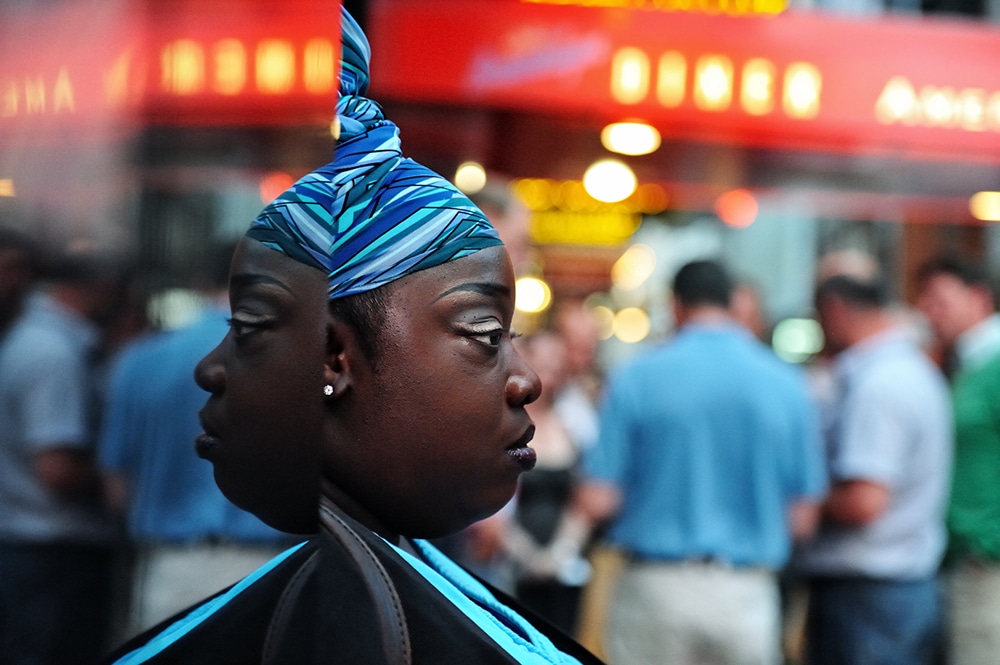
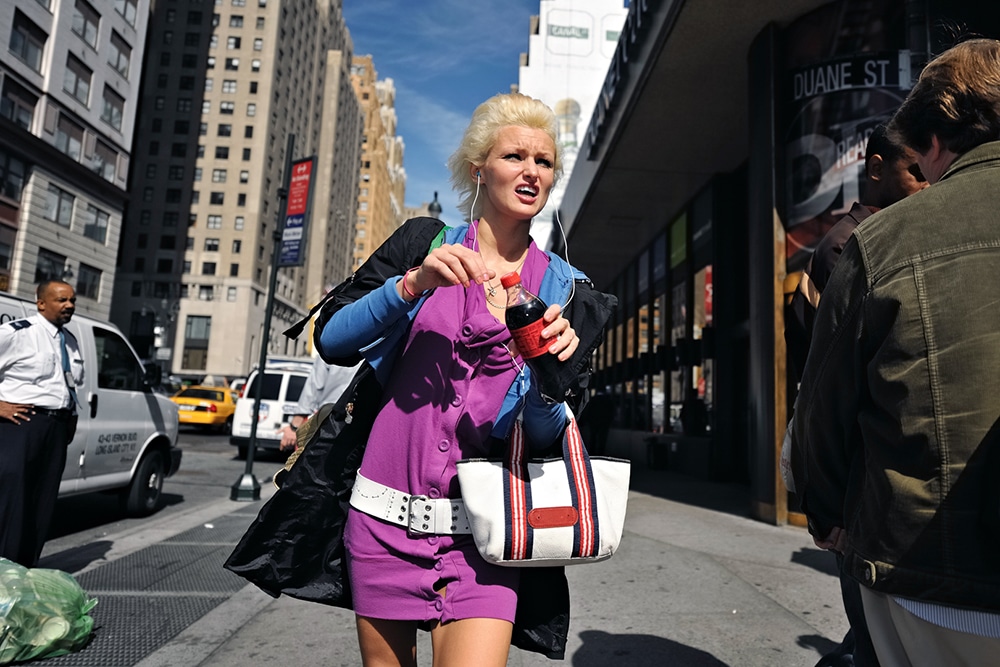
5) Your opening image in your “Street Portraits” portfolio is of a woman deep in thought, but there is a reflective, double-image of her. The image is rich with complementary colors and your use of a very shallow depth of field forces us to “stare” back at this woman. It's an arresting image. Do you know who she is? Do you engage with people once you photograph them? How aware was she that you were photographing her?

Thank you for the love and appreciation, Seshu. I was spending a day with fellow street shooters Ourit Ben-Haim, Rena Ginzburg, and Michael Martin in Midtown Manhattan (group walks are usually not my favorite thing to do but it works with certain shooters). We all saw this lady in Midtown Manhattan and were drawn to her immediately. She was VERY aware of our attempts to photograph her and she definitely did not appreciate it. The situation could have gone wrong easily, and somehow I managed to explain why we found her intriguing and why we wanted to take her picture. She eventually relaxed and allowed us to do our work. This particular shot took a while to get, as I wanted her to be a little more settled down and find an angle that gives me more context in terms of color and texture. I gave her my card and obtained her email address, and sent her the picture a few days later.

I think the latter is always a good practice – to return some of the goodwill by sending people the pictures you took, especially if you engaged them in a longer conversation. Or if email is not an option, make prints and mail them, or keep them with you as you roam the streets, ready to hand them out if you happen to run into the same individuals again. It happens more often than not.

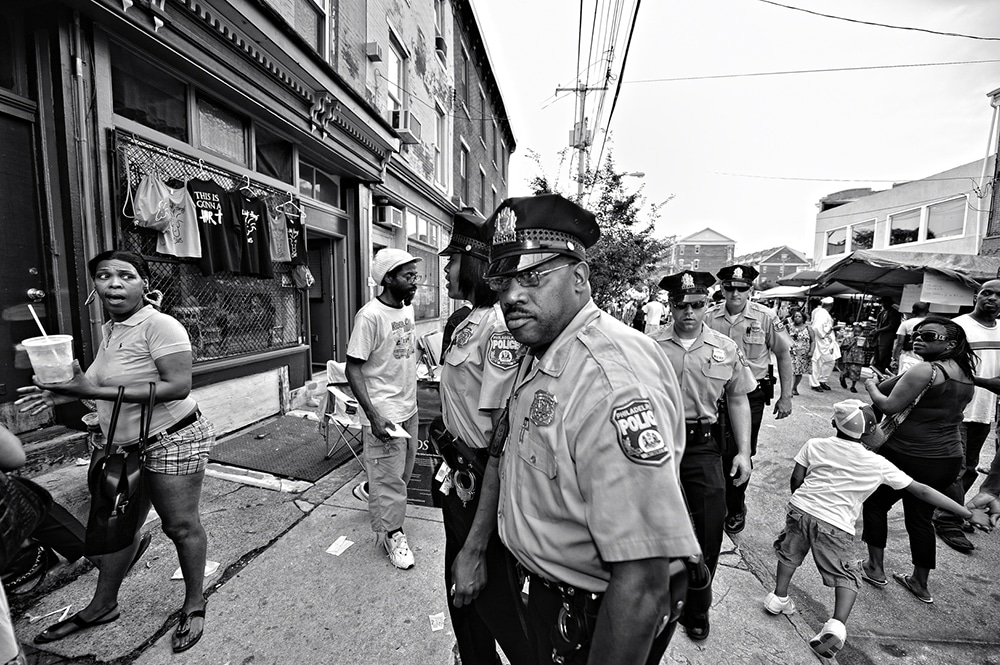
Zun Lee | Documentary Photographer

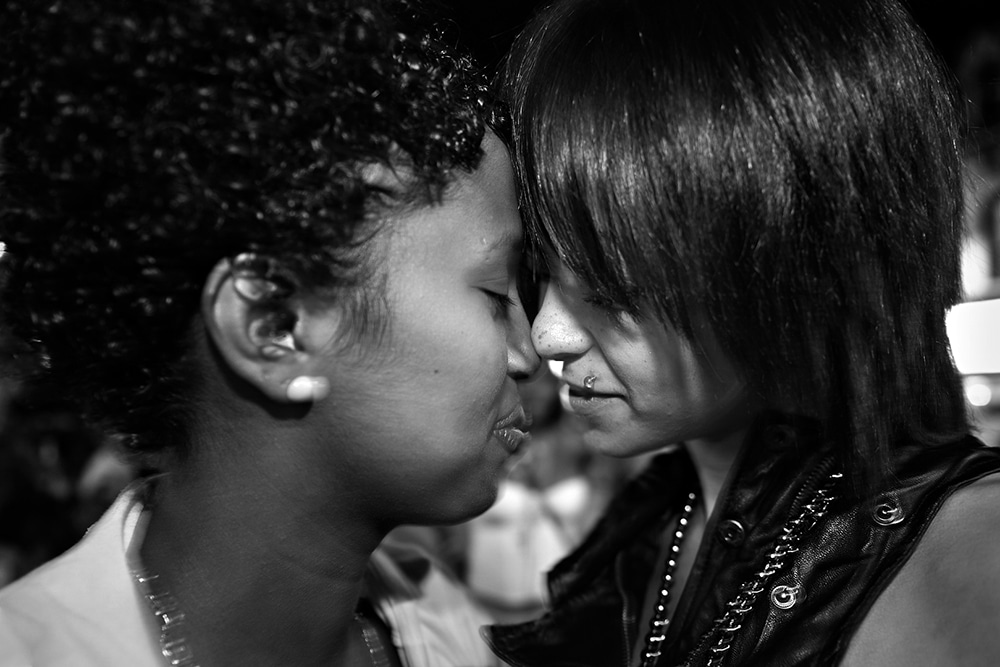
Zun Lee | Documentary Photographer

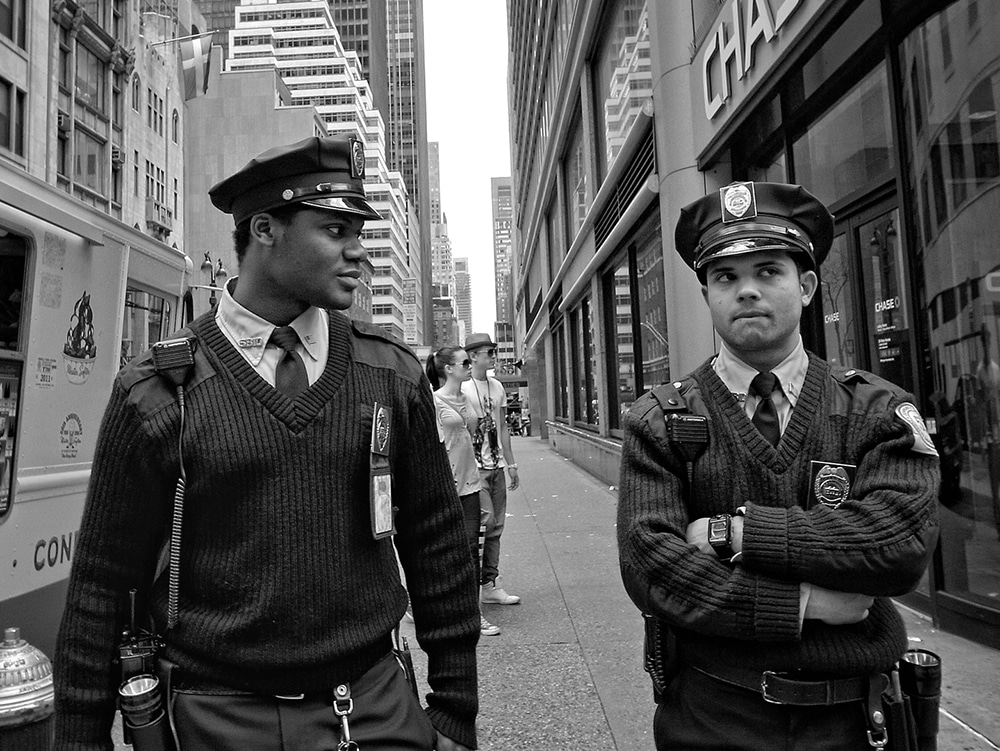
Zun Lee | Documentary Photographer

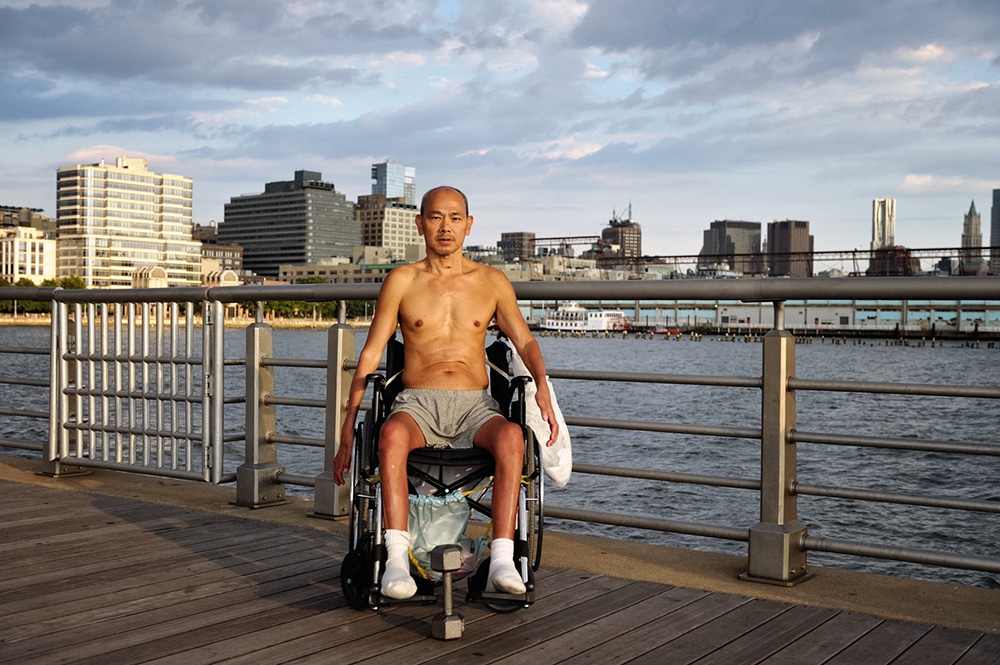
Zun Lee | Documentary Photographer

Zun Lee | Documentary Photographer

Zun Lee | Documentary Photographer

Zun Lee | Documentary Photographer

Zun Lee | Documentary Photographer


6) Do you get any grief from people you photograph on the streets? I am curious to know how you deal with conflict on the street.

… All the time! People routinely yell and scream, sometimes fists get swung my way, and I’ve been stopped and detained by cops who were not aware of the legality of what I’m doing. And even without those moments, you have to be prepared for a lot of rejection. It’s not a relaxing pastime.

I’m actually quite shy and conflict-averse, so shooting street is definitely nerve-wrecking to begin with. I can’t tell you how many times I missed a shot by passing by a person or scene I really wanted to photograph but couldn’t muster the courage to do so. I’ve gotten better at standing my ground and negotiating with people to get what I want, but in the end you don’t want to manipulate them or cause unnecessary conflict. So if the answer remains no, you got to move on.

In general, I’d say pick and choose your battles. Over time, you develop a pretty good sense of which individuals you can push beyond the initial “no” and which ones are best left alone. Familiarity with a certain neighborhood also plays a role. When the locals see you coming back time and time again, it establishes a certain level of trust. By that token, it also helps sometimes to stay put in a certain spot for a while and interact with the people in the area until they relax and won’t notice you anymore.

7) The human face is perhaps the most interesting thing to photograph. What got you started on this mission to photograph people on the street? What drives you personally to observe and then to photograph these human interactions?

Agreed, for me it’s all about the face and the eyes. I think everyone has a story to tell, and that story often manifests in the face and eyes. I just have this desire to get in on that story, to uncover at least an aspect of it. But in the end, it isn’t really about “their” story. I think of my street photos as mirrors to my soul – they often reveal more about me and my state of mind than about what’s happening in front of me. Going back to the idea of “energy”, I often gravitate toward individuals that mirror my own realities back to me. It’s very unnerving to put that out there with certain frames, but it can also be liberating.

I first ventured into the streets about 4 years ago and was just happy to experiment, get to know my gear. I didn’t even know much about street photography then, had no idea who Cartier-Bresson, Winogrand, or Klein were. I went shooting every day after work, and on most weekends, more or less. At first, it was without much of a plan other than having an interest in photographing strangers, except I didn’t really know how to go about that. As mentioned, I’m quite shy, so the whole experience was terrifying. I just had a desire to learn how to do that, so I kept practicing. I tried with longer lenses at first and quickly realized that approach doesn’t work for me. The physical distance also creates emotional distance, and it was not a satisfactory experience at all.

Ironically, I think my shyness actually led to this desire to be as close as possible with people – by being in the same space, eventually people will let you into their world, their lives, their story. And being so close, it forces you to do the same – you also share a piece of who you are to enable the picture that you seek to make. It’s not about “stealing souls” or being an unobtrusive fly on the wall. To me, photography is about creating a relationship, whether for a split second or for a longer period of time, and whether it’s with people, animals, or inanimate objects. Your visceral reaction to a given moment – it matters as much as what you see in front of you. There’s a brief but powerful moment of someone expressing the notion of “I don’t know who you are but I trust you”, and that is a real privilege to be granted. I think being part of that “give-and-take” can be exhilarating, even addictive.

8) On a technical side, I see you use a Nikon D700. Do you switch around with different lenses? Which ones and why?

I use the D700 and the Ricoh GRD (GRDIV at the moment). As mentioned, I used telezooms initially, and now use them very rarely. 35mm or wider is my comfort zone, and my favorite Nikkor glass is the 14-24mm f2.8. The Ricoh is my always-on-me camera, 28mm is a perfect all-around focal length for me. It’s how I see the world, and the ergonomics of the camera suit my style of shooting. I’ve also begun using the Olympus OM-D (also with lenses 35mm or wider), which offers a great balance in terms of portability and image quality.

9) Your post-production is realistic. Colors pop and black & white images are some of the best I have seen online. Do you do your own post-processing? Is much of that learned on the job or did you go to school for it?

Thanks for the compliment, Seshu. I used to paint, so perhaps that background helps in the way I approach processing. I do my own post-processing, and it is all self-taught, lots of trial and error. I definitely am not very knowledgeable as a user of imaging software and you’d be appalled at some of my workflows! In terms of processing, I’m primarily driven by the desire to make an image look and feel like what I actually saw, as closely as possible. I definitely have a penchant for dramatic processing at times, but I never want it to look surreal or over-processed. Sometimes achieving the look I want takes just a few minutes; sometimes it can take up to an hour per frame.

10) I am always curious about how anyone can make a living as a street photographer. There are all kinds of copyright and model release issues that one has to deal with now. What are you doing to overcome all those challenges when marketing your work? Or, is your work simply a way to get your foot in the door for corporate work that calls for a “street vibe”? Tell us more about your plans to be represented. How do you make a living as a photographer?

That’s the $64,000 question, isn’t it? The whole industry is in flux, traditional business models are collapsing and entire job categories disappearing. Honestly, I haven’t really been in this field long enough to move it from a serious hobby into a full-time lifestyle, much less a life-sustaining one. There are no formulas, or transparent roadmaps. A huge part of being a creative visual professional nowadays will have to revolve around how to forge your own creative career path, and I am still in the process of figuring that out for myself.

Copyright and model release issues – that’s definitely an ongoing challenge to deal with. Luckily for most street work, I find I don’t explicitly need releases to publish or exhibit the work. Making money from prints and books is a bit of a grey area but so far it’s not been a huge problem for me because I don’t do stock or commercial photography. I haven’t actively sought any commercial work, even though I’ve been approached to use my street shots for ad campaigns or shoot commercial projects with a “street” vibe. For my long-term documentary work, I definitely make sure model releases are signed.

What’s next for me? I know I want to continue to tell interesting stories and bring them to people’s attention. I don’t think I’m interested in being an assignment photographer per se; I have to really be personally connected to the work I’m doing or it becomes just another chore. I’m really drawn to photodocumentary and photojournalistic work – unfortunately, this kind of work is recognized less and less, and commercially not very viable on its own. So, I will definitely not quit my day job anytime soon to do this full-time. That said, I’ve embarked on some long-term projects, for which I’ve already received some great recognition by the photo industry and major publications, so it’s encouraging to know that I’m on the right path.

My immediate goal is to complete these projects, get them published, maybe do a few exhibitions, and continue building my name in the field, both as a photodocumentarian and as a street photographer. Then we’ll see where it goes. I’m still paying my dues, so I’m focusing on producing more work and getting better at it. Being able to join a photo collective with a social or humanitarian mandate would be an amazing opportunity. Gallery representation would be a great experience at some point. But most of all, I want to continue to enjoy making pictures and engaging people in the process. That is the main reward for me; any potential money and recognition is secondary.

If you enjoyed this interview and would like to see more like it, please Tweet, post a link to this article on Facebook and tell your friends. I am looking for more documentary photographers to interview on this site. Thank you!

Filed Under: Documentary, Interviews, Photography Tagged With: documentaries, Documentary Photographer, Lee, photograph, Photographing People, street photographer, Zun

An Interview With Documentary Photographer Jim Mortram

April 29, 2013 by Seshu | Editor & Publisher

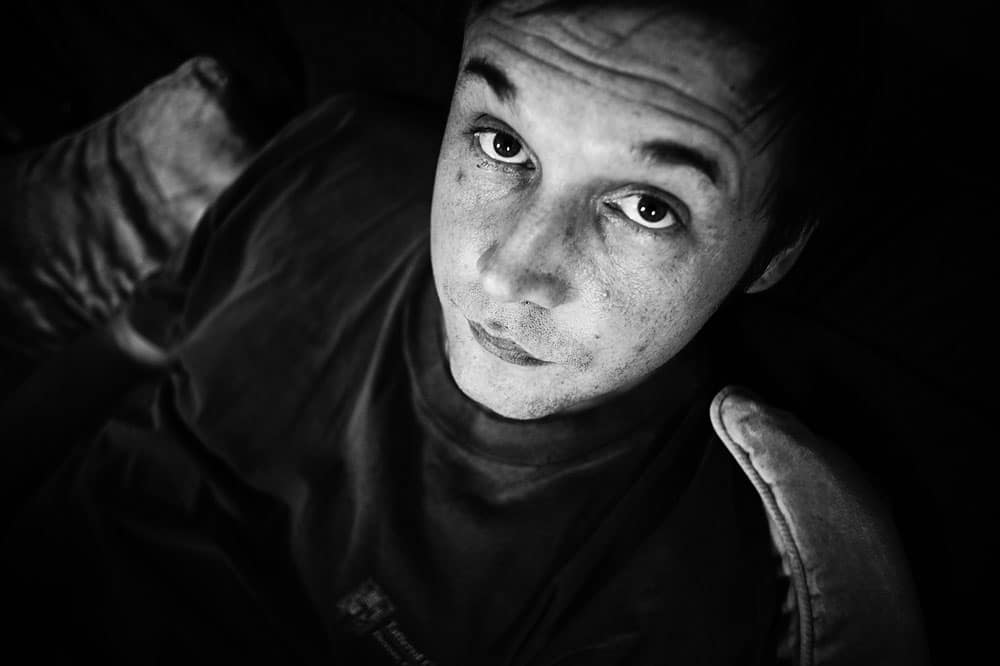
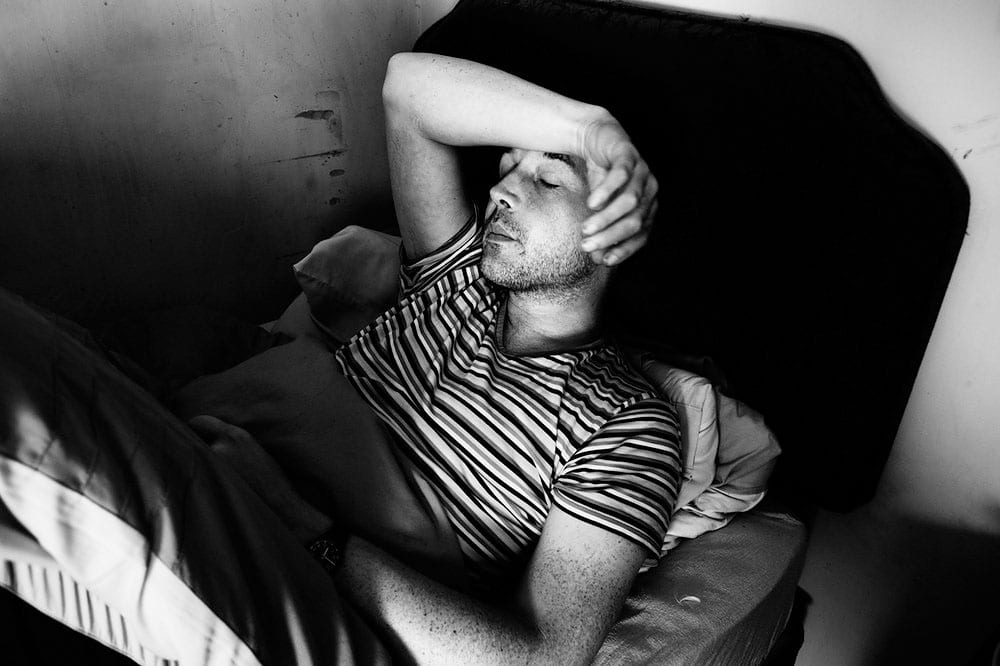
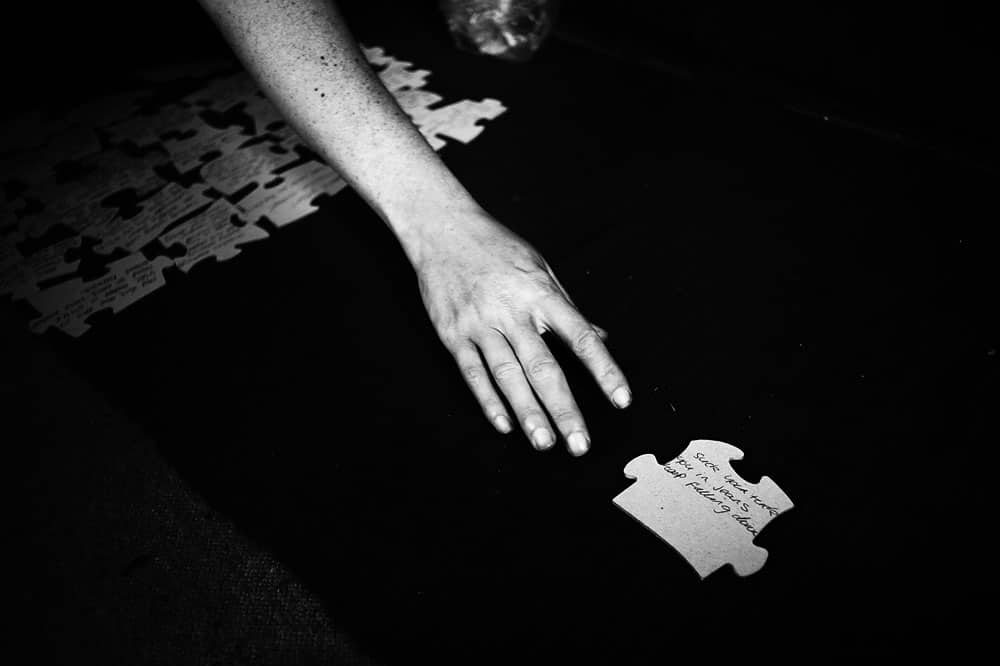
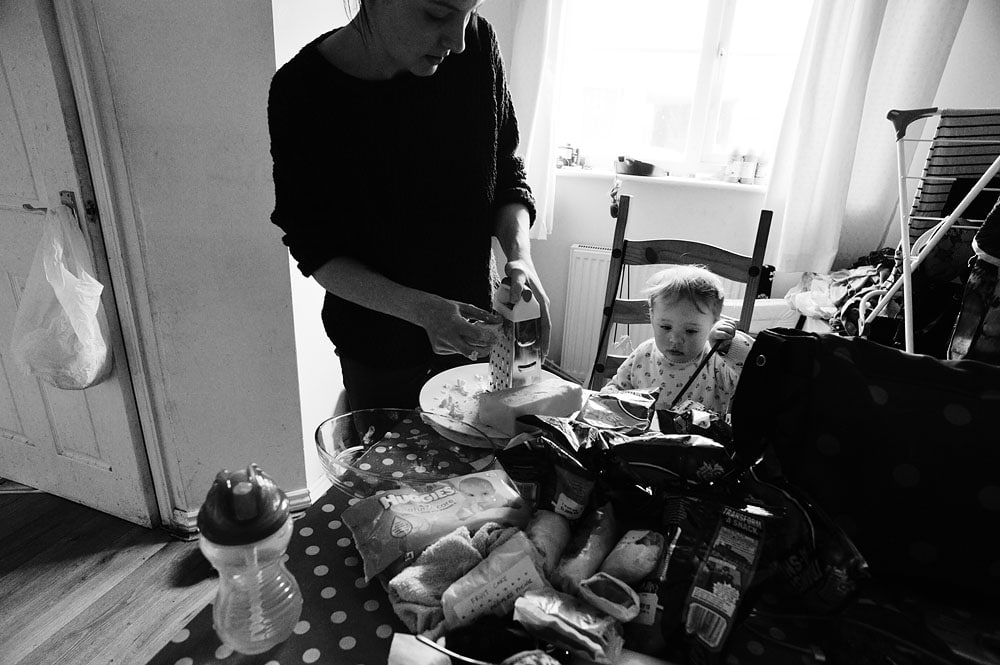
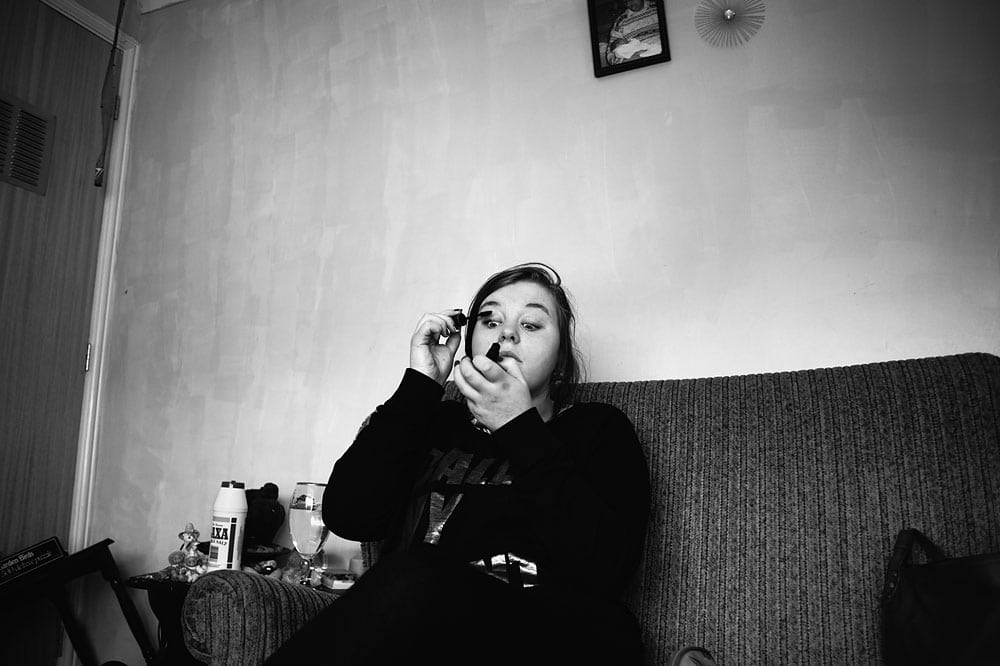
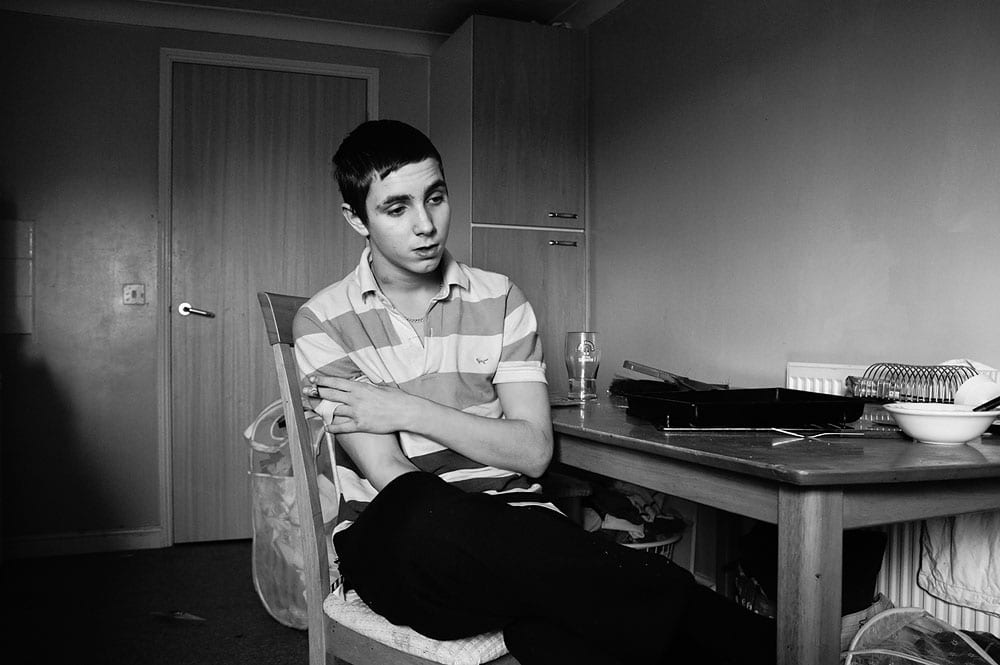
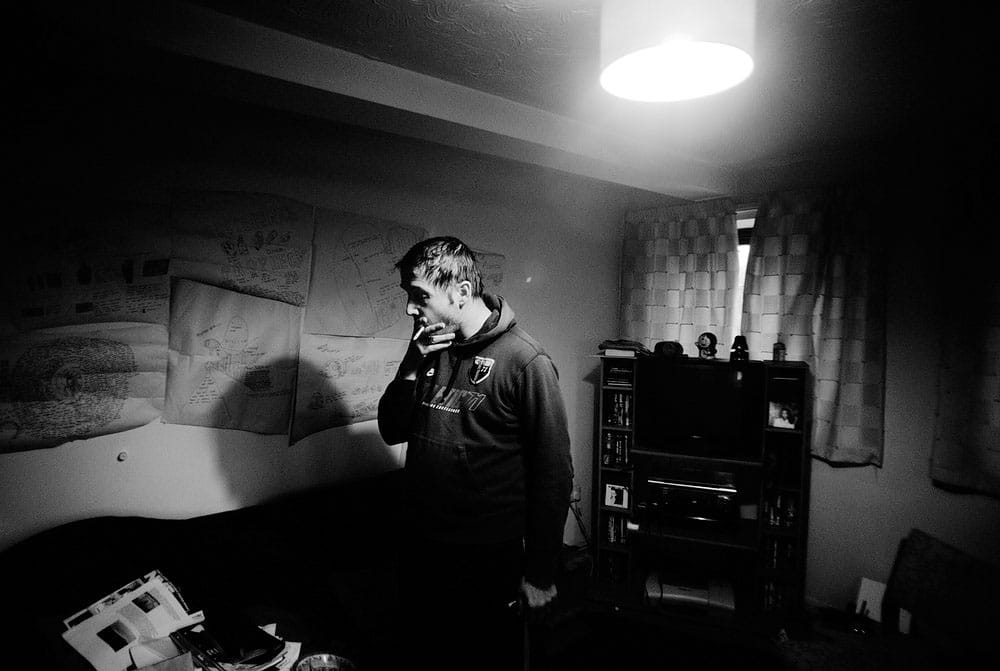
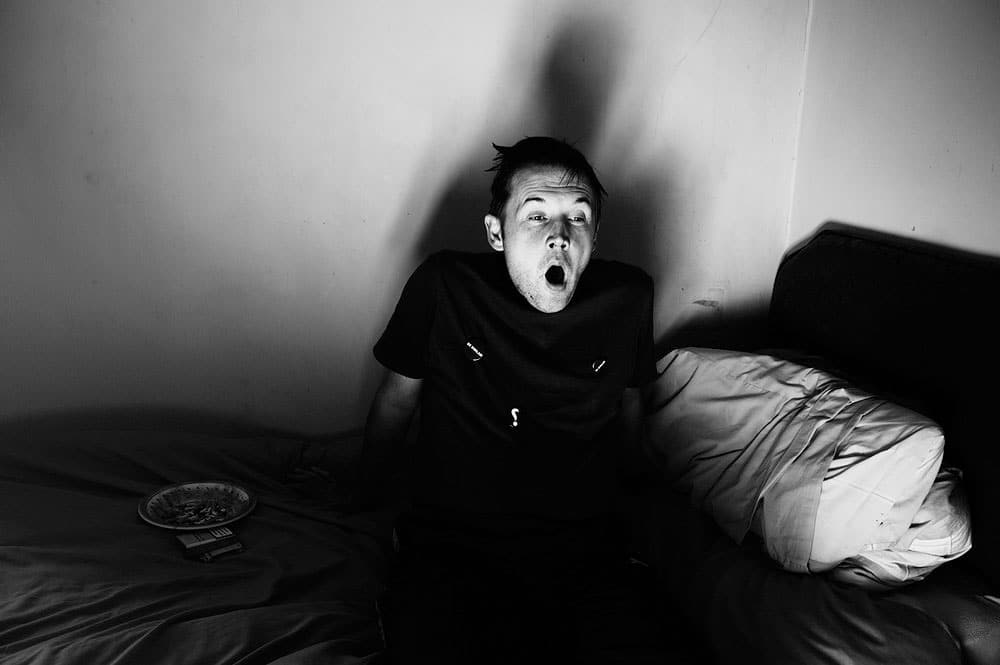
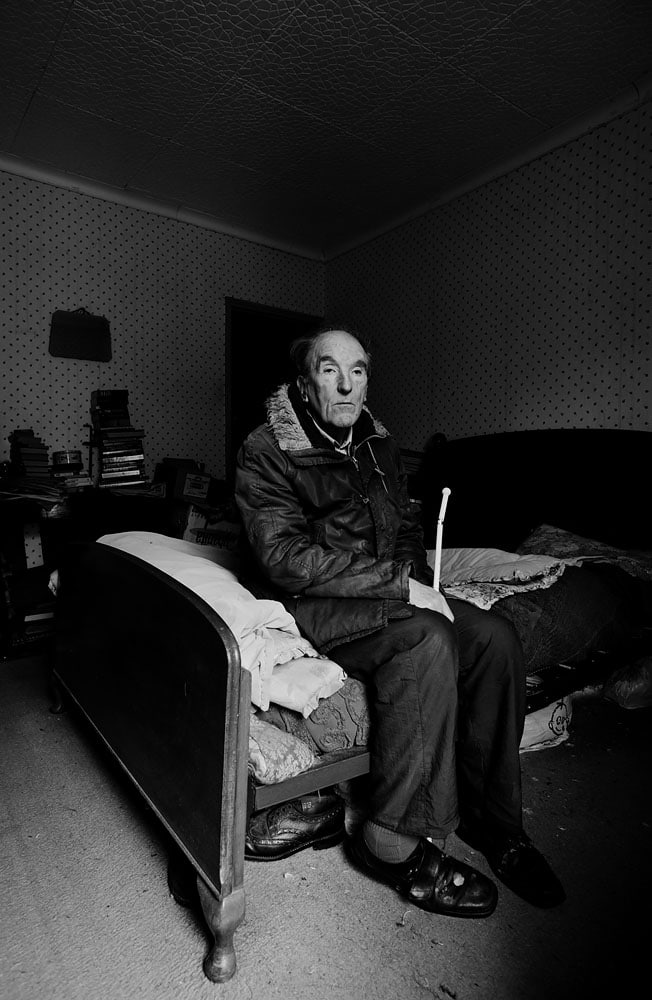
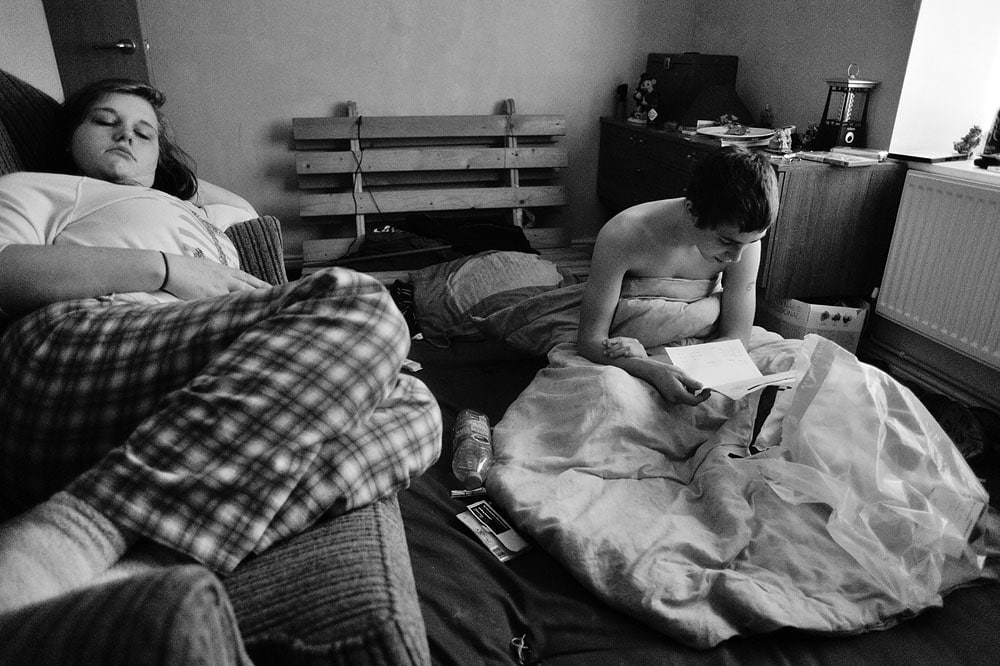
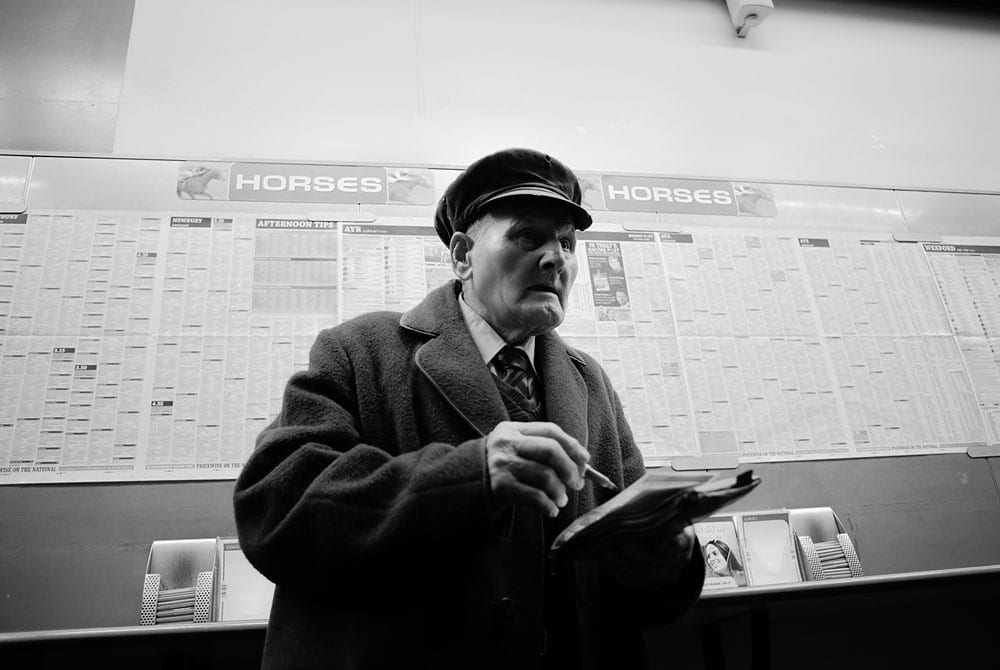
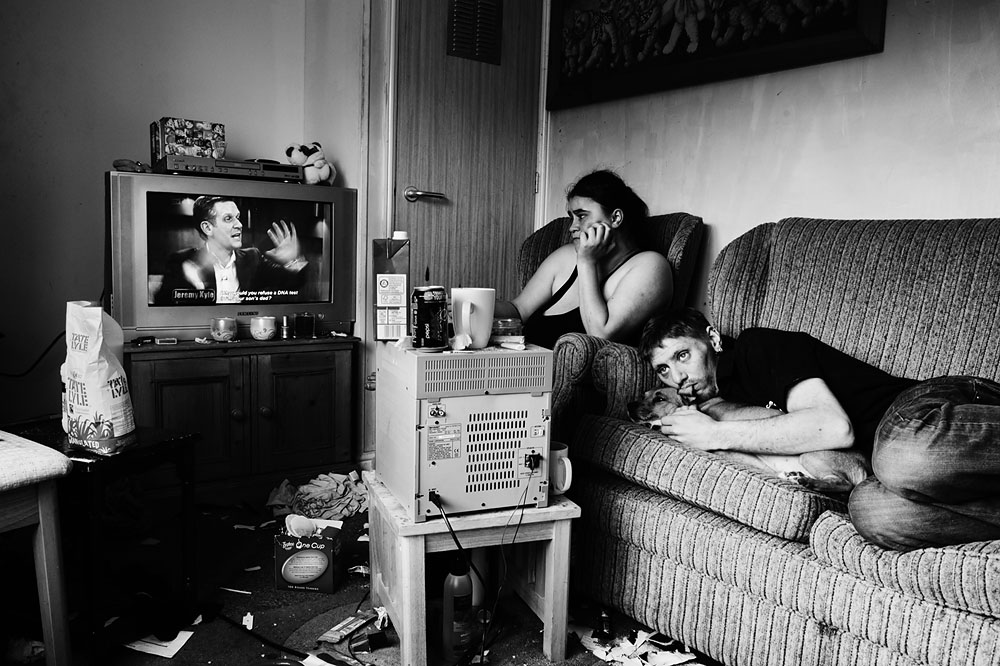
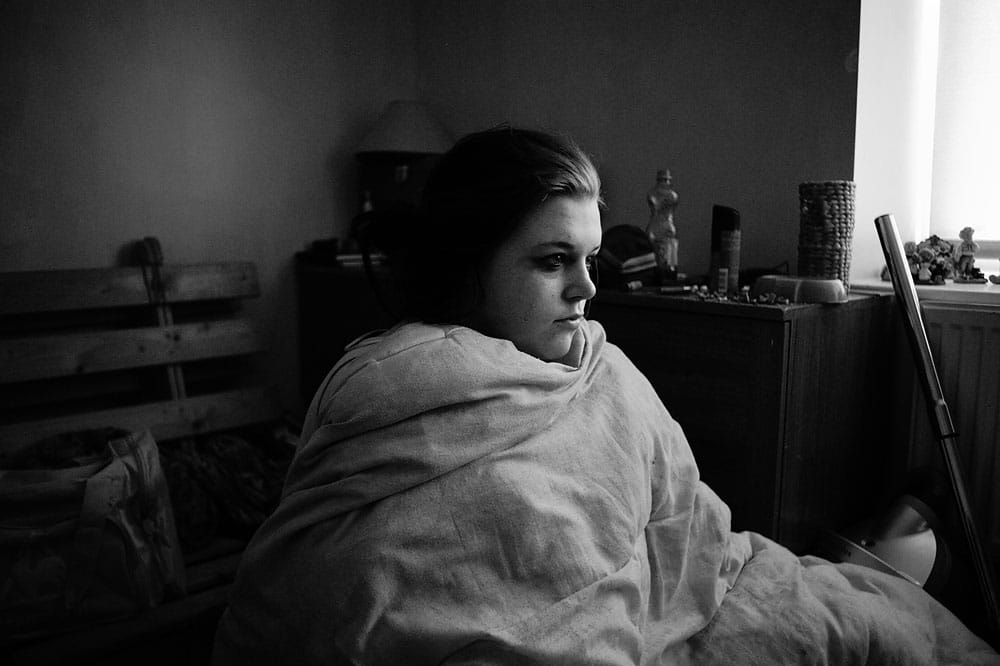
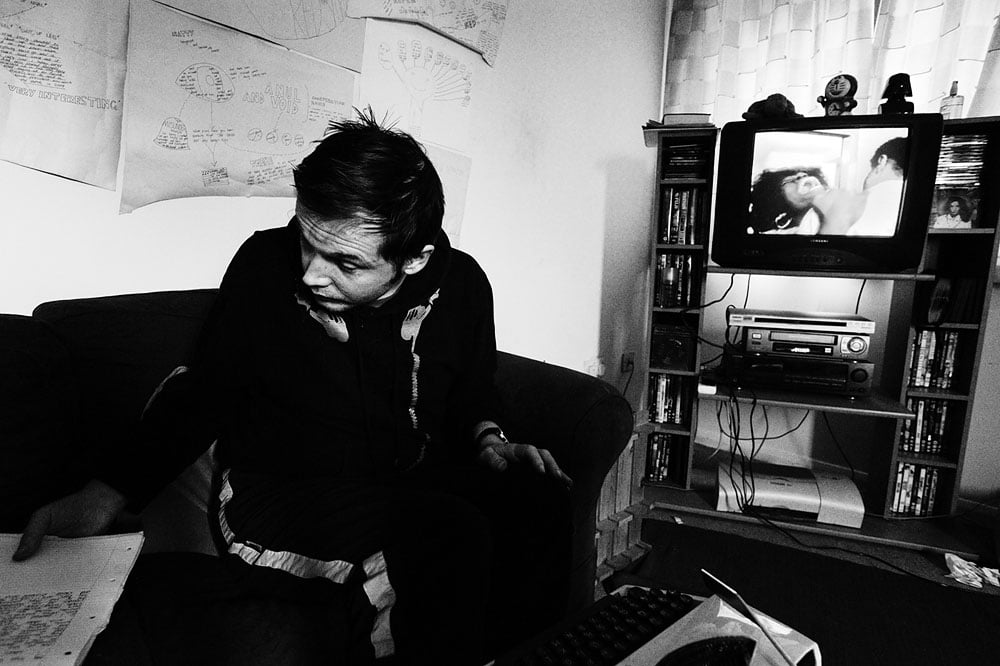
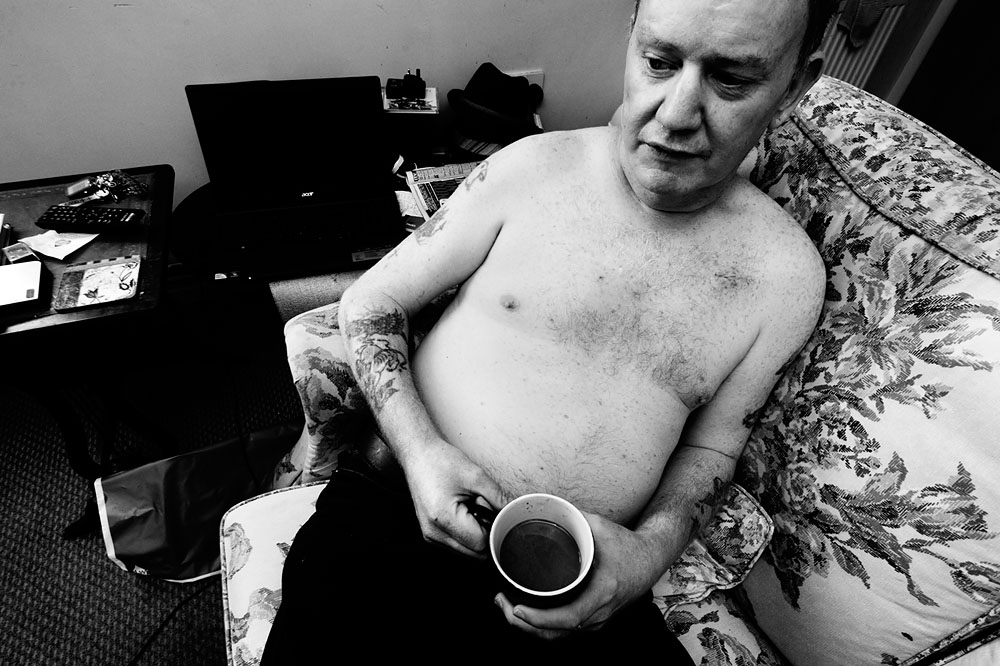
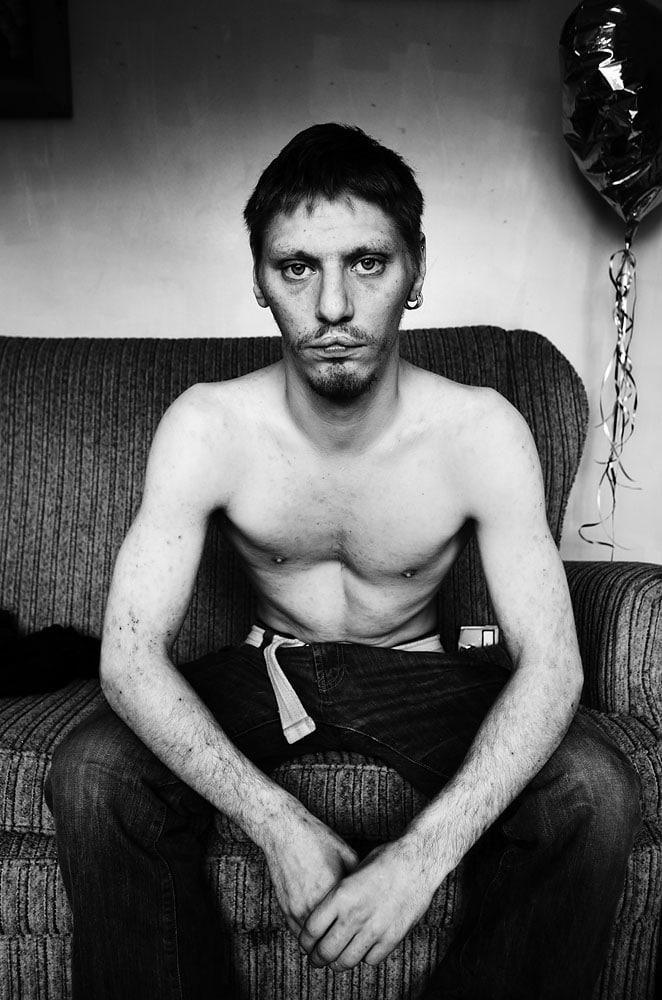
Jim Mortram is a documentary photographer. That's perhaps the easiest way to describe him. The images on his website – Small Town Inertia – gripped me like a vice for their gritty portrayal of lives lived in rural England. I was surprised by how quickly I cared for those people Mortram photographed. There is compassion and clarity in Mortram's approach and it is a refreshing change from the synthetic and saccharine images we are all subjected to every day. Mortram has published a limited edition book called “Electric Tears & All Their Portent” – limited and sold out! Please follow Jim Mortram on Twitter.

Small Town Inertia | Jim Mortram

1) Who are you and how did you get your start in documentary photography?

About six years ago I'd become quite insular. Working as a caregiver for my Mother in my family home; it's an intense situation, quite highly stressed, with odd hours. Before you're even aware of it, the ties you once had – friends and the connection to the outside word – erode. It's a subtle shift, and by the time I noticed, it was too late to cease that evolution. I was loaned a camera by a friend and immediately knew I had to document people. The challenge was where and how. I live in a very rural, low-population part of East Anglia, UK; I was tied to my duties as a caregiver. Long periods away from home to shoot were out of the question due to both responsibilities and financially. I hated the situation. I wanted to escape, wanted an escape for everyone involved … I wanted to click my fingers and make my Mother well, Father freed of the pain of seeing his wife in pain everyday but there was no way that was going to happen. After having this effect me profoundly it was then a long road of rebuilding everything.

One relationship really helped pull me out of my shell and pull my photography into focus. It was because of a person close to me, 2 doors from the family home, in fact. I'd known W.H. since I was a child. In his late 80's, I would visit often to hear his stories. Gradually I began to make portraits. He encouraged me greatly. The whole process was very organic and instinctive. He became ill with cancer, and I ended up being one of the last people to talk with him – certainly the last to photograph him. This experience really forged the understanding of why I had to document local people. I began to understand that everyone has a story; that they are all important. It also made me re-appraise my location and my relationship to it. I finally harmonized with where I lived. Where I had felt suffocated suddenly transformed into a place that was of the highest importance : Dereham, one of those small forgotten towns, with a distinct strata of the population that have also been forgotten.

I still work at home, caring for my Mother, that's never changed, I don't shoot for money, I fit shoots in and around duties etc. It's a big balancing act but like water finds it's way from mountains to sea, you find a way!

2) Do you have a sense of the documentary tradition – as in, have you studied it, or did this all come about naturally for you?

I'm an autodidact really, I studied fine art painting before being forced to quit early in my degree to return home to be a Carer. Regarding photography or documentaries I've always been aware of it and when I turned to it, it was a very natural extension of myself.

3) Why is it so important for you to document the lives in your own community?

I think this has been answered through the other Q&A's : )

4) How do you cope with the emotional baggage that usually comes with working in this genre of photography?

I could not see myself working in any other way than long form. Without the time invested, on both sides of the lens, I think I would document in a much shallower, ephemeral way, so taking months, years to constantly document and share it gives the series context, there is a evolution within the lives, to tell any story you have to do more than read chapter one you have to read from the front to the back cover. That's all far more important to me than how it might touch ‘me' emotionally, even if it and often is quite really stressful or saddening and you know if it did not affect me, touch me … I'd really worry.

5) How do you go about choosing people to photograph? How do you get access into their lives? Why are they so eager to tell their story to you?

I just ask … or sometimes I'll get a call from someone or someone who knows someone and wants to be involved. I always treat people, as I myself like to be treated. You can never feign nor fake interest in a person. I’ve never singled out people with an eye that they might make a good story for example; it’s a very organic evolvement. People are very giving and that humbles me greatly, my greatest debt is always to the person the other side of the lens. It’s such a great honor to be accepted and brought into another person’s life and given the access to document it. I’m sure I could work in a faster fashion but for me long form documentary is where my heart is. Often I’ll visit people and not even take an image, just talk and more importantly listen, and I listen more than I shoot. I have an equation that I always bear in mind talk more than you shoot and listen more than you talk and it serves me well. I break shoots up into periods of straight documentary and periods to shoot portraits, make interviews and shoot video.

Initially, for the people I work with it’s a way to have an opportunity, ANY opportunity to share their experiences and to be heard. It’s, I feel, a really empowering step for someone to make the decision to get involved, stay involved. It’s a way for many people to take a positive step, to maybe take some control where there might be a huge absence of any control in their lives. It’s also a mirror for many people, it might be the first time that they have paused for thought as every day is just surviving, enduring and when you live just to make it through one day to the next it’s often hard to distance yourself from that experience and take a moment for reflection.

6) Typically, how long do you spend photographing someone? When do you know you are “done” telling their story?

I'll shoot a person, their story forever, I don't think you can ever be ‘done'.

Small Town Inertia | James Mortram

Small Town Inertia | James Mortram

Small Town Inertia | James Mortram

Small Town Inertia | James Mortram

Small Town Inertia | James Mortram

7) Your images are almost always black & white. Was that by design or were you limited to black & white film? Do you shoot in color?

I get asked this a lot and there's a simple and fast answer and also one I might expound upon. When I started shooting I was using borrowed equipment, digital equipment, cameras, lenses and the monitor I had was broken, the colours were way off and no way to calibrate etc. so I turned the colour off and worked in mono. Mono suited me as I related to it having watched my Father hand develop images in the kitchen or the bathroom when I was young. My formative years were spent experiencing images in mono, newspapers, books from the library, most were featuring mono so that language was imprinted within me I think, the shapes within mono, the way composition is highlighted. I've never found a B&W image to be more abstract than a colour and I'm aware of all the arguments VS … likewise film VS digital … truth be told, from day one of shooting I'd planned to shoot colour (Film, medium format) portraits in tandem with the mono DSLR it was just a fact that I was not able to fund it immediately so I've had to wait a few years.

8) You've used social media quite effectively to spread your message. Which platform do you feel best helps you do that?

Twitter is amazing. On first glimpse it's easy to see it as quite an ephemeral platform, fast, impersonal but if you apply patience and dedication the friendships and relationships that have evolved from Twitter have been so rewarding, I've met and become firm friends with so many incredible people via Twitter. I've never seen the Internet as ‘other' to our non on-line lives, just different. It's like photography (or anything else) you'll get back what you put in and it's only going to be as honest as your own intent.

9) I can see how one could feel a sense of satisfaction narrating the lives of your fellow neighbors. But, what do your subjects receive in return for their time?

I've never felt satisfied, I feel driven, obliged, motivated to make photographs and share stories the way I do. It's all about addressing an imbalance, I find everyone around me is in a situation where they are subjected to prejudice or stereotyping, especially now via mainstream media and our current government. I have no satisfaction depicting lives, real lives lived that are sometimes filled with suffering, struggle … of course some stories feature great happiness, great strengths and endurances. As for the people I document, I never use the term or perceive anyone as a subject, I'd really have to ask them … were I to assume, I'd think as for me, it's good to have someone to talk to, share with, someone to listen and often the people I'm working with know they are never heard, never noticed and want to be, want an opportunity to have their life experienced rather than have it written about in text or policy by some far away pen that's no experience of their situation.

Jim Mortram10) You were accepted into Aletheia, the documentary photography and film collective. How has that helped you personally and professionally?

It's just amazing to be included with a group of such amazing documentary makers and afforded the opportunity to share work as part of a collective and a collective that shares a very similar world view.

11) What are your plans for Small Town Inertia? Have you been approached to create a book or a country-wide exhibit?

I just keep shooting and what comes along, comes along. If nothing ever happened I'd still do everything exactly the same.

12) You came at this from a very personal angle – your mom suffers from epilepsy. Is having a personal stake important in creating images and pursuing personal projects?

Having emotions and having empathy is important. I'm not alone in experiencing pain or struggle in life, in witnessing it. I'm not alone in allowing the sum of ones life to inform, to be fuel for ideas, to inform ethical or moral views, to be the compass, direction and engine.

I'm a big believer in the now, right now, to be alive in the now you can't ignore the situations around you. Here in the UK right now … it's a hugely volatile time, divisive … real fractures are appearing in society … and I feel compelled as you either to choose to ignore it and the lives situations around you or you feel it, experience it and react.

Documenting, to document “Something, such as a recording or a photograph, that can be used to furnish evidence or information,” is so important, important to the lives lived and important lest they now be forgotten.

Would you like to see more interviews such as this on Tiffinbox? Can you recommend other documentary photographers who are pursuing personal projects? Please do so in the comments section below. Your participation is crucial!

Filed Under: Documentary, Photography Tagged With: Documentary Photographer, documentary photography, James Mortram, photograph, The Documentary Tradition, Town

A Photographer’s Dream Client

July 28, 2012 by Salonee Pareek

Salonee Pareek is the better half of Ramit Batra Photography. She assists Ramit at his shoots and chronicles their experiences on their blog. When not travelling, or writing, she loves to spend her time with her books and can be found on Twitter.

A few days ago, I had the chance to interact with a prospective client and a fellow wedding photographer. The interaction was around two terms – one listed above, mentioned by the photographer – the dream client; and another what the dream client said “… if someone can put their heart and soul into doing a great job of the photography”. This got me thinking about our expectations as photographers and our clients' expectations for us and how it is like walking a tightrope to manage both of these expectations.

For a photographer, perhaps, there is no greater feeling than working for a client that wants the photographer to put her heart and soul in her photography. What would my dream client be like?

Realistically, what does a client really want? This may not be a million dollar question, but is definitely worth a few thousand dollars to us photographers. Some of us went to school or college and studied the craft of photography and some of us learned it in a more hands-on manner. But most of us have developed a manner of photography, we call our own, even as it changes and develops over time. There are certain things one is willing to do, and quite a few things one is not prepare to commit. And at the end of a hard day, we all want a client that appreciates our work and sees in it, a good value for her money.

While I am in no position to generalise, I have worked for clients who have appreciated the hard work I put in, gone a few steps further and asked for suggestions as to what would help me do my job better. And some, who have at the very outset, communicated the desire to always be in control of me and directed me to work accordingly. It is the latter variety that I am wary of. Here's why: because that does not come across to me as being honest. It appears as though this person only requires a camera operator with good equipment, not someone who uses their mind to control their equipment and create photographs the way only they can.

And thus began my dream of my ideal client. And here’s what I dreamed of:

My dream client would have some awareness about photography, if not especially about wedding photography. She would see me as a professional doing her work and not merely a camera controller. She would not vanish at the mere mention of payments (quite frankly, I know a lot of fellow photographers who have had brides vanish as soon as they receive an estimate). She will want to hire me as she likes my work, and not because she thinks I would do well to ape another’s style. Most of all, she will inspire me to create not merely capture.

Wow! Now that is quite a wish-list.

About being the client’s dream photographer? That would be another day, another story.

Sarah Petty's Worth Every PennyWant to win Sarah Petty and Erin Verbeck's book, “Worth Every Penny“? Comment below. Their book walks you through the steps you need to take to set up a boutique business. It's a great read, with lots of information that you can put to use right away in your photography business.

Respond to these questions below: Can you describe your dream client? What would she or he be like? What are your expectations? What, typically, are theirs? (I'll pick the best responses on August 1st. Winners will be notified by email so please use an email address you check regularly when you post your answers.)

Filed Under: Commentary, Photography, Weddings Tagged With: client, dream wedding, photograph, photographer, Photography, prospective client, ramit batra photography, the dream, visual arts, wedding photographer, Wedding Photography, your dreams

  • 1
  • 2
  • 3
  • Next Page »

Subscribe To Tiffibox Treats!

Looking for a well-curated email newsletter that will leave you inspired and motivated about your photography business? Sign up below!

About Seshu

Seshu creates relaxed portraits of families and high school seniors in Avon, Connecticut. He also leads a successful headshot photography studio in Connecticut, helping professionals from a variety of disciplines project the very best versions of themselves. He created Tiffinbox as a way of inspiring photographers, to create better images and successful businesses. [Read More]

Email Templates For Headshot Photographers

Email Templates for Headshot Photographers

Recent Posts

  • How Capture One Changed My Event Photography
  • 10 Steps To Stay Positive In Times Of Great Stress
  • Why You Need To Read “Personal Branding For Photographers” Now
  • How To Master Your Website Content Step By Step?
  • Tony Taafe’s TNT Method For Headshot Photographers

Recent Comments

  • Stephen Davison on Are You A Business Owner Who Is Smart, But Stuck?
  • Ben A. on Don Giannatti Clinches The 8th Annual Tiffinbox Award
  • Dan on Don Giannatti Clinches The 8th Annual Tiffinbox Award
  • Donald Giannatti on Don Giannatti Clinches The 8th Annual Tiffinbox Award
  • Stephen Davison on G.E. Masana’s 6 Strategies For Wedding Photography Success
  • Naveen Kumar on Weddings In India Are More Than Being At The Right Place And At The Right Time
  • kartick on Weddings In India Are More Than Being At The Right Place And At The Right Time
  • Leonid Farbman on 6 Uncommon Trends To Grow Your Photography Business
  • Willow and Finch Wedding Photography on 11 Reception Tips To Help Your Wedding Photography
  • Web Designer Malaysia on How To Optimize Your Squarespace Website For Search Engines
  • Creastan on An Interview With Photojournalist G.M.B. Akash
  • Cindy Brown | Atlanta on An Open Letter To A Local Photographer

Become a Patron!

Copyright © 2026 · Tiffinbox · Site Design by Heather Mackan Creative · Built on Genesis