• Photography
  • Interviews
  • Business
  • Reviews

Tiffinbox

Inspiring Photographers

  • Home
  • About
  • Blog
  • Contact

Doug Levy

Doug Levy is a commercial and editorial photographer based outside of Boston, Massachusetts. He is known to teach and lead other photographers and speak at conferences in New England.

To Find Commercial Clients, First Pursue Personal Work

July 3, 2017 by Doug Levy

“I'm the king of U-turns,” photographer Andy Anderson told our class at the 2014 Texas Photo Roundup. Over the course of the next few days, we'd come to learn that he meant that quite literally: Andy was in constant pursuit of his next personal project. For him that could have meant a dune buggy in a desert, or oilmen at work.

The bigger picture though, to me at least, wasn't about the art of it. Yes Andy spoke at length about how it was important to craft your own vision and continually be honing a unique point of view, and both of those things are incredibly important, that wasn't the golden nugget. The most valuable take-away from the workshop, and from my experiences since then was that photographers who shoot the most personal work get the most commissioned work of the type they want to do.

Other Tiffinbox blog posts that address the idea of personal work are here and here.

This concept has been reinforced by Andy's rep, Heather Elder, who writes the incredibly insightful, Notes from a Rep's Journal blog. Heather has often written that among the photographers she represents, it's always those who shoot the most personal work who find themselves the busiest commercially.

Years ago – I think it was from Nick Onken's blog, but am not 100% sure – I read the best advice regarding the photography business I've ever heard.

“Everything you do needs to be in service of two ideas – take better photos, and show them to more people.”

As I've built my business, that idea has been at the center of everything I do, and if a particular task isn't in service of one of those ideas, maybe that's something I should consider outsourcing (like bookkeeping).

The most valuable take-away from the workshop, and from my experiences since then was that photographers who shoot the most personal work get the most commissioned work of the type they want to do.

It all ties together though. In 2015 I committed to sending monthly e-mails to 2,000+ creatives and current clients via Yodelist as part of my overall broader marketing plan. Yodelist, while far less expensive then their chief competitor Agency Access, isn't a small financial commitment. To see a return on that investment, I realized quickly I couldn't send e-mails saying, “Hey! Come look at the same work I showed you last month!”

The catch-22 though is that much of the work I shoot in a given month won't be available to be shown publicly for a few months following, because it's either part of a broader yet-unfinished campaign, or because a magazine hasn't yet been published. As a result, having new personal work, like my recent “Fuego Faces” series is a key component to my marketing plan as I can shoot something today and have it live on my blog or website tomorrow.

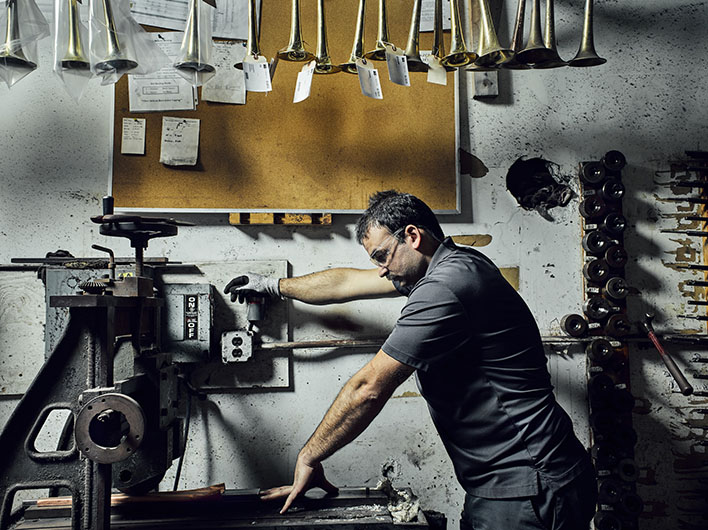
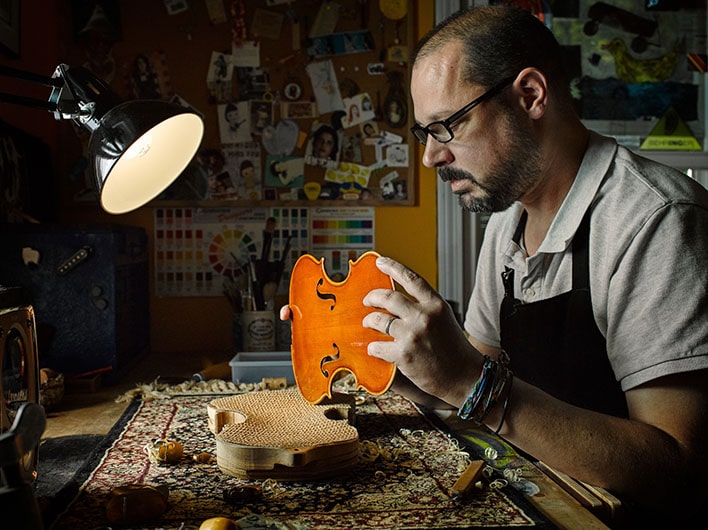
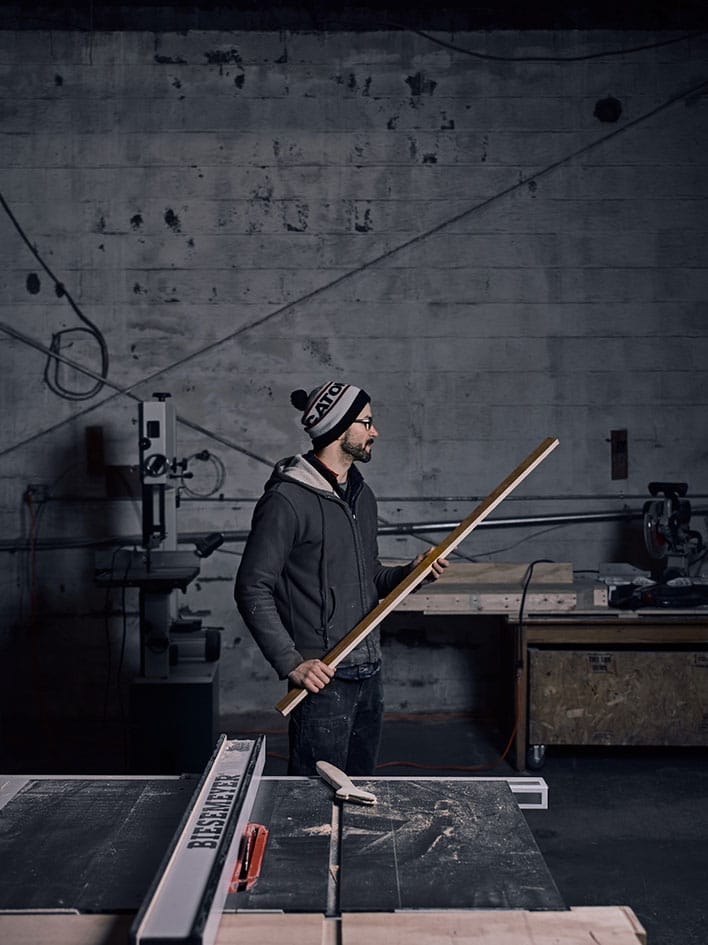
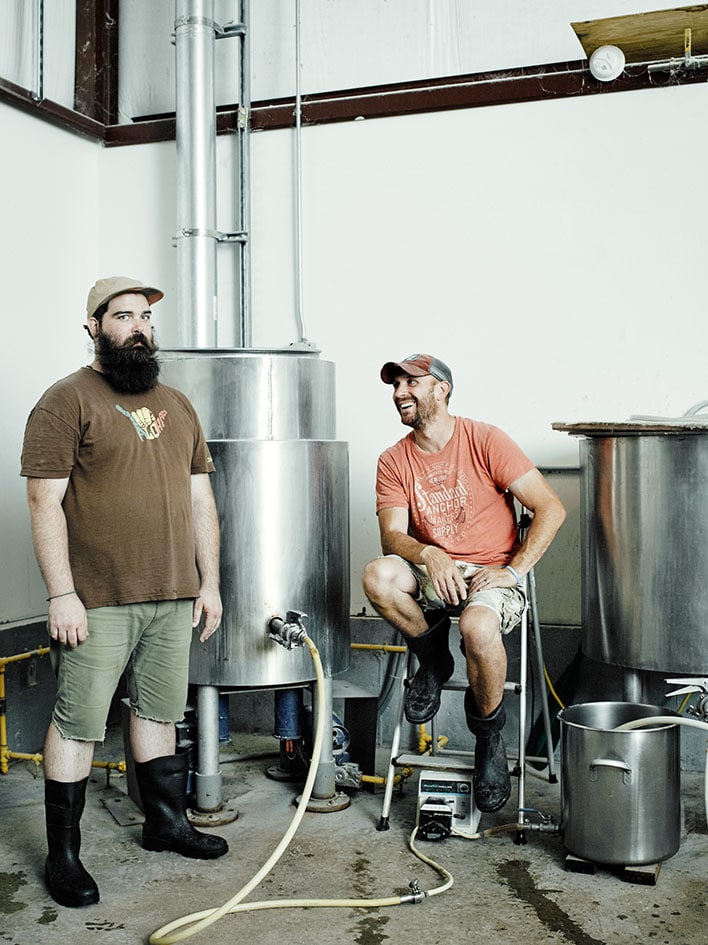
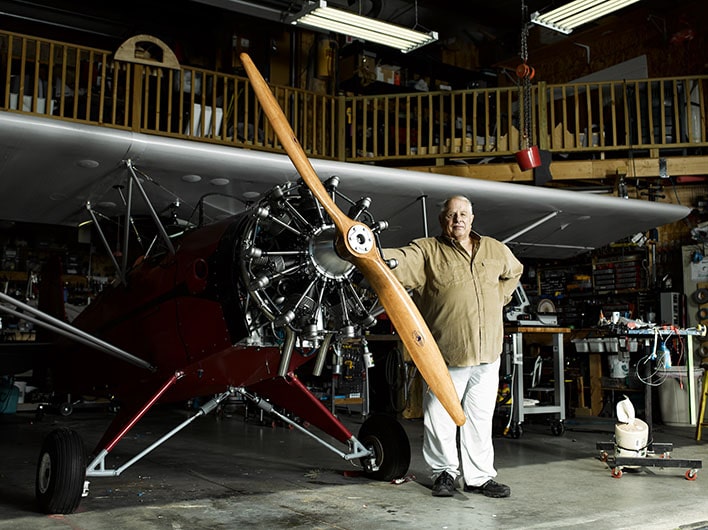
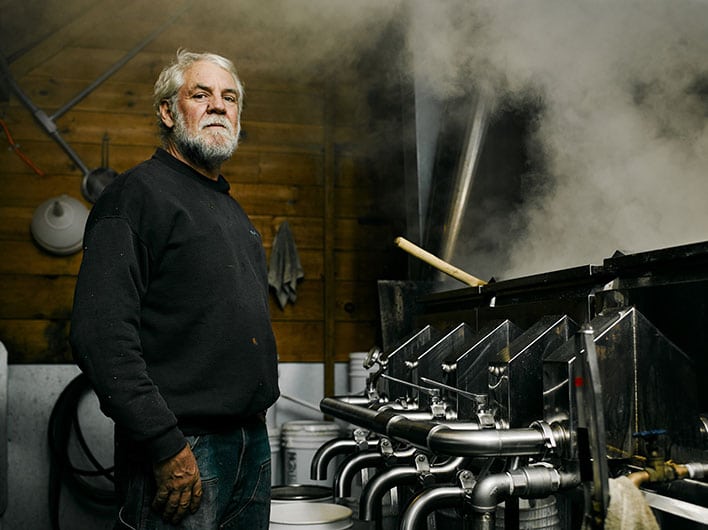
While the “Fuego Faces” project was all shot in a day, my series of photos of New England Craftsmen has been ongoing for 3+ years with no end in sight. I don't exaggerate to say that literally every new client I've worked with during the past few years has referenced the craftsmen series – it's led to thousands (tens of perhaps?) of dollars of new work. I've received creative briefs with individual images pulled from the craftsmen gallery, and lost track of the number of times clients have said, “Just shoot it like your craftsmen series.”

Personal Work by Doug Levy
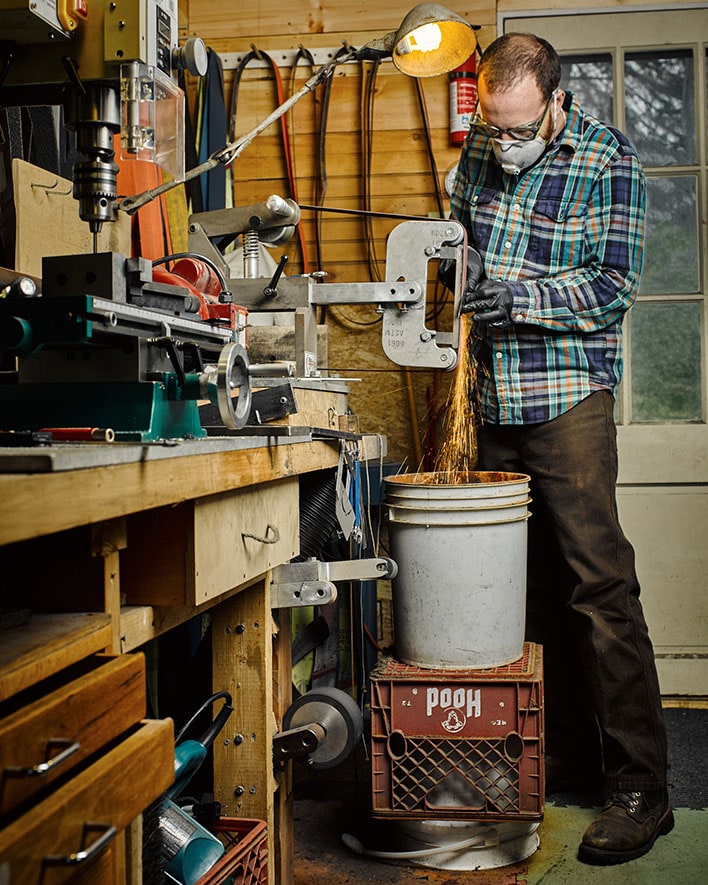
Personal Work: Cape Cod Custom knife maker Sam Densmore
Cape Cod Custom knife maker Sam Densmore

Personal Work: Custom string instrument restorer and creator Erik Grausam
Custom string instrument restorer and creator Erik Grausam

Personal Work: Flintlock Design Company's Joe Reynolds
Flintlock Design Company's Joe Reynolds

Personal Work: Lowell Massachusetts Brewers Mike and PJ at their Navigation Brewing Company
Lowell Massachusetts Brewers Mike and PJ at their Navigation Brewing Company

Personal Work: Ray Grenier

Ray Grenier

Personal Work:  HyperFocal: 0 Trumpet and Trombone manufacturer S.E. Shires
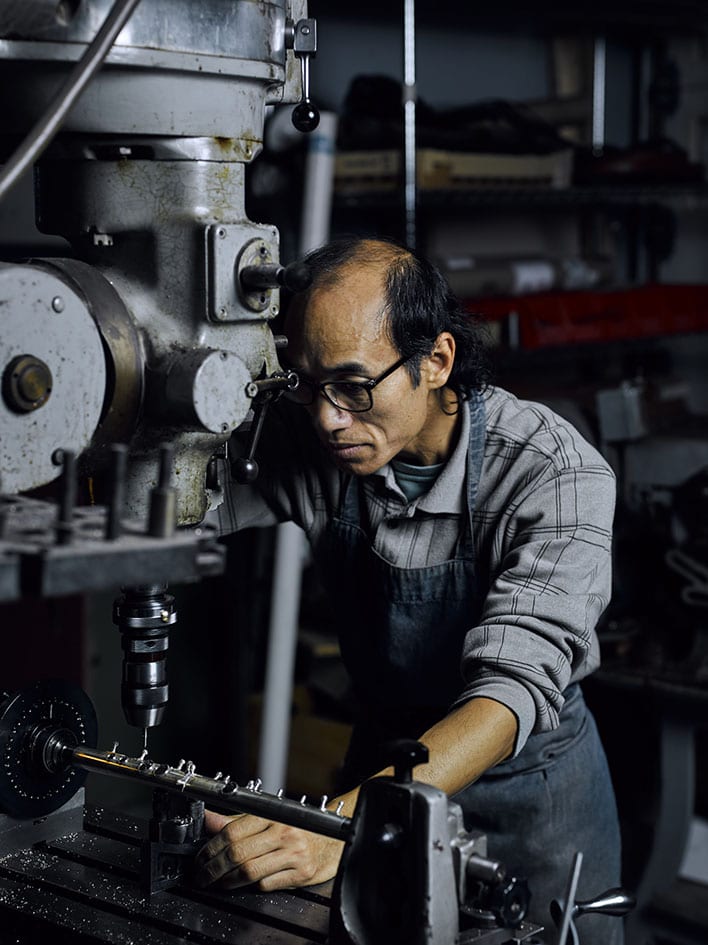
HyperFocal: 0 Trumpet and Trombone manufacturer S.E. Shires

Personal Work: HyperFocal: 0 Flute maker Wm.S.Haynes Co.
HyperFocal: 0 Flute maker Wm.S.Haynes Co.

Personal Work: Willis Wood, Woods Cider Mill, Weathersfield, Vermont
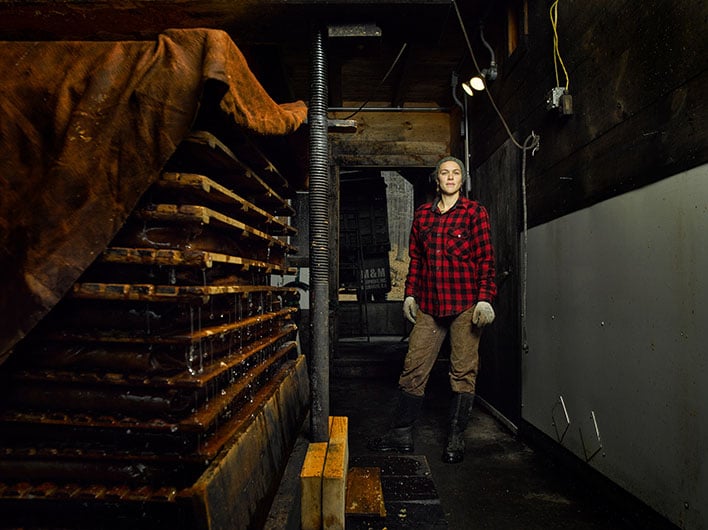
Willis Wood, Woods Cider Mill, Weathersfield, Vermont

Personal Work: Marina Garland, Woods Cider Mill, Weathersfield, Vermont

Marina Garland, Woods Cider Mill, Weathersfield, Vermont

I try to treat personal work no different than commissioned work, and often that means paying an assistant to come to personal work shoots. It totally depends how you work though. For me, paying to have an assistant is just part of my overall marketing budget. I wouldn't do a client job without a second set of hands, so why would I shoot personal work any differently? To me, spending a few hundred dollars on an assistant = better photos = more paying client work. Personal work is also an opportunity to try new techniques and work in new assistants (or stylists, or digital techs) on jobs that inherently have a lower stress point than those involving large client expenditures.

I frequently get asked by local photographers, “How do I get more commercial clients?” At its root, the first step could almost always be, “Shoot some killer personal work and show it to as many people as possible.”

Filed Under: Business, Commentary, Home Middle Right, Photography Tagged With: commercial clients, finding clients, personal projects, Photographers, Photography, vision

Will You Switch To Medium Format Cameras?

January 8, 2013 by Doug Levy

Doug Levy is a photographer based in Ayer, MA. He shoots weddings and portraits. Check out his blog. Check out Doug’s first guest blog post about second shooting weddings. Doug will be teaching classes about his lighting techniques and the business of photography at Inspire Photo Seminars. Follow him on Twitter.

When wedding season starts to slow down, I start to look for interesting projects to shoot during the slower time of year. One thing I’d wondered about for years was the holy grail of cameras, medium format digital. Now, I should preface this with the fact that I’ve never shot medium format anything, let alone digital. My first “real” camera was a Nikon D70s in 2006 and I’ve shot exactly one roll of film since then, on my wife’s old plastic 35mm Nikon, and that took me six months to finish.

One portrait I’d had rolling around in my head for a while was to take a few minutes to introduce myself to Bob, owner of B&J Cycles, a Harley Davidson repair shop on my street. I thought a photo of Bob would be the perfect opportunity to test out a medium format system, so I called Derrick Brown at Imagelink to see if I might be able to rent a camera and back for a few days. I’ve been using Derrick’s calibration software for years, and we have a mutual friend, but despite his being just down the road, I’d never had the chance to meet him in person until recently.

Doug Levy Medium Format Portrait

When I called Derrick up he immediately invited me over to his studio, where we spent a couple hours discussing the options in the current medium format digital world, and ended with him offering to loan me a Hasselblad H2 and Phase One P25 back for a weekend. I suspect he knew I wasn’t going to be shelling out $20k+ anytime soon for a new IQ system, but that the used price of a P25 ($5,000-$6,000) was something I could probably pull off.

And it’s true, with a few months of careful budgeting, I probably could have afforded to pick up a used P25 system, and I even spent a few hours one afternoon looking around on eBay to gauge the market.

But here’s what I didn’t expect. While there were a lot of things to like about the H2 and P25 combo (1/800 flash sync, a gorgeous gigantic viewfinder, autofocus that was better than I’d expected, true 16-bit color), the back was beyond unusable to judge color, focus or exposure unless you shot tethered. It really makes you appreciate how far camera and LCD technology has come in a short time.

As 95 percent of the work I do is on location, and about 90 percent of that takes place in situations where tethering is either impractical or outright impossible, shooting the P25 was essentially equivalent to shooting film. By that I mean that you don’t know what you have until you’re back at your desk reviewing the files.

Now that doesn’t mean I had a horrible weekend with the camera, far from it in fact. I shot a couple hundred photos with it, and it’s an absolute joy to use. The ergonomics are well thought out and I managed its hefty weight quite well. The larger finder made manual focus fine tuning a breeze and the Hasselblad HC 80mm lens Derrick loaned me ranks up there with Nikon’s 200mm F/2 as the sharpest I’ve ever used. And when you do make it back to the computer, the files at ISO 50 and 100 are stunning in their depth and clarity.

This was probably an unfair comparison, to pit a camera that was at the top of the line in 2004 against my daily driver, the Nikon D4, but as someone who makes my living with my camera, I had to ask myself if my wedding and corporate clients would really see the difference between the cameras, and the answer to that is a resounding: “not a chance.”

That’s not to say that when Powerball hit half a billion dollars the week after I returned the camera that I wasn’t already building a brand new Phase system in my head (because I was), but until the current backs with their gorgeous iPhone-like screens drop into the sub-$10k used market, I’ll stick with my 35mm Nikon system.

So, will you give medium format its due? Do you work in medium format now? Chime in with a comment below. Thank you!

Filed Under: Photo Technology Tagged With: camera, doug levy, medium format, Medium Format Cameras, nikon

How To Create Fun Wedding Ring Shots

February 1, 2012 by Doug Levy

Doug Levy is a photographer based in Acton, MA. He shoots weddings and portraits. Check out his blog. Check out Doug's first guest blog post about second shooting weddings. Doug will be teaching reception lighting techniques at Inspire Photo Seminars. Follow him on Twitter.

When Seshu saw my year in review post with my favorite ring shots of the year and asked me to write a guest blog about rings, my first thought was, “That's not substantial enough of a topic for an entire blog post.” Then I gave it some more thought and realized there might be enough there after all.

With my ring shots, the light is almost always the same, small flash through an umbrella or white diffusion panel, as close as I can get it. Shutter at max sync, aperture in the F/8-16 range (you want that diamond to pop!), and ISO 100 or 200.

There are other tricks too. A few years back Matt Grazier turned me onto the idea of magician's invisible string (to help rings stand up), and though I've never been able to make it work for me, I definitely see how it could be a useful tool.

With the technical formalities out of the way, on to the fun part.

My ring shots almost always about one of two things – humor, or something personal to the couple. Sometimes, it's easy.

Doug Levy Wedding Ring Shot | Bruins

The groom was a big Bruins fan, and their wedding was just a few weeks after they'd won the cup, nothing crazy here.

Sometimes though, it's not quite so obvious.

A bottle cap from room service.

Doug Levy Wedding Ring Shot | Bottle Cap

The card from the coffee at the end of the night.

Doug Levy Wedding Ring Shots | Half & Half

A hotel room key (the couple was going to Hawaii on their honeymoon).

Doug Levy Wedding Ring Shot | Beach

The dessert table is a great spot to dig up ideas.

Doug Levy Wedding Ring Shot | PacMan

Doug Levy Wedding Ring Shot | Waffle

Doug Levy Wedding Ring Shot | Reese's Pieces

Doug Levy Wedding Ring Shots | Hershey's Kisses

So is the bar.

Doug Levy Wedding Ring Shots | Coke and Sprite

Doug Levy Wedding Ring Shots | Lime & Lemons

When I get really stuck, I start looking for text.

Doug Levy Wedding Ring Shots | Eat, Pray, Love

Doug Levy Wedding Ring Shot | Life Cereal

Doug Levy Wedding Ring Shots | Cel-e-brate Dictionary Definition

Doug Levy Wedding Ring Shots | Eat, Pray, Love

Doug Levy's Wedding Ring Shots | The Real America In Romance

It would be easy to put the rings on the flowers or the cake at every wedding. That's easy. That's also, “been there, done that.” And I never want to repeat a shot. To me, that's just throwing in the towel and being lazy. I love it when potential clients come over and wonder aloud what I'll do with their rings – that's the fun part. Then comes the, “I need to step up my game and do this better,” part. But that part should never go away, and that's what makes it fun.

Share links to your wedding ring shots below in the comments section.

Filed Under: Photography, Weddings Tagged With: acton, doug, doug levy, fun wedding, how to create, levy, rings, shots, structure, Wedding, wedding photographs, Wedding Photography, wedding ring, wedding rings

Ethics & Etiquette For A Second Photographer

April 7, 2010 by Doug Levy

Doug Levy is a Sharon, Massachusetts photographer and former professional baseball umpire. You can see his wedding photography at douglaslevyphotography.com, and his portraits at douglaslevy.com. He also blogs at dougblogs.com and spends way too much time with his Blackberry updating those sites.

With the wedding season quickly approaching, Seshu and I thought it might be helpful to put together a blog post of suggestions that might help second shooters this summer.
 
Since I first assisted Rob Brown at my first wedding in the fall of 2007 I've assisted and second shot for nearly a dozen Boston-area photographers. Some have been amazing, inspiring learning experiences. Some, well, I'll just leave it at I've only worked with them once.
 
Second shooter Do's and Don'ts
 
If I could give you one bit of advice, I'd just say, “be cool.” It really should be that simple. Wedding days are long, and when I'm the lead photographer I'll hire someone I want to hang out with who takes OK photos before someone who takes amazing photos but is a pain in the ass and I have to baby-sit all day.
 
A little more practical advice (what, “be cool” wasn't clear enough?)
 
Dress appropriately

Rob prefers me to wear a tie when I shoot with him. I don't wear one for my weddings, but I certainly don't mind wearing one for Rob's – remember, you are a representative of the lead photographer's brand and business, if you show up in unshaven in cut-off's, it's the lead photog's brand you've just damaged.
 
Treat Clients As Your Own

As an extension of that brand, it's important to treat the client as though they are your own. If possible get some information from the lead photographer about the couple beforehand. How does the couple envision their day? Is photography the most important element or just one part of a much bigger plan? Are there any family issues you need to be aware of? Is it OK to use flash during the ceremony? Are there any explicit do's and don't during the ceremony (many venues are specific “Don't stand here, no moving once the ceremony has started etc..”

But, Your Business Is No One's Business

Don't sell yourself to the client or their guests. This is probably the number one no-no. This should be painfully obvious, but don't pass out your business cards either (unfortunately I've heard of this happening). It might even be a good idea to ask the primary photographer for some of their cards, that way if guests asks you can have them at the ready.

Wedding Rings By Doug Levy
 Experiment With The Gear

From a technical standpoint, second shooting can be a great opportunity to use some gear you don't own (especially if you both use the same brand), but, and this should be obvious, it's not a good idea to go rooting around in another photographer's bag without permission.
 
Commit To Making Great Images

Be fully committed to the photos, not just your photos. I've probably missed dozens of portfolio quality moments while second shooting. But the thing is, it doesn't matter. This may be the most important thing I say here – it's not your show.
 
This means that there will be times during the day when you have to give up “your” picture because time is tight, or the primary photographer has a different vision, but that's OK. There will be times when have to fall-back into the role of an assistant. Usually this is during the family formals, when time is tight, or during couples portraits when additional lighting may be necessary.
 
Sweet Embrace by Doug Levy
The Experience Of Being Photographed Counts

The important thing to remember is while good primary photogs will want to hear your ideas, as my friend Ned Jackson has said numerous times, giving the clients a great experience is just as important as giving them great photos. If formals run 30-minutes long and the couple misses cocktail hour because of the photographers, they'll remember that, no matter how great the photos are.
 
(A quick aside: After I attended one of my best friends' wedding as a guest this fall I was at his apartment a few months later looking at their proofs, and while the photos were amazing (and the couple loved them), they also remembered by the end of the couples portraits, “We were totally exhausted and sick of photos.” I never want my clients to reach that point of exhaustion.)
 
Don't Just Shadow The Primary Photographer

Don't simply make your version of the lead photographer's photo. I think we've all seen this happen, there's great light, a great moment, and you obviously both want to capture it. The thing is, it's not your show, so it does the lead photographer no good to have two versions of the same image. So, don't stand next to the lead photographer and shoot with the same lens.
 
Take Risks

One of the best parts of second shooting is the ability to take risks. If the lead photog is making the “safe” image, it's your job to find the “hero” image. (Some lead photogs prefer to work the opposite of this. I know Joe Buissink hires a second photographer to take the safe shots all day so he is free to roam. This goes back to why it's important to game-plan the day before).
 
That said, I know if the lead photographer is shooting long, I'll shoot wide. If they're shooting available light, I'll crank up the flash. The best second photographers will give an entirely unique perspective to the day, without being intrusive.

Filled With Joy by Doug Levy
Don't overshoot

No one wants to go through 3,000 images with minute variations. Get the shot, then look for the next one.
 
This Is Not A Workshop

Don't forget this is not a workshop. One of the best parts of second shooting is the window into someone else's creative process. Literally no one I've shot with does things the same way, from formals to how they approach the ceremony. So while it's important to not be afraid to ask questions, make sure you pick the right time. Generally this will be in the car in between locations or toward the end of the reception once things have slowed down a bit.
 
Publish & Perish
 
After the wedding day, don't blog/publish the photos before the primary photographer does. And when you do blog the photos (and make sure the other photog is OK with it), don't try to play the wedding off as your own. Make it clear you were the second photographer and link to the main photographer's site/blog post in your own post.

Childs Play by Doug Levy
 Advice for the main photographer:
 
Don't expect the second photographer to edit their images for free.

If you want me to edit my take, I'm happy to, but should be compensated. (I'm talking about a full edit here, color correction, culling etc.)

Don't ask me to sign a work-for-hire-agreement.

This type of agreement typically states that any images made for the primary photographer's studio become the copyright of that studio. Many second photographer are new shooters with minimal portfolios. When I first started, the only images in my portfolio were from second shooting, don't take that away from me.

Don't show the second photographer's photos as your own.

I had a friend recently call me after second shooting for the first time for a more experienced photographer. A few weeks after the wedding she was on his website and saw some of her photos from the day in his portfolio. While it's expected that my photos will end up in the client's gallery from the day, don't show them on your site as your own.

Don't ask the second photographer to put your logo on their photos.

I know this may sound a bit funny, but when I was first starting out (and didn't have much of a portfolio) one photographer asked me to put her logo on photos I shot while working for her. Photos that were on my website. I'm still scratching my head about this one …
 
I'm sure I've forgotten some things, but I hope this helps some people going forward this season. If you have any questions, please don't hesitate to e-mail me at doug@douglaslevyphotography.com

Filed Under: Commentary, Photography, Weddings

Subscribe To Tiffibox Treats!

Looking for a well-curated email newsletter that will leave you inspired and motivated about your photography business? Sign up below!

About Seshu

Seshu creates relaxed portraits of families and high school seniors in Avon, Connecticut. He also leads a successful headshot photography studio in Connecticut, helping professionals from a variety of disciplines project the very best versions of themselves. He created Tiffinbox as a way of inspiring photographers, to create better images and successful businesses. [Read More]

Email Templates For Headshot Photographers

Email Templates for Headshot Photographers

Recent Posts

  • How Capture One Changed My Event Photography
  • 10 Steps To Stay Positive In Times Of Great Stress
  • Why You Need To Read “Personal Branding For Photographers” Now
  • How To Master Your Website Content Step By Step?
  • Tony Taafe’s TNT Method For Headshot Photographers

Recent Comments

  • Stephen Davison on Are You A Business Owner Who Is Smart, But Stuck?
  • Ben A. on Don Giannatti Clinches The 8th Annual Tiffinbox Award
  • Dan on Don Giannatti Clinches The 8th Annual Tiffinbox Award
  • Donald Giannatti on Don Giannatti Clinches The 8th Annual Tiffinbox Award
  • Stephen Davison on G.E. Masana’s 6 Strategies For Wedding Photography Success
  • Naveen Kumar on Weddings In India Are More Than Being At The Right Place And At The Right Time
  • kartick on Weddings In India Are More Than Being At The Right Place And At The Right Time
  • Leonid Farbman on 6 Uncommon Trends To Grow Your Photography Business
  • Willow and Finch Wedding Photography on 11 Reception Tips To Help Your Wedding Photography
  • Web Designer Malaysia on How To Optimize Your Squarespace Website For Search Engines
  • Creastan on An Interview With Photojournalist G.M.B. Akash
  • Cindy Brown | Atlanta on An Open Letter To A Local Photographer

Become a Patron!

Copyright © 2026 · Tiffinbox · Site Design by Heather Mackan Creative · Built on Genesis