• Photography
  • Interviews
  • Business
  • Reviews

Tiffinbox

Inspiring Photographers

  • Home
  • About
  • Blog
  • Contact

To Find Commercial Clients, First Pursue Personal Work

July 3, 2017 by Doug Levy

“I'm the king of U-turns,” photographer Andy Anderson told our class at the 2014 Texas Photo Roundup. Over the course of the next few days, we'd come to learn that he meant that quite literally: Andy was in constant pursuit of his next personal project. For him that could have meant a dune buggy in a desert, or oilmen at work.

The bigger picture though, to me at least, wasn't about the art of it. Yes Andy spoke at length about how it was important to craft your own vision and continually be honing a unique point of view, and both of those things are incredibly important, that wasn't the golden nugget. The most valuable take-away from the workshop, and from my experiences since then was that photographers who shoot the most personal work get the most commissioned work of the type they want to do.

Other Tiffinbox blog posts that address the idea of personal work are here and here.

This concept has been reinforced by Andy's rep, Heather Elder, who writes the incredibly insightful, Notes from a Rep's Journal blog. Heather has often written that among the photographers she represents, it's always those who shoot the most personal work who find themselves the busiest commercially.

Years ago – I think it was from Nick Onken's blog, but am not 100% sure – I read the best advice regarding the photography business I've ever heard.

“Everything you do needs to be in service of two ideas – take better photos, and show them to more people.”

As I've built my business, that idea has been at the center of everything I do, and if a particular task isn't in service of one of those ideas, maybe that's something I should consider outsourcing (like bookkeeping).

The most valuable take-away from the workshop, and from my experiences since then was that photographers who shoot the most personal work get the most commissioned work of the type they want to do.

It all ties together though. In 2015 I committed to sending monthly e-mails to 2,000+ creatives and current clients via Yodelist as part of my overall broader marketing plan. Yodelist, while far less expensive then their chief competitor Agency Access, isn't a small financial commitment. To see a return on that investment, I realized quickly I couldn't send e-mails saying, “Hey! Come look at the same work I showed you last month!”

The catch-22 though is that much of the work I shoot in a given month won't be available to be shown publicly for a few months following, because it's either part of a broader yet-unfinished campaign, or because a magazine hasn't yet been published. As a result, having new personal work, like my recent “Fuego Faces” series is a key component to my marketing plan as I can shoot something today and have it live on my blog or website tomorrow.

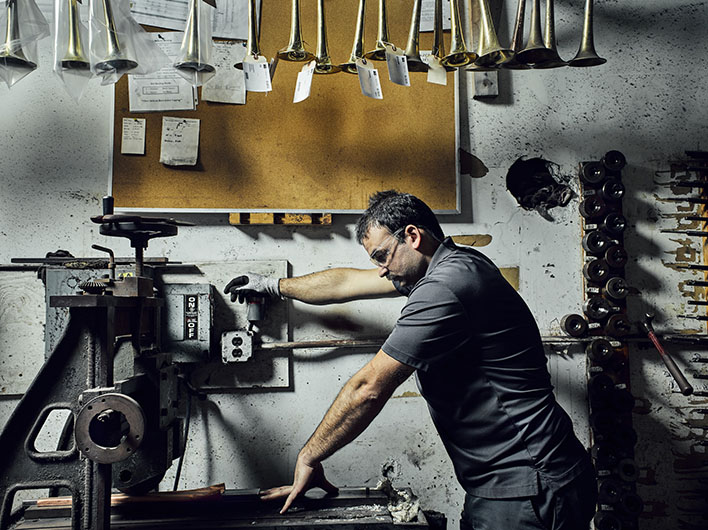
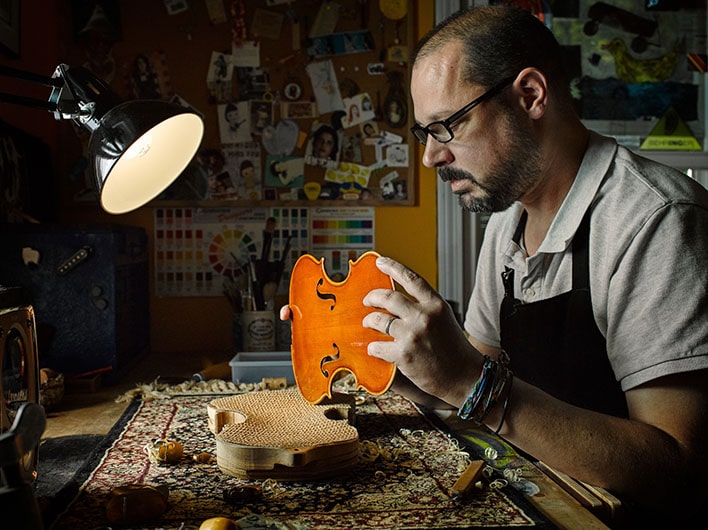
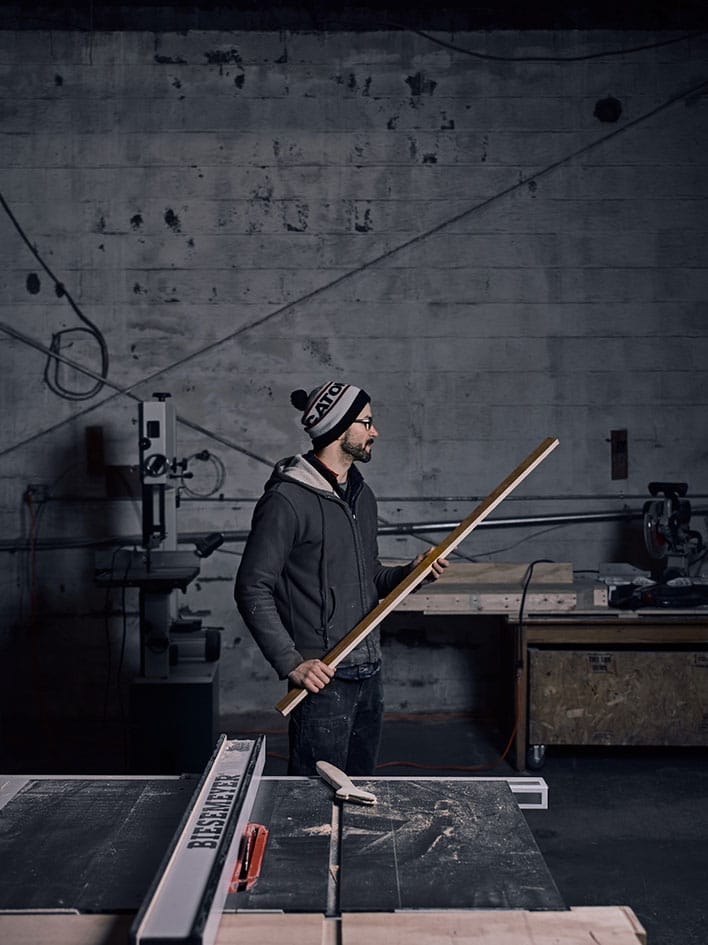
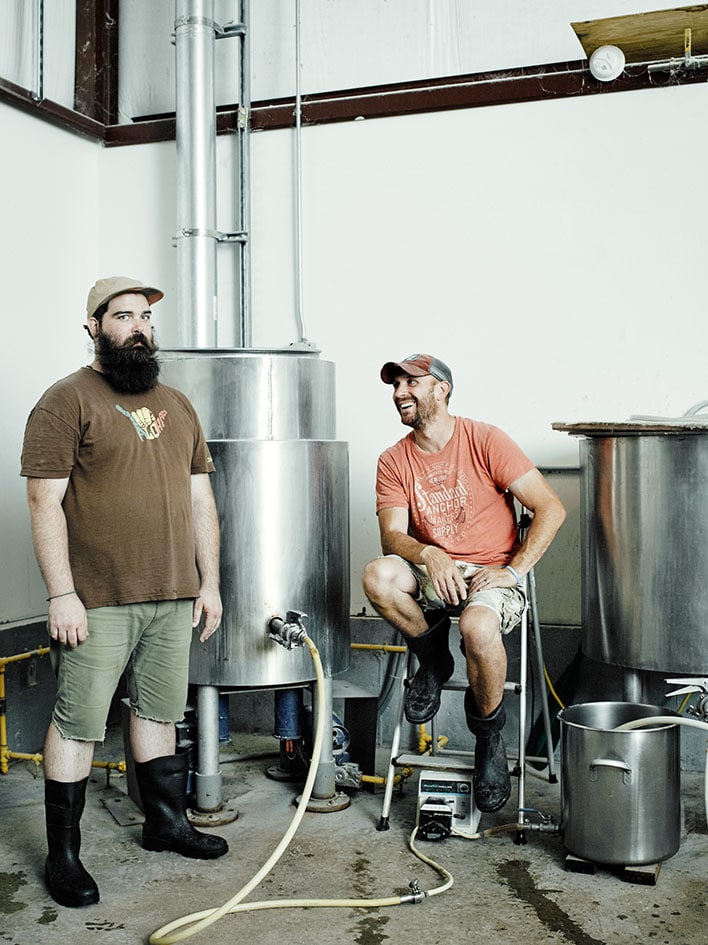
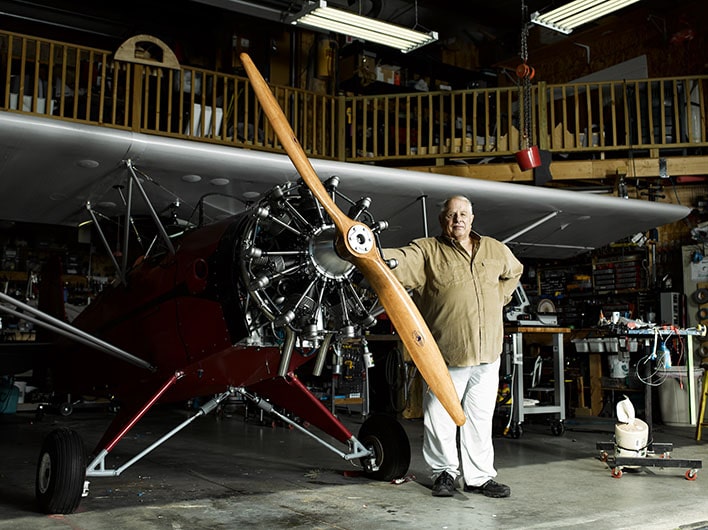
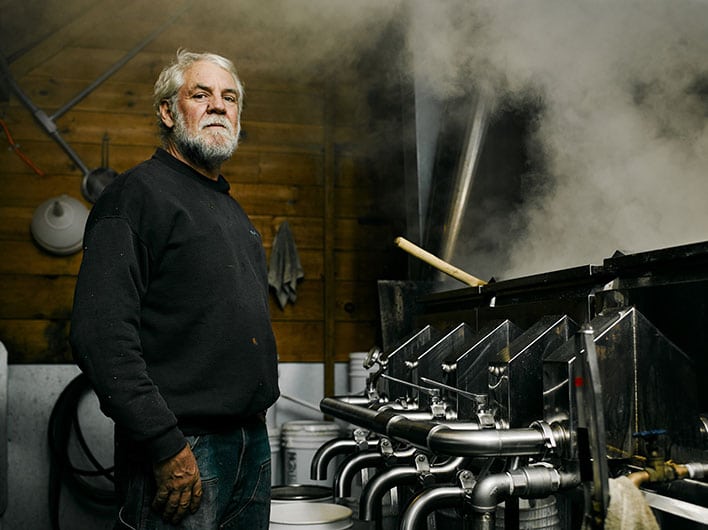
While the “Fuego Faces” project was all shot in a day, my series of photos of New England Craftsmen has been ongoing for 3+ years with no end in sight. I don't exaggerate to say that literally every new client I've worked with during the past few years has referenced the craftsmen series – it's led to thousands (tens of perhaps?) of dollars of new work. I've received creative briefs with individual images pulled from the craftsmen gallery, and lost track of the number of times clients have said, “Just shoot it like your craftsmen series.”

Personal Work by Doug Levy
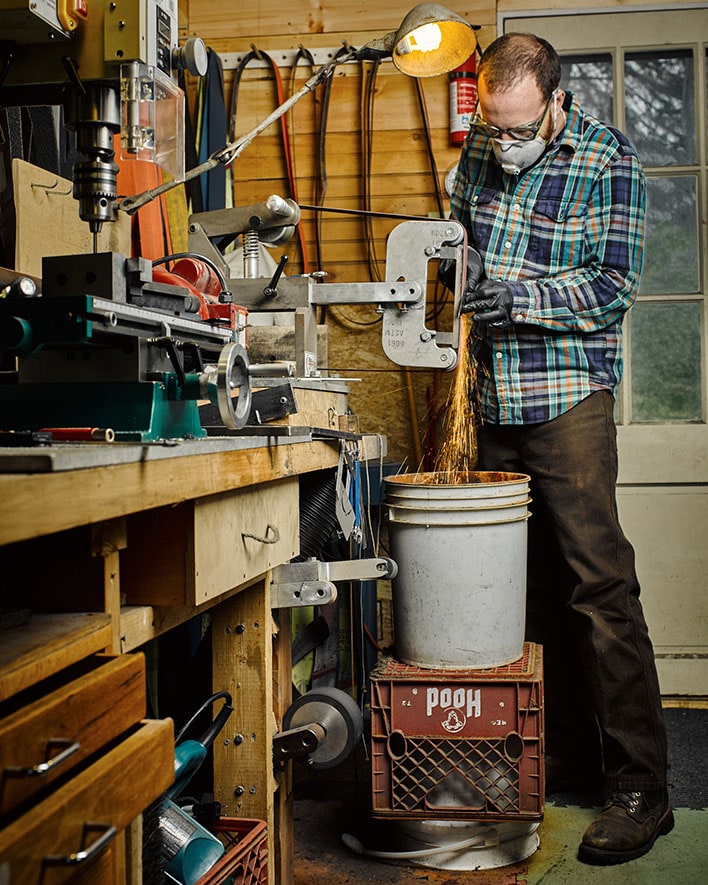
Personal Work: Cape Cod Custom knife maker Sam Densmore
Cape Cod Custom knife maker Sam Densmore

Personal Work: Custom string instrument restorer and creator Erik Grausam
Custom string instrument restorer and creator Erik Grausam

Personal Work: Flintlock Design Company's Joe Reynolds
Flintlock Design Company's Joe Reynolds

Personal Work: Lowell Massachusetts Brewers Mike and PJ at their Navigation Brewing Company
Lowell Massachusetts Brewers Mike and PJ at their Navigation Brewing Company

Personal Work: Ray Grenier

Ray Grenier

Personal Work:  HyperFocal: 0 Trumpet and Trombone manufacturer S.E. Shires
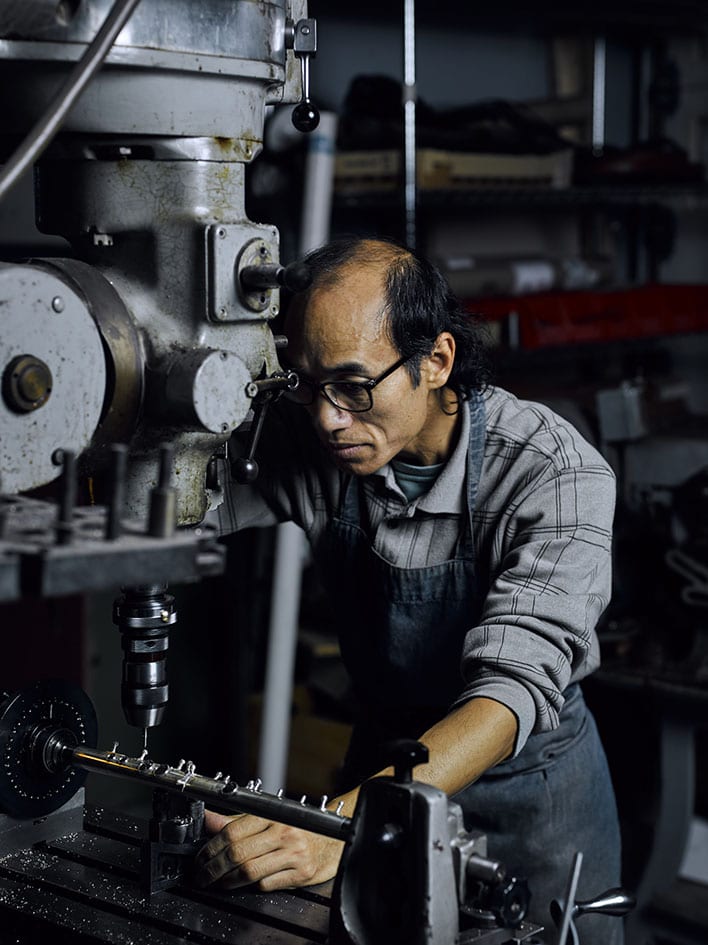
HyperFocal: 0 Trumpet and Trombone manufacturer S.E. Shires

Personal Work: HyperFocal: 0 Flute maker Wm.S.Haynes Co.
HyperFocal: 0 Flute maker Wm.S.Haynes Co.

Personal Work: Willis Wood, Woods Cider Mill, Weathersfield, Vermont
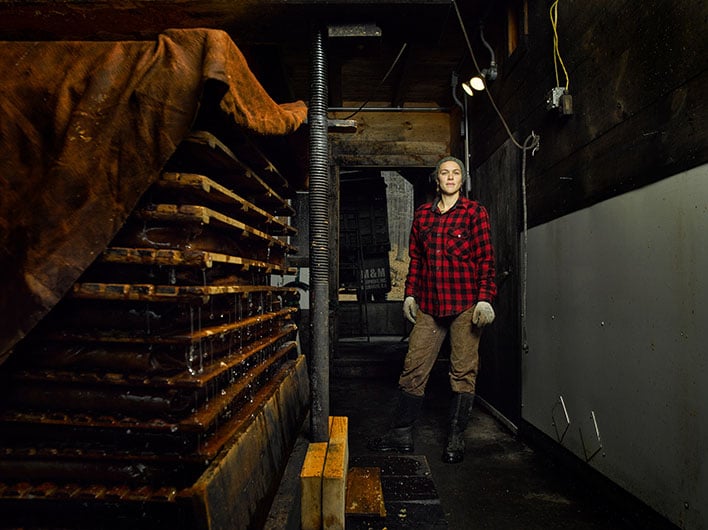
Willis Wood, Woods Cider Mill, Weathersfield, Vermont

Personal Work: Marina Garland, Woods Cider Mill, Weathersfield, Vermont

Marina Garland, Woods Cider Mill, Weathersfield, Vermont

I try to treat personal work no different than commissioned work, and often that means paying an assistant to come to personal work shoots. It totally depends how you work though. For me, paying to have an assistant is just part of my overall marketing budget. I wouldn't do a client job without a second set of hands, so why would I shoot personal work any differently? To me, spending a few hundred dollars on an assistant = better photos = more paying client work. Personal work is also an opportunity to try new techniques and work in new assistants (or stylists, or digital techs) on jobs that inherently have a lower stress point than those involving large client expenditures.

I frequently get asked by local photographers, “How do I get more commercial clients?” At its root, the first step could almost always be, “Shoot some killer personal work and show it to as many people as possible.”

Filed Under: Business, Commentary, Home Middle Right, Photography Tagged With: commercial clients, finding clients, personal projects, Photographers, Photography, vision

11 Ways You Can Improve Your Photography

December 1, 2011 by Seshu | Editor & Publisher

There are several phases of being a photographer. The obvious ones are beginner, amateur, professional and, perhaps at a stretch, “master.” You may disagree with that progression and that's fine. But I suspect you will agree with me when I say that at every level (yes, even if you self-proclaim yourself the Grand Poobah of photography), you are constantly learning.

Yes, that's right. Educating yourself never ever stops. It's what I find most exciting about photography. Every day, I am learning something new about the art and also ultimately about myself.

Several weeks back, I announced the 1st annual Tiffinbox Award winner. That photographer is David DuChemin, an author, blogger, teacher and foremost a visual explorer. I urge you to check out his blog and his books.

David is also the visionary behind Craft & Vision e-books for photographers of all stripes. Each of these books is $5. They are a fast read and are chalk-full of great tidbits of useful information that you don't just save in your head but are forced to go out and try out for yourself. To say that I have fallen in love with these e-books would actually be a bit of an understatement. They are exquisitely designed and of course contain some of the best photography I have seen. I eagerly wait for each new e-book because they are so remarkable.

Craft & Vision Free E-Book | 11 Ways To Improve Your PhotographyToday, Craft & Vision is doing something different. They are actually giving away their latest e-book, 11 Ways You Can Improve Your Photography.

So, why is this 69-page e-book free? What's the catch, you wonder? There is none. Think of this book as a sampler. The authors of these chapters are representative of the breadth and depth of the topics you will find on the Craft & Vision website. The writing is lucid and engaging. The images are spectacular. If you are even remotely inclined to educate yourself or even elevate your photography, these e-books are a must. Being e-books, I carry them around on my iPad 2 and flip through them when I want a quick burst of inspiration.

I bet you are curious to know what those 11 ways are right? So here they are, in the order they appear in the free e-book (yeah, download it now):

1) Make Your Images More Dynamic by Piet Van Den Eynde
2) Tame Your Digital Exposures by David DuChemin
3) The Power Of The Print by Martin Bailey
4) Learn To Direct The Eye by Michael Frye
5) Understand The Stages by Alexandre Buisse
6) Create Projects And Collaborate by Andrew S. Gibson
7) Refine Your Composition by Nicole S. Young
8) The Power Of The Moment by Eli Reinholdtsen
9) Forget Lens Stereotypes by Piet Van Den Eynde
10) Slow Down And Learn To See by Stuart Sipahigil
11) Make Stronger Portraits by David DuChemin

Buy one or two, or better yet, buy them all (and save 20%). With the Christmas season around the corner, I don't think there is a better set of gifts than these e-books for the budding or experienced photographer in your life. I know I would appreciate it, if I was presented this incredible opportunity to learn from the very best in the industry.

Disclosure Of Material Connection

Filed Under: Books, Photography Tagged With: better photography, books, david duchemin, e book, E-books, educate, imaging, improve, photographer, Photography, vision, visual arts

Crafting Your Photographic Vision Leads To Success

September 1, 2010 by Guest

Daniel Milnor, AvatarThis guest post is by Daniel Milnor who splits his time between the chaos of Southern California and the spiritual landscape of New Mexico. He is happiest with his notebook, Leica and trusty leather boots, sizing up whatever situation is happening in front of him.

Milnor is the author of the blog, Smogranch, which allows him to speak his mind, post his mother’s poetry and bring together like minded people around the globe. Connect with him on Twitter.

For being a “creative industry” we sure love to conform.

A trend develops, no pun intended, and suddenly the industry publications, blogs, advertising, seminars and trade shows are filled with what is hot, new and temporary.

I’ve never completely understood this.

This isn’t unique to photography. Look at television. One reality show becomes a success and suddenly three or four similar shows pop up, all slightly less relevant than the original. Within a year or two the public is saturated, bored and searching for a new thrill.

Today’s photography world is filled with more photographers than ever before as the barrier for entry into the professional world falls lower and lower.

So what gives? How do we look to the future with a positive glow in our eyes?

Well, to me it comes down to finding our individual vision and refining our style, and accomplishing this isn’t possible by following industry trends or what’s hot.

Finding your vision comes from intense soul searching, time in the field and mastering the basics of photography, things like light, timing and composition, not to mention actually having something to say, something unique and native only to you, or me, and not simply what the industry wants us to say.

Children's Portraiture by Daniel Milnor

Often times, words like “vision, soul, passion, style,” are thrown around with reckless abandon, but most of the time this is only for show. These things, these traits are easy to talk about but very difficult to actually acquire. The good news, you already have them and all you have to do now is find them inside yourself.

Why do you need vision? Style?

Well, in essence, your vision is the most valuable thing you have. Making unique imagery, instantly recognizable imagery, is what will create the demand around your business.

Yesterday I received an email from a potential portrait client who said, “I had another photographer booked to photograph my kids, but after I saw your work I canceled with them and knew you were the photographer I was looking for.”

Mirage by Daniel Milnor

If I followed the industry trends, used all the same tools that the masses of photographers were using, then how does the client differentiate between my work and the masses? What do I have to negotiate with?

If I’m using camera A, lens A, Photoshop action A, Filter A, and you are using all these same things, then where is the value in my work? Why would anyone hire me over the photographer down the street?

When photographers conform and follow the masses, what typically happens is the job comes down to price and how much the photographer is prepared to give away. What gets lost? The photographs.

This is NOT the situation you want to find yourself in.

When you produce unique imagery clients recognize they are seeing something they can’t get everywhere. This doesn’t’ mean you are going to book every job, the reality is far from this, but what becomes the focal point of the negotiation is the IMAGERY.

My point with this little story is that finding your vision isn’t easy and might require time alone and asking some serious questions.

“Who am I with a camera in my hand.”
“What am I trying to say?”
“What do I REALLY want to do?”

You might think this last question is an easy one but I can’t tell you how many photographers I’ve spoken with who have simply followed what the industry has told them to do, or what they feel “They have to do.”

How did I find my vision?

I found my vision by NOT working as a photographer. I began working as a photographer, full time, around 1993. By 1997 I knew something wasn’t right. I was working but I wasn’t particularly thrilled with what I was producing and after looking back at what I had produced over the entire year I realized I didn’t have anything to show.

So, I took a job working for Eastman Kodak and signed a non-competition letter stating I wouldn’t accept any assignments during my time working for the company. I sold all of my equipment except for one Leica M body and one lens.

Over the following four years I learned much about the industry, other photographers, but more importantly I had the time to learn about my own work.

Over the four years I worked for Kodak I shot extensively on the side, not for anyone else, strictly for myself. When I picked up a camera I had only my own vision in mind.

After four years I looked at what I had accomplished and finally recognized who I was with a camera in my hand.

I made the decision to leave Kodak and become a photographer once again only this time I had a personal vision to lead my way.

Mirage In The Desert, by Daniel Milnor

Had I NOT stopped working as a photographer I don’t think I would have ever come close to finding my vision. The industry and the controls being placed on me were just too powerful. There was little room to explore and what was expected of me was cut and dry.

My jobs today come more from me making suggestions than from a client telling me what to do. This is a very liberating feeling. When I book a portrait shoot or a wedding I book it because my work looks different and I have a clear vision of what I want to accomplish. Working this way feels like you are part of a creative collaboration as opposed to having to adopt to someone else’s idea of what images should look like.

My advice? Think about studying photography, really studying. Take classes, go to bookstores, go to galleries, museums and study what photography really has to offer. Learn who the masters were and are, and not just those in your genre. I’ve learned FAR more about how to photograph a wedding by looking at documentary work than I ever have from the wedding industry.

Also, think about taking on a long-term personal project, a project that is entirely controlled by you and preferably something outside your normal comfort zone.

Children's Portraits by Daniel Milnor

And finally, approach one of your best clients and suggest a new direction.

We can make all kinds of excuses about conforming, about not taking the time to find our unique point of view, but ultimately we simply owe it to photography to continue to explore the limits of our vision.

Finding your vision can be frustrating, confusing, sure, but when you begin to see a pattern or begin to see the proverbial light at the end of the tunnel the positive feeling will far outweigh any struggles you had to endure.

So go forth, take chances, break some eggs and keep your eyes open for the spark that can set you free.

Desert Mirage by Daniel Milnor

Milnor is a former newspaper, magazine and commercial photographer who now tries to work solely on his own projects, projects that allow him to work in the fashion he feels most likely to produce images that go beyond the temporary. Milnor is also a member of the advisory board at Blurb, a print on demand book publishing company comprised of some of the most creative and talented folks he has ever encountered.

He has taught at Art Center College of Design, The Santa Fe Photographic Workshops, The Julia Dean Workshops and is scheduled to teach in Peru, California and New Mexico in 2010. He has also found considerable success with his portrait work, which is represented by the agency Masterfile.

Filed Under: Commentary, Photography Tagged With: craft, crafting, creative industries, current trends, daniel, daniel milnor, event photographer society, industry trends, milnor, photographer, Photography, Success, vision, vision led, visual arts, Wedding Photography

Subscribe To Tiffibox Treats!

Looking for a well-curated email newsletter that will leave you inspired and motivated about your photography business? Sign up below!

About Seshu

Seshu creates relaxed portraits of families and high school seniors in Avon, Connecticut. He also leads a successful headshot photography studio in Connecticut, helping professionals from a variety of disciplines project the very best versions of themselves. He created Tiffinbox as a way of inspiring photographers, to create better images and successful businesses. [Read More]

Email Templates For Headshot Photographers

Email Templates for Headshot Photographers

Recent Posts

  • How Capture One Changed My Event Photography
  • 10 Steps To Stay Positive In Times Of Great Stress
  • Why You Need To Read “Personal Branding For Photographers” Now
  • How To Master Your Website Content Step By Step?
  • Tony Taafe’s TNT Method For Headshot Photographers

Recent Comments

  • Stephen Davison on Are You A Business Owner Who Is Smart, But Stuck?
  • Ben A. on Don Giannatti Clinches The 8th Annual Tiffinbox Award
  • Dan on Don Giannatti Clinches The 8th Annual Tiffinbox Award
  • Donald Giannatti on Don Giannatti Clinches The 8th Annual Tiffinbox Award
  • Stephen Davison on G.E. Masana’s 6 Strategies For Wedding Photography Success
  • Naveen Kumar on Weddings In India Are More Than Being At The Right Place And At The Right Time
  • kartick on Weddings In India Are More Than Being At The Right Place And At The Right Time
  • Leonid Farbman on 6 Uncommon Trends To Grow Your Photography Business
  • Willow and Finch Wedding Photography on 11 Reception Tips To Help Your Wedding Photography
  • Web Designer Malaysia on How To Optimize Your Squarespace Website For Search Engines
  • Creastan on An Interview With Photojournalist G.M.B. Akash
  • Cindy Brown | Atlanta on An Open Letter To A Local Photographer

Become a Patron!

Copyright © 2026 · Tiffinbox · Site Design by Heather Mackan Creative · Built on Genesis