• Photography
  • Interviews
  • Business
  • Reviews

Tiffinbox

Inspiring Photographers

  • Home
  • About
  • Blog
  • Contact

The Mother of All Mentoring

September 24, 2012 by Seshu | Editor & Publisher

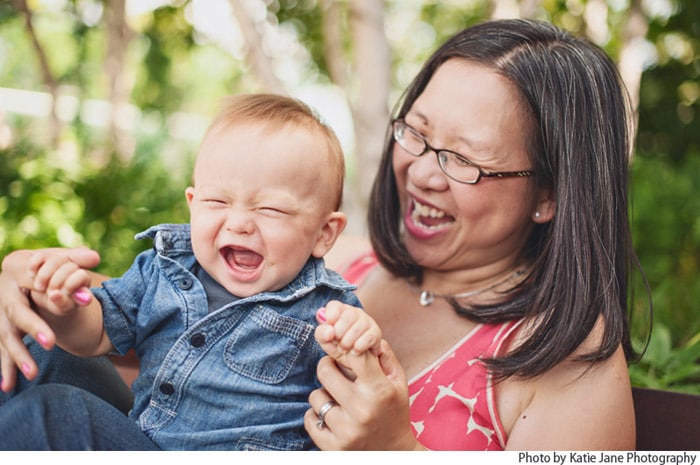
Emily Potts at Moms With Cameras is launching a brand-new online workshop, The Mother of All Mentoring. The workshop runs from October 23-November 13 and usually costs $379. Class is limited to only 50 participants. So please be sure to register early to reserve your seat!

Mother Of All Mentoring Online Workshop

She says the workshop is a comprehensive program designed to help you build an incredible photography business starting from where you are this very moment. Emily believes in teaching easy-to-implement strategies that allow you build the photography business of your dreams.

The Mother of all Mentoring is a series of four lessons that run over the course of four weeks. Each week you will receive a 90-minute recording plus a series of tasks that will give you both the education and the tools you need to run a successful photography business.

Registration opens on Wednesday September 26, 2012, but you have an opportunity to win a spot before you can buy it! She’s given Tiffinbox a complimentary seat to give to one lucky reader! Here’s how to enter:

1. Like Tiffinbox on Facebook and Follow Tiffinbox on Twitter.

2. Like Moms With Cameras on Facebook and Follow Moms With Cameras on Twitter.

3. Leave a comment below.

4. We will announce our winner on September 25th, 9 pm EST.

Good luck everyone!

If you’re not the lucky winner, don’t fret. Emily is also offering all of our followers $100 off of the tuition price when they use the code MM100 by September 30th, 2012.

As an added bonus, the first twenty-five registrants will receive a thirty-minute phone consultation with Emily Potts!

With your enrollment, you’ll receive the following:

Four 90-minute sessions full of information on that week’s topics.

A weekly pdf outlining your goals for the week and offering spaces on which to take notes to refer back to.

A set of digital templates to use for your promotional materials and products.

In-house forms to streamline your workflow and keep track of clients.

Special offers and promotions from our favorite vendors.

While this course is being offered by Moms With Cameras, I am sure Emily would welcome guys into this online mentoring program as well. So, if you are looking to get a solid footing as you set up your business, this online mentoring program might be your ticket.

[Just so you know, I am not financially benefitting by announcing this opportunity here on my site.]

Filed Under: Contests & Grants, Photography Tagged With: all mentoring, emily potts, Learning, mentor, mentorship, moms with cameras, online mentoring, online workshops

The First Job For Photographers: Get To Know The Business

September 24, 2012 by Seshu | Editor & Publisher

This is Russ Klettke's interview with Brian Dilg, who is Chair of Photography at the Photography School at the New York Film Academy. In addition to 20 years of professional teaching experience around the world, Dilg's work has been published in The New York Times, Time Out, Village Voice and covers of books published by Simon and Schuster, Random House and Hyperion. He has also worked in post-production for major fashion houses, consumer products manufacturers and media organizations. He also has won awards as a filmmaker and worked as a director, cinematographer and editor of narrative, documentary, music video and commercial films.

Q: What do you tell photography students about careers in the industry?

As an instructor at a New York-based school of photography (The Photography School at the New York Film Academy), I regularly provide advice to student commercial photographers and photojournalists about the kinds of careers they may achieve. It is hugely beneficial for them to envision the heights to which they can aspire – we are is New York, after all, where you can become the best of the best in almost every endeavor – but it is also essential to consider the entry point at which one can enter the profession.

I have a quick way of summarizing what a career in photography likely will entail. In your first job, you probably will be someone’s assistant, and a lot of your time will not involve taking pictures. Across the later arc of your career, you are likely to be self-employed and therefore must have business skills – in addition to your acumen and artistry as a photographer.

Q: So, they are to start from the ground up – but does that mean actually taking photos?

Let’s discuss first things first. The role of the photographer’s assistant, or someone who works in the administrative and support side of photography, is not just about paying dues. You will learn vital parts of what makes a photographer valuable to his or her clients and their craft. Between what you shoot and what is ultimately used in print editorial, multimedia advertising or online publications there is a lot of editing, organizing, legal documentation, processing and selling. Long-term, every photographer has to know how this works and how to manage it.

Q: We suppose this varies, depending on the type of photographer the student hopes to be one day, yes?

The specific path you wish to take – smaller-scale commercial (including weddings), larger-scale commercial (fashion and advertising photography), and photojournalism – would likely involve these entry level positions:

Smaller-scale commercial – Most established photographers need assistants to help with lighting, equipment, on-location support and administrative tasks. Work with a pro and learn to be a pro. Often, the assistant will price out a job (some use contract templates found on Blinkbid.com) and handle client contact to some extent.

Larger-scale commercial – The digitech assistant on advertising, high-end fashion and other large-budget commercial shoots may appear to be the most popular person in the production. As they work on the computer tethered to the camera, clients and talent might be clustered around them as they identify whether or not the shoot is getting them what is intended – in real time. The work doesn’t end there, as a lot of organizing and file backup is required post-production, along the path that selected images take to become a final product.

Photojournalism – While the budgets for photojournalists are shrinking for print media, rare is the project where the assistant can travel with the photographer to newsworthy locales – unfortunately. But there is plenty for the photojournalist’s assistant to do in the office: editing, cropping, backing up files, processing prints and communicating and invoicing are all in their role. This person gets a first-hand look at what clients (media) want and need, and the value they place on good images.

Of course, assistants in each category need to be working on developing their own skills and portfolio, even when that is not their full-time responsibility. For example, the photojournalist should seek out local media assignments, enough to develop credits and tear sheets. Commercial photographers-in-training should jump at any opportunity to work with smaller clients.

Q: Is it essential for the photographer to also be a businessperson?

Concurrent with developing a portfolio, the photographer needs to become comfortable with the business imperatives of a photography career. Indeed, the first job for photographers is to get to know the business. In addition to the skills development mentioned above, the future independent photographer needs to understand the importance of selling in their career. By selling, we mean relationship development. You’re only as good as you hope to be and working as much as you want when clients know you and trust you. That boils down to a personal style, your professionalism, how fun you are to work with and your ability to establish reasonable expectations on the part of your clients – on top of providing top-quality photography.

Do you agree that the first job for photographers who are either professionals or want to go pro should be to get to know the business? Sound off below in the comments section. Your voice counts!

Filed Under: Business, Photography Tagged With: commercial photographers, new york film academy, photographer, Photographers, Photography, photography school, Photojournalism, school of photography, visual arts, Wedding Photography

The Secret To Getting Clients To Understand Your Value

September 17, 2012 by Alethea Cheng Fitzpatrick

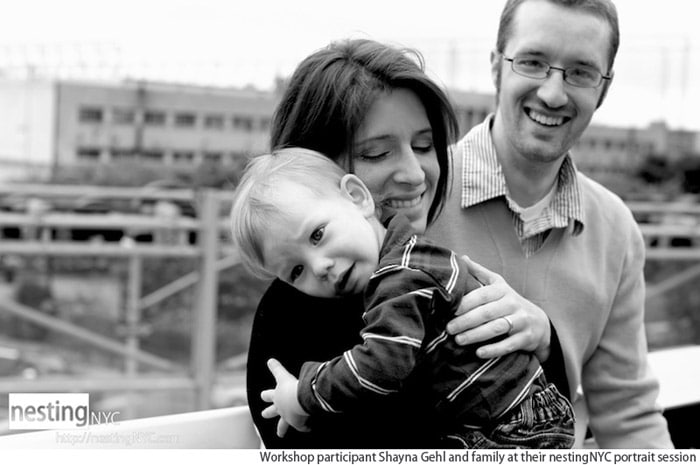
Alethea Cheng Fitzpatrick is a family photographer with nestingNYC and photography coach for parents with Photosanity. She is on a mission to help parents more fully experience the precious fleeting moments of their children's lives through photography. She teaches The Photosanity Workshop, a twelve week online photography workshop for parents, and also offers custom one-on-one coaching and NYC area family portrait sessions. Alethea is also mom to two boys, Liam, aged 3.5, and Jack, 9 months. Follow Alethea on Facebook, Twitter or Pinterest.

Do You Struggle To Get Your Potential Clients To Understand And Appreciate The Value Of What You Do?

If so, you are not alone.

I hear from a lot of professional family photographers who struggle with this. How can we communicate the value of beautiful portrait artwork that retains meaning over a lifetime in this age of “Groupon” shoot-and-burn photographers who are giving away their sessions complete with a disc of high resolution images for under $100?!

How My Experience As A Mom Lead Me To Figure It Out

I struggled with this same issue when I first started my family photography business.

At the same time, I was a new mom who not only fell in love with her first baby, but fell in love with photographing him.

Photosanity

However, as a mom, I quickly became overwhelmed by how many photos I was taking and how little time I had to do anything with them.

I also noticed, as I started to talk to and work with more and more parents, how so many of them loved photographing their kids too, but were frustrated with the results. I could see how some simple strategies and tips that even the most sleep-deprived parent could learn would make a huge difference.

So, I set out to figure out a) what parents needed to know to take better photos of their kids and b) how on earth could we as parents get control over all the thousands of photos that we were now taking so that they were organized and out in the world to be shared and enjoyed rather than gathering dust on a hard drive?!!!

I also had a hunch that, just as I myself gained an increasing appreciation for the value of professional photography the more I got into photography myself, so too would my workshop participants.

And thus The Photosanity Workshop [affiliate] was born, where I teach parents how to take better photos, and organize, edit and share too.

Photosanity

The Surprising Result Of The Workshop

I'll be honest – my dad thought I was crazy, teaching people how to take better photos, and I still get questions from photographers about whether I'm worried that in teaching parents my “secrets” I will lose them as potential clients.

I'm not worried at all.

In fact, the opposite has been true. Last year my photo sessions sold out to local workshop participants and referrals before I even got the chance to offer them to the rest of my e-mail list, let alone the public. Some of my workshop participant turned portrait clients have kids in elementary school and had never hired a professional photographer before. Through my workshop, they gained an increased appreciation for the value of photography and were willing to invest. And even if they were starting to take great photos of their kids, they still needed a professional photographer to take photos that included them, with their families.

After all, even professional photographers need other professional photographers to photograph them! I make sure my family is photographed at least twice a year by a professional photographer – this is something that has only become more important to me over time, not less.

Photosanity

My Primary Mission … And The Happy Secondary Result

Now I'm not saying that everyone who takes my workshop becomes a portrait client – far from it. Professional photography is not for everyone, especially the highly customized services that I offer, and that is totally ok.

My primary mission with Photosanity is to help parents get more enjoyment out of photographing their kids – this is completely rewarding and fulfilling to me in and of itself and I love doing it. In fact, as much as I believe in the value of professional photography, I feel like I can have an even greater impact on someone's life if they work with me through my workshop or one-on-one coaching.

I have no expectation that my workshop participants become portrait clients. However, I am always happy when they do – they are GREAT clients, and I'm actually hesitant now to take on clients who haven't taken my workshop, just because I know there will be more education involved up front.

Photosanity

Don't Alienate Your Clients – Make Your Passion Accessible So They Fall In Love With Photography Too

I think as professional photographers, it's very easy for us to try and set ourselves apart from the rest of the crowd who don't know what they're doing, and to try to create value around what we do by making it seem unattainable and inaccessible … but that's a really great way to further alienate your potential clients.

Instead, in my workshop, I draw very heavily from my own experiences not as a professional photographer but as a mom photographing my own kids. I talk about how much the experience of photographing my own kids means to me – how it has transformed me as both a photographer and as a mom.

I talk about how I more fully experience the precious fleeting moments of my children's lives through photography, and how photography can change the way you see and feel so that even if you don't have your camera with you, and you don't take a photo, your senses, emotions and memories are heightened.

Photosanity

I talk about how my photos are an expression of my love for my kids and for everything that I love about my life and that they are a love letter of sorts. I explain that when my kids look back at my photos of them, I want them to see just how much they are cherished and just how important the moments we have together are.

I believe that ANY parent can learn to take amazing photos of their kids that have incredible emotional power and that capture natural moments that would otherwise fade into a blur and be lost forever.

And I do advocate that workshop participants include regular professional family photo sessions as part of their plan for documenting their family's life, along side their own photos, but this is a really small part of the workshop, more of a postscript actually.

I teach parents to take better photos and organize, edit and share too, but what I really teach them is how the experience of photographing their kids can change their experience as a parent.

Because of this approach, my workshop participants fall in love with photography, and in doing so, gain an increased appreciation for its value.

Photosanity

How Can You Apply This To Your Business?

I encourage every professional photographer to share your own personal experiences with photography so your passion for what you do is infectious. Inspire and empower your clients and potential clients to fall in love with photography by taking their own photos, and they will need and want you more than ever before.

And if you don't have time to create an entire twelve week online workshop for parents (believe me, it's a lot of work!) I would love to have you tell your family portrait clients and potential clients as well as all your non-photographer parent friends about The Photosanity Workshop.

In fact, I'm giving a FREE live online workshop for parents called Quickstart your Photosanity [affiliate link] this coming Tuesday September 18th at 9pm EDT. I'll be giving participants tips and strategies they can use right away (including some of my best material yet!) as well as offering a preview to The Photosanity Workshop, and signups for the paid workshop will open right after the call.

I'm offering a generous cash commission per referred sale so if you're interested in becoming a Photosanity Affiliate, you can find out more and sign up here.

Filed Under: Marketing, Photography

Capturing Life Through Better Photography

September 16, 2012 by Seshu | Editor & Publisher

Back in October 2010, I posted a review of Tamara Lackey's DVD “Inside Contemporary Children's Photography.”

Almost two years later, I have in front of me a book and DVD called “Capturing Life Through Better Photography.” While it too was published in 2010, I think it is appropriate that I am mentioning it now.

In the last two weeks, I have been approached by well-meaning parents who are frustrated by the challenges they face when photographing their children. And it was Tamara's book, “Capturing Life Through Better Photography,” that I recommend to them.

Capturing Life Through Better Photography BookThe book is concise. At less than 100-pages, it is a quick read. In fact, there are so many incredible examples that illustrates Tamara's points, that there is less reading and more seeing. As a budding photographer, I subscribe to this method of learning. We all need to do more seeing.

Tamara's other promise on the book is – “Simple tips & tricks to turn everyday snapshots into little works of art.” The basics, are for sure covered. Exposure, composition, timing, direction of light etc. But on page 43, she urges us to look at body language.

I know of no other book that makes this very important point. Body language, be it of a child or an adult says so much about their personality or their current circumstance. So, if you like nuggets like that, this book is for you.

The book is peppered with “Fun Facts” that draw the reader back in. Be they historical quotes or short scientific explanations (the one about why a balloon makes that popping sound was something new to me), Tamara's crisp and lucid writing will leave you reaching out for your camera to try and replicate what you see in her book.

Capturing Life Through Better Photography DVDThe 90-minute DVD that is a part of this set is a MUST watch. Why? Well, if you somehow miss Tamara's high-energy and passion for teaching photography in the book, you'll definitely feel it watching the DVD. The 90 minutes zip by quickly. It's exquisitely produced. Tamara worked with Rex Ballard, the Director of Photography for ABC's Emmy award-winning Extreme Makeover: Home Edition, to create this DVD.

From my perspective I feel the DVD complements the book but not the other way around. So, think of the DVD as a real bonus.

Capturing Life Through Better Photography Quick Reference GuideIf you buy the entire set through Amazon, you'll get what is called a “Quick Reference Guide.” I did not receive this so I don't know what is in it. But given the two other products that I have had the pleasure of reading, viewing and using, I bet the reference guide is just as good too.

Now, I do have to say that the book and DVD is directed towards those who have just bought or are thinking about buying a digital camera – a DSLR like the new Nikon D600 [affiliate].

Here is the link to the Deluxe kit where you get the book, the DVD and the quick reference guide for $59.99. There is so much information packed into each of these that I think parents or amateur photographers who want to start making images on a more solid footing will be remiss if they don't buy it. [I make absolutely nothing for promoting this set.]

Want to have access to more of Tamara Lackey's photography wisdom? Join us on October 3 when she will be our guest during our Swift Kick webinar. Sign up for that webinar alone or register for all of them in the series for only $25.

Filed Under: Books, Photography, Review Tagged With: capturing life, children's photography, digital slr camera, human interest, Photography, photography books, photography dvd, slr cameras, tamara lackey, teaching photography

Tips For Shooting On Location

September 14, 2012 by Brett Stoddart

Today’s featured photographer and guest blogger is Appleton, Wisconsin based Brett Stoddart. He shoots abandoned buildings. He shoots people. Sometimes he combines the two. He is a husband. A father. A traveler. An art and music lover. He says he has a wicked sense of humor, albeit an odd one. Check out his blog. Follow him on Twitter and or friend him on Facebook.

Recently I wrote about my experiences exploring and shooting in abandoned buildings. These places offer a plethora of interesting and unique shooting experiences. There are ornate interior design elements of days gone by; from peeling paint to exposed lathe and plaster and even the occasional hideous wallpaper (hideous by today's standards).

Brett Stoddart - Portrait Photography In An Abandoned Building

Brett Stoddart - Portrait Photography In An Abandoned Building

As photographers we are always searching out the next best location to shoot our clients, whether that is truly on location or a backdrop that has been procured to transform our interior shooting spaces to something they are not.

For me, the locations of choice have become those buildings that I so passionately explore. The grit, the grime, the decay; they have all become interesting elements in my portraiture.

I began my journey into portraiture at the urging of a friend and fellow photographer who also happened to be a model for many local merchants. Up until that point I was aiming a camera at another person or limited to your traditional snapshots at bars and parties. Now, I had practiced a little, I had studied, I kind of knew what was going on and I had watched others soaking it all up, but I never fully intended to become a portrait photographer. People scared me: they move, they talk. My buildings, not so much.

So it was with reluctance and great trepidation that I acquiesced.

A client and I drove out to a local farmhouse that had been abandoned for over 30 years, nearly empty of all remnants of human occupation. I set up my one light and softbox and shot that first frame. Wow. I was stunned. Who knew? The textures of the walls popped and at that moment I knew that I was on to something. We continued shooting and even went to a second location to shoot more. Three years later I still have 2 of the images from that day in my portfolio. Luck? Maybe.

Brett Stoddart - Portrait Photography In An Abandoned Building

Shooting on location always presents us with many challenges that we don't have to worry about in-studio: the logistics of getting there, hauling everything in, powering it, set up and tear down, etc. Many location shooters have probably been told to ‘move along' at some point in their career. It usually happens just when you've gotten into that groove and things are flowing nicely.

For me that is the risk 95% of the time when I shoot on location. Everyone wants their portraits at one of the abandoned buildings I shoot. But there are inherent risks in bringing a client into a structure that is not truly ‘safe'. In addition to potential structural damage, there could be health concerns, legal issues, and a myriad of risks that most people don't have to contend with. I try to obtain permission whenever possible if I will be shooting clients in these places. I have no problem signing waivers of liability that prevent me from taking action if something were to happen while on their property. Having the necessary legal documents tends to show that I am serious and not just a random trespasser. I carry blank forms with me for just this reason and it always helps to carry a book of my work. But finding owners is not always easy and truth be told it is rare that I get a chance to obtain permission.

I mainly shoot models in these locations, however this year I started shooting high school seniors too. The demand was too high to ignore although I have a different set of criteria for suitable locations for each.

For seniors, I really go the ultra-safe route by going to places where I know that our being there won't cause ‘trouble,' or have de facto permission from owners. They are the ones that are structurally sound, free of the most common health risks and in general: safe. The associated risks and nature of location are always discussed in depth beforehand.

When I'm with models, we will take a few more chances. We will go to the locations that are riskier, but with that risk there is certainly reward. In my opinion, a place rarely seen greatly enhances the value of an image. Models also understand the risks associated with these shoots, and I would never put them – or anyone – into a particularly dangerous situation. But we definitely push the envelope.

Brett Stoddart - Portrait Photography In An Abandoned Building

Brett Stoddart - Portrait Photography In An Abandoned Building

I am not a natural light shooter, I use off-camera flash. I don't like shooting natural light portraits; it doesn't give me the drama I like to create and presents a whole other set of logistical nightmares. How do you ‘sneak' into a building carrying 4 strobes, stands, modifiers, etc. and not be seen? Chances are you can't.

I usually have a good idea going into the shoot of what type of images I want and that allows me to plan my gear accordingly. Very frequently it is just one light, one stand, and one modifier. Travel light, get in, shoot and get out. Also, I always like to know the location I will be using beforehand. I don't like going into a fashion shoot location blind. It's not safe for me or the models.

Whether I choose to take a model in a $5000 wedding dress to an abandoned gothic cathedral, or clothe her in heroin chic and stick her in a filthy corner of a nasty factory, there are options to compliment or even contrast the look we are going after. I am in love with the juxtaposition of classic beauty mixed in with the beauty of decay.

Sure I can take safe studio shots of models and composite them into my abundance of already shot images from locations, but that would take all the fun out of it, and I don't like to continually be cooped up inside. I feel constant studio shooting drains me of creativity, although winter is approaching the Midwest faster than I would like.

Hmmm, maybe it is time to start to practicing those compositing skills … until next time, happy shooting and stay safe.

[blogshow id=9d07 player=1 autoplay=0 toolbar=1]


Filed Under: Lighting, Photography Tagged With: abandoned building, best location, brett stoddart, camera flash, location photography, Portraits, shooting experiences, shooting people, studios shoot

  • « Previous Page
  • 1
  • …
  • 63
  • 64
  • 65
  • 66
  • 67
  • …
  • 164
  • Next Page »

Subscribe To Tiffibox Treats!

Looking for a well-curated email newsletter that will leave you inspired and motivated about your photography business? Sign up below!

About Seshu

Seshu creates relaxed portraits of families and high school seniors in Avon, Connecticut. He also leads a successful headshot photography studio in Connecticut, helping professionals from a variety of disciplines project the very best versions of themselves. He created Tiffinbox as a way of inspiring photographers, to create better images and successful businesses. [Read More]

Email Templates For Headshot Photographers

Email Templates for Headshot Photographers

Recent Posts

  • How Capture One Changed My Event Photography
  • 10 Steps To Stay Positive In Times Of Great Stress
  • Why You Need To Read “Personal Branding For Photographers” Now
  • How To Master Your Website Content Step By Step?
  • Tony Taafe’s TNT Method For Headshot Photographers

Recent Comments

  • Stephen Davison on Are You A Business Owner Who Is Smart, But Stuck?
  • Ben A. on Don Giannatti Clinches The 8th Annual Tiffinbox Award
  • Dan on Don Giannatti Clinches The 8th Annual Tiffinbox Award
  • Donald Giannatti on Don Giannatti Clinches The 8th Annual Tiffinbox Award
  • Stephen Davison on G.E. Masana’s 6 Strategies For Wedding Photography Success
  • Naveen Kumar on Weddings In India Are More Than Being At The Right Place And At The Right Time
  • kartick on Weddings In India Are More Than Being At The Right Place And At The Right Time
  • Leonid Farbman on 6 Uncommon Trends To Grow Your Photography Business
  • Willow and Finch Wedding Photography on 11 Reception Tips To Help Your Wedding Photography
  • Web Designer Malaysia on How To Optimize Your Squarespace Website For Search Engines
  • Creastan on An Interview With Photojournalist G.M.B. Akash
  • Cindy Brown | Atlanta on An Open Letter To A Local Photographer

Become a Patron!

Copyright © 2026 · Tiffinbox · Site Design by Heather Mackan Creative · Built on Genesis