• Photography
  • Interviews
  • Business
  • Reviews

Tiffinbox

Inspiring Photographers

  • Home
  • About
  • Blog
  • Contact

Flashing Is Not A Crime!

September 26, 2010 by Guest

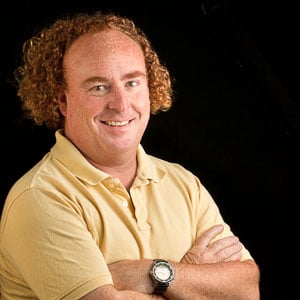
Syl Arena is known around the world as much for his colorful persona as he is for his colorful hair. He freely admits that he has long been obsessed with light.

For the past year, Syl has been writing and shooting the Speedliter's Handbook which will be published later this fall. His first book, LIDLIPS: Lessons I Didn't Learn In Photo School is a collection of micro-essays on the philosophy of photography.

Each spring and fall, Syl travels the country teaching Speedliting seminars and workshops. He is also the founder and director of the Paso Robles Workshops. You should follow him on Twitter especially because he is giving away one lucky Tiffinbox subscriber a seat at one of his lighting workshops. Scroll down to read details about that awesome opportunity.

In case we've not met before, you should know that I'm a flasher… a long-time flasher. And I'm not shy about it. I am not one of those only-flash-when-it's-dark flashers. I like to flash in broad daylight. In fact, I often flash when the sun is high overhead and everyone can see me. The fact that it's really bright outside has never stopped me from flashing.

Syl_Arena_Chelsea-outside-Pipers

If you're not a flasher, ask yourself “why?” Is it because you think that flashing is wrong, or because you're shy, or because no one has ever showed you how to flash, or because you tried flashing once and didn't like the experience?

“I don't flash because…”
I’m always amused (and often concerned) when a photographer says, blogs, or Tweets, “I don’t use flash because…

Syl_Arena_Gelled-Light-Thru-Window

“I'm a purist and only use available light.”
First, there is no such thing as pure photography. Every photograph is an abstraction. No photograph is a perfect record of the entire moment that passed in front of the photographer. The mere act of pointing the camera at one part of the scene and not another is artificial. The activation of the shutter at one instant over another is artificial. The conversion of light into long series of numbers or into layers of dye on a transparent substrate is artificial. The manipulation of digital files in a computer is artificial. The re-creation of the light on a computer screen or piece of paper is artificial. So, I see no reason to limit one's actions because of a philosophy that is as artificial as the actions it rails against.

“I don’t need flash because I can always turn the ISO up.”
Let's be honest about this one. Crappy light at ISO 12,600 is still crappy light. For a painter, having more colors does not automatically make one a better artist. It's knowing how to work the paint with a myriad of strokes that adds depth to the painter's ability to express herself. Photography is no different. A better digital sensor is no substitute for learning how to see and use light.

Syl_Arena_Buster_HSS

“I always shoot in bright light, so I don't need flash.”
If you think the main use of flash is to provide light when there is none, then you're missing out on half the world of flash. No camera today can record the full range of brights and darks that the human eye can see. Photographers often avoid shooting under full sun because details are often lost in the shadows. Even in full-auto mode, today's digital cameras and flashes are brilliant at adding just the right amount of fill light to reduce the contrast of the shadows. The brighter the ambient light, the greater the need is to add fill light to the shadows somehow.

Syl_Arena_Smashin_Pumpkins

“Flash limits the shutter speeds that I can use. A sync speed of 1/250″ is too slow.”
High-speed sync (aka: Auto-FP sync if you're a Nikonian) is a Speedlite-only mode that enables you to shoot at virtually any shutter speed. So, lighting your subject with a Speedlite means that you can use a fast shutter speed to freeze high-speed motion or to saturate the sky by underexposing the ambient. Contrary to the popular myths, you can't do HSS with studio flash. Nor is a neutral density filter a good substitute. For more details on HSS, check out these articles: Simple Truths About HSS, Dimming The Sun – Part 1, and Part 2.

“Flash is unreliable. It changes from frame to frame”
Even among shooters who like to flash, there is the concern that the automatic flash modes (E-TTL for Canonistas and I-TTL for Nikonians) are unreliable because the flash power changes. Well that's exactly what E-TTL / I-TTL is supposed to do: change the power. When your flash is close to your subject, then you need less light from it than you do when your flash is farther from your subject. While these auto-flash technologies are not perfect, they can be amazingly useful in situations, like weddings, where the subject-to-flash distance is always changing. The real root the problem is a lack of understanding by the photographer about how the camera meters for flash — which is especially tough at a wedding where in one frame the bride in her white gown is the dominant element and in the next frame the groom with his blackhole of a tux is the dominant element. Learn how your gear works and the consistency from frame to frame will improve dramatically.

Syl_Arena_Jaime-on-off-camera-flash

“Flash always looks bad.”
This should be re-phrased as “On-camera flash often looks bad.” It's not the flash, it's the location of the flash that kills the shot. Anytime the dominant source of light goes right down the axis of the lens, then your subject will be lit equally on both sides. Without any shadows, there is no depth to the image — no shape to your subject. You don't need flash to flatten a shot; stand with the sun straight behind you and the same flat light will happen. When it comes to crafting great light with flash, the position of the flash and how you modify the flash is key. So, a bare Speedlite locked in your camera's hotshoe is a tough way to craft good light.

Syl_Arena_Mallory_gelled-not

“Flash looks artificial.”
Once you move beyond the issues with on-camera flash, another huge complaint against the look of flash is that it does not blend with ambient light. The color temperature of flash is about the same as daylight at noon. If you light your subject with flash indoors under tungsten light, the ambient-lit background will appear very orange or your subject will appear very cool. Likewise, if you are using flash to fill shadows at sunset, the fill light will be very cool and unnatural. In both of the situations, the use of a CTO gel on the flash will change the color temperature of the flash so that it blends into the ambient more naturally.

So, while I'm proud to be a flasher, I believe that flash is just another tool in my toolbox. My photos go out into the world without me. What matters to the viewer is the light that was captured within the frame — not how it got there.

Other Articles I've Written About Flashing (Particularly Small Flash)

15 Insights For A New Speedliter

It's Where You Put The One Speedlite You Have That Matters

Deciding How To Start With Off-Camera Speedliting

Consider ZOOM To Be A Speedlite Modifier

Deciding Between E-TTL and Manual

Shadowing and Other Revolutionary Ideas

Twitter Contest: Learn To Flash ByTweeting To Win A Seat

PRIZE

Win a seat at any of my upcoming two-day Speedliter’s Intensives (value $200)

• Seattle, Oct. 2/3
• Boston, Oct. 30/31
• Austin, Nov. 6/7
• San Francisco, Dec 4/5

RULES

1. Follow @Syl_Arena on Twitter.

2. Tweet this exactly:  Hey @Syl_Arena I want to learn to flash at the Speedliter’s Intensive http://bit.ly/coPPUC. Contest on Tiffinbox.org > http://bit.ly/dsGLsP

3. Contest ends at 1:00pm PDT, Thursday, September 30, 2010.

4. One winner will be selected at random by Tweetaways.com and announced via my Twitter account Thursday afternoon.

5. Multiple Tweets will disqualify you from the contest.

6. The prize is the ticket to the Speedliter's Intensive. Transportation, lodging, meals, that lens you've always wanted, etc. are on your own nickel.

7. You can give the registration code to a friend if you want to attend the Speedliter's Intensive yourself.

Filed Under: Photo Technology, Photography, Workshops Tagged With: ambient lighting, camera flashes, canon eos flash system, digital cameras, Flash, improve, Lighting, nikon sb900, off-camera flash, photographic lighting, Photography, shutter, speedlite 430ex, speedlite 580ex ii, studio flash, syl, use flash

Lighting It Up In Boston, A JVS Speedliting Workshop

June 25, 2010 by Seshu | Editor & Publisher

I think it was Zack Arias who lit a fire in me to think about off-camera lighting for my wedding and portrait photography. Since taking his workshop in Boston a few years back, I have been to a number of other workshops. I'll be happy to post a short list of those in a future blog post.

The one lighting workshop that always eluded me, however, was Joseph Victor Stefanchik's 1 Day Speedlites Workshop in Dallas. For a few years JVS, as he is called, only had these workshops in Texas. Now he and his lovely wife Anne are now taking these workshops on the road.

The one in Boston will be on August 26th. It will be held at LensProToGo‘s amazing warehouse space in Concord, Massachusetts. Learn more about these workshops.

JVS and Anne publish a blog called Off Camera Flash. You may want to bookmark it as it is one of my go-to-blogs for inspiration. Check out the images posted there and at his wedding website.

The word – “excited” – is a bit of an understatement. I spoke with JVS about this workshop and he promises me that he will elevate my ability to craft images with light and depth. The cost of the workshop is $500. It's a long, intensive day where you can expect to start using one-light and then two-lights and by the end of the course, three-lights. Class size will be small – no more than 15 people. The bonus is a PDF that JVS and Anne custom-design from the workshop that you attended with images, lighting diagrams and a list of equipment used for each example. This dedication to their craft and to their students alone convinced me that these guys are the real deal.

If you are interested in this Boston workshop by JVS & Anne, use this link to register. Please enter “PICSESHU” in the “Enter Promo Code” box during step one of three on their shopping cart. The cart will automatically apply a $50 discount for the first 10 people to register.

Yes, we are all inundated with requests to attend photography workshops all the time. Which ones are going to hit the mark … for you?

No easy answer to that one. However, here are the steps I usually take when I am considering a photography or lighting workshop of any kind:

1) I outline my immediate needs to grow as a photographer
2) Research the forums to see what is being said about a workshop I want to attend
3) Ask my peers if they have attended the workshop you are considering
4) Get a sense of who the instructor(s) are and what their goals for the workshop will be
5) Look for a way of following up after the workshop

Full disclosure: If I get 10 people to register using the link above, my registration fee will be complimentary. So, yes there is vested interest in plugging this workshop, but people who know me even remotely will tell you that I promote products and/or services that are only of a very high standard.

I hope you will join me in Boston on August 26th. We have much to learn … together!

Filed Under: Lighting, Photography, Workshops Tagged With: Boston, JVS, LensProToGo, Lighting, Photography, Workshops

Learn To Light With Zack Arias At CreativeLive.com

June 6, 2010 by Seshu | Editor & Publisher

Learning to light is one of those big steps that you will take as a photographer. True, there is a lot you can do with ambient light, or if night time photography is your thing, then investing in a tripod makes sense.

As a wedding photographer or portrait photographer, I am called to a variety of scenarios and I have to make quick calls to whether to use the existing light or enhance it with a flash. I recall buying two Nikon SB-800's and then asking myself, “now what?” I didn't know much about flash, how apertures and shutter speeds and ISO's all worked in tandem, or that my images would truly rock if only I took the flash off of the hot-shoe on my camera body.

Subjected to wedding after wedding where the reception lights were getting dimmer and dimmer, I was desperate to learn to light. Through the Digital Wedding Forum, I learned about Zack Arias, an Atlanta-based photographer who had cut his teeth photographing bands and music concerts. Zack was and is photographing weddings with another fabulous photographer named Marc Climie (more on him in a future post). When I heard about Zack's OneLight Workshops, I had to attend. The description matched my needs to a T. It was meant for those who wanted to learn from the ground-up, to light.

Well, some weeks back, Chase Jarvis and friends inaugurated CreativeLive.com, a website for photographers to learn from the very best photographers in the world.

On June 11, 12 and 13 (yes, this coming weekend), Zack, will be presenting at CreativeLive. If you can't make it you can buy his presentations as a digital download for $79. That, my friends, is what I call a STEAL. Get it!

And you've got to watch this by my man Zack:

I have to be on the road for that weekend, so I have ordered the download. If you are anywhere near Connecticut, bring some popcorn; we can watch it over at my place. I hope it is in HD! I am sure it will be a treat and a great learning experience. Perhaps we can even watch it and then go out and practice like real Strobists.

So, in full disclosure – I have attended two OneLight Workshops by Zack – one in Boston and the other in New York. They were both fabulous and I recommend them to anyone who is just starting out. If using your flash freaks you out (I was one of those to be totally honest), you should go. If you don't know what “off-camera lighting” means, you should go. If you want to create images with a greater depth, by using lighting, you should go. Well, you get the picture, right? [grin]

Unlike a lot of workshops where you sit and stare at an instructor and take furious notes, Zack broke it up and had us go out and shoot and practice and practice and practice. He split us into groups, had models stand in and made his equipment available for our use. He isn't just a photographer, he is a teacher. And by that I mean he talks and shows and makes darn sure you GET IT, before moving on to the next topic. One of the first things he declared was that there were no “stupid questions.” All was fair … from the very basic to the very technical. And if Zack didn't know the answer, he would say that he didn't know rather than bullshit his way through it.

Well, with this workshop now on CreativeLive.com, you don't have to travel far. The workshop comes to you online. That's bonus number one. And as I have said, if you are busy or away from your computer or you are still running on dial-up (God save you!), you will want to get that download for $79. That's bonus number two. Both will lead you to bonus number three, which is your desire to go and see the man in person at a workshop near you.

I don't make a dime for saying all this, so rest easy, sit back to watch and learn from a lighting guru. Your comments (after you watch the live event, which is FREE, by the way) would be greatly appreciated.

Filed Under: Lighting, Photography, Workshops Tagged With: Flash, Lighting, OneLight, Photography, Strobes, Workshops, Zack Arias

Forays In Photographing Underwater

May 20, 2010 by Guest

Elena Hernandez AvatarThis is a guest blog by photographer Elena Hernandez from Dallas, Texas. As a professional photographer for the past 30 years, Elena has been through various evolutions in fine tuning her craft. In the beginning, her passion was in the purity of photojournalism and worked as a freelance photographer for several local newspapers for a few years. Evolving into commercial work then transitioning into school and wedding photography. Her journey has led her into seeking out the new ways to stay creative and bring her clients into the evolution of her vision and art. Elena has won various awards such as the Fuji Masterpiece Awards to Kodak Gallery Awards. She earned her Masters of Photography degree, Craftsmen and Certification degrees from Professional Photographers of America. She is one of only a a handful of Latin women to have those degrees. I am extremely honored to have her pen some thoughts about underwater photography.

“Look and think before opening the shutter. The heart and mind are the true lens of the camera” – Yousuf Karsh

What causes a person to be inspired to go beyond what is normal into the extraordinary? For some, it is Love. For some, it is Boredom. Others might find it is because they are in a situation that demands change. I found myself one day needing a change. I needed to go beyond my comfort zone and do something totally foreign to me. I needed to take a leap into my art and do a ”free fall” of sorts. I know it is scary to venture out into the unknown. Yet, it is also exciting …

“What if I tried to shoot an underwater portrait session? What would I do to go about making that happen?”

One night, in 1999, I was having a drink with a friend named Rex, and we were discussing “what if's”… What is the one thing in photography that I have not done that I would like to? I mentioned that I attended a PPA convention one year, and met Gigi Clark and she had done some lovely underwater images of brides that reminded me of a book I had called “Pool Light”. By an incredible photographer by the name of Howard Schatz. It was fine art fashion portraiture underwater. I mentioned I would love to be able to do that someday. Then the thought occurred to me …”What if I tried to shoot an underwater portrait session? What would I do to go about making that happen?”

So began my quest to do something different and unique that was challenging and very VERY out of my comfort zone. Just so you know, there is nothing new in photography that has not been done before when photography was in it's infancy. Before Howard Schatz tried to photograph models underwater, there was a woman photographer by the name of Toni Frissell who was a society/fashion photographer in the 1920's who shot for Vogue and the New yorker. Her images were very glamorous and one in particular that really excited me was shot in Florida, underwater of a model for a fashion shoot. If you get a chance, look up Toni Frissell. Here is the image below:

Tony Frissell - Images of model underwater in Florida

Keep in mind, this is before they invented cool underwater housings and cameras. She probably shot this inside of a float-able fish tank and probably shot this with herself being underwater and the camera inside that fish tank contraption just barely below the surface. There is no real data about how or with what this is done with, but just looking at this image made me try to figure out those questions.

As luck would have it, I had a woman ask me to photograph her nude indoors then outdoors. She just got some new ‘upgrades' if you know what I mean. I then asked her if it would be possible to do an experimental underwater session at the end of the session and that if she did not like those images she did not have to purchase them. She agreed.

Now I was committed to a project I knew nothing about. Zilch. Nada. Zero.

I figured that I would ask a fellow photographer friend, if I could borrow his underwater Nikonos camera to play around with. He said “Sure, but it has not been used in years and I think the O ring is leaking”… I said to myself: “Hmm what is an O ring?” I later found out that it is a rubber piece that keeps the camera from flooding with water …(we'll get to how I found that out later.)

I wanted to test the camera out so I bought some 35 mm film and went to a pool and immersed the camera underwater and shot in broad daylight.

Four things I noticed:
1) The camera underwater magnifies things.
2) I do not like the squiggly lines that happen in broad daylight.
3) Everything is off color blue.
4) This is a fixed focal length lens so there is no room to move around.

I decided to shoot at night.

I then also decided to immerse my $300 dollar black muslin into the pool to create a dynamic contrast that I felt this type of photography needed. (the chlorine bleached my lovely background. don't ruin a perfectly lovely background like I did.)

One thing I make clear is safety. We get in and out on one side and the electronics are on the other side.

Once I got the film back, I was really excited about this upcoming session because the images, even though they were kinda blue, looked really magical. The day came. We photographed indoors and then outdoors. I had to have two assistants with me as a “look out” for the outdoor session, because all of a sudden men were tromping in the woods where I was photographing this nude woman. I photographed those images very quickly. By the time we got back to the studio it was dark. It was great that I had a private pool to work in and so the nudes were not observed by anyone but my assistants and myself.

Lyrical Depth by Elena Hernandez

I lit it with 2 Photogenic lights with strip soft-boxes on the one side of the pool. I slaved the lights. I wanted a direction for the lighting and so all the electronics are on one side of the pool. One thing I make clear is safety. We get in and out on one side and the electronics are on the other side. I was halfway through the session when all of a sudden the lights were not firing. There was a short in the camera's flash system. So I went to plan B. I shot Bulb open and lifted my hand out of the water so that I could have the assistant trigger the lights manually. The problem was…when I lifted my hand out of the water it made me unbalanced and as a big girl … my butt kept floating up to the surface … (I know laugh all you want it was funny.)

Soul Deep by Elena Hernandez

Catching Air by Elena Hernandez

My second assistant then got into the water to hold me under the surface … (lesson number two was to get a weight belt). Once I was finished with the session she went home. I tried to get the film out of the Nikonos and realized the camera was flooded slightly. (sigh … remember the O ring issue?) I immediately took the underwater roll to the lab and they processed it that night. I only lost about five images but the rest were fine. One image in particular was exceptional. I titled it “Free Fall.” It hung at PPA and was published into the showcase collection book.

Freefall by Elena Hernandez

This was a very difficult session with all of Murphy's Laws coming into play but I am so glad I tried. I would rather try and fail than go through life saying “would have, could have, should have.”

Water Sprite by Elena Hernandez

From this one session, I started to get more people requesting underwater imagery. Then my clients started to get more creative with me in the final Art Pieces. I raised my prices for those sessions because they were so labor intensive.

Fallen by Elena Hernandez

I also learned something important about myself and that is I am tenacious … I want to thank those pioneers who inspired me to want to be different … I hope that what ever idea or dream you might have that you do not give it up no matter what the challenges.

Rise Of The Phoenix by Elena Hernandez

Elena is on Twitter and Facebook. Be sure to connect with her. And you should know that she and I would greatly value your comments below. Hit her up questions about what she did and why? She may be able to give you more pointers on how to get started on photographing underwater.

Filed Under: Photography, Strobist, Visual Art Tagged With: Lighting, Nudes, Technique, Underwater Photography

  • « Previous Page
  • 1
  • 2
  • 3
  • 4

Subscribe To Tiffibox Treats!

Looking for a well-curated email newsletter that will leave you inspired and motivated about your photography business? Sign up below!

About Seshu

Seshu creates relaxed portraits of families and high school seniors in Avon, Connecticut. He also leads a successful headshot photography studio in Connecticut, helping professionals from a variety of disciplines project the very best versions of themselves. He created Tiffinbox as a way of inspiring photographers, to create better images and successful businesses. [Read More]

Email Templates For Headshot Photographers

Email Templates for Headshot Photographers

Recent Posts

  • How Capture One Changed My Event Photography
  • 10 Steps To Stay Positive In Times Of Great Stress
  • Why You Need To Read “Personal Branding For Photographers” Now
  • How To Master Your Website Content Step By Step?
  • Tony Taafe’s TNT Method For Headshot Photographers

Recent Comments

  • Stephen Davison on Are You A Business Owner Who Is Smart, But Stuck?
  • Ben A. on Don Giannatti Clinches The 8th Annual Tiffinbox Award
  • Dan on Don Giannatti Clinches The 8th Annual Tiffinbox Award
  • Donald Giannatti on Don Giannatti Clinches The 8th Annual Tiffinbox Award
  • Stephen Davison on G.E. Masana’s 6 Strategies For Wedding Photography Success
  • Naveen Kumar on Weddings In India Are More Than Being At The Right Place And At The Right Time
  • kartick on Weddings In India Are More Than Being At The Right Place And At The Right Time
  • Leonid Farbman on 6 Uncommon Trends To Grow Your Photography Business
  • Willow and Finch Wedding Photography on 11 Reception Tips To Help Your Wedding Photography
  • Web Designer Malaysia on How To Optimize Your Squarespace Website For Search Engines
  • Creastan on An Interview With Photojournalist G.M.B. Akash
  • Cindy Brown | Atlanta on An Open Letter To A Local Photographer

Become a Patron!

Copyright © 2026 · Tiffinbox · Site Design by Heather Mackan Creative · Built on Genesis