• Photography
  • Interviews
  • Business
  • Reviews

Tiffinbox

Inspiring Photographers

  • Home
  • About
  • Blog
  • Contact

Zack Arias Will Present His OneLight Workshop At Silk Inspire

October 3, 2017 by Seshu | Editor & Publisher

Who Is Zack Arias?

Zack Arias is a portrait photographer based in Atlanta, Georgia. A little over ten years ago, he began offering off-camera lighting workshops around the US that he called OneLight Workshops. Hundreds of photographers now know not to fear off-camera flashes, but embrace them because of Zack. I am one of them.

I was at Zack's Boston and New York workshops and let me tell you that he does not hold back on anything. He approaches his teaching with just as much humility and grace as he does his photography projects and commissions. The truth is he doesn't have to teach, but he wants to.

He is incredibly generous with his time during the workshops, and I remember him starting early and ending late at night. Every time, Zack patiently answered questions and demonstrated solutions to participants, even if it was for the third or fourth time.

At some point, Zack invited people to send him questions and a collection of his responses became the basis of his book, Photography Q&A: Real Questions. Real Answers.

Zack At Silk Inspire

I was thrilled to hear that Zack will be presenting his OneLight workshop at Silk Inspire, in Goa, India.

You may have watched Zack on CreativeLive, or seen his videos in Marrakech or Mumbai.

While gear is important for Zack, I remember the super simple setup he introduced me to during his OneLight workshop. Still he is always ready to be challenged, like this “cheap camera challenge” or the shootouts at Gulf Photo Plus.

If you have registered for this incredible photography festival, you already know what to expect (but there are some surprises for you too). We are just days away from opening day!

Interviewing Zack Arias

I sat down with Zack to find out what his plans were for Silk Inspire, and so here is that quick interview with him:

A Sample Portfolio

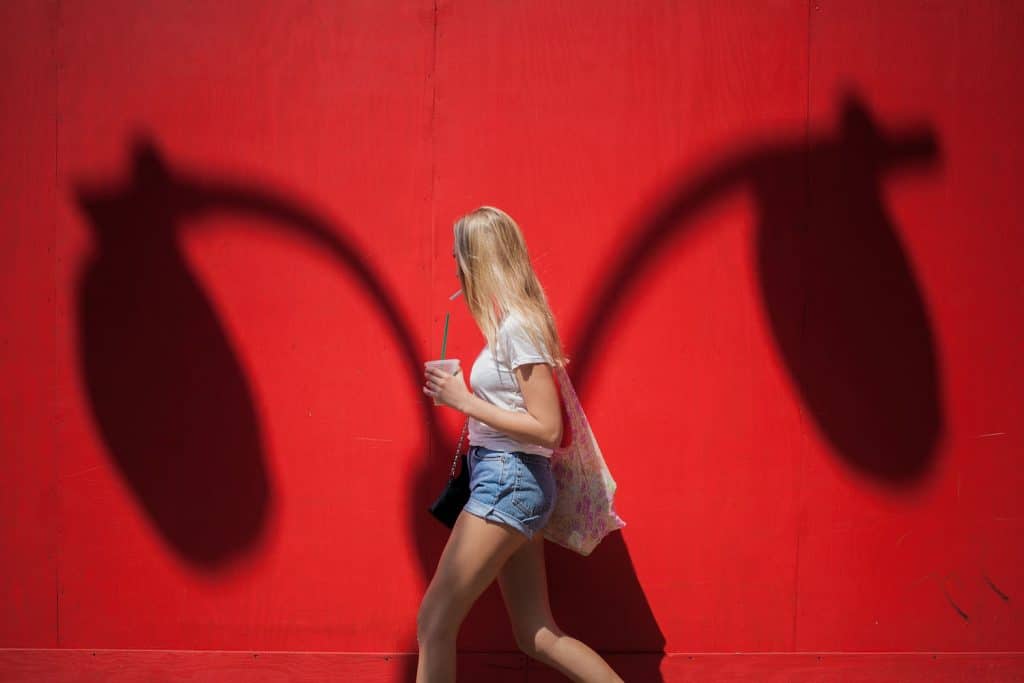
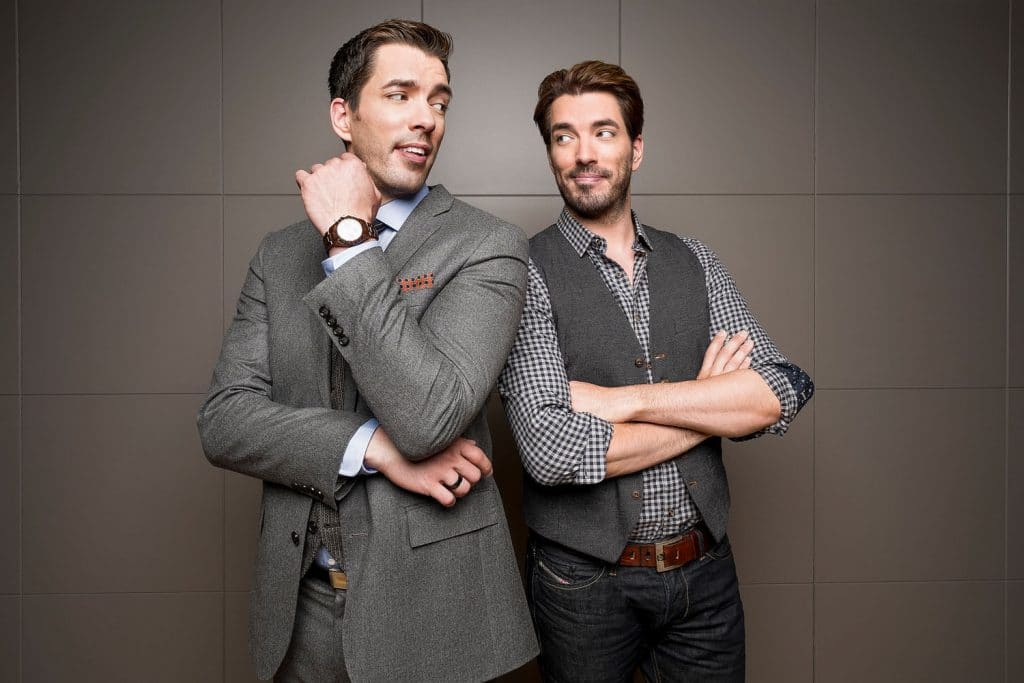
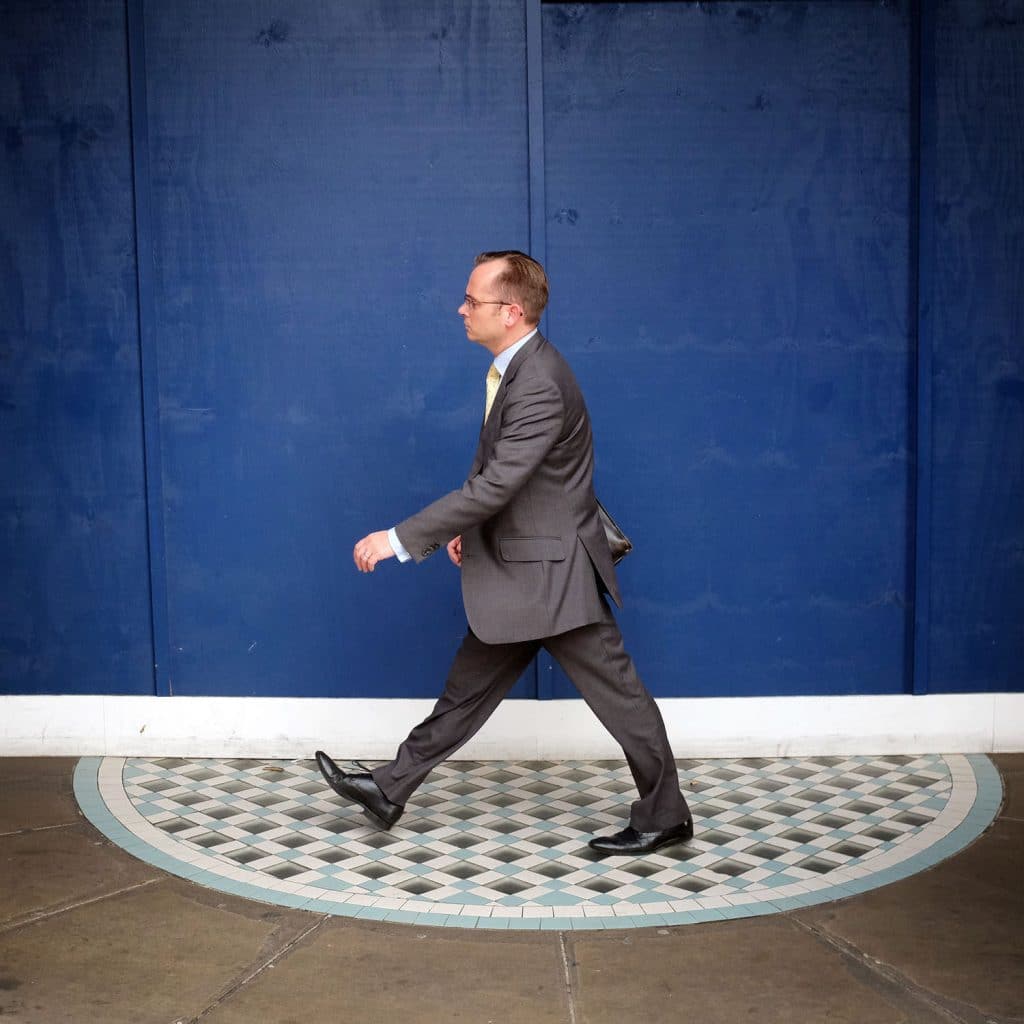
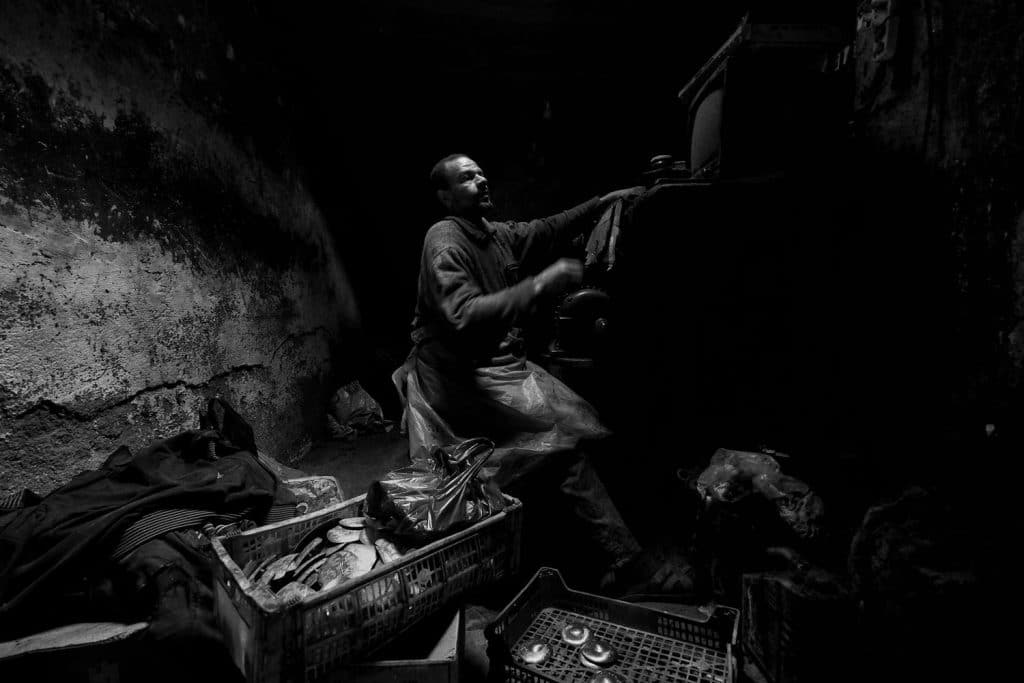
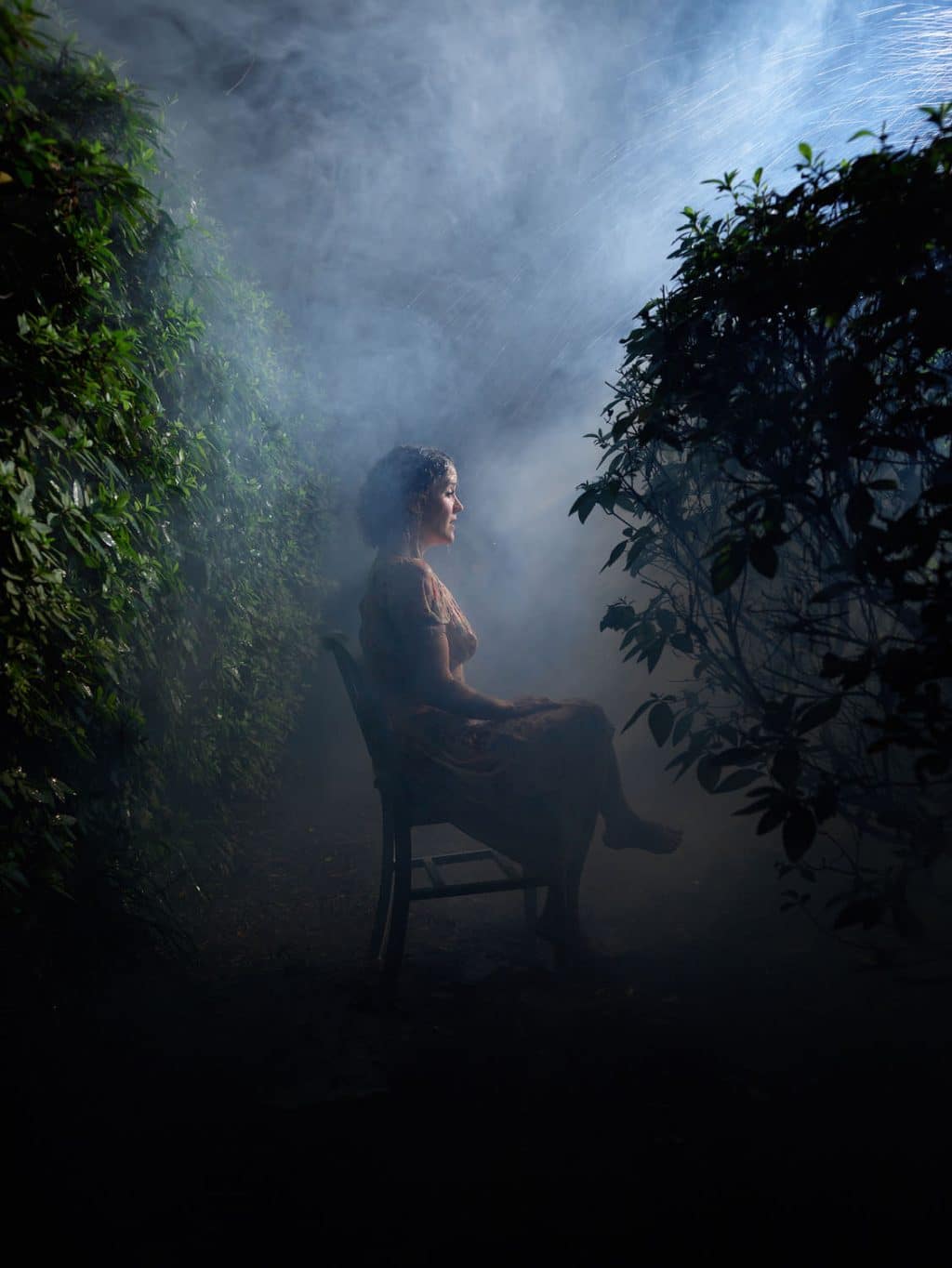
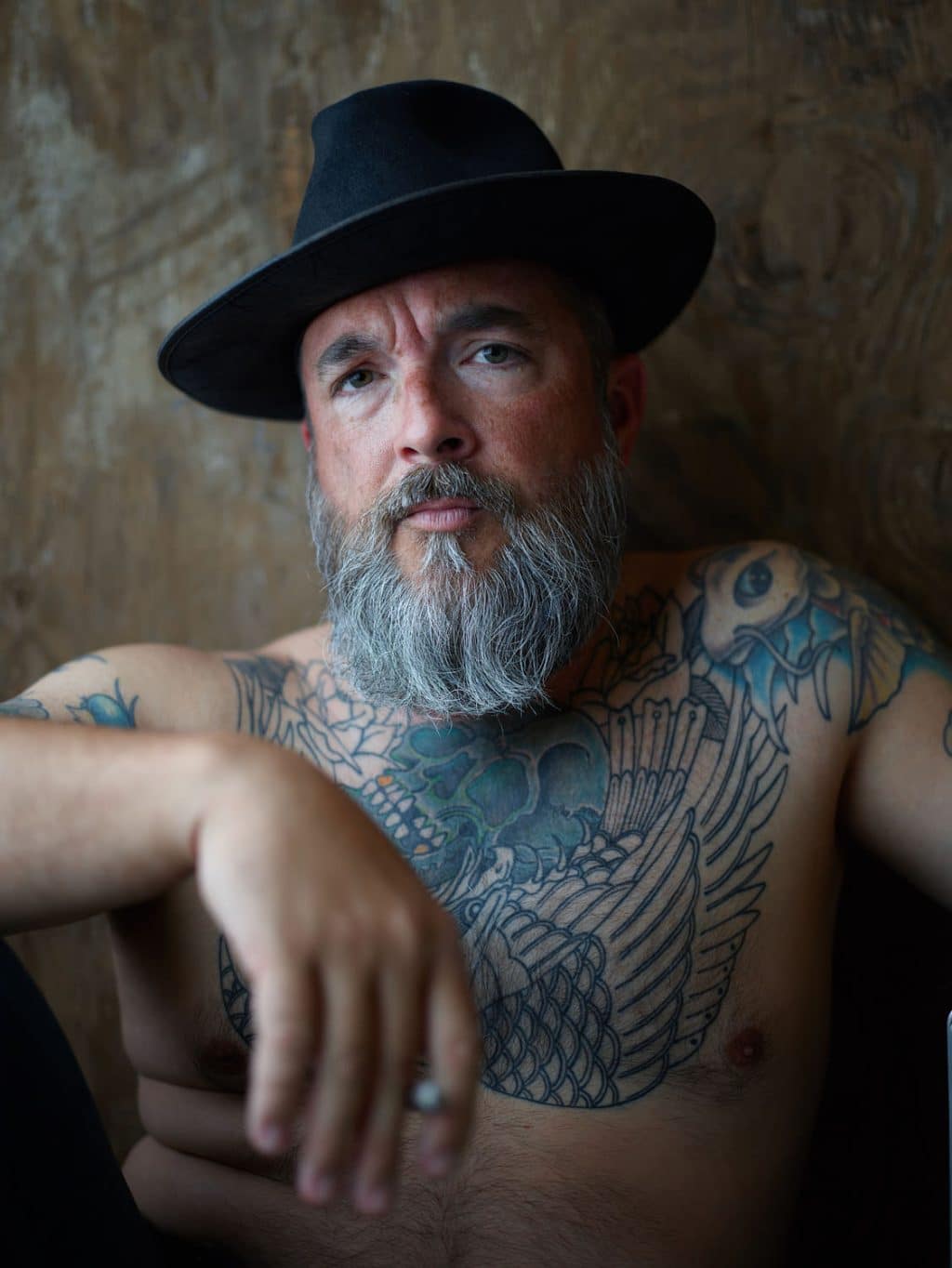
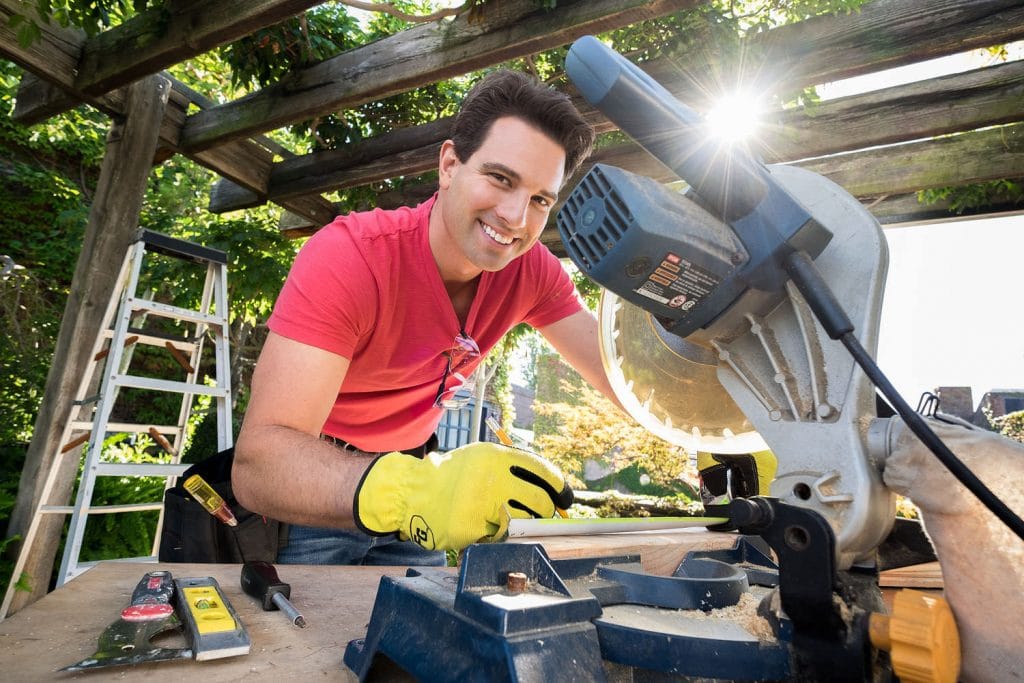
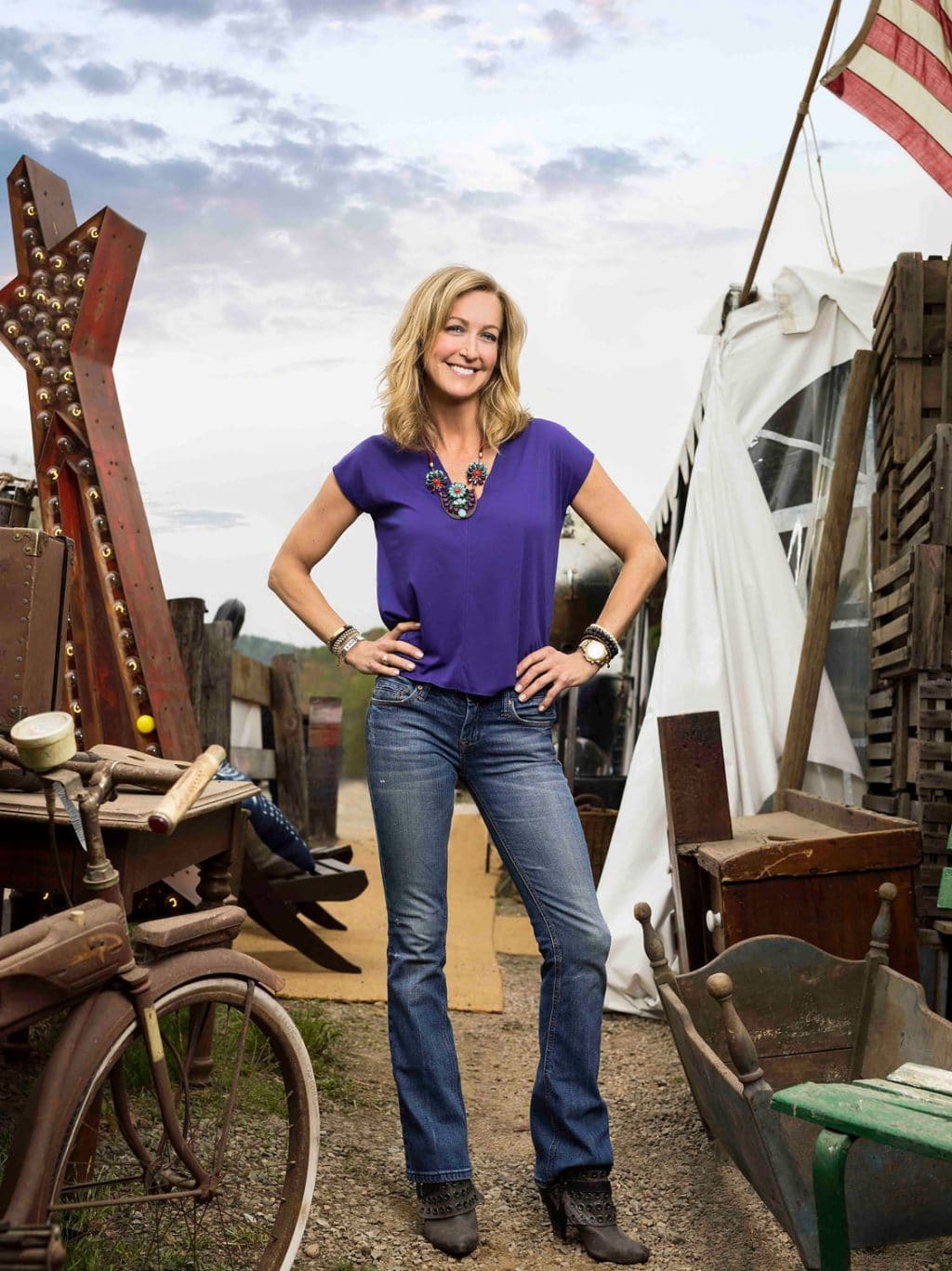
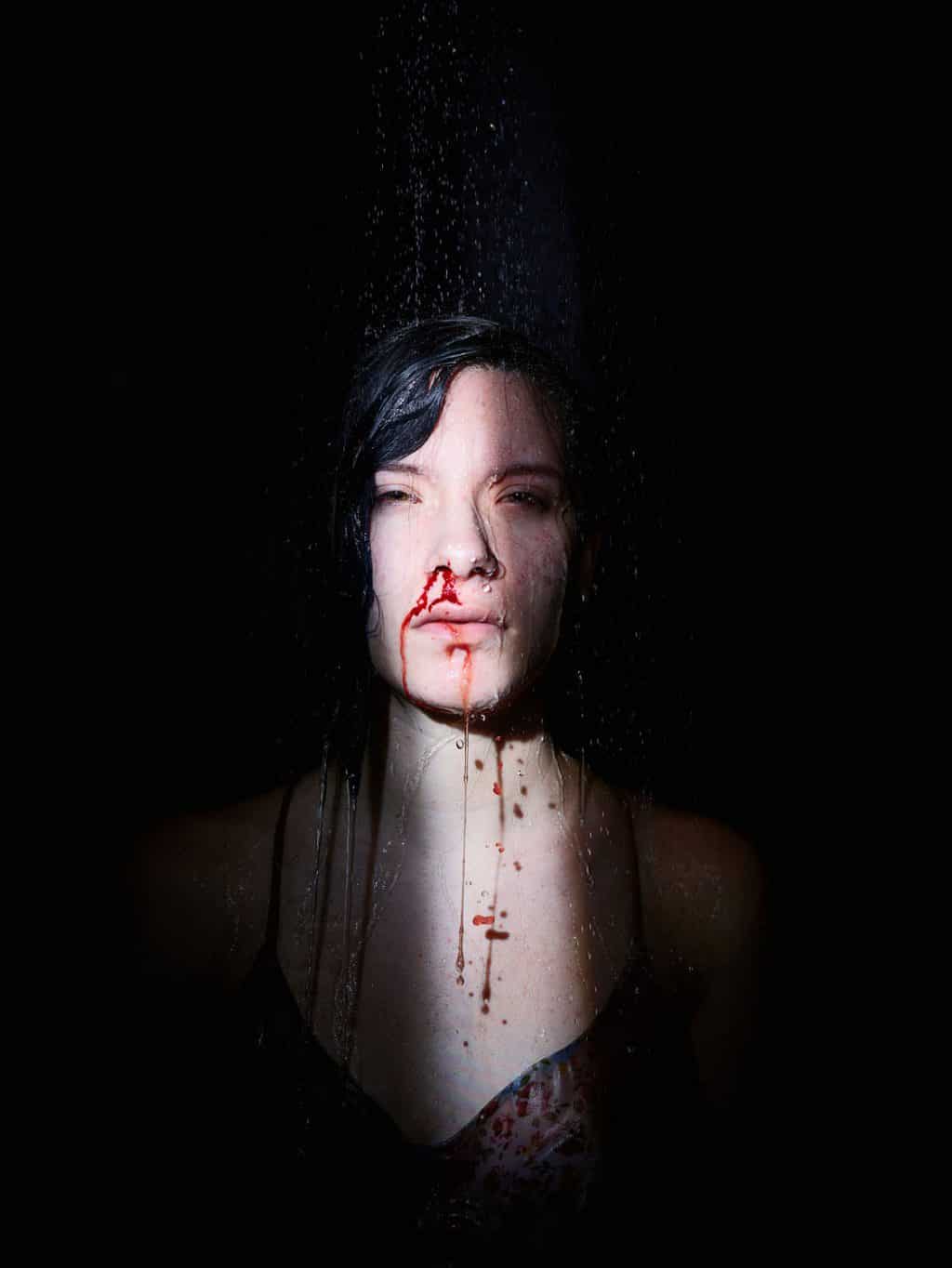
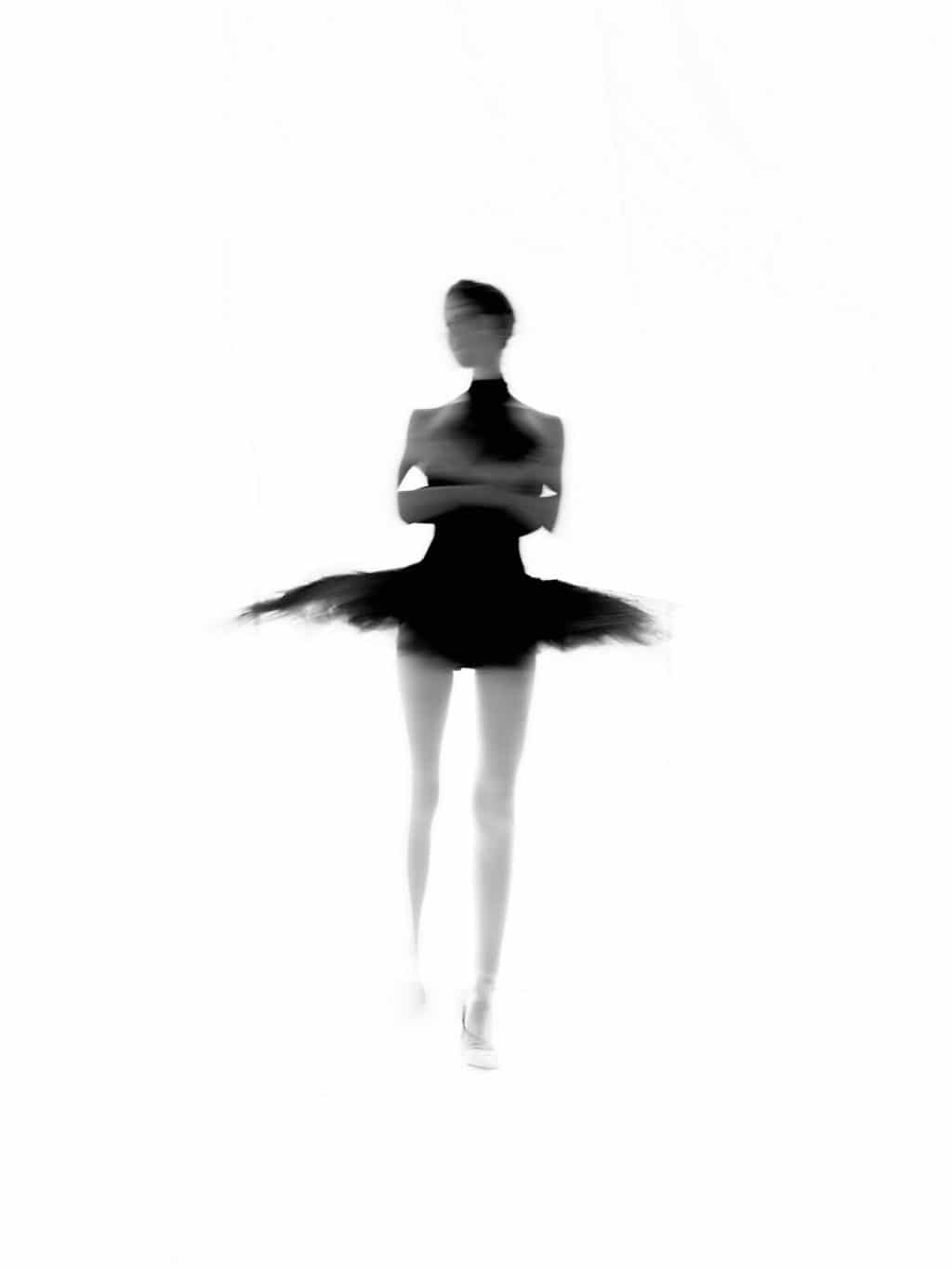
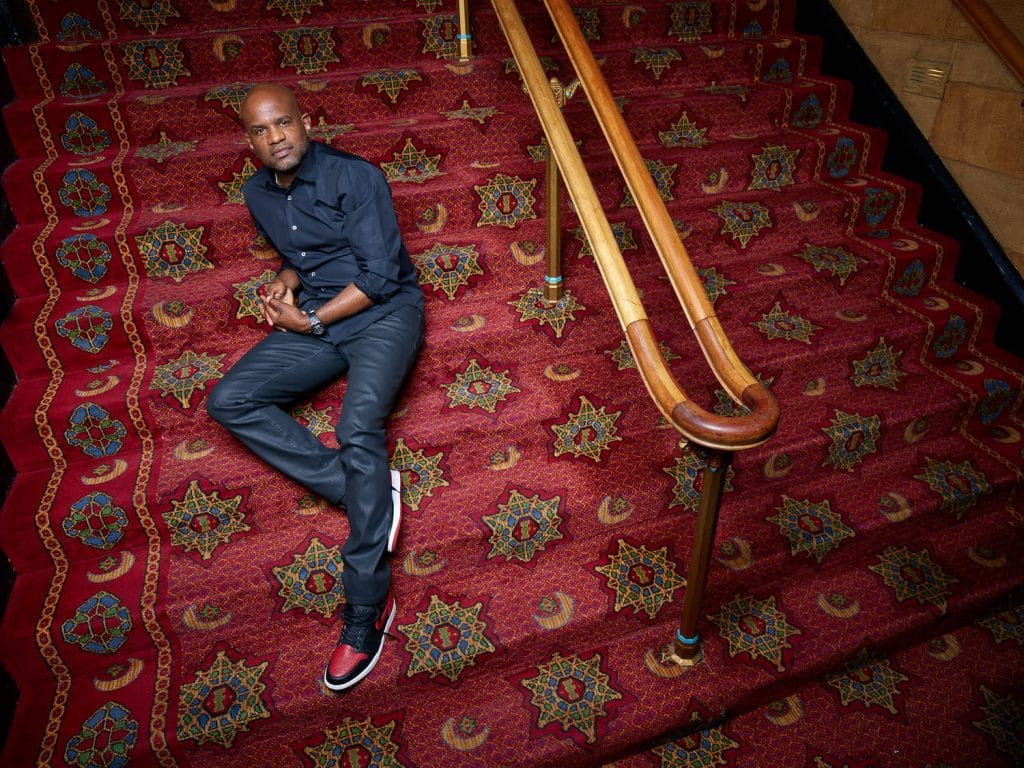
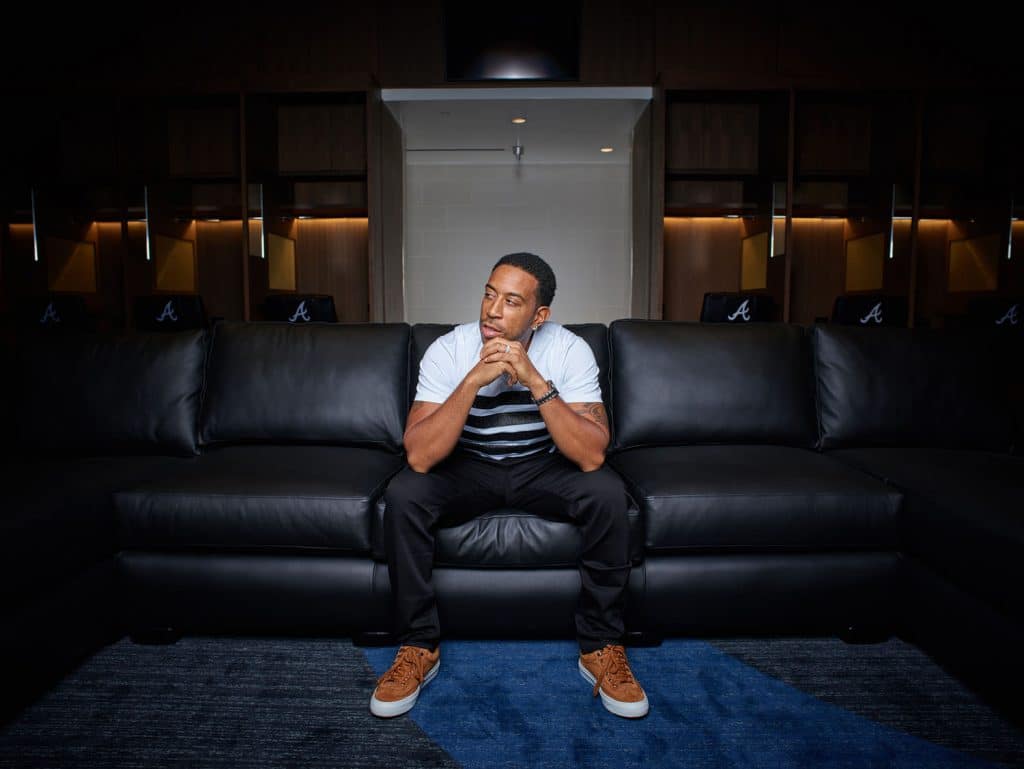
Zack's work is diverse and in between commissioned work, he self-assigns personal projects to stretch his creative muscles. Can you tell which ones are for his clients and which ones are for him?
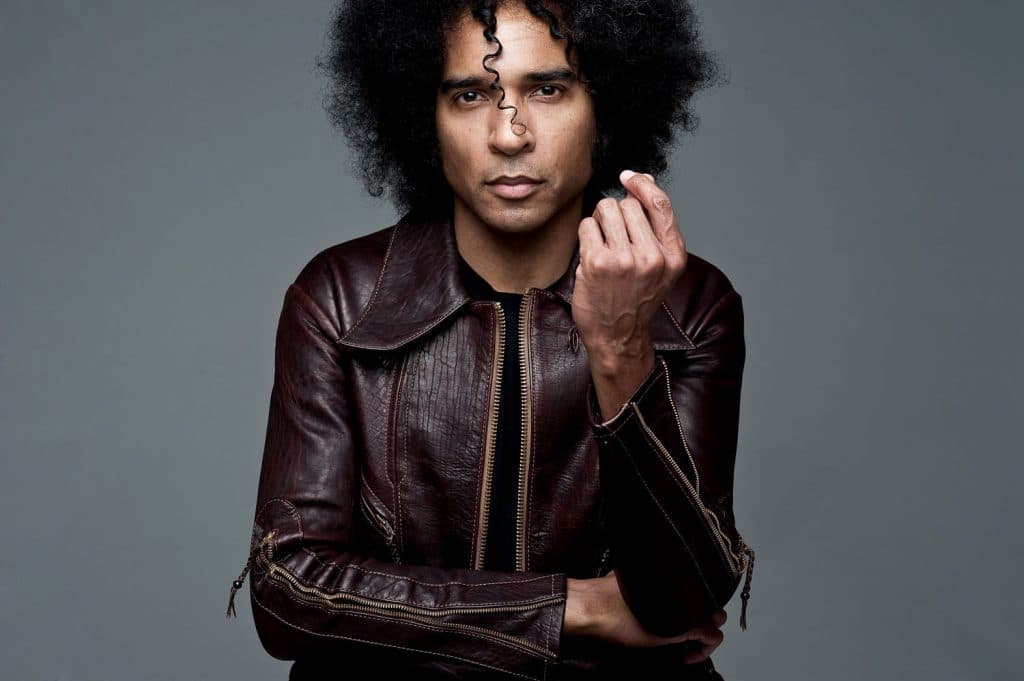

HGTV's Property Brothers Drew and Jonathan Scott.

Lara Spencer, host of HGTV’s Flea Market Flip, season 6.

Register Now For Silk Inspire 2017

You are going to meet and learn from world-class photographers like Zack Arias, at Silk Inspire. There is no better opportunity than right now to register for the event that runs from October 6th through October 10th, in Goa, India.

If you have made it all the way down here to this post, that's awesome.

But let me sweeten things for you. I have a few cool giveaways for those who register for Silk Inspire today. Once you do, email me your receipt (with today's date showing) and you will be qualified for a few cool things I am bringing with me. What are they?

Well, let's just say you could win one of six Black Rapid camera straps, one of three ShootProof annual accounts or one brand new LowePro camera backpack (valued at $350). Email your receipt to me here – seshu at tiffinbox dot org. First ones to email me win. That's the only way to keep this fair and you must be present at the event, to receive the prize in person. Good luck!

Speakers At Silk Inspire

Please watch the interviews with other Silk Inspire speakers: Arjun Kartha, Jen Huang and Brian Callaway. Plus, there are other incredible panelists!!
Filed Under: Conferences, Home Middle Left, Interviews, Photography Tagged With: atlanta, fear of lighting, fearlessness, georgia, Goa, India, off-camera flash, onelight workshop, Photographers, portrait photography, silk inspire, speaking, Teaching, traveling, Zack Arias

How To Use Panlight To Remotely Redirect Your Off-Camera Flash

December 19, 2014 by Seshu | Editor & Publisher

If you are a photographer who use off-camera flashes to photograph weddings or portraits, you are my kind of people. You like to create punchy images that separates your subjects from their backgrounds and make them truly stand out. Am I right?

The Problem

But we all experience a well-known scenario.

There you are, ready to make some sweet images of a wedding couple dancing the night away at their reception.

Your assistant or VALS (voice-activated light stand) is away in the Bahamas. You need to move that off-camera light down and out by about 32 degrees because your clients are losing themselves to the music and have moved from where you thought they would be to this new spot, near Uncle Bob and Aunt Maddy.

But you are about 30 feet away from the couple and the off-camera light you set up with a PocketWizard or a RadioPopper is another 10 feet away from them, making it near impossible for you to move like Spiderman to adjust the light angle and or direction. You are SOL.

Frustrating, right? I know your pain. I have felt it. Often.

The Solution

Thankfully, there is a new solution coming and it's called Panlight. I spoke with Mike Garrard, its inventor a few weeks back. As a Kickstarter campaign, it has already surpassed the goal he set. With only about 18 hours to go before the end of the campaign, this is the time to jump in and order one of these units. I am doing it myself because this is a tool that will come in handy if you are a wedding or a portrait photographer.

Now imagine you impressing the heck out of your clients by being able to adjust that off-camera flash remotely, from where you are standing. Can you feel that pain melt away? Your assistant could be sipping drinks on a beach for all you care, but you will be making bank with all the great images you will be creating for your clients. Sorry, but VALS may indeed become dinosaurs if you begin to use the Panlight. Plus, you won't have to jump around and get in Uncle Bob or Aunt Maddy's grid, like you used to. And, if those two had cameras anyway, you can wish them the best of luck as you go from one amazing lighting scenario to the next. Who wins? You do.

The Win

Yes, it can be that simple. Skip on out of this blog and check out Panlight now on Kickstarter or on the Panlight website, to learn more. But remember, once the Kickstarter campaign ends, prices will go up.

A special thanks to Kate McElwee, a Boston-based wedding photographer who introduced me to Mike Garrard of Panlight. And yes, she is backing this campaign as well.

Filed Under: Featured Post of the Day!, Interviews, Lighting, Photography Tagged With: angle of light, camera, direction, Flash, Mike Garrard, off-camera flash, Panlight, portrait photography, Portraits, remote control, wedding receptions

Using Sexy Light On The Beach

July 14, 2014 by MP Singh

Behind The Scene Look: How I Got That Shot

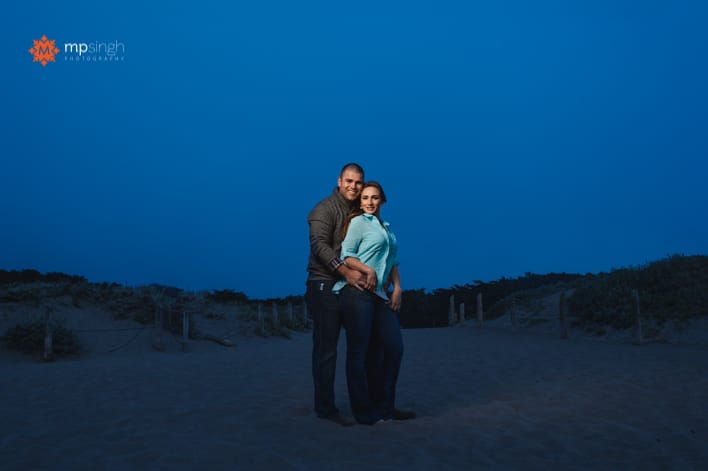
The image you see below was created as part of an engagement session. It was towards the end of shoot when we were at a beach and sun had already gone down. The park visiting hours were already over and there was a cop driving everyone out. And it was cold, the chill factor in the wind was sending shivers down our spines. We quickly grabbed couple of shots and drove out of the park.

MPSingh Photography - Couple On The Beach

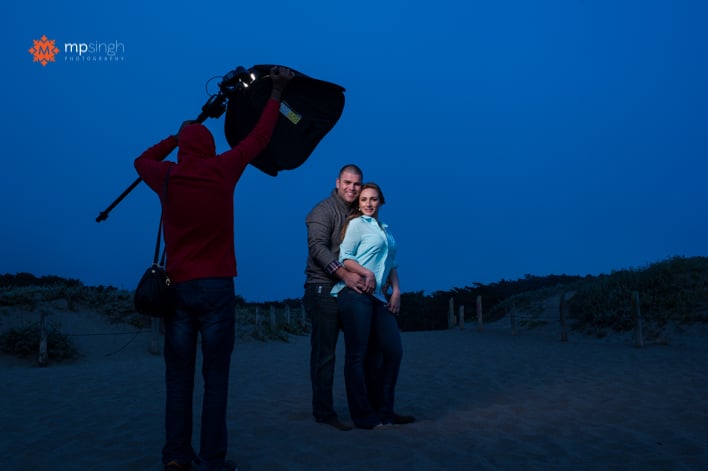
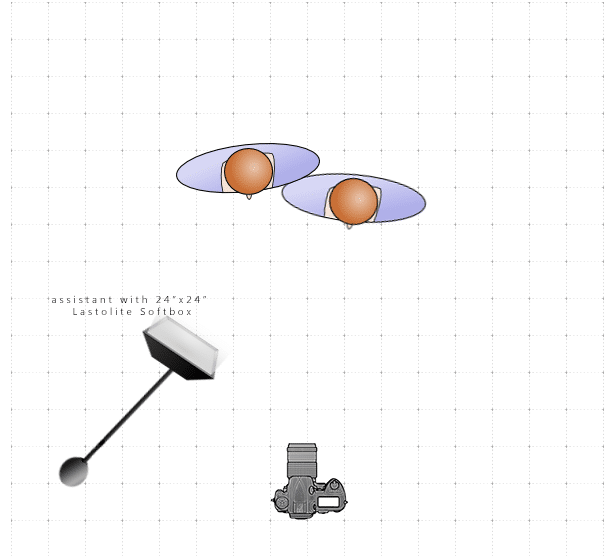
This shot was taken with the help of an off camera flash, Nikon SB900 inside a Lastolite 24″x24″ softbox, triggered with my trusted Pocket Wizards. The following is a lighting diagram showing the set up for this shoot.

MPSingh Photography - Couple On The Beach Lighting Diagram

The flash had a full cut CTO (color temperature orange) gel on it. I wanted to give the feel for the post dusk bluish night sky. So I turned my camera to tungsten white balance. This gives the blue tint to the whole image. To compensate the blue tone on the subjects and bring the skin color back to normal yellow/orange tones, the flash had the orange gel on it. The full cut CTO gel fully compensates for the tungsten white balance.

Another challenge was that we required the light to be very close to the couple and we wanted wide angle shot to include more of the background for context. So the assistant was in the picture.

MPSingh Photography - Couple On The Beach

The Photoshop Work

To fix that we took two shots, one with assistant lighting the couple and in the shot. Before the second shot, the assistant ran out of frame and switched off the light. So the second shot was taken with the couple without any light. Once we take these two shots it is very easy to do a composite in Photoshop:

1. Open both the images in Photoshop as layers, with the image with assistant as the top layer.

2. Auto align layers (Edit –> Auto-Align). When we don't use a tripod there is always a slight movement of the camera and the frame changes. To compensate for that, we have to align the layers.

3. Once the layers are aligned, select the top layer and use layer mask to mask out the assistant. Now we are using everything else from this layer except area where assistant was. That area is picked up from the layer beneath.

4. Make other changes as required.

And, voilá, we have our final image. Do you have any questions? Feel free to ask below!

Filed Under: Home Middle Right, Lighting, Photography Tagged With: adobe photoshop, camera flash, Color Gel, digital photography, Flash, image processing, Layers, off-camera flash, Orange Gel, photographic lighting

Going Wireless: PocketWizard For Off-Camera Flash

June 15, 2011 by Seshu | Editor & Publisher

The very core of the Strobist experience is to use your flash units off-camera or studio strobe units on location. There are a lot of options in the market now that can help you do just that. From personal experience, though, I have used the PocketWizard Plus II Transceivers. More recently I switched to Paul C. Buff's CyberSync system. Now I am considering returning back to PocketWizard.

These two videos below by Mark Wallace have convinced me to make the move back. The videos show how the new units work with the Nikon camera and flash systems. I suspect, however, the way these units operate won't be too radically different if you are using a Canon system. So everyone is welcome!

How To Shoot With PocketWizard MiniTT1 and FlexTT5

How To Use The PocketWizard AC3 Zone Controller

For using these units on a Canon system, check out these video tutorials.

By sheer coincidence, I won these units some time back. So, you'll see an “open-box” video very soon. Stay tuned! Thanks to Mark Wallace and Phil Bradon of Mac Groups for sending me the Nikon version of these PocketWizard units. I can't wait to go out and play with them.

Below, tell me if you have considered buying these units or you have already invested in a RadioPopper or some other wireless system. Do you work with flash off-camera or studio units for your shoots? Do you have questions on how to set those up? Would you find it useful if there were more tutorials posted here on Tiffinbox? Let me know!

Filed Under: Off-Camera Flash, Photography, Reviews Tagged With: camera flashes, cameras, digital photography, electronics, Flash, j. mark wallace, live preview digital cameras, nikon, nikon camera, off-camera flash, Photography, pocketwizard, red digital cinema camera company, shooting, strobist, technology, Video, video tutorials, zone controller

Flashing Is Not A Crime!

September 26, 2010 by Guest

Syl Arena is known around the world as much for his colorful persona as he is for his colorful hair. He freely admits that he has long been obsessed with light.

For the past year, Syl has been writing and shooting the Speedliter's Handbook which will be published later this fall. His first book, LIDLIPS: Lessons I Didn't Learn In Photo School is a collection of micro-essays on the philosophy of photography.

Each spring and fall, Syl travels the country teaching Speedliting seminars and workshops. He is also the founder and director of the Paso Robles Workshops. You should follow him on Twitter especially because he is giving away one lucky Tiffinbox subscriber a seat at one of his lighting workshops. Scroll down to read details about that awesome opportunity.

In case we've not met before, you should know that I'm a flasher… a long-time flasher. And I'm not shy about it. I am not one of those only-flash-when-it's-dark flashers. I like to flash in broad daylight. In fact, I often flash when the sun is high overhead and everyone can see me. The fact that it's really bright outside has never stopped me from flashing.

Syl_Arena_Chelsea-outside-Pipers

If you're not a flasher, ask yourself “why?” Is it because you think that flashing is wrong, or because you're shy, or because no one has ever showed you how to flash, or because you tried flashing once and didn't like the experience?

“I don't flash because…”
I’m always amused (and often concerned) when a photographer says, blogs, or Tweets, “I don’t use flash because…

Syl_Arena_Gelled-Light-Thru-Window

“I'm a purist and only use available light.”
First, there is no such thing as pure photography. Every photograph is an abstraction. No photograph is a perfect record of the entire moment that passed in front of the photographer. The mere act of pointing the camera at one part of the scene and not another is artificial. The activation of the shutter at one instant over another is artificial. The conversion of light into long series of numbers or into layers of dye on a transparent substrate is artificial. The manipulation of digital files in a computer is artificial. The re-creation of the light on a computer screen or piece of paper is artificial. So, I see no reason to limit one's actions because of a philosophy that is as artificial as the actions it rails against.

“I don’t need flash because I can always turn the ISO up.”
Let's be honest about this one. Crappy light at ISO 12,600 is still crappy light. For a painter, having more colors does not automatically make one a better artist. It's knowing how to work the paint with a myriad of strokes that adds depth to the painter's ability to express herself. Photography is no different. A better digital sensor is no substitute for learning how to see and use light.

Syl_Arena_Buster_HSS

“I always shoot in bright light, so I don't need flash.”
If you think the main use of flash is to provide light when there is none, then you're missing out on half the world of flash. No camera today can record the full range of brights and darks that the human eye can see. Photographers often avoid shooting under full sun because details are often lost in the shadows. Even in full-auto mode, today's digital cameras and flashes are brilliant at adding just the right amount of fill light to reduce the contrast of the shadows. The brighter the ambient light, the greater the need is to add fill light to the shadows somehow.

Syl_Arena_Smashin_Pumpkins

“Flash limits the shutter speeds that I can use. A sync speed of 1/250″ is too slow.”
High-speed sync (aka: Auto-FP sync if you're a Nikonian) is a Speedlite-only mode that enables you to shoot at virtually any shutter speed. So, lighting your subject with a Speedlite means that you can use a fast shutter speed to freeze high-speed motion or to saturate the sky by underexposing the ambient. Contrary to the popular myths, you can't do HSS with studio flash. Nor is a neutral density filter a good substitute. For more details on HSS, check out these articles: Simple Truths About HSS, Dimming The Sun – Part 1, and Part 2.

“Flash is unreliable. It changes from frame to frame”
Even among shooters who like to flash, there is the concern that the automatic flash modes (E-TTL for Canonistas and I-TTL for Nikonians) are unreliable because the flash power changes. Well that's exactly what E-TTL / I-TTL is supposed to do: change the power. When your flash is close to your subject, then you need less light from it than you do when your flash is farther from your subject. While these auto-flash technologies are not perfect, they can be amazingly useful in situations, like weddings, where the subject-to-flash distance is always changing. The real root the problem is a lack of understanding by the photographer about how the camera meters for flash — which is especially tough at a wedding where in one frame the bride in her white gown is the dominant element and in the next frame the groom with his blackhole of a tux is the dominant element. Learn how your gear works and the consistency from frame to frame will improve dramatically.

Syl_Arena_Jaime-on-off-camera-flash

“Flash always looks bad.”
This should be re-phrased as “On-camera flash often looks bad.” It's not the flash, it's the location of the flash that kills the shot. Anytime the dominant source of light goes right down the axis of the lens, then your subject will be lit equally on both sides. Without any shadows, there is no depth to the image — no shape to your subject. You don't need flash to flatten a shot; stand with the sun straight behind you and the same flat light will happen. When it comes to crafting great light with flash, the position of the flash and how you modify the flash is key. So, a bare Speedlite locked in your camera's hotshoe is a tough way to craft good light.

Syl_Arena_Mallory_gelled-not

“Flash looks artificial.”
Once you move beyond the issues with on-camera flash, another huge complaint against the look of flash is that it does not blend with ambient light. The color temperature of flash is about the same as daylight at noon. If you light your subject with flash indoors under tungsten light, the ambient-lit background will appear very orange or your subject will appear very cool. Likewise, if you are using flash to fill shadows at sunset, the fill light will be very cool and unnatural. In both of the situations, the use of a CTO gel on the flash will change the color temperature of the flash so that it blends into the ambient more naturally.

So, while I'm proud to be a flasher, I believe that flash is just another tool in my toolbox. My photos go out into the world without me. What matters to the viewer is the light that was captured within the frame — not how it got there.

Other Articles I've Written About Flashing (Particularly Small Flash)

15 Insights For A New Speedliter

It's Where You Put The One Speedlite You Have That Matters

Deciding How To Start With Off-Camera Speedliting

Consider ZOOM To Be A Speedlite Modifier

Deciding Between E-TTL and Manual

Shadowing and Other Revolutionary Ideas

Twitter Contest: Learn To Flash ByTweeting To Win A Seat

PRIZE

Win a seat at any of my upcoming two-day Speedliter’s Intensives (value $200)

• Seattle, Oct. 2/3
• Boston, Oct. 30/31
• Austin, Nov. 6/7
• San Francisco, Dec 4/5

RULES

1. Follow @Syl_Arena on Twitter.

2. Tweet this exactly:  Hey @Syl_Arena I want to learn to flash at the Speedliter’s Intensive http://bit.ly/coPPUC. Contest on Tiffinbox.org > http://bit.ly/dsGLsP

3. Contest ends at 1:00pm PDT, Thursday, September 30, 2010.

4. One winner will be selected at random by Tweetaways.com and announced via my Twitter account Thursday afternoon.

5. Multiple Tweets will disqualify you from the contest.

6. The prize is the ticket to the Speedliter's Intensive. Transportation, lodging, meals, that lens you've always wanted, etc. are on your own nickel.

7. You can give the registration code to a friend if you want to attend the Speedliter's Intensive yourself.

Filed Under: Photo Technology, Photography, Workshops Tagged With: ambient lighting, camera flashes, canon eos flash system, digital cameras, Flash, improve, Lighting, nikon sb900, off-camera flash, photographic lighting, Photography, shutter, speedlite 430ex, speedlite 580ex ii, studio flash, syl, use flash

Subscribe To Tiffibox Treats!

Looking for a well-curated email newsletter that will leave you inspired and motivated about your photography business? Sign up below!

About Seshu

Seshu creates relaxed portraits of families and high school seniors in Avon, Connecticut. He also leads a successful headshot photography studio in Connecticut, helping professionals from a variety of disciplines project the very best versions of themselves. He created Tiffinbox as a way of inspiring photographers, to create better images and successful businesses. [Read More]

Email Templates For Headshot Photographers

Email Templates for Headshot Photographers

Recent Posts

  • How Capture One Changed My Event Photography
  • 10 Steps To Stay Positive In Times Of Great Stress
  • Why You Need To Read “Personal Branding For Photographers” Now
  • How To Master Your Website Content Step By Step?
  • Tony Taafe’s TNT Method For Headshot Photographers

Recent Comments

  • Stephen Davison on Are You A Business Owner Who Is Smart, But Stuck?
  • Ben A. on Don Giannatti Clinches The 8th Annual Tiffinbox Award
  • Dan on Don Giannatti Clinches The 8th Annual Tiffinbox Award
  • Donald Giannatti on Don Giannatti Clinches The 8th Annual Tiffinbox Award
  • Stephen Davison on G.E. Masana’s 6 Strategies For Wedding Photography Success
  • Naveen Kumar on Weddings In India Are More Than Being At The Right Place And At The Right Time
  • kartick on Weddings In India Are More Than Being At The Right Place And At The Right Time
  • Leonid Farbman on 6 Uncommon Trends To Grow Your Photography Business
  • Willow and Finch Wedding Photography on 11 Reception Tips To Help Your Wedding Photography
  • Web Designer Malaysia on How To Optimize Your Squarespace Website For Search Engines
  • Creastan on An Interview With Photojournalist G.M.B. Akash
  • Cindy Brown | Atlanta on An Open Letter To A Local Photographer

Become a Patron!

Copyright © 2026 · Tiffinbox · Site Design by Heather Mackan Creative · Built on Genesis