• Photography
  • Interviews
  • Business
  • Reviews

Tiffinbox

Inspiring Photographers

  • Home
  • About
  • Blog
  • Contact

3 Factors That Make You A Professional Photographer

January 26, 2014 by Aaron Hockley

Regardless of photographic genre, the primary factor a client will use to make their photographer hiring decision is going to be the photographer's images; if they see that you can produce great photos, that's going to be the most important thing. But there are a number of supporting factors that distinguish a true professional photographer; things that aren't always visible in your photos; but they contribute behind the scenes to being able to consistently deliver a great client experience.

A Professional Has Redundant Gear

I never arrive at a photo shoot with only a single camera, lens, or light; and neither should you. Like everything else, camera gear will break, whether it's just worn out or accidentally damaged. An equipment failure shouldn't derail a wedding, senior portrait session, commercial shoot, or other client endeavor. Responsible pros will own or rent an appropriate amount of gear to work through the occasional problem.

On Stage | Aaron Hockley

A Professional Photographer Is Insured

As a professional, it's good business to have insurance. Equipment insurance will cover your essential tools you use to make photos. Liability insurance will protect you if a client trips over your tripod. Errors and Omissions insurance will protect against other failures such as missing a critical photo in a scene that can't be re-staged. If you're not yet insured, consider the risks.

Balloons | Aaron Hockley

A Professional Photographer Knows Other Professional Photographers

It's the night before a big wedding. Or the morning of a day in your studio booked solid with clients. Maybe you're slated to head out first thing in the morning to set up for a day of executive portraits on location for a large company. And now you're violently ill. What's going to happen? A pro is going to have established connections with other pro photographers in the area that could potentially cover in a pinch.
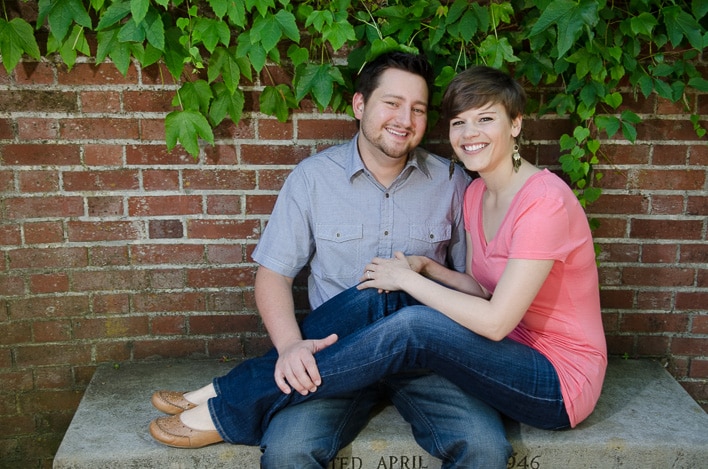
Jordan & Sara | Aaron Hockley

Be Professional and Proud

Be a professional; and be proud of that. Your clients want great-looking photos, but they also want assurance that you've done the work to make sure that can happen. Let them know about what makes you a pro; it's a benefit to your client and they ought to know that you've thought about these factors. I can help them understand the value in hiring you rather than that guy off of Craigslist that'll do the job for 1/4 of your rate.

So, do you agree or disagree with Aaron Hockley? What other factors would you add to this list? Sound off below in the comments section!

Filed Under: Home Middle Left, Photography, Photography Business Tagged With: 3 Factors, A Professional, Insurance, Liability Insurance, photographer, professional photographer

How To Get “The Big Picture” Of Your Photography Business

January 14, 2014 by Seshu | Editor & Publisher

Mr. Farnsworth was a terrific music teacher. Affable, yet stern. He would tell me each time I would return to take drum lessons, “Seshu, failing to practice is practicing to fail.”

It’s taken me nearly 30 years to absorb that. Sometimes, it would be obvious that getting my stuff done in time was beneficial and sometimes procrastination would get the better of me and I paid dearly. Still, creating a plan or a workflow and being organized simply has not come naturally to me.

Is that how you feel at least a few times a year? Do you feel that being organized would create at least a semblance of efficiency? Have you struggled to keep track of your client contact information or sales tax deadlines? Are you sometimes delivering your client orders later than when you promised them?

My friend Eric O’Connor, a wedding photographer in Chicago, tried to get me to think in about workflow. Several times. I remain in awe at how his allows him to photograph 30 weddings a year and be a father and a husband.

“Creating a system,” he told me once, was the ticket to being stress-free and happy.

I have a short stack of scratch paper filled with workflow ideas and what I would do the minute a potential client rang me. I had steps that I would follow after the portrait session was booked. But what would come after the shoot and in what order? Sadly, I had too many ideas and no action. This is mostly because having and maintaining a system requires clarity of thought and the “D” word … discipline.

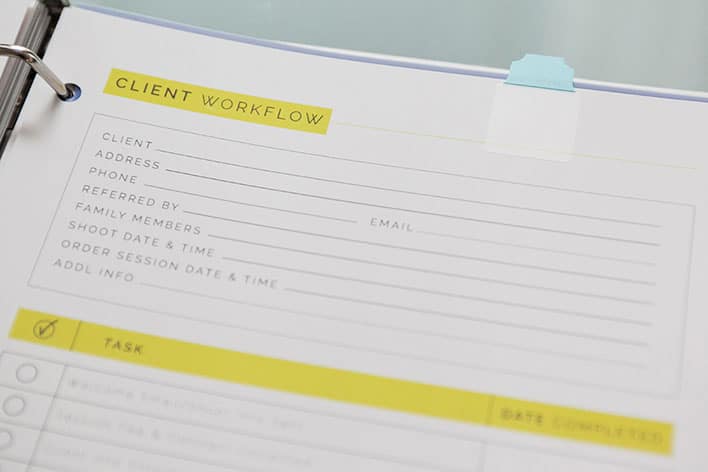
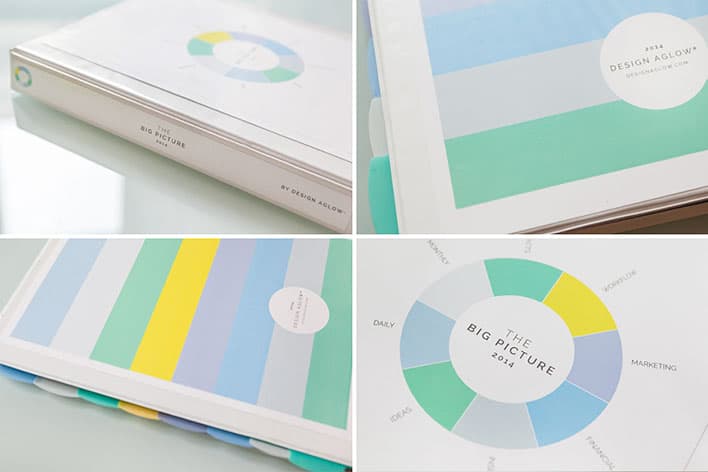
Thankfully, Design Aglow is the photographer’s friend. I lean on the team there to provide me with ideas and templates. Just in time for the start of the new year, they launched a photographers’ studio planner called The Big Picture.

The Big Picture: Essential Studio Planner

The Big Picture: Essential Studio Planner

The Big Picture: Essential Studio Planner

Like all their templates, The Big Picture, does not disappoint when it comes to how it is presented. Minimalistic design meets elegance. The introductory section says, “it’s a repository for your hopes and dreams.” So true.

The Big Picture guides you through a short writing exercise where you enunciate your goals. Then you are gently coaxed into breaking down your goals into actionable tasks. Huge win for me.

There are templates for daily, weekly and monthly activities surrounding your studio. The exercise is in writing it all down and being able to refer back to it constantly. I think this is brilliant because it instills that sense of discipline and accountability to oneself that I mentioned above.

Keeping track of clients, venues and vendors (mostly for wedding photographers) is now easy as 1-2-3. There is a questionnaire and a time table that helps you through your online and off-line (local) marketing.

Want to track your website and blog statistics? Yes, there is a rather intricate table for that too. The Big Picture also includes income and expense reports that you fill out and also a mileage tracker (which I have usually forgot to log in the past).

The Big Picture ends with a long list of recommended business books one should read to stay informed and inspired. There were quite a few in this list that I hadn’t even heard of before. So, Design Aglow, thanks for that too!

I don’t think this team has missed any detail when it comes to putting this studio planner together. I know as I launch my new website and business this month, The Big Picture is going to help me stay focused and remain efficient through the year. It’ll be a binder that I take with me to client meetings and I’ll refer to it when I am trying to assess my business. It promises to provide me a macroscopic view of my business and will tell me about its health from month-to-month. I no longer have to fret about keeping tabs on my workflow or if my quarterly sales tax payments are late.

Now, there are a couple of things I would have liked to have seen in The Big Picture download: 1) InDesign files to further customize the templates and 2) perhaps down the road, an electronic version that we can refer to while we are in the field, say an iPad application that could display all of these bits of information?

[UPDATE: Both InDesign & Photoshop files are included! I had failed to open all of the folders that came as part of the zip'd download file! Sorry about the error!]

That said, The Big Picture is a remarkable achievement because it so neatly brings so many elements of one’s business in an easily accessible folder or binder. I know there are several other options in the market but as a die-hard Design Aglow fan, I have to urge you to take a look at this product first.

On January 15th (that’s tomorrow), the introductory pricing of $69 ends. Make this the first business expense you enter into The Big Picture for 2014!

In other words, buy it now.

Filed Under: Business, Most Popular Posts, Photography Tagged With: artists, Business, Clarity, efficiency, organization, photographer, Photographers, Photography, planning, productivity, Success, tracking progress

3 Important Tips For Photographers To Choose The Right Social Media Channel

March 15, 2013 by Aaron Hockley

This is Aaron Hockley's third guest blog post. Aaron is a professional photographer and writer who tweets too much and blogs a few times each week. His professional work finds him working with businesses for events, publicity, and editorial work; he also creates abstract and travel photos for leisure. In addition to photography for clients Aaron often works with other photographers to help them understand and refine their online and social media presence. Read Aaron's first blog post here. And, his second post here.

How's your social media life today?

Have you Tweeted? Pinned? Instagrammed?

What about LinkedIn? Facebook? Flickr?

Feeling overwhelmed? You're not alone. There are a lot of social networks and social media outlets that compete for our time as photographers. One could probably easily fill an eight-hour workday with nothing but online social media activities. That wouldn't leave time for actually making or editing any photos!

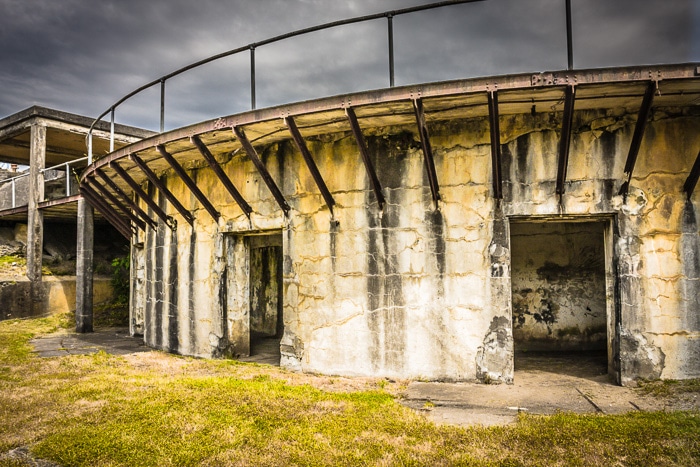
Post-Storm Fort | Aaron Hockley

How do you decide where to spend your effort with social networking? I think you can make those decisions based on three factors, and one of them is a bit of a cheat.

1) Where Are Your Clients (or Fans)?

When we look at social media marketing or social networking from the aspect of trying to grow one's photography business, the online world is no different than the offline world. If you're engaged in offline advertising, mailers, networking, or other marketing efforts, you're (hopefully) targeting your audience. If you're trying to sell your senior portrait services, you're targeting high school juniors and seniors rather than sending a mass-mailer to everyone in your city. The same principles should apply online.

Identify your ideal clients. We already mentioned high school seniors if that's what you do. If you photograph weddings, you're looking for brides and can make some generalizations about their age and, depending on your positioning, income levels. How many wedding planning boards are there on Pinterest? Thousands? Millions? If I shot weddings I'd be all over that. Do you make fine art landscape images? Odds are that you know something about your typical buyer. If you're a commercial shooter, you probably want to connect with marketing folks, agencies, art directors, and the like.

Figure out where those clients live online. For high school seniors, right now the buzz is that Twitter and Instagram are the most popular networks. Corporate types are found on LinkedIn and increasingly on Twitter. If you want to find brides, Facebook is a good place to be and to connect with others in that segment. I'm seeing a fair amount of discussion on Google+ that involves folks willing to buy fine art prints and books.

2) Where Are Industry Connections?

Building relationships with clients (both existing and potential) is one aspect of social networking, but the other big area that can benefit photographers is connecting with industry professionals. Developing connections with other photographers, manufacturers of photo equipment, and vendor partners can have various benefits to your photography. In some cases, “it's who you know” can lead to referrals. Perhaps getting to know other industry folks can lead to publicity or an “in” with a gear manufacturer. Maybe you just want to bounce ideas or problems off of someone who has been in a similar situation.

Right now, I'm making the most connections with other photographers and industry folks on Google+.

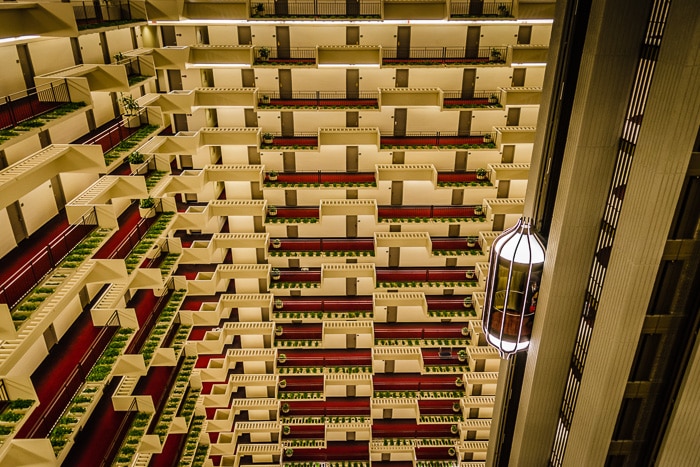
The Atrium Transport | Aaron Hockley

3) Do You Just Want to Have Fun?

If your purpose in social networking is purely to have fun, then heck, do whatever you want … but don't complain that you're not getting business results if you're not making social media choices based on business criteria.

Lowering the spout | Aaron Hockley

So … Where Do You Go?

There's not a single right answer. I've given you some ideas above, but ultimately you need to look at your business and figure out what makes sense for you. You don't have to be everywhere, on every social media channel. You can't be everywhere. It's okay to ignore a social network that isn't relevant for your business or area of interest. Trying to reach retail photographer customers? They're not likely to book you via LinkedIn. You probably won't pick up a corporate job via your Instagram images. Look at what you do, where you want to be, and where your clients and partners are hanging out. Be there, and don't feel bad about about ignoring other places.

Filed Under: Marketing, Photography Tagged With: 3 Tips, aaron hockley, Linkedin, photographer, social media, Social Media Marketing, Social Networking

Your Photography, Your Website, Your Success

December 6, 2012 by Scott Wyden Kivowitz

Scott Wyden Kivowitz is a New Jersey Photographer and the Community & Blog Wrangler at Photocrati, NextGEN Gallery and the Photographers SEO Community, teaching other photographers on how to increase business with their website.

These days, websites are so important for photography businesses. They can be used as a marketing tools, a sales tool and even an accounting tool if so desired.

WordPress is the most popular website platform among the industry, and most industries for that matter. After picking from WordPress photography themes, many photographers are looking for advice on what to do or where to go next. With WordPress being such a flexible platform for websites, it is understandable that someone can be overwhelmed at first.

photography-website-ebook

This is where a new eBook comes into the picture. (pun intended) 10 Tips To Supercharge Your Photography Website contains advice from ten photographers who have done the legwork of figuring out some secrets to website success.

For example, Jamie Swanson of The Modern Tog talks about local marketing and SEO by using a website. Justin Balog, of HOSSedia, talks about using your blog as an education resource to attract clients. Brian Matiash, of onOne Software, talks about using social media to further promote your work.

Photographers in the eBook:

  • Jamie Swanson
  • Andrew Funderburg
  • Angela Pointon
  • C.C. Chapman
  • Zach Prez
  • Brian Matiash
  • Chris Frailey
  • Justin Balog
  • Rosh Sillars
  • Jodi Friedman

Even with the three examples and the tips from seven photographers, Photocrati has added their own advice to the mix.

“Choosing a WordPress theme is very personal, even when choosing for a business. As photographers, we are visual people and tend to lean towards more visual themes, which completely makes sense. Of course, you can pick between free and premium (paid) themes, but premium themes provide a lot of advantages.”

So as you can see there is a lot to be learned in the ebook. Did I mention it's free?

Aaron Hockley is a photographer (and speaker) in Vancouver, Washington. He downloaded a copy of the photography website eBook and sent me an email saying:

“Great tips for photographers of all sorts – whether you shoot people, artwork, or landscapes, these website strategies will apply to your site.”

So with that, I urge you to visit the eBook page and download your free copy, because it's only a few clicks away.

Filed Under: Business Tagged With: 10 Tips, photographer, Photography, Photography Themes, photography website, wordpress

The First Job For Photographers: Get To Know The Business

September 24, 2012 by Seshu | Editor & Publisher

This is Russ Klettke's interview with Brian Dilg, who is Chair of Photography at the Photography School at the New York Film Academy. In addition to 20 years of professional teaching experience around the world, Dilg's work has been published in The New York Times, Time Out, Village Voice and covers of books published by Simon and Schuster, Random House and Hyperion. He has also worked in post-production for major fashion houses, consumer products manufacturers and media organizations. He also has won awards as a filmmaker and worked as a director, cinematographer and editor of narrative, documentary, music video and commercial films.

Q: What do you tell photography students about careers in the industry?

As an instructor at a New York-based school of photography (The Photography School at the New York Film Academy), I regularly provide advice to student commercial photographers and photojournalists about the kinds of careers they may achieve. It is hugely beneficial for them to envision the heights to which they can aspire – we are is New York, after all, where you can become the best of the best in almost every endeavor – but it is also essential to consider the entry point at which one can enter the profession.

I have a quick way of summarizing what a career in photography likely will entail. In your first job, you probably will be someone’s assistant, and a lot of your time will not involve taking pictures. Across the later arc of your career, you are likely to be self-employed and therefore must have business skills – in addition to your acumen and artistry as a photographer.

Q: So, they are to start from the ground up – but does that mean actually taking photos?

Let’s discuss first things first. The role of the photographer’s assistant, or someone who works in the administrative and support side of photography, is not just about paying dues. You will learn vital parts of what makes a photographer valuable to his or her clients and their craft. Between what you shoot and what is ultimately used in print editorial, multimedia advertising or online publications there is a lot of editing, organizing, legal documentation, processing and selling. Long-term, every photographer has to know how this works and how to manage it.

Q: We suppose this varies, depending on the type of photographer the student hopes to be one day, yes?

The specific path you wish to take – smaller-scale commercial (including weddings), larger-scale commercial (fashion and advertising photography), and photojournalism – would likely involve these entry level positions:

Smaller-scale commercial – Most established photographers need assistants to help with lighting, equipment, on-location support and administrative tasks. Work with a pro and learn to be a pro. Often, the assistant will price out a job (some use contract templates found on Blinkbid.com) and handle client contact to some extent.

Larger-scale commercial – The digitech assistant on advertising, high-end fashion and other large-budget commercial shoots may appear to be the most popular person in the production. As they work on the computer tethered to the camera, clients and talent might be clustered around them as they identify whether or not the shoot is getting them what is intended – in real time. The work doesn’t end there, as a lot of organizing and file backup is required post-production, along the path that selected images take to become a final product.

Photojournalism – While the budgets for photojournalists are shrinking for print media, rare is the project where the assistant can travel with the photographer to newsworthy locales – unfortunately. But there is plenty for the photojournalist’s assistant to do in the office: editing, cropping, backing up files, processing prints and communicating and invoicing are all in their role. This person gets a first-hand look at what clients (media) want and need, and the value they place on good images.

Of course, assistants in each category need to be working on developing their own skills and portfolio, even when that is not their full-time responsibility. For example, the photojournalist should seek out local media assignments, enough to develop credits and tear sheets. Commercial photographers-in-training should jump at any opportunity to work with smaller clients.

Q: Is it essential for the photographer to also be a businessperson?

Concurrent with developing a portfolio, the photographer needs to become comfortable with the business imperatives of a photography career. Indeed, the first job for photographers is to get to know the business. In addition to the skills development mentioned above, the future independent photographer needs to understand the importance of selling in their career. By selling, we mean relationship development. You’re only as good as you hope to be and working as much as you want when clients know you and trust you. That boils down to a personal style, your professionalism, how fun you are to work with and your ability to establish reasonable expectations on the part of your clients – on top of providing top-quality photography.

Do you agree that the first job for photographers who are either professionals or want to go pro should be to get to know the business? Sound off below in the comments section. Your voice counts!

Filed Under: Business, Photography Tagged With: commercial photographers, new york film academy, photographer, Photographers, Photography, photography school, Photojournalism, school of photography, visual arts, Wedding Photography

  • « Previous Page
  • 1
  • 2
  • 3
  • 4
  • 5
  • …
  • 18
  • Next Page »

Subscribe To Tiffibox Treats!

Looking for a well-curated email newsletter that will leave you inspired and motivated about your photography business? Sign up below!

About Seshu

Seshu creates relaxed portraits of families and high school seniors in Avon, Connecticut. He also leads a successful headshot photography studio in Connecticut, helping professionals from a variety of disciplines project the very best versions of themselves. He created Tiffinbox as a way of inspiring photographers, to create better images and successful businesses. [Read More]

Email Templates For Headshot Photographers

Email Templates for Headshot Photographers

Recent Posts

  • How Capture One Changed My Event Photography
  • 10 Steps To Stay Positive In Times Of Great Stress
  • Why You Need To Read “Personal Branding For Photographers” Now
  • How To Master Your Website Content Step By Step?
  • Tony Taafe’s TNT Method For Headshot Photographers

Recent Comments

  • Stephen Davison on Are You A Business Owner Who Is Smart, But Stuck?
  • Ben A. on Don Giannatti Clinches The 8th Annual Tiffinbox Award
  • Dan on Don Giannatti Clinches The 8th Annual Tiffinbox Award
  • Donald Giannatti on Don Giannatti Clinches The 8th Annual Tiffinbox Award
  • Stephen Davison on G.E. Masana’s 6 Strategies For Wedding Photography Success
  • Naveen Kumar on Weddings In India Are More Than Being At The Right Place And At The Right Time
  • kartick on Weddings In India Are More Than Being At The Right Place And At The Right Time
  • Leonid Farbman on 6 Uncommon Trends To Grow Your Photography Business
  • Willow and Finch Wedding Photography on 11 Reception Tips To Help Your Wedding Photography
  • Web Designer Malaysia on How To Optimize Your Squarespace Website For Search Engines
  • Creastan on An Interview With Photojournalist G.M.B. Akash
  • Cindy Brown | Atlanta on An Open Letter To A Local Photographer

Become a Patron!

Copyright © 2026 · Tiffinbox · Site Design by Heather Mackan Creative · Built on Genesis