• Photography
  • Interviews
  • Business
  • Reviews

Tiffinbox

Inspiring Photographers

  • Home
  • About
  • Blog
  • Contact

Colin Breece, ShootProof.com – Inspire Interviews: Episode 11

January 1, 2015 by Seshu | Editor & Publisher

Colin Breece is the co-founder of ShootProof.com, the photography industry's leading provider of proofing galleries for wedding and portrait photographers in the world.

When I first heard of ShootProof, I was stunned by their business model.

ShootProof Logo

“We empower photographers to upload, share, sell and have products printed for their clients without taking commission from their sales.”

What? No double dipping? I was truly gobsmacked by their move. Intrigued, Colin and I set up a time to chat and in the course of getting to know each other, I boldly asked Colin to sponsor a Gary Vaynerchuck interview. He didn't blink once. His response was, “Sure, ShootProof would love to do that.”

I was floored again.

About a year later, I ran into Colin at Inspire Photo Retreats. He had a relatively small booth, but what I noticed was how he engaged with those who stepped up to speak with him. He was excited to speak with photographers about ShootProof; not in a hard-pitch kind of way that one would expect at a conference, but more in line with how his product could really help photographers make a difference for their businesses. I knew then that ShootProof was a natural fit for Inspire and I am thrilled to know that he and ShootProof will be back again.

We sat down to chat about his experiences in the past and I asked him what motivated him to come back to Inspire Photo Retreats.

You still have an opportunity to be a part of Inspire Photo Retreats. I do hope you will come. Not only will you network with other photographers, but you will get a chance to step up and chat with people like Colin Breece about how ShootProof can benefit you. That kind of access is often hard to come by at large, crowded, tradeshows or conferences. That's how Inspire Photo Retreats is different.

Inspire Photo Retreats - February 9-11, 2015, Portland, Maine

Do yourself a favor and register for it now. The conference takes place from February 9th through the 11th in Portland, Maine.

Filed Under: Conferences, Interviews, Photography Tagged With: Colin Breece, conference, Inspire, Inspire Photo Retreats, interview, Photographers, Photography, portrait photographers, Portraits, Shootproof, Shootproof.com., Weddings

An Interview With Documentary Photographer Brant Slomovic

May 16, 2013 by Seshu | Editor & Publisher

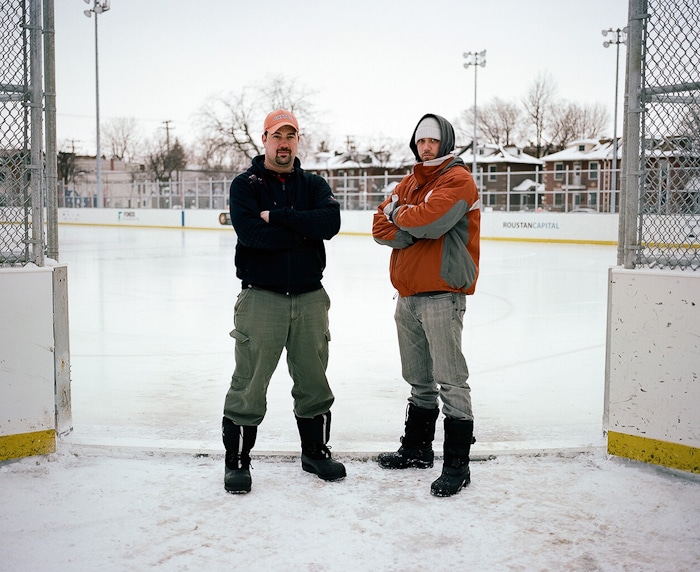
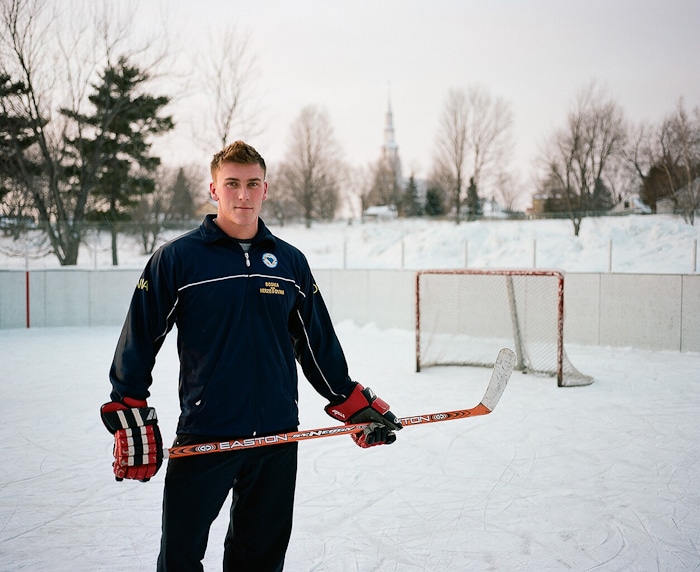
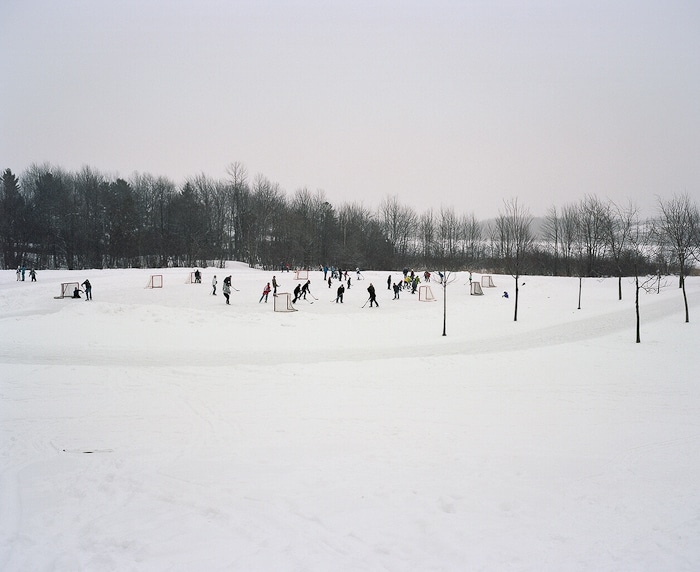
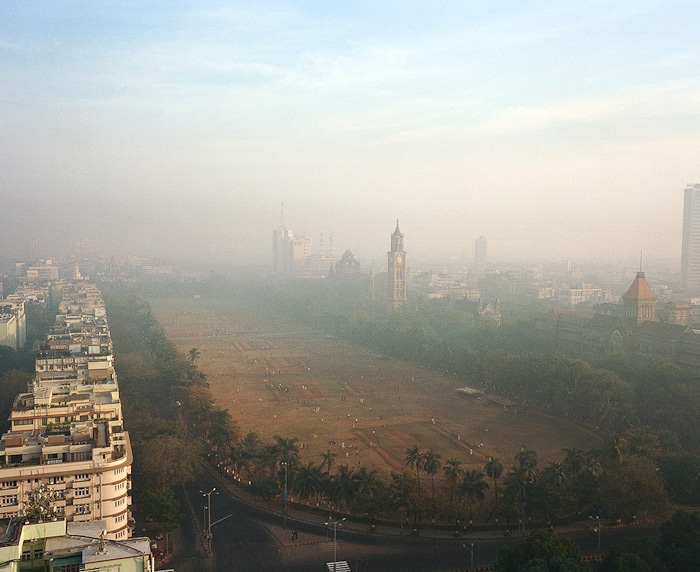
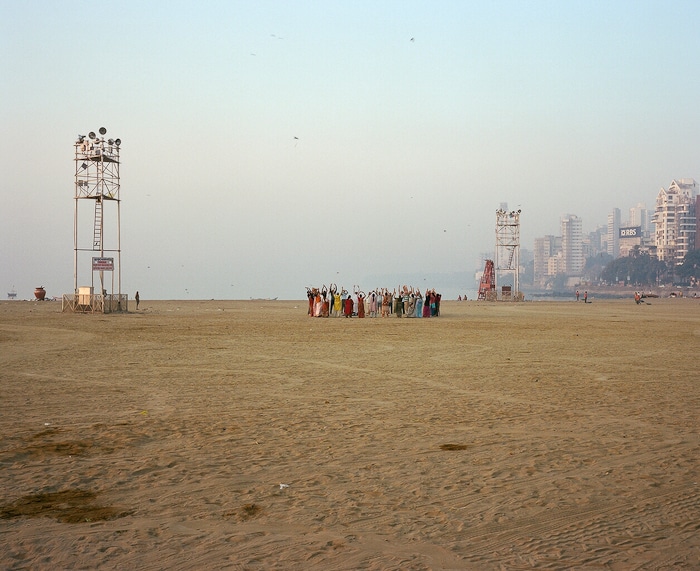
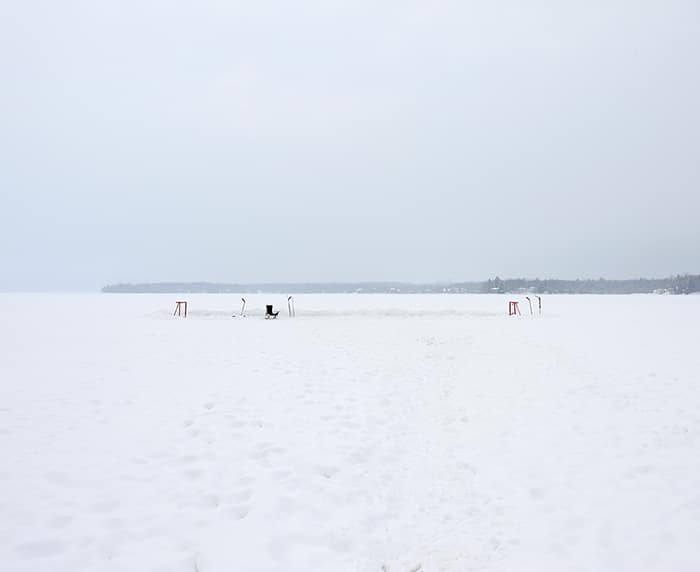
Brant Slomovic is a documentary photography based in Toronto. He was recently featured as a Contender in the 2012 Hey, Hot Shot! International Photography Competition and in the Collection at Flak Photo. His current personal projects include Shinny, which details the ubiquity of shinny Hockey in Canadian culture, and Puja, which explores daily rituals of spirituality in Indian life. Please follow Brant on Twitter.

Documentary Photographer Brant Slomovic | Shinny

1) You became a documentary photographer after pursuing emergency medicine. First what motivated you to change tracks? And, secondly, what was it in your training as a medic prepared you the most to be a documentary photographer?

Those are great questions, but to clarify, I was a photographer long before I even considered becoming a physician. So it wasn’t really changing tracks from one métier to another, as much as it was rediscovering of a need to make photographs and tell stories. I had abandoned photography when I entered university. By the time I finished my specialty training in emergency medicine this deep desire to express myself through images re­emerged. It was unstoppable.

I think of the two ­- medicine and photography ­- as completely separate existences. I’m keenly aware of the potential for conflicts of interests to arise, because I am a photographer and at the same time a physician. So the choice not to cross paths is deliberate. Perhaps one day I will find a way to approach a subject and bring the two together­; the insight and empathy that my training as a physician has developed and photo making.

2) If I was to describe the images on your website, I would use the words: “quiet” or “deliberate” ­ do you agree? Where did you acquire this sense of rhythm in your images?

I do agree, it’s a very fair statement. I search out these moments. On one hand its a reflection of an esthetic that I’m looking for. On the other, it gets back to your first question, about the relationship between practicing medicine and making images. As a result of the inherent chaotic environment of the emergency department, I look for the opposite when I am engaged with the other elements of my life. It's about finding a balance for me personally.

3) So many interviews I have heard or read focus on the process. I am interested in your intention. The projects you have embarked on ­ Shinny and Puja ­ couldn't be more disparate. Can you tell us what it is about each that you are drawn to?

Both the Shinny project and the Puja work emanate from very personal places. My long term projects have to come from something that stirs within, whether it be a deep curiosity or something I am already connected to and passionate about.

Shinny is about my love of hockey and the place it has in Canadian culture and art. As a Montrealer, having grown up during the heyday of the 70’s, it would be impossible not to be passionate about this subject. I see shinny as a deeply unifying Canadian experience, shared by a huge spectrum of people, from elite professional athletes to new immigrants. The initial inspiration began with the paintings of great Quebec artists like Terry Tomalty and John Little, who have established a tradition of painting hockey scenes. I thought “no one is doing this kind of work with photographs”.

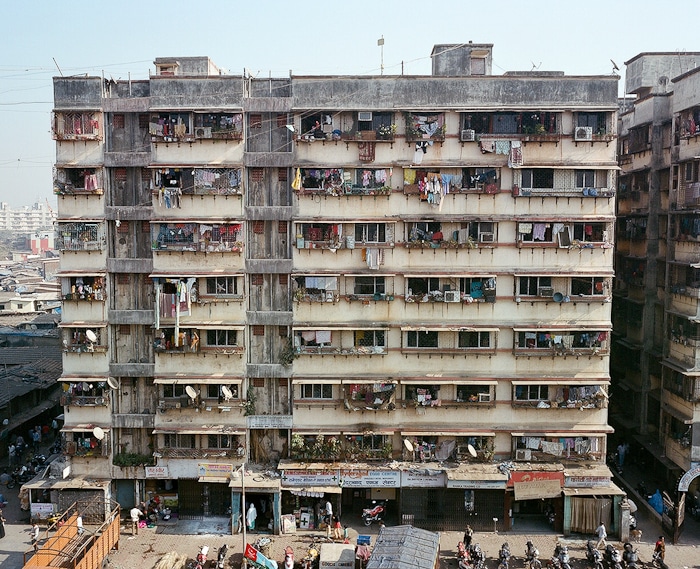
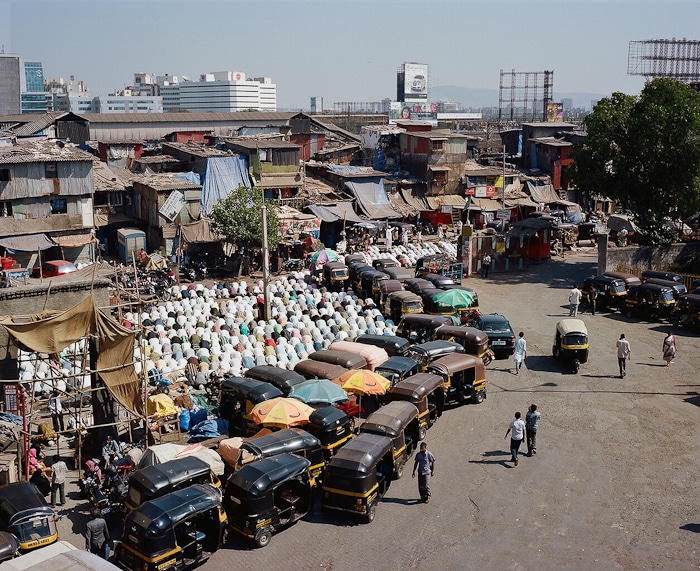
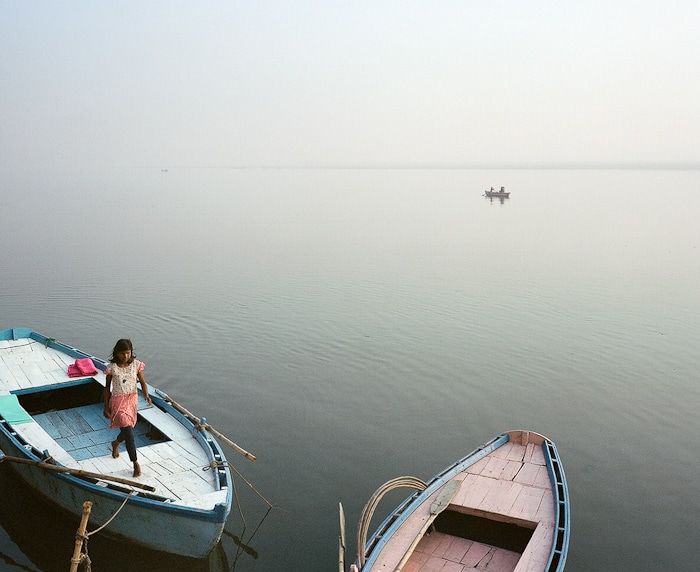
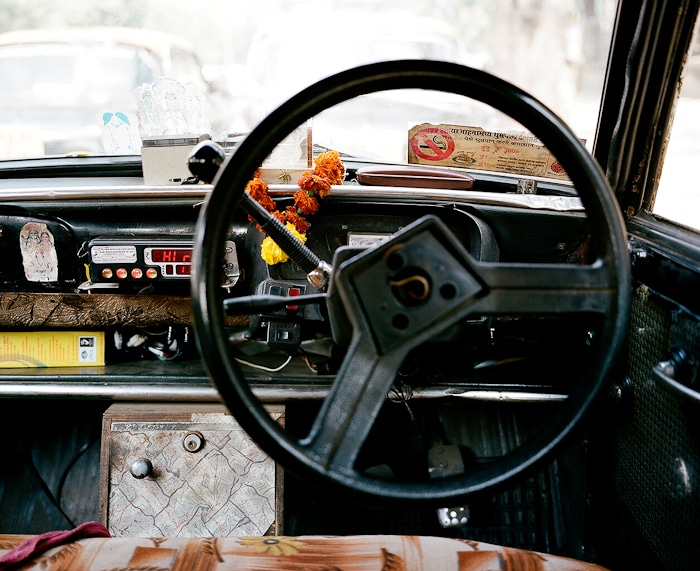
The Puja project is also highly personal. My wife was born and raised in Bombay. So my attraction to this work began with my discovery of her and where she came from. I am fascinated by the intertwining of cultures in India, how the lines of distinction are blurred, and by this sense of unification through diversity. The ritual of puja is a beautiful expression of devotion and I love that it can exist in public spaces and that it’s interpretation is limitless. Puja can be a specific religious act as much as it can be about the way in which one travels to work or performs mundane daily activities.

4) Around 1984, when you graduated from high school, you tasted your first big win in an art competition. How important is it for you to enter contests? How do you select which ones to enter? And, lastly how do you edit your images and select your personal “winners”?

To be honest, contests, per se, are not very important to me. The recognition is of course nice and there is certainly a role for them in the advancement of one’s work. At this point I am concentrating on building the strongest body of work that I can and on developing new projects. But hey, if you’re interested in nominating me for anything, I’ll accept graciously.

Editing is always a challenge. First, I take time away from the images and the experiences. I need the separation physically and emotionally; the space to gain objectivity. Then I enlist the eyes of a few trusted friends. The personal winners communicate emotion and that impact stands the test of time.

5) Tell us a little bit about your sense of awareness of when an image should be made.

A large part has to do with the preparation before you even show up. Developing a clear idea and intention, researching, immersing in one’s subject. Then, for me, its about being as present an open minded as possible. Looking and often waiting for specific moments but having the awareness to let things happen as well.

Documentary Photographer Brant Slomovic

Documentary Photographer Brant Slomovic

Documentary Photographer Brant Slomovic

Documentary Photographer Brant Slomovic

Documentary Photographer Brant Slomovic

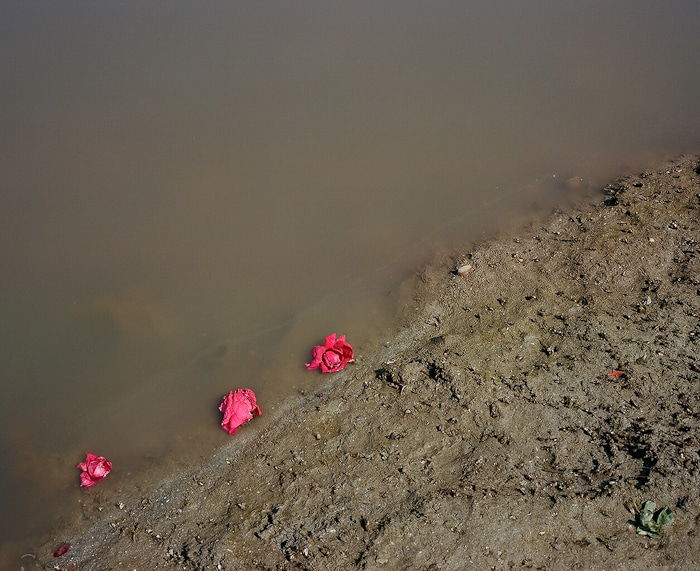
6) When I came across image #14 in your “PUJA” series, it stopped me in my tracks. Can you tell us about why that image was made and what its significance is?

That image was made because it was there. The significance is that for me the image is a reflection of India, in it’s totality. It is a literal and perhaps slightly cliché representation of the contrasts that personify India. I was also attracted to the scene because it made me wonder about the story of those roses ­where and by whom were they made, what was their purpose and in what kind of ceremony were they used. And finally, what was their journey and how did they end up adrift in murky waters.

7) I have to ask you about the form factor of your gear. What are you using? Are you shooting film or is all of your work now digital?

The majority of my work, and specifically the two projects we have been discussing, are shot on medium format film.

8) Whether it's “PUJA”, “SHINNY”, “GLENGARRY” or “PAAN”, I get the sense that you are most interested in how humans inhabit their spaces. True? Is distilling it to that even fair?

It is fair. There is certainly an element of that in my work. For a while, I wanted to make images devoid of people. It was just something that made sense and felt natural at a specific time in my evolution. When I was editing my first show, Glengarry, I realized that I couldn’t fully tell the story I wanted to tell without including the human element in the edit. From that point forward it has been something I strive for­ – how people fit into the narrative. I think of the work of Simon Roberts and Massimo Vitale as great examples of this.

9) Personal projects are never ever finished as they go on and on. Do you find yourself finding a point to stop and say that you've got it all and you move on to the next project?

Ha! Well I thought so. But recently I was encouraged by one of my mentors to return to a project I thought I had closure on. I’m considering it, but haven’t gone back to it, yet. I think some will inherently come to an end, either when I feel a sense of satisfied completion or simply exhaustion. With Shinny, I’ve just begun to scratch the surface and I’m excited for it to carry on for a long time.

10) Are you represented by an agency or a gallery? How would one go about buying one of your prints?

At this time, I do not have representation. Buying prints can be done through the contact link on my website, www.brantslomovic.com. Thank you Seshu. It’s been a real pleasure.

Know of other documentary photographers like Brant or Jim Mortram pursuing projects that they are ready to show and share with the world? Send them my way. I would love to highlight their efforts and interview them.

Filed Under: Uncategorized Tagged With: Brant Slomovic, Documentary Photographer, documentary photography, interview, project

An Interview With Photojournalist G.M.B. Akash

November 11, 2010 by Seshu | Editor & Publisher

G.M.B. Akash, AvatarThis is a very special interview with an international, award-winning photojournalist G.M.B. Akash. He is based in Dhaka, Bangladesh and represented by Panos Pictures. Wrangling him into finding the time to answer these questions took some doing because he was always on the road working on one project or another. So, I am truly honored to host his images and his responses to a few of my questions here on Tiffinbox. If you have any questions or comments for him, please do submit them at the end of this post!

1) Tell us a little bit about yourself. Where are you from? How old are you?

I grew up in a home far removed from my profession. Throughout my childhood I did not have access to photographers, their work, or even a camera. Photography did not exist for me in theory or in practice. Then a decade ago I found my father’s old camera and my life took a different turn. My fascination for the captured image was uncontainable and overcame everything — even my inexperience. Not knowing what I was doing or why, I went everywhere shooting anything and everything that caught my attention. The only thing I was certain of were the subjects I photographed. I concentrated on people living on the edge of society because their faces, lives, and living conditions held a particular fascination for me. Gradually I became absorbed in their daily lives for months on end, learning from their experiences. My desire to capture it all on film pushed me to go to places and to meet people I never would have encountered otherwise. Each visit gave me a deeper understanding of humanity.

I am from Narayangonj, a city which is 200 km away from Dhaka. I come from a middle class, very ordinary family. I was born in 1977. I was always a last bencher in my school. I always felt inside that I have no talent like other kids. But photography gave me a new life.

G.M.B. Akash, A Photojournalist

2) Some would consider you Bangladesh's best known photojournalist. What has led to that success?

Hard work, honesty and respect towards the people whom I photograph.

G.M.B. Akash, A Photojournalist

3) Where were you trained as a photographer? And why, photojournalism? Why not advertising or travel?

My passion for photography began in 1996. I attended the World Press Photo seminar in Dhaka for 3 years and graduated with a BA in Photojournalism from Pathshala. I believe that the formal study of photography is necessary to survive in the industry today. But most important things are to be really passionate and dedicated.

The formal study helped me a lot but most of the time I learned from other photographers. I have learned from painting, songs and movies as well. Everyday I go through the work of other photographers and I learn from them. I have learned from many photographers.

Photography pushed me to go to places and to meet people I never would have encountered otherwise. Each visit gave me a deeper understanding of humanity. Today, I count myself blessed, having become a photographer. To be able to articulate the experiences of the voiceless, to bring their identity to the forefront, gives meaning and purpose to my own life.

In 1998, I saw a photo exhibition on AIDS victims, titled ‘Positive Lives’ at gallery in Dhaka. And realized for the first time how images can influence social perception. My first reaction, on seeing the exhibit was a complete subversion of my original perception of AIDS patients. It struck me how patients with AIDS are alienated and scorned by us because of social misconceptions, and I realized how I as a photographer could help dispel these misconceptions. I discovered the power that images have over us.

To me, photojournalism is a huge responsibility and a tough job. A photojournalist must be honest, hard worker, punctual, and he or she must respect other people.

I believe photography can bring lot of changes in our life. It can bring positive changes. In my case, “my images are my voice, I want to show the things that should be corrected or should be appreciated.”

G.M.B. Akash, A Photojournalist

G.M.B. Akash, A Photojournalist

G.M.B. Akash, A Photojournalist

4) What drives you to make images? Do you see it as a job or as a calling?

What I find most amazing about the work I do is that it opens my eyes to all these little pleasures of life. There is great pleasure in meeting people who are despised by the world, in sharing a cup of tea with them, and discovering that they are still capable of affection, though they themselves go unloved.

This is not a job about making money or succeeding; it is about pursuing art, and opening people’s eyes. That is the responsibility of every photographer.

G.M.B. Akash, A Photojournalist

G.M.B. Akash, A Photojournalist

5) How do you take on projects? Are they self-financed or do you write grants?

Most of my projects are self–financed. I keep saving my money from other assignments to keep doing my personal projects. I do not like using my camera for begging. Each of my projects usually lasts over a year or even two and I begin to use my camera only when I have earned the trust of the people whose lives I want to document.

To portray a community or a way of life, you first need to understand it well yourself, otherwise the images become superficial, and neither you, nor those who look at your photographs, will be touched or moved. In fact, I let the year pass in regular visits to a small community of transvestites in Dhaka, before I eventually started taking their photos. I like to mingle with my subjects, I visit them often, and I invite them to my house, to get it across that I see them as people rather them mere subjects of photography.

G.M.B. Akash, A Photojournalist

G.M.B. Akash, A Photojournalist

6) There is great sensitivity to people in your images? How did you cultivate it? How do you approach people when you are doing stories?

With every picture you take, you enter a space that is unknown to you as a photographer. In the beginning it feels like forbidden territory, a place you are not supposed to enter surrounded by borders of privacy you are not supposed to cross. You, the photographer, are there at a factory, an old home or a brothel with your simple black bag hanging from your shoulder, eying everything around you as you are eyed by the people there. The first days following these intrusions I never take pictures because they would not be good. I wouldn’t know the people I met, wouldn’t understand the place I had just entered – my photography would be stale and meaningless. But there is always that moment when it feels completely natural to open that bag. And also there is no way of telling why it comes. Suddenly, I have a friendly conversation, or the afternoon light makes everybody around me relaxed and mellow, or someone looks at me in a trusting yet familiar way.

Then I take out my camera, and for me and everybody around me it is the most natural thing to do. There is consent. People don’t accuse me, or reject me or pose in unnatural ways. They are just there, doing what they normally do. Then I click away, and it feels like a conversation, a conversation between me and the people, between me and the location, between me and the light, between me and the souls that make this place alive. In such moments a landscape becomes a soulscape.

After such moments, life where I am working becomes trivial again, and the next day everybody asks for their photographs, and there is no difference if the people are girls from a brothel, children who work in a factory or farmers from the countryside. But these little exchanges bring us closer to each other, and the ties between us, which started with small talk and conversation and continued with the first pictures I took, will begin to become deeper and more meaningful, and so will the pictures I take. And the closer I get to them and the deeper our friendship becomes, the simpler my photography gets. I am no longer looking for special angles or artistic points of views; I just open myself to these people, take a good look, frame and wait for the right moment. When I walk home, I have all the moments that I missed in my head, and they will become my source of inspiration in the days to come.

I see the beauty of people and the human soul in the pictures I take. And though the circumstances of some of the people I portray may be grim, back-breaking, depraved, the people themselves are always remarkable characters and souls. And it is my duty as a photographer and artist to point with my pictures at every aspect of existence in the society and world I live in, to show what can be shown, to go deep into every milieu and also into every aspect of poverty, deprivation and hardship that I encounter – because the only sin for a photographer is to turn his head and look away.

G.M.B. Akash, A Photojournalist

7) You keep winning award after award and you are very good about making it known that you were either nominated or you won. Where did you learn such a basic marketing strategy – that is, to be in forefront of everyone's mind when it comes to photography? What or who inspired you to follow that template?

I am very much alone in the Bangladeshi photography industry. I do not even have photographers as friends. I learned everything for my survival. I keep doing the hard work. And my God was always so kind to me and my friends and family.

G.M.B. Akash, A Photojournalist

G.M.B. Akash, A Photojournalist

8) What is the photo world like in Bangladesh? Does most of it revolve around Dhaka? Are Pathashala and Drik still the only resources for emerging photojournalists?

Lot of people are getting interested in photography in Bangladesh. It is becoming a very popular art form. Pathshala is one of the main photography schools. But there are many other schools which also
give a very good education.

It is very tough to survive as a freelancer now days. Especially in Bangladesh. Wire services like AFP, Reuters, AP, EPA capture all the markets. They are very fast and very powerful. They have a huge investment and network. They have their staff everywhere. It is really hard to publish your work as a freelancer.

But what I believe is this: “if you remain true to your work then your work will remain true to you”

G.M.B. Akash, A Photojournalist

9) Do Bangladeshi photojournalists have a network? Is there a sense of camaraderie and competition between photographers?

We have huge competition and huge politics in Bangladeshi photography. Lots of groups and nepotism. Few people control the whole system and they only favor their own people.

G.M.B. Akash, A Photojournalist

10) What challenges do you face when you are commissioned by magazines or newspapers around the world?

Every assignment is a new experience to me. Till today, I have received more than 40 international awards from all around the world and my work has been featured in over 50 major international publications including: National Geographic, Time, Sunday Times, Newsweek, Geo, Stern, Der Spiegel, The Fader, Brand Eins, The Guardian, Marie Claire, Colors, The Economist, The New Internationalist, Kontinente, Amnesty Journal, Courier International, PDN, Die Zeit, Days Japan, Hello, and Sunday Telegraph of London.

It is challenging to work with so many international magazines. Bangladesh is not an internationally important country. I've met so many people who even don’t know where Bangladesh is. Magazines seem to only want photographs from Bangladesh when there are big floods or big disasters.

We have also lot of problems in acquiring travel visas. If something happens in India or Pakistan, we cannot go there instantly. It takes a few days for getting the proper visa. It is so easy for a photographer from a developing country to get a visa but that's not the case for Bangladeshi photographers; it is almost impossible to go into a conflict zone.

But all these awards and publications bring lot of attention on those issues that I have been working. After seeing my work, so many individual people and organizations have shown their interest to help/improve the situation of child labor in Bangladesh and other issues.

My work on “home for elderly people in Nepal” has been printed in a German magazine. After it got printed so many individuals and organizations came to help them. We raised lot of money for this old home. The situation at that old home was very bad and the elderly people who lived there found it hard to get food three times a day.
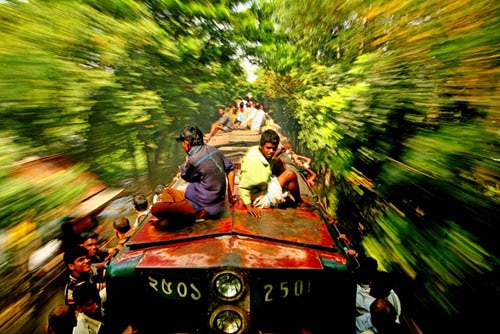
G.M.B. Akash, A Photojournalist

11) Are you mentoring anyone interested in pursuing a career in photojournalism? Have you considered conducting workshops in South Asia?

I am trying to help a few of my friends. But no workshops at this time. I am very busy with assignments, traveling and working on my personal projects. And I really want to keep taking lot of photos. I need more time for organizing and giving workshops.

G.M.B. Akash, A Photojournalist

12) Have you ever been tempted to work with video? Will still photography always be your main mode of communication?

I have never tried video but I really want to start making short videos. I mainly concentrate on still photography now.

13) What are you trying to say with your photography?

I see the beauty of people and the human souls in the pictures I take.

G.M.B. Akash, A Photojournalist

Filed Under: Interviews, Photojournalism Tagged With: akash, bangladeshi, dhaka, g.m.b. akash, human interest, international award, interview, Journalism, meeting people, News, optics, people, photographer, Photography, photojournalist, photojournalists, positive lives, shahidul alam, world press photo

Subscribe To Tiffibox Treats!

Looking for a well-curated email newsletter that will leave you inspired and motivated about your photography business? Sign up below!

About Seshu

Seshu creates relaxed portraits of families and high school seniors in Avon, Connecticut. He also leads a successful headshot photography studio in Connecticut, helping professionals from a variety of disciplines project the very best versions of themselves. He created Tiffinbox as a way of inspiring photographers, to create better images and successful businesses. [Read More]

Email Templates For Headshot Photographers

Email Templates for Headshot Photographers

Recent Posts

  • How Capture One Changed My Event Photography
  • 10 Steps To Stay Positive In Times Of Great Stress
  • Why You Need To Read “Personal Branding For Photographers” Now
  • How To Master Your Website Content Step By Step?
  • Tony Taafe’s TNT Method For Headshot Photographers

Recent Comments

  • Stephen Davison on Are You A Business Owner Who Is Smart, But Stuck?
  • Ben A. on Don Giannatti Clinches The 8th Annual Tiffinbox Award
  • Dan on Don Giannatti Clinches The 8th Annual Tiffinbox Award
  • Donald Giannatti on Don Giannatti Clinches The 8th Annual Tiffinbox Award
  • Stephen Davison on G.E. Masana’s 6 Strategies For Wedding Photography Success
  • Naveen Kumar on Weddings In India Are More Than Being At The Right Place And At The Right Time
  • kartick on Weddings In India Are More Than Being At The Right Place And At The Right Time
  • Leonid Farbman on 6 Uncommon Trends To Grow Your Photography Business
  • Willow and Finch Wedding Photography on 11 Reception Tips To Help Your Wedding Photography
  • Web Designer Malaysia on How To Optimize Your Squarespace Website For Search Engines
  • Creastan on An Interview With Photojournalist G.M.B. Akash
  • Cindy Brown | Atlanta on An Open Letter To A Local Photographer

Become a Patron!

Copyright © 2026 · Tiffinbox · Site Design by Heather Mackan Creative · Built on Genesis