• Photography
  • Interviews
  • Business
  • Reviews

Tiffinbox

Inspiring Photographers

  • Home
  • About
  • Blog
  • Contact

Publishing Ernesto Bazan’s Isla, The Final Book Of His Cuban Trilogy

March 27, 2014 by Seshu | Editor & Publisher

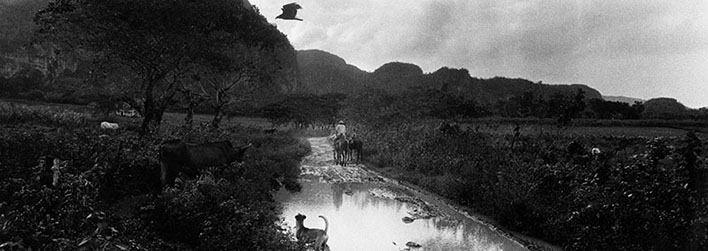
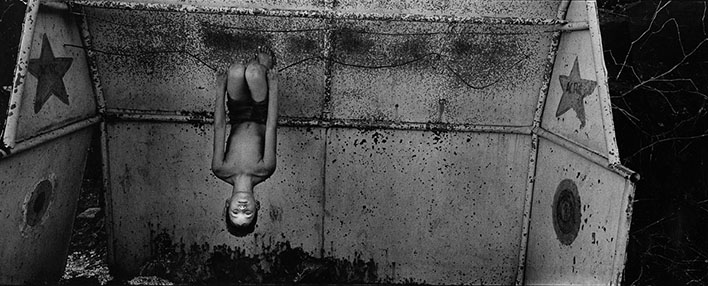
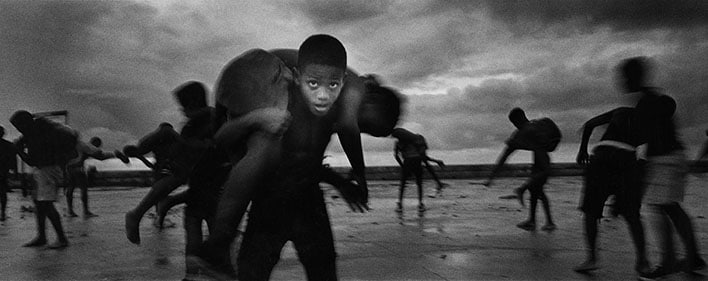
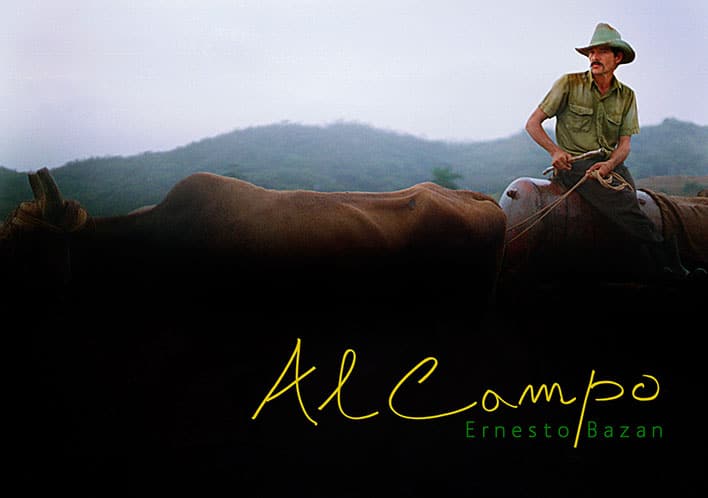
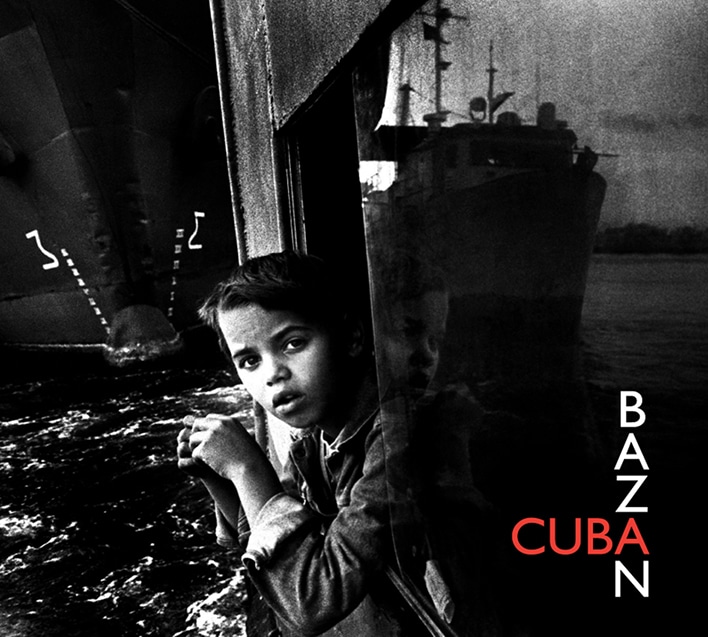
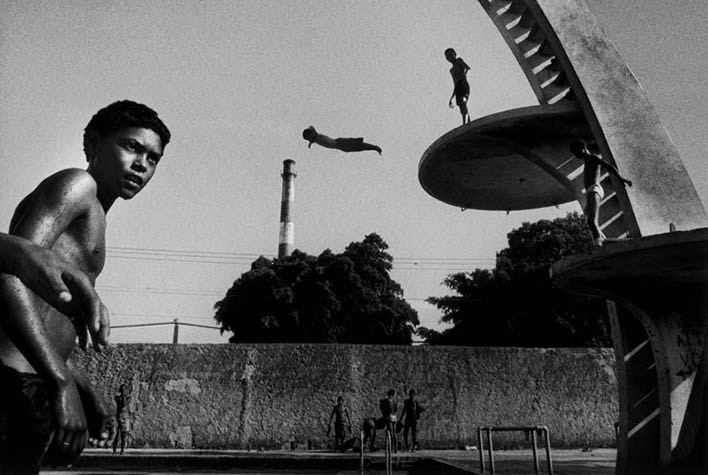
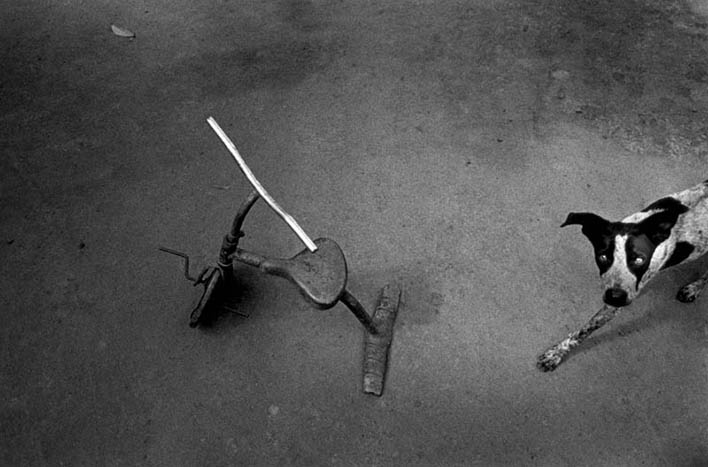
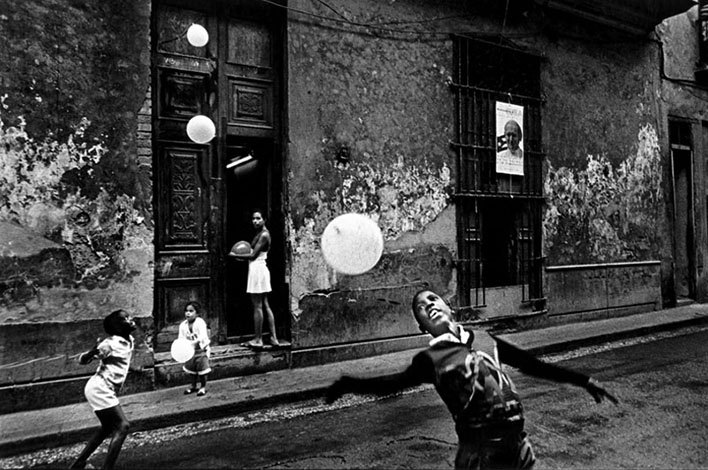
Ernesto Bazan eschews the title of “documentary photographer” when I try to describe him before our chat. He prefer to be known as a photographer who creates intimate, personal stories. Looking at his images (see below), you'll immediately get that about him. For the last 20 or so years, he is committed to telling those stories of the people and the island of Cuba. His work, developed over time is a response more than a reaction. The images, whether they are from Bazan Cuba, Al Campo or his latest book, Isla, all originate from his heart.

Bazan, is originally from Palermo, Sicily, but now lives in Veracruz, Mexico. From 1992 to 2006, Bazan committed himself to Cuba out of sheer curiosity. Instead of parachuting in and out of the country like a lot of photographers do, Bazan chose to live among the island's people and get to know them in a way only a native Cuban would or could.

The strength of his images are a testament to his resolve to immerse himself in whatever he chooses to photograph. Bazan is the recipient of a number of awards and grants including, The W. Eugene Smith grant; the Mother Jones Foundation for Photojournalism, the Dorothea Lang Paul Taylor prize at Duke University, N.C., the World Press Photo and two fellowships from the Alicia Patterson Foundation and the Guggenheim Foundation.

It was an honor to speak with him as he launched his Kickstarter campaign to fund his latest book, ISLA.

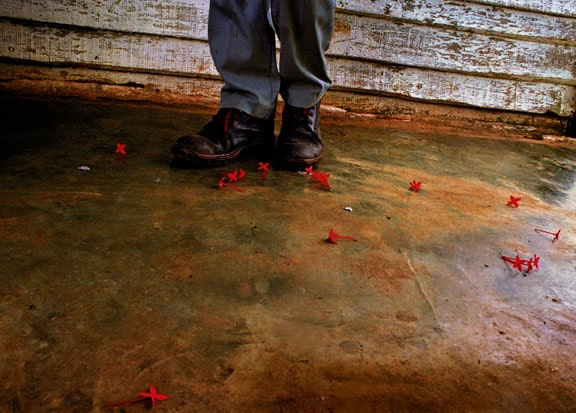
Isla:

ISLA, Book Cover

Isla, By Ernesto Bazan

Isla, By Ernesto Bazan

Isla, By Ernesto Bazan

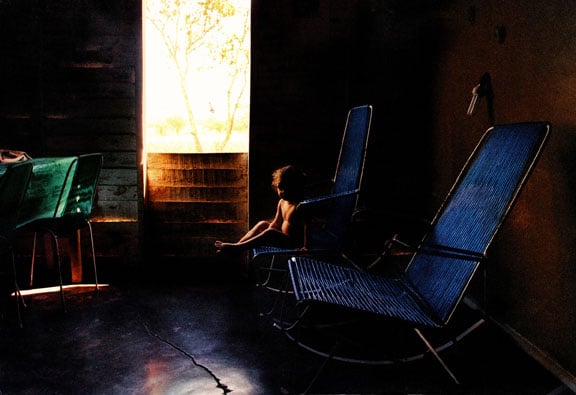
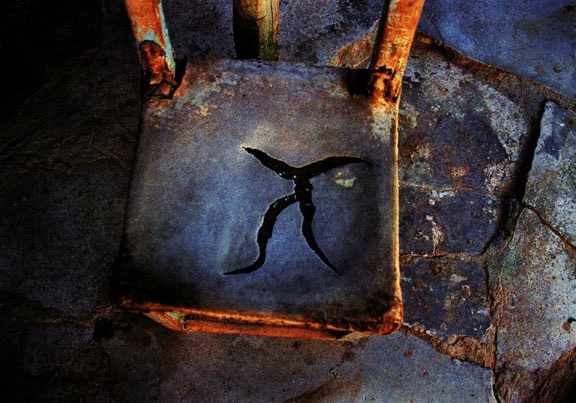
Al Campo:

Al Campo Book Cover

Al Campo

Al Campo

Al Campo

Bazan Cuba:

Bazan Cuba

Bazan Cuba

Bazan Cuba

Bazan Cuba

It is my hope that you will find a way to support Bazan's Kickstarter campaign and make the printing of this important book a reality. The success of this campaign will fuel future independent photography book projects by Bazan and his students and other collaborators through Bazan Photos Publishing.
Filed Under: Books, Home Middle Right, Photography Tagged With: Al Campo, Bazan, black and white, books, Cuba, Cuban People, Documentary, Ernesto Bazan, Final Book, Isla, kickstarter, panoramic images, photo books, project, Triolgy

“Upstate Girls,” A Project By Brenda Ann Kenneally, RIT & The Visual Studies Workshop

July 8, 2013 by Seshu | Editor & Publisher

I love how connected the photojournalism world is. A few weeks back, I interviewed Chicago Tribune photojournalist,Scott Strazzante for his project, “Common Ground” (which, by the way was funded). Following his Twitter stream, I noticed a Tweet about Brenda Ann Kenneally‘s project, “Upstate Girls.”

Figuring he knew her, I sent him an email requesting him to introduce us.

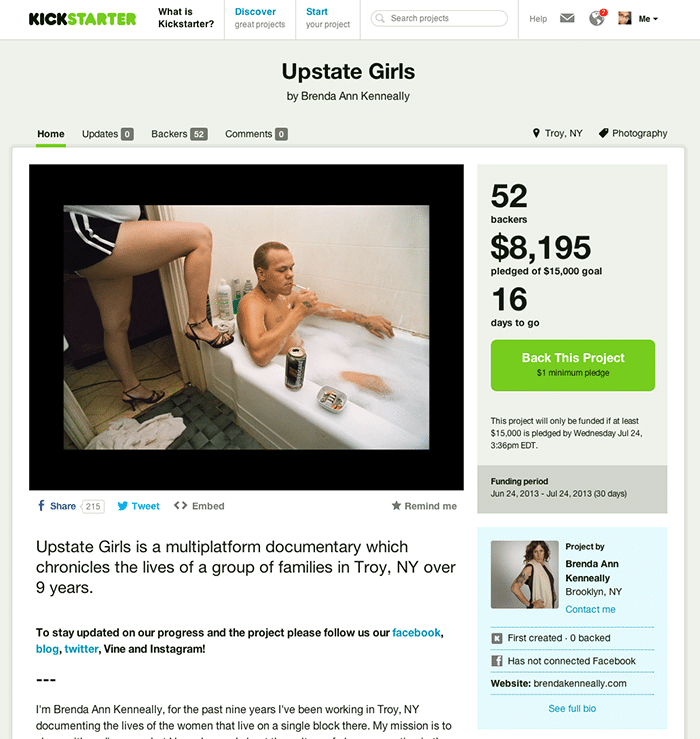
A few days later, I heard from Brenda and so, what we have here is a frank chat about her nine-year project that follows the lives of two adolescent girls in Troy, New York. The project is now a collaboration with the Rochester Institute of Technology and The Visual Studies Workshop.

Upstate Girls by Brenda Ann Kenneally

Please do watch and listen to Brenda, as she describes how and why she started this personal photography project:

“The Upstate Girls Project is not only a document of the America that we all share with these women, but more importantly a story of the emotional connections that are universal to being human.”

It probably seems that week after week, I am here asking you all to support the work of yet another documentary photographer. The fact is this – newspapers and magazines are flexing their accounting muscles and shuttering entire photo departments or downsizing them to a point where community stories (that's stories about us) aren't narrated anymore.

If you find the work of Scott Strazzante or Brenda Kenneally personally moving, then step up and do something about it. These two (and trust me there are many more) are so passionate about pursuing long-term photography projects that by doing so tehy bring meaning into the lives of their subjects, for themselves and to the community as a whole, when their stories are shared with us all.

Brenda has 16 days to go before her Kickstarter caampaign closes. She has a little over $7,000 to raise to hire a web designer that will bring these gutsy stories to all of us online.

However small or big, can I count on you to make a contribution?

Filed Under: Video Interviews Tagged With: A Project, Brenda, Brenda Ann Kenneally, photography project, project

Eye Am, A Global Photography Project For Children

June 24, 2013 by Seshu | Editor & Publisher

When Jens Lennartsson, a Swedish travel and commercial photographer turned 30, he struck upon an idea to create a movement around the world that would empower children in some of the poorest countries in the world to tell their own stories.

Visually.

Jens is joined by Sara Hansson, also from Sweden, in this new global photography project called: Eye Am.

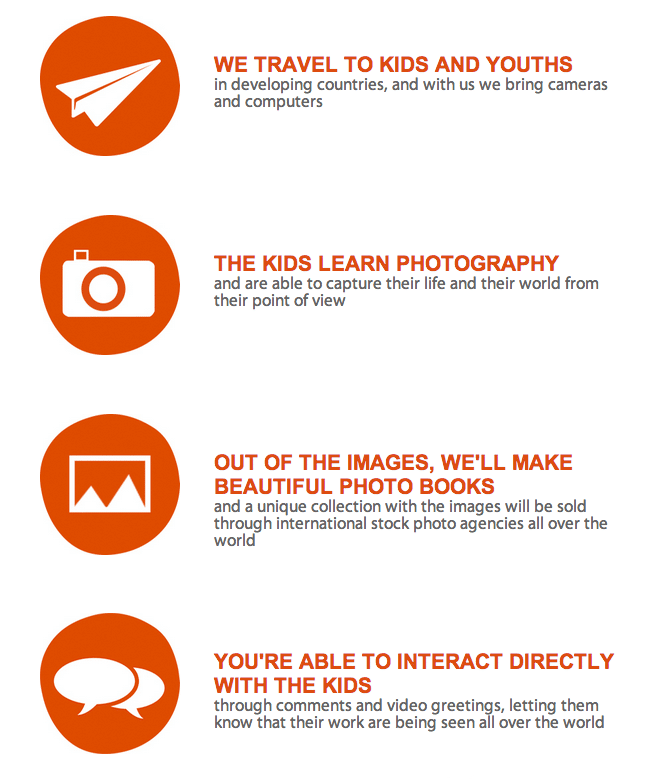
“By doing two week photo workshops, we teach kids in developing countries how to photograph, giving them the opportunity to show their life from their perspective, instead of just letting media tell their sometimes flat and generalizing story. And together with you, we create a more realistic view of the world.”

Jens and Sara sat down with me yesterday to talk about their project. Please check out this video below:

Eye Am Process

Lennartsson and Hansson are seeking to raise $33,000 in the next 12 days for this project. They want to be able to buy 20 cameras (and accessories like memory cards) and also computers that these young photographers can use in the field to process their images. These devices will be used in all three locations – 1) Renl, Ukraine, 2) Addis, Ethiopia and 3) Nairobi, Kenya

So, here's why this project appealed to me and I am helping Jens and Sara spread the word.

First off, I am from India and from what I have seen in the nearly 45 years of my existence, the images of India seen by those in the US are largely by non-Indians. While it's true they brings their unique perspectives and skill sets to capture images of either daily life or strife, there is nothing like reading, hearing or seeing the story unfold from the perspective of a local inhabitant. There are nuances that outsiders may simply miss that highlights the actual situation on the ground.

After years of being offered only a one-sided view of a situation, isn't it time we saw the world from a different, and thus, enriched perspective? By asking children to take part, we can be hopeful that their sense of spontaneity and living in the moment will garner us a fresh look into their lives and perhaps more importantly give those children a way to boost their confidence and appreciate themselves.

Whether it is the Ukraine, Ethiopia or Kenya, these kids are going to have an incredible ride into discovering who they are, for themselves. This project appeals to me because I am a father of two young boys who, given the opportunity, love to express themselves in sports, music and the visual arts. As a photographer, this is a no-brainer: we need to foster visual literacy among our young so that they in turn can continue to the tradition of recording and interpreting the world around them.

Learn more about this project and to support it, check out Eye Am's IndieGoGo's campaign page. I ask that you take a moment now to go to that page and give what you can.

Filed Under: Photography Tagged With: Eye Am, Global Photography, Jens, Lennartsson, photography project, project, Projects For Children, Sara Hansson

An Interview With Documentary Photographer Brant Slomovic

May 16, 2013 by Seshu | Editor & Publisher

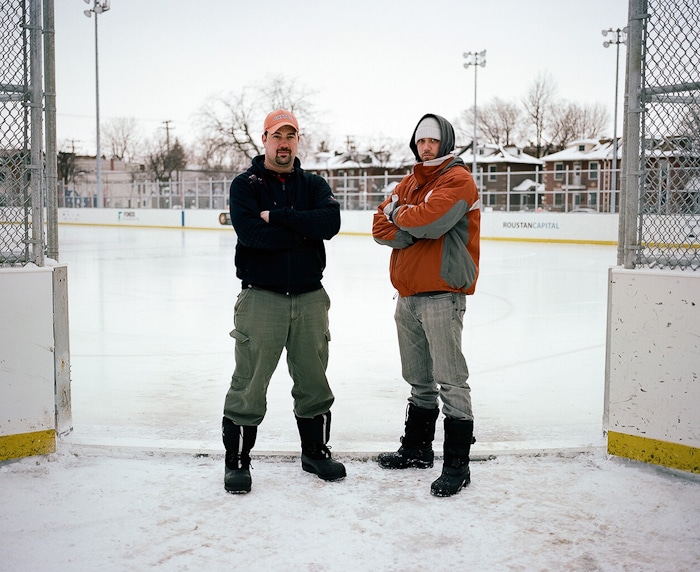
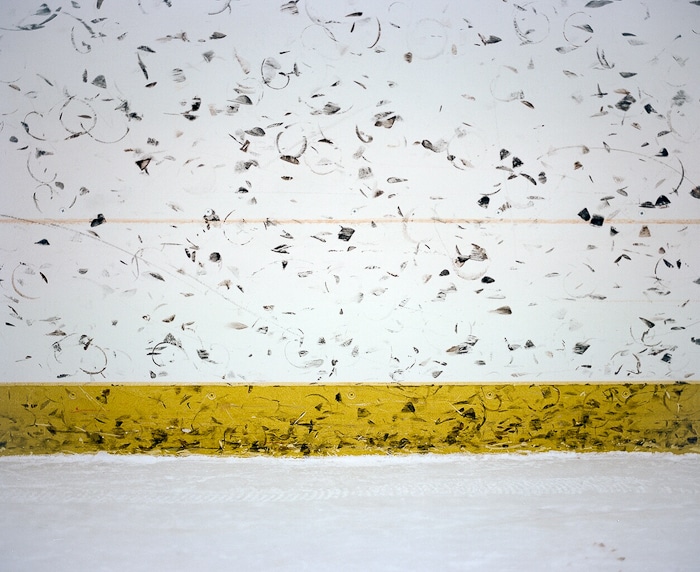
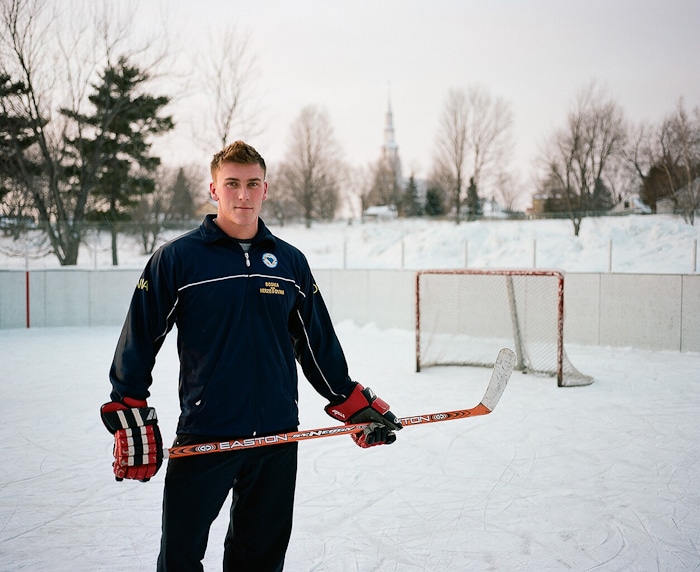
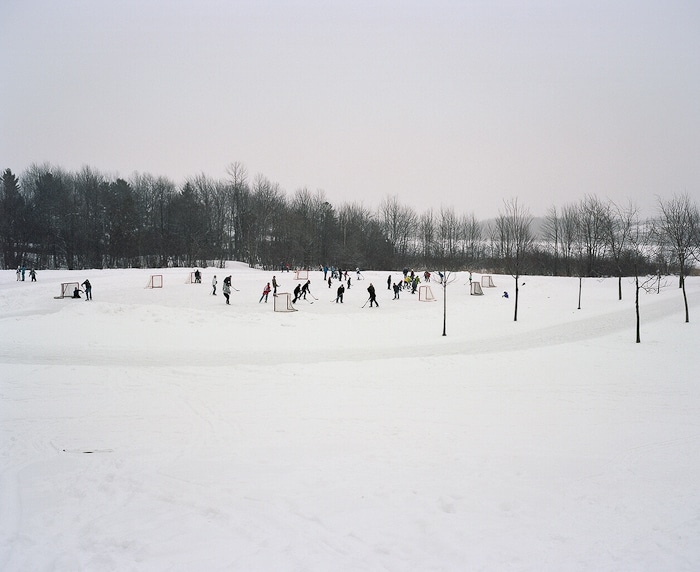
Brant Slomovic is a documentary photography based in Toronto. He was recently featured as a Contender in the 2012 Hey, Hot Shot! International Photography Competition and in the Collection at Flak Photo. His current personal projects include Shinny, which details the ubiquity of shinny Hockey in Canadian culture, and Puja, which explores daily rituals of spirituality in Indian life. Please follow Brant on Twitter.

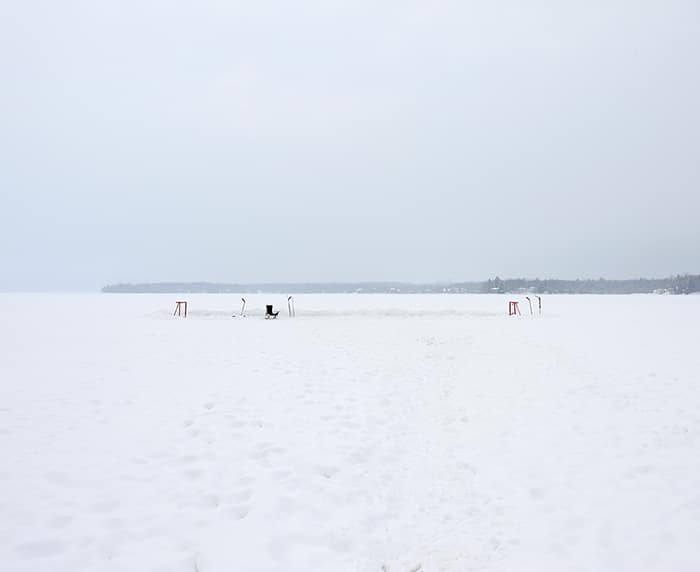
Documentary Photographer Brant Slomovic | Shinny

1) You became a documentary photographer after pursuing emergency medicine. First what motivated you to change tracks? And, secondly, what was it in your training as a medic prepared you the most to be a documentary photographer?

Those are great questions, but to clarify, I was a photographer long before I even considered becoming a physician. So it wasn’t really changing tracks from one métier to another, as much as it was rediscovering of a need to make photographs and tell stories. I had abandoned photography when I entered university. By the time I finished my specialty training in emergency medicine this deep desire to express myself through images re­emerged. It was unstoppable.

I think of the two ­- medicine and photography ­- as completely separate existences. I’m keenly aware of the potential for conflicts of interests to arise, because I am a photographer and at the same time a physician. So the choice not to cross paths is deliberate. Perhaps one day I will find a way to approach a subject and bring the two together­; the insight and empathy that my training as a physician has developed and photo making.

2) If I was to describe the images on your website, I would use the words: “quiet” or “deliberate” ­ do you agree? Where did you acquire this sense of rhythm in your images?

I do agree, it’s a very fair statement. I search out these moments. On one hand its a reflection of an esthetic that I’m looking for. On the other, it gets back to your first question, about the relationship between practicing medicine and making images. As a result of the inherent chaotic environment of the emergency department, I look for the opposite when I am engaged with the other elements of my life. It's about finding a balance for me personally.

3) So many interviews I have heard or read focus on the process. I am interested in your intention. The projects you have embarked on ­ Shinny and Puja ­ couldn't be more disparate. Can you tell us what it is about each that you are drawn to?

Both the Shinny project and the Puja work emanate from very personal places. My long term projects have to come from something that stirs within, whether it be a deep curiosity or something I am already connected to and passionate about.

Shinny is about my love of hockey and the place it has in Canadian culture and art. As a Montrealer, having grown up during the heyday of the 70’s, it would be impossible not to be passionate about this subject. I see shinny as a deeply unifying Canadian experience, shared by a huge spectrum of people, from elite professional athletes to new immigrants. The initial inspiration began with the paintings of great Quebec artists like Terry Tomalty and John Little, who have established a tradition of painting hockey scenes. I thought “no one is doing this kind of work with photographs”.

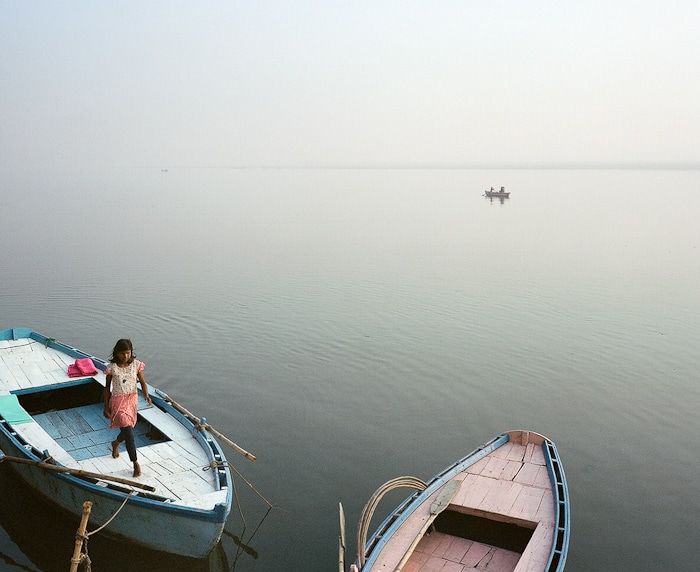
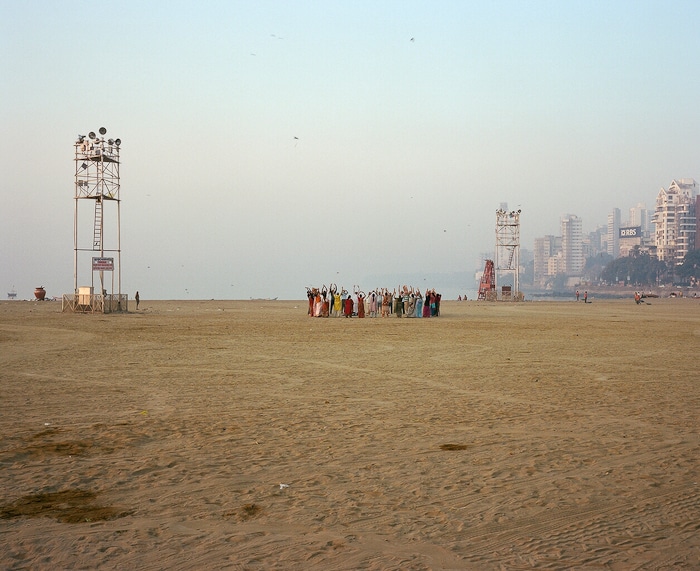
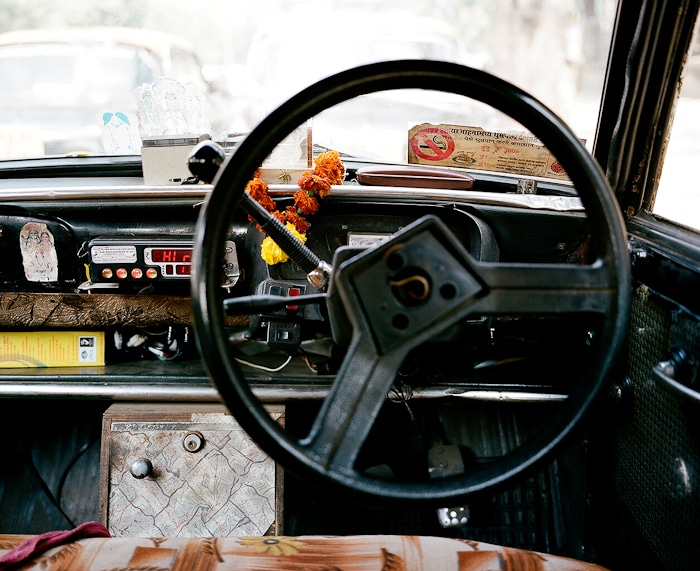
The Puja project is also highly personal. My wife was born and raised in Bombay. So my attraction to this work began with my discovery of her and where she came from. I am fascinated by the intertwining of cultures in India, how the lines of distinction are blurred, and by this sense of unification through diversity. The ritual of puja is a beautiful expression of devotion and I love that it can exist in public spaces and that it’s interpretation is limitless. Puja can be a specific religious act as much as it can be about the way in which one travels to work or performs mundane daily activities.

4) Around 1984, when you graduated from high school, you tasted your first big win in an art competition. How important is it for you to enter contests? How do you select which ones to enter? And, lastly how do you edit your images and select your personal “winners”?

To be honest, contests, per se, are not very important to me. The recognition is of course nice and there is certainly a role for them in the advancement of one’s work. At this point I am concentrating on building the strongest body of work that I can and on developing new projects. But hey, if you’re interested in nominating me for anything, I’ll accept graciously.

Editing is always a challenge. First, I take time away from the images and the experiences. I need the separation physically and emotionally; the space to gain objectivity. Then I enlist the eyes of a few trusted friends. The personal winners communicate emotion and that impact stands the test of time.

5) Tell us a little bit about your sense of awareness of when an image should be made.

A large part has to do with the preparation before you even show up. Developing a clear idea and intention, researching, immersing in one’s subject. Then, for me, its about being as present an open minded as possible. Looking and often waiting for specific moments but having the awareness to let things happen as well.

Documentary Photographer Brant Slomovic

Documentary Photographer Brant Slomovic

Documentary Photographer Brant Slomovic

Documentary Photographer Brant Slomovic

Documentary Photographer Brant Slomovic

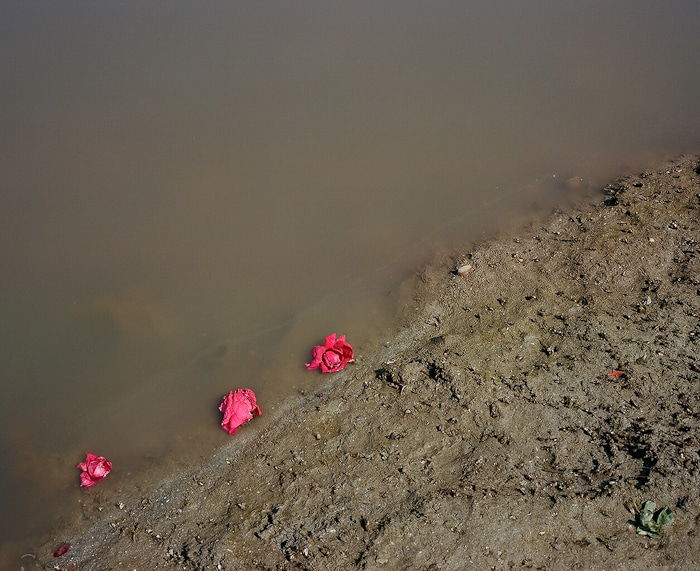
6) When I came across image #14 in your “PUJA” series, it stopped me in my tracks. Can you tell us about why that image was made and what its significance is?

That image was made because it was there. The significance is that for me the image is a reflection of India, in it’s totality. It is a literal and perhaps slightly cliché representation of the contrasts that personify India. I was also attracted to the scene because it made me wonder about the story of those roses ­where and by whom were they made, what was their purpose and in what kind of ceremony were they used. And finally, what was their journey and how did they end up adrift in murky waters.

7) I have to ask you about the form factor of your gear. What are you using? Are you shooting film or is all of your work now digital?

The majority of my work, and specifically the two projects we have been discussing, are shot on medium format film.

8) Whether it's “PUJA”, “SHINNY”, “GLENGARRY” or “PAAN”, I get the sense that you are most interested in how humans inhabit their spaces. True? Is distilling it to that even fair?

It is fair. There is certainly an element of that in my work. For a while, I wanted to make images devoid of people. It was just something that made sense and felt natural at a specific time in my evolution. When I was editing my first show, Glengarry, I realized that I couldn’t fully tell the story I wanted to tell without including the human element in the edit. From that point forward it has been something I strive for­ – how people fit into the narrative. I think of the work of Simon Roberts and Massimo Vitale as great examples of this.

9) Personal projects are never ever finished as they go on and on. Do you find yourself finding a point to stop and say that you've got it all and you move on to the next project?

Ha! Well I thought so. But recently I was encouraged by one of my mentors to return to a project I thought I had closure on. I’m considering it, but haven’t gone back to it, yet. I think some will inherently come to an end, either when I feel a sense of satisfied completion or simply exhaustion. With Shinny, I’ve just begun to scratch the surface and I’m excited for it to carry on for a long time.

10) Are you represented by an agency or a gallery? How would one go about buying one of your prints?

At this time, I do not have representation. Buying prints can be done through the contact link on my website, www.brantslomovic.com. Thank you Seshu. It’s been a real pleasure.

Know of other documentary photographers like Brant or Jim Mortram pursuing projects that they are ready to show and share with the world? Send them my way. I would love to highlight their efforts and interview them.

Filed Under: Uncategorized Tagged With: Brant Slomovic, Documentary Photographer, documentary photography, interview, project

The World Through Our Eyes, A Cambodian Project

August 25, 2010 by Guest

Jen May Pastores, AvatarThis is a guest post by Jen May Pastores, a lifestyle photographer and portrait photographer based in Los Angeles, California.

There’s a window by my desk and outside are two elementary boys peeking in with their smiles eagerly anticipating my returning glance. “Teacher! Study? 4?” is the question I heard everyday from them. “Chaa, chaa,” I reply with a nodding yes. The boys run over to their friends practicing headstands on the side of the center’s building and bring them over to my window. “Can I study, too?” asks a new student. “I’d love that,” I say to him. I check my watch to see I have only a few minutes to prepare the cameras for the next class, so I quickly download the rest of the memory cards to my laptop and head upstairs to the classroom.

Cambodian Child Doing A Headstand

This was my typical afternoon at the Tiny Toones center in Phnom Penh, Cambodia. Three times a day 15-20 students met me in a classroom to learn and practice photography with each class split among age groups from as young as 10 to 24-years-old. The majority of the youth barely knew English, so the center hired a local translator to communicate for me. Imagine trying to explain f-stops and shutter speed to a translator who was new at photography, then having her explain it to the class! It was a month-long experience with lots of picture drawing on the chalkboard and grand gestures, but it led to creating images and capturing stories that no language barriers could trap.

One of my students once asked me, “Do you take pictures and get money for it?” My class knew I was a photographer in Los Angeles, but they were curious as to why I was there teaching them for free. “Yes, people do pay me to take their pictures. Why do you think they’ll want do that?” I asked. “Because they want to remember something important or special. They want you to tell their story,” answered a student. “So why are you here?” they asked. “Because no one wanted me to tell their story this summer. And, I love teaching others that photography is more than making money. It’s about showing who we are and what we care about.”

Cambodian Student

Last summer, I ran into my first season where I had no weddings or sessions booked. I decided to look at it as a season of opportunity instead of as a failure. I had never considered visiting Cambodia before, but–as timing can work out perfectly–I was invited by Tiny Toones to offer a photography program at their center. The only thing asked was that I needed to provide everything, including cameras and my airfare, and do it all voluntarily. I looked into who the organization was and discovered that Tiny Toones uses the elements of Hip-Hop like break dancing and djing as creative tools to empower the youth, especially so they could live healthy lives apart from drugs and violence. I then realized that photography could be a complimentary, creative class to educate the youth.

My decision to go happened only a couple months before my program start date. A season with a seemingly bleak outlook turned into one of the busiest, but fulfilling season I’ve lived out so far. My main obstacle was raising funds to buy classroom supplies like digital cameras, memory cards, rechargeable batteries, and chargers for the batteries. This led me to announce my first workshop held in L.A. (which so happens to be the same place where the L.A. Smug group meets every month) where all proceeds went directly to my endeavor. I also reached out to industry professionals requesting donations and out of this Shootsac, Dane Sanders, and local camera stores and photo labs gave items for my workshop and program in Cambodia. In less than a month I was able to raise enough money to purchase 10 cameras, my airfare, and other necessities to main the program for a month.

After the completion of my program at Tiny Toones a gallery in Phnom Penh invited to exhibit the student’s work where 100% of proceeds from sold prints were donated to the center. This began the international tour of what is now known as, “The World Through Our Eyes.” Since last year, the exhibit traveled to Philadelphia, is currently in California, and has plans to continue in Hawaii this fall. None of this would have happened if I didn’t take advantage of an opportunity to give back, especially during a time when I could have easily given up.

The World Through Our Eyes Exhibit

The World Through Our Eyes Class In Cambodia

The program covered the basics of photography such as composition, lighting and finding good backgrounds for portraits. More importantly, the workshop encouraged students to exercise their voice in telling their story and how they see the world around them. A series of photographs taken during that workshop, “The World Through Our Eyes” is a vibrant statement by youth countering stereotypes of artistic, emotional and urban desolation in the developing world.

The World Through Our Eyes Graphic

To further read up on this cause and how you can help please visit http://cambodia.jenmayphotography.com. You can also watch a documentary on the site that interviews students who participated in the photography classes and find out about upcoming exhibits to see the photos in person.

Filed Under: Uncategorized Tagged With: asia, cambodia, cambodian, jen, Jen May Pastores, lifestyle photographer, los angeles, Los Angeles photographer, phnom penh, Photography, photography programs, photography projects, photography workshops, portrait photographer, project, student, the world

  • 1
  • 2
  • Next Page »

Subscribe To Tiffibox Treats!

Looking for a well-curated email newsletter that will leave you inspired and motivated about your photography business? Sign up below!

About Seshu

Seshu creates relaxed portraits of families and high school seniors in Avon, Connecticut. He also leads a successful headshot photography studio in Connecticut, helping professionals from a variety of disciplines project the very best versions of themselves. He created Tiffinbox as a way of inspiring photographers, to create better images and successful businesses. [Read More]

Email Templates For Headshot Photographers

Email Templates for Headshot Photographers

Recent Posts

  • How Capture One Changed My Event Photography
  • 10 Steps To Stay Positive In Times Of Great Stress
  • Why You Need To Read “Personal Branding For Photographers” Now
  • How To Master Your Website Content Step By Step?
  • Tony Taafe’s TNT Method For Headshot Photographers

Recent Comments

  • Stephen Davison on Are You A Business Owner Who Is Smart, But Stuck?
  • Ben A. on Don Giannatti Clinches The 8th Annual Tiffinbox Award
  • Dan on Don Giannatti Clinches The 8th Annual Tiffinbox Award
  • Donald Giannatti on Don Giannatti Clinches The 8th Annual Tiffinbox Award
  • Stephen Davison on G.E. Masana’s 6 Strategies For Wedding Photography Success
  • Naveen Kumar on Weddings In India Are More Than Being At The Right Place And At The Right Time
  • kartick on Weddings In India Are More Than Being At The Right Place And At The Right Time
  • Leonid Farbman on 6 Uncommon Trends To Grow Your Photography Business
  • Willow and Finch Wedding Photography on 11 Reception Tips To Help Your Wedding Photography
  • Web Designer Malaysia on How To Optimize Your Squarespace Website For Search Engines
  • Creastan on An Interview With Photojournalist G.M.B. Akash
  • Cindy Brown | Atlanta on An Open Letter To A Local Photographer

Become a Patron!

Copyright © 2026 · Tiffinbox · Site Design by Heather Mackan Creative · Built on Genesis