• Photography
  • Interviews
  • Business
  • Reviews

Tiffinbox

Inspiring Photographers

  • Home
  • About
  • Blog
  • Contact

Why Calibrating Your Camera’s Lenses Is A Must For All Photographers

June 19, 2012 by Wes Kauffman

Wes Kauffman is the President and Lead Technician at Perfect Image Camera, an independent camera repair center located in Lancaster, PA. Perfect Image has been providing professional camera repair service to the amateur, advanced amateur and professional photographic community for over 30 years.

“There are only two guarantees in life, Death and Taxes.” – Ben Franklin

I could not disagree more with the above statement. There are three guaranteed things in life. Death, taxes, and the fact that 90% of the lenses you buy will not focus properly on your camera. As a camera repair technician I am continuously hearing photographers complain about soft images. Either their lenses used to be sharp and now are not, or they just never performed up to their expectations. The truth is they are right, their lenses are not sharp, no matter how expensive, how new, or how well they take care of their lenses. Taking a camera and lens off the shelf, putting them together and getting perfectly sharp images is just not likely.

The reason is simple. Manufacturing relies on producing a high quality product, not a perfect product. Could Canon and Nikon produce perfectly matched cameras and lenses? Yes, but none of us could afford them. So in order to keep cost down they manufacture equipment to fall within “Allowable Tolerances”. In other words if a lens back focuses just a little, or a camera front focuses a tiny bit that is ok, because the amount of time and money it would take to get things perfect is just not worth it.

So, what’s a photographer to do? Thankfully the answer is really quite simple, Micro-Adjust (for the Canon lover), and AF Fine Tune (for all you Nikonians out there). Essentially what the manufacturers have come up with is a software solution. The process goes like this. We take a camera and lens that are having front or back focus issues, test them on an AF adjustment tool, enter the correct adjustment into the camera and voila we have a camera and lens combo that focus correctly. Now in real life it takes a little more work than that, but you get the idea. In my opinion the most practical and well thought out feature in newer DSLR’s is the AF Calibration feature. Very few technical advances have had such a profound impact on image quality as this one tool.

Perfect Image Lens Calibration

Now I’m going to be honest with you. Calibrating your camera is something you can do yourself, some of my customers do, and some of my customers try. The truth is a qualified repair tech can do it faster, and probably more accurately. They will have the correct tools and more importantly the experience. You also need to keep in mind that not all camera models have the AF Calibration feature built in. Here is a list of current cameras that can be calibrated.

Canon and Nikon

Nikon and Canon DSLR Bodies That Can Be Cleaned at Perfect Image Camera, Inc.

Sometimes calibration is not the answer to focus issues you might be having. Often times, (especially in Canon lenses) the USM (ultrasonic motor) unit in the lenses can go bad. If you have a Canon USM lens and the focus “seeks” (goes in and out without locking focus), or is very erratic (i.e. will back focus one moment and front focus the next) you need a repair not just a calibration. Nikon lenses don’t have the problem as frequently, but it still does occur. I always check a lens for these problems before I even begin the calibration process. If your lens does need repair please keep in mind that once the repair is complete it should still be calibrated with your camera.

Perfect Image Lens Calibration

So to wrap things up, your images are soft, guaranteed! Well 90% guaranteed anyway. Thankfully there is a solution and I can help you with it. Check out my website www.perfectimagerepair.com or click here to order your calibration service today.

Perfect Image is committed to being the solution to all your camera repair or professional sensor cleaning needs. Use the following code: “tiffinbox” and receive a $5 discount off of calibration or sensor cleaning from Perfect Image Camera.

Filed Under: Photo Gear, Photo Technology Tagged With: calibrate, camera, camera and lens, digital photography, digital single lens reflex camera, image lens, images cameras, lenses, nikon, optics, perfect image, photographic lens, Photography, sharp images, technology, usm lens

3 Simple Techniques To Elevate Your Photography

January 20, 2011 by Trevor Rideout

This is a guest blog post by Trevor Dean Rideout, a lifestyle and family photographer based in central Newfoundland.

So you’ve conquered exposure, you confident in your ability to shoot in manual or priority modes and your getting some great feedback on your photography. What next? Well here are three things to apply to your craft, that don't cost money, you can apply in-camera, and will improve your photography overnight!

These techniques are simple in theory but take time to become second nature. Don't fret and as the saying goes, “practice makes perfect”.

1. Focus On The Eyes

You've probably heard this expression more than once and may be wondering to yourself, “well what does that mean?”. The concept is simple. Set your focus mode to center focus. Most if not all camera's today have the ability to move your focus zone around between those little squares in your camera, but for now let's just focus on the very center. When shooting portraits, it is usually the most ascetically pleasing to shoot with a wider aperture. This helps to separate your subject from the background and gives you nice creamy backdrops. The biggest issue here, is that the result of opening your aperture nice and wide, decreases you “depth of field” (DOF). Wherever you zone in that focus point, is where your subject will be most in focus. To guarantee the best results you need to focus on the eyes. As humans, our first instinct when viewing a photograph is to look at what's in focus, and in portraiture, the most important element is the eyes.

So, have a look through your viewfinder, line up that little square right over the eye that is closest to you and press your shutter half way down. This will lock in that focal area and give you nice sharp results on the eye that you've chosen. Whatever else falls outside of the DOF at this point is irrelevant. Sometimes, you may not be able to frame the scene exactly the way you want it, if you just focus and shoot in the one spot. This is where locking in your focus (half press of the shutter) and then recomposing your shot, comes in to play. As long as you do not move the camera forward and backward, you will stay within your focal plane, and the chosen point will stay in focus. This is absolutely essential when shooting at anything wider than f5.6 but should become common practice whenever your photographing people.

Trevor Rideout

Trevor Rideout - Focus On The Eyes

2. Watch Your Crop!

I see this mistake made probably more than any other when photographing people. If you're not careful about where you frame your subject, you may end up cutting off fingers, toes, limbs, etc. While this is probably something you may have never noticed, it is commonly accepted rule in Art. There are though, what we call “crop points”. The general rule you need to remember, is don't crop at anything that bends. Most commonly you will see fingers cropped at the edges of the frame. Standard crop could include about midway down the bicep, above the waist (midway between the sternum and waistline) and about midway between the waist line and knees. When you crop at other sections of the body it tends to make the subject look amputated and is not considered ascetically pleasing.

Trevor Rideout - Watch Your Crop!

Trevor Rideout - Watch Your Crop!

3. Watch Your Backgrounds

This is also one of those things that you need to become completely aware of when photographing people. It requires what you might refer to as “situational awareness”. When you’re composing your photo you may want to include some of the background to help better portray the story you’re trying to tell. What you need to watch for is objects passing through your main subject. Commonly it would end up being power lines, tree branches and other architectural features; although I have seen some instances that involve much more hilarity. You have to keep in mind that we see in 3 dimensions, but our camera's only have the ability to convert that scene into 2 dimensions. This means that you may see your subject in front of a very compelling backdrop with lots of people and things behind them, but your camera may tell a different story. Deeper in the frame, objects tend to shrink, in relation to your subject. This could mean that although you see a person walking down the street, once compressed, that person could be walking right into your subjects ear (as a less likely, but more comical example). So keep your eyes open and make a habit of scanning the entire viewfinder area. When we're first starting out, we tend to focus on one thing … whatever the main subject we're trying to photograph. Try to make a conscious effort, whenever you’re composing your shot, to take a quick scan around the entire area of the viewfinder. This will also help to better express your vision. Think about what you want to include in the frame and what you don't. Even though our higher resolution sensors allow us to do some pretty heavy cropping in post, it is always better to nail it, in camera, and have the ability to work with the entire resolution of the photo.

Trevor Rideout - Watch Your Background

So there you have it! Three simple techniques that you can apply right now. They don't cost any money, don't require any special software but they will take time to perfect and make second nature. Practice these techniques daily and before you know, you won't even know you're thinking about it!

Since this blog is all about learning and sharing, how about dropping a link to one of your images (use Flickr if you have to) that uses one or possibly all that Trevor has talked about in this post? Don't spam the comment box. One entry per person please. So, what are you waiting for? Let's see some of your images! If you do post anonymously, I reserve the right to delete your comment.

Filed Under: Uncategorized Tagged With: aperture, camera, cameras, depth of field, digital single lens reflex camera, elevate, elevated, optics, Photography, point and shoot camera, science of photography, shutter, techniques, trevor dean, trevor dean rideout, viewfinder

An Interview With Photojournalist G.M.B. Akash

November 11, 2010 by Seshu | Editor & Publisher

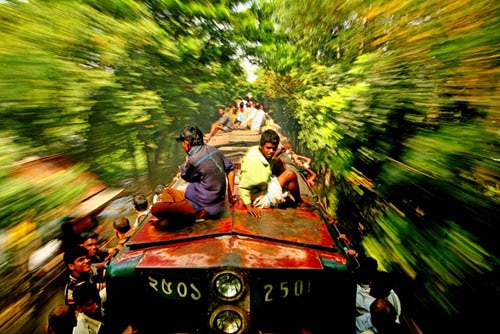
G.M.B. Akash, AvatarThis is a very special interview with an international, award-winning photojournalist G.M.B. Akash. He is based in Dhaka, Bangladesh and represented by Panos Pictures. Wrangling him into finding the time to answer these questions took some doing because he was always on the road working on one project or another. So, I am truly honored to host his images and his responses to a few of my questions here on Tiffinbox. If you have any questions or comments for him, please do submit them at the end of this post!

1) Tell us a little bit about yourself. Where are you from? How old are you?

I grew up in a home far removed from my profession. Throughout my childhood I did not have access to photographers, their work, or even a camera. Photography did not exist for me in theory or in practice. Then a decade ago I found my father’s old camera and my life took a different turn. My fascination for the captured image was uncontainable and overcame everything — even my inexperience. Not knowing what I was doing or why, I went everywhere shooting anything and everything that caught my attention. The only thing I was certain of were the subjects I photographed. I concentrated on people living on the edge of society because their faces, lives, and living conditions held a particular fascination for me. Gradually I became absorbed in their daily lives for months on end, learning from their experiences. My desire to capture it all on film pushed me to go to places and to meet people I never would have encountered otherwise. Each visit gave me a deeper understanding of humanity.

I am from Narayangonj, a city which is 200 km away from Dhaka. I come from a middle class, very ordinary family. I was born in 1977. I was always a last bencher in my school. I always felt inside that I have no talent like other kids. But photography gave me a new life.

G.M.B. Akash, A Photojournalist

2) Some would consider you Bangladesh's best known photojournalist. What has led to that success?

Hard work, honesty and respect towards the people whom I photograph.

G.M.B. Akash, A Photojournalist

3) Where were you trained as a photographer? And why, photojournalism? Why not advertising or travel?

My passion for photography began in 1996. I attended the World Press Photo seminar in Dhaka for 3 years and graduated with a BA in Photojournalism from Pathshala. I believe that the formal study of photography is necessary to survive in the industry today. But most important things are to be really passionate and dedicated.

The formal study helped me a lot but most of the time I learned from other photographers. I have learned from painting, songs and movies as well. Everyday I go through the work of other photographers and I learn from them. I have learned from many photographers.

Photography pushed me to go to places and to meet people I never would have encountered otherwise. Each visit gave me a deeper understanding of humanity. Today, I count myself blessed, having become a photographer. To be able to articulate the experiences of the voiceless, to bring their identity to the forefront, gives meaning and purpose to my own life.

In 1998, I saw a photo exhibition on AIDS victims, titled ‘Positive Lives’ at gallery in Dhaka. And realized for the first time how images can influence social perception. My first reaction, on seeing the exhibit was a complete subversion of my original perception of AIDS patients. It struck me how patients with AIDS are alienated and scorned by us because of social misconceptions, and I realized how I as a photographer could help dispel these misconceptions. I discovered the power that images have over us.

To me, photojournalism is a huge responsibility and a tough job. A photojournalist must be honest, hard worker, punctual, and he or she must respect other people.

I believe photography can bring lot of changes in our life. It can bring positive changes. In my case, “my images are my voice, I want to show the things that should be corrected or should be appreciated.”

G.M.B. Akash, A Photojournalist

G.M.B. Akash, A Photojournalist

G.M.B. Akash, A Photojournalist

4) What drives you to make images? Do you see it as a job or as a calling?

What I find most amazing about the work I do is that it opens my eyes to all these little pleasures of life. There is great pleasure in meeting people who are despised by the world, in sharing a cup of tea with them, and discovering that they are still capable of affection, though they themselves go unloved.

This is not a job about making money or succeeding; it is about pursuing art, and opening people’s eyes. That is the responsibility of every photographer.

G.M.B. Akash, A Photojournalist

G.M.B. Akash, A Photojournalist

5) How do you take on projects? Are they self-financed or do you write grants?

Most of my projects are self–financed. I keep saving my money from other assignments to keep doing my personal projects. I do not like using my camera for begging. Each of my projects usually lasts over a year or even two and I begin to use my camera only when I have earned the trust of the people whose lives I want to document.

To portray a community or a way of life, you first need to understand it well yourself, otherwise the images become superficial, and neither you, nor those who look at your photographs, will be touched or moved. In fact, I let the year pass in regular visits to a small community of transvestites in Dhaka, before I eventually started taking their photos. I like to mingle with my subjects, I visit them often, and I invite them to my house, to get it across that I see them as people rather them mere subjects of photography.

G.M.B. Akash, A Photojournalist

G.M.B. Akash, A Photojournalist

6) There is great sensitivity to people in your images? How did you cultivate it? How do you approach people when you are doing stories?

With every picture you take, you enter a space that is unknown to you as a photographer. In the beginning it feels like forbidden territory, a place you are not supposed to enter surrounded by borders of privacy you are not supposed to cross. You, the photographer, are there at a factory, an old home or a brothel with your simple black bag hanging from your shoulder, eying everything around you as you are eyed by the people there. The first days following these intrusions I never take pictures because they would not be good. I wouldn’t know the people I met, wouldn’t understand the place I had just entered – my photography would be stale and meaningless. But there is always that moment when it feels completely natural to open that bag. And also there is no way of telling why it comes. Suddenly, I have a friendly conversation, or the afternoon light makes everybody around me relaxed and mellow, or someone looks at me in a trusting yet familiar way.

Then I take out my camera, and for me and everybody around me it is the most natural thing to do. There is consent. People don’t accuse me, or reject me or pose in unnatural ways. They are just there, doing what they normally do. Then I click away, and it feels like a conversation, a conversation between me and the people, between me and the location, between me and the light, between me and the souls that make this place alive. In such moments a landscape becomes a soulscape.

After such moments, life where I am working becomes trivial again, and the next day everybody asks for their photographs, and there is no difference if the people are girls from a brothel, children who work in a factory or farmers from the countryside. But these little exchanges bring us closer to each other, and the ties between us, which started with small talk and conversation and continued with the first pictures I took, will begin to become deeper and more meaningful, and so will the pictures I take. And the closer I get to them and the deeper our friendship becomes, the simpler my photography gets. I am no longer looking for special angles or artistic points of views; I just open myself to these people, take a good look, frame and wait for the right moment. When I walk home, I have all the moments that I missed in my head, and they will become my source of inspiration in the days to come.

I see the beauty of people and the human soul in the pictures I take. And though the circumstances of some of the people I portray may be grim, back-breaking, depraved, the people themselves are always remarkable characters and souls. And it is my duty as a photographer and artist to point with my pictures at every aspect of existence in the society and world I live in, to show what can be shown, to go deep into every milieu and also into every aspect of poverty, deprivation and hardship that I encounter – because the only sin for a photographer is to turn his head and look away.

G.M.B. Akash, A Photojournalist

7) You keep winning award after award and you are very good about making it known that you were either nominated or you won. Where did you learn such a basic marketing strategy – that is, to be in forefront of everyone's mind when it comes to photography? What or who inspired you to follow that template?

I am very much alone in the Bangladeshi photography industry. I do not even have photographers as friends. I learned everything for my survival. I keep doing the hard work. And my God was always so kind to me and my friends and family.

G.M.B. Akash, A Photojournalist

G.M.B. Akash, A Photojournalist

8) What is the photo world like in Bangladesh? Does most of it revolve around Dhaka? Are Pathashala and Drik still the only resources for emerging photojournalists?

Lot of people are getting interested in photography in Bangladesh. It is becoming a very popular art form. Pathshala is one of the main photography schools. But there are many other schools which also
give a very good education.

It is very tough to survive as a freelancer now days. Especially in Bangladesh. Wire services like AFP, Reuters, AP, EPA capture all the markets. They are very fast and very powerful. They have a huge investment and network. They have their staff everywhere. It is really hard to publish your work as a freelancer.

But what I believe is this: “if you remain true to your work then your work will remain true to you”

G.M.B. Akash, A Photojournalist

9) Do Bangladeshi photojournalists have a network? Is there a sense of camaraderie and competition between photographers?

We have huge competition and huge politics in Bangladeshi photography. Lots of groups and nepotism. Few people control the whole system and they only favor their own people.

G.M.B. Akash, A Photojournalist

10) What challenges do you face when you are commissioned by magazines or newspapers around the world?

Every assignment is a new experience to me. Till today, I have received more than 40 international awards from all around the world and my work has been featured in over 50 major international publications including: National Geographic, Time, Sunday Times, Newsweek, Geo, Stern, Der Spiegel, The Fader, Brand Eins, The Guardian, Marie Claire, Colors, The Economist, The New Internationalist, Kontinente, Amnesty Journal, Courier International, PDN, Die Zeit, Days Japan, Hello, and Sunday Telegraph of London.

It is challenging to work with so many international magazines. Bangladesh is not an internationally important country. I've met so many people who even don’t know where Bangladesh is. Magazines seem to only want photographs from Bangladesh when there are big floods or big disasters.

We have also lot of problems in acquiring travel visas. If something happens in India or Pakistan, we cannot go there instantly. It takes a few days for getting the proper visa. It is so easy for a photographer from a developing country to get a visa but that's not the case for Bangladeshi photographers; it is almost impossible to go into a conflict zone.

But all these awards and publications bring lot of attention on those issues that I have been working. After seeing my work, so many individual people and organizations have shown their interest to help/improve the situation of child labor in Bangladesh and other issues.

My work on “home for elderly people in Nepal” has been printed in a German magazine. After it got printed so many individuals and organizations came to help them. We raised lot of money for this old home. The situation at that old home was very bad and the elderly people who lived there found it hard to get food three times a day.

G.M.B. Akash, A Photojournalist

11) Are you mentoring anyone interested in pursuing a career in photojournalism? Have you considered conducting workshops in South Asia?

I am trying to help a few of my friends. But no workshops at this time. I am very busy with assignments, traveling and working on my personal projects. And I really want to keep taking lot of photos. I need more time for organizing and giving workshops.

G.M.B. Akash, A Photojournalist

12) Have you ever been tempted to work with video? Will still photography always be your main mode of communication?

I have never tried video but I really want to start making short videos. I mainly concentrate on still photography now.

13) What are you trying to say with your photography?

I see the beauty of people and the human souls in the pictures I take.

G.M.B. Akash, A Photojournalist

Filed Under: Interviews, Photojournalism Tagged With: akash, bangladeshi, dhaka, g.m.b. akash, human interest, international award, interview, Journalism, meeting people, News, optics, people, photographer, Photography, photojournalist, photojournalists, positive lives, shahidul alam, world press photo

Control & Chaos: Two Genres Of Photography

October 5, 2010 by Guest

Paul GeroThis is a guest post by Paul Gero, a wedding photojournalist based in Orange County. Paul is also known for being a terrific writer, speaker and teacher. He, his wife Nicki and now two kids are wonderful people to know.

Having been in photography for a little while, I find that the work falls down into basically two approaches: Control and Chaos.

Doing Control type work is about setting up, posing, lighting and forging a bond that elicits the desired response.

Much of the commercial world and a lot of the wedding and portrait world is in that category of Control.

A few reasons why it might be so popular:

a) The desire to create an image that looks familiar (and with the web more images are shown and seen than ever before).

b) The desire to create an image that you know will be client pleasing and you know will sell.

c) A newer photographer with new found skills and less certain about capturing things “on the fly”.

The Chaos approach has been around for decades practiced by many of the greats including Henri Cartier-Bresson, Josef Koudelka, Larry Towell and others.

Many of the great photographers from the famed photo agency Magnum work in this manner. These are some of my favorites primarily because of the way the see the world, the moments they capture and the way they structure their photographs.

It’s a style that takes practice to master. It's about looking, watching, spending time in the field with a camera, and anticipating — it's not always reproducible, but it will always be interesting. Serendipity is a huge part of the equation of Chaos photography — that can be scary but also hugely rewarding.

It takes thinking about how you'll approach a situation from where you position yourself in relation to your subject, where they are in relation to the background and what focal length you'll use to make this type of photograph.

I recommend to my students is they watch people especially as they gather at a mall, for example. Notice how they stand, how they greet people (and cultures are different).

Then when watching those interactions think about where you would need to be to make a great photograph of that situation. What lens would you use? How far would you be from the subjects?

Selecting a spot to stand in relation to your subject in the Chaos realm is important. This location along with your focal length determines how much context will be revealed in the photograph. And typically you’ll want to see that subject’s face in order to capture emotion (the eyes reveal the soul, as they say). That often means being in front of or to the side of your subject.

When I worked in Washington DC and covered events with the President, it was interesting to watch how the Associated Press determined their coverage and would station a photographer front and center of the President. That was a safe angle, and often times the best angle.

They would position another photographer off to the side for most events — that 45 degree or called the “cut away” angle.

This angle adds depth to the photo as the subject to the right or left of the President would often be slightly out of focus (with a telephoto lens). It would be a good angle if the President was looking in the camera direction, and perhaps less successful if he were to look to the opposite side.

Selecting the angle behind your subject is a lower percentage choice, but can be useful as this position gives the viewer a sense of “walking into the sunset”, or leaving. That aspect makes it useful and can help creating a natural looking end to a story.

While observational skills and camera position are critical to successful Chaos photography so is being in control of your technical skills.

Knowing light, knowing exposure, knowing when to trust or not trust your meter all play into that role.

Many photographers use the auto modes on a modern camera to “set it and forget it” and while that can work and does in many cases, there are times when it can get you in trouble especially if you’re not paying attention to the choices made by the camera or get sloppy in where you meter and hold the exposure value.

When I choose my working settings, I start from selecting aperture first, in order to create the look and depth of field on the scene (especially using wide or normal lenses).

My shutter speed choice then coincides with a good exposure for that scene based on the ISO (typically using the lowest ISO for optimum quality while still being able to get the desired shutter speed). I also consider the amount of movement in a scene in order to select the appropriate shutter speed to stop the action.

Lens selection is critical for Chaos photography.

Much of what I call the inspirational photography in this genre is often made with simple focal lengths, either slightly wide or normal (i.e. 28mm, 35mm, 50mm lenses on 35mm cameras). Rarely do you see a lot of this work done with extreme wide angles and extreme telephotos.

These lens choices also force an intimacy with your subjects in terms of your position to them. It’s much tougher to hide when you’re using a wide or a normal focal length lens, as is possible when using long zooms or telephotos.

When you’ve become really disciplined using one, two or three focal lengths, you begin to see the world taking place on the stage for those lenses. You get comfortable framing with the the imaginary lines of those focal lengths.

Zooms are popular and can be useful tools, though I find that primes often help photographers hone their vision especially when learning. It forces you to move to frame, rather than zoom to frame.

I know for me when using zooms I have to be very disciplined to not just zoom out when I should be moving my feet to frame. In fact, I try to use the zoom like a prime and determine the focal length I want to use, set it on the zoom and then move to frame but not zoom unless I absolutely must (especially with a zoom such as the 24-70mm; less so with a long lens such as the 70-200mm).

Metering light which then translates to a great exposure is critical especially in fast-moving situations.

I find that using an old school incident meter is great in this area. It allows me to dial in the exposure so that helps exposure consistency from frame to frame. Even if you only use an external meter for a while as you learn the patterns of lighting, I think it can be extremely useful.

This gives you one less thing to think about because you’ll know that exposure is handled.

Look at the scene and anticipate what would happen if you change position or your subject’s change position. Think ahead and pre-visualize where the subjects might go can help you successfully handle any change in exposure.

I can’t stress it enough: Exposure is a critical component to successful photography — and especially digital photography.

To paraphrase my instructor, famed National Geographic photographer William Albert Allard: You have to get your exposure dialed in because you’d hate to lose a portfolio photograph due to a lousy exposure.

He was right when he told me (and we were shooting transparency film) as he is today if you’re shooting digital.

What I enjoy most about Chaos photography is that it’s more about capturing life as it happens, as opposed to having it set up by me. It takes more time for this to work, because you have to be able to witness things — having a five minute window with a subject often precludes that and reduces you to do Control work.

I find that life is so much more fascinating and people do much more interesting things than I could ever set up.

I loved to be surprised when looking through the lens and use that as a guide to know if I'm in the presence of an interesting photograph — if it moves me, excites me, or causes an emotional response in me while I'm photographing, it will usually translate in the actual photograph.

Perhaps folks who prefer Control photography are not certain that good or great photos will even materialize therefore they want to ensure that they do.

All I can say from years of experience is to trust that they will — if you have time. Wherever people gather there is a potential for great photographs. And you will often be surprised by the photographs these subjects give you.

The human element makes that happen. The energy from an event makes it happen. You just have to have faith that you’ll see those moments when they happen and using your skills acquired from practice and observation, you’ll be in the right place at the right time.

Knowing how to create nice Control images is a part of the modern photographer’s tool box, no doubt, but I think it should be a piece of the box, not the whole thing.

Practice your observational skills and your technical skills and be prepared to be surprised with the beautiful and incredible chaos that is life and then capture that feeling with your camera.

What kind of photography do you practice? Do you agree or disagree with Paul? Your comments below will create a dialogue that I will welcome here on Tiffinbox. So please take a moment to tell us what is on your mind. We're listening to you!

Filed Under: Photography Tagged With: aperture, camera, chaos, control, controlled chaos, controls, digital photography, exposure, focal length, genre, genres, optics, paul gero, photographer, Photographers, photographic lens, Photography, physics, science of photography, shutter speed, telephoto lens, wide angle lens

Friday Foto Features By Scott Webb, Week 1

September 10, 2010 by Scott

Scott Webb, AvatarThis is a guest post by Scott Webb, a photographer based in London, Ontario Canada. Through photography and art, he believes that we can avoid and fight depression and mood disorders. He gets out of bed everyday to challenge the mediocre through the lens of photography.

Every week there are a massive number of articles posted relating to photography. I want to present some that help me out and could help you out too. Tiffinbox is growing as a great resource for photographers and the weekly round up is intended to build upon that momentum. This being the first week for the photography round up, I’m testing the waters and the topics are very malleable.

The format of the helpful photography round up will take some time to mold, but the intention is always to help photographers with a place to come and be presented with content they may not have come across during their busy days of the week. The topics included within such a round up related to photography are anything from photography tips, marketing, business, inspiration, and showcasing. Forgive me if this first week feels a bit scattered.

Here are some of the best articles I have read in RSS subscriptions this week, stumbled upon, or caught in my twitter stream and retweeted on @scotty_webb.

Tips & Technique

• 5 ways a photographer can take advantage of using long lenses when it comes to portrait photography
• A helpful interview that will help you learn to shoot challenging food photography
• Rad approach that says to forget about focusing on your subject – great right brain thinking.
• How it's possible to use a normal lens for macro photography – why not!

Thought Provoking

• Is photography an art? You tell me in: Beyond Craft – this is a great insightful exploration within the photographers mind.
• Better start to think about what your portfolio is revealing about you – is it good or bad news?
• 5 points a photographer should consider related to watermarking photographs – helping or damaging?
• How much time do you spend keeping up with industry trends and cutting edge info? – might be time to start chasing

On Tiffinbox!

• Photographers: do you have a photographic archive? – be good to your archive and it will be good to you
• How success comes from your photographic vision – as the world of photography democratizes before your eyes you'll need to craft a vision

Introspective

• It's not too early to start some reflection and plan for 2011 – start looking within for next year.
• What type of photographer do you see yourself as? – become the observer and step back.
• How a photographer struggles with the vision for a photography business – labels and being defined by what
Offbeat
• Customize your Pentax with lego blocks and skins – have the coolest camera in your city
• NASA releases images for creative commons – check out NASA's vast collection of photographs

Showcase!

Sweet-n-Low

An amazing photography project – Our Secret Selves.  The artist looks at identities in the pockets and purses of strangers. Beautifully inspiring!

Want To Be Featured In A Helpful Photography Round Up?

Looking for some Tiffinbox link love? Articles featured in the resources come primarily from people I interact with in social networks and comments! So comment your heart out and add me to your social networks.  If something you share catches my eye, it may appear here on Tiffinbox.

A word from Seshu: Scott Webb and I have never met. Yet, here we are collaborating on a weekly post. That's the beauty of the Internet. Scott, who is very active on Twitter has generously offered to collate and post links to some very interesting articles about photography on a weekly basis. I used to this way back when but it's always great to have a second pair of eyes scouring the net to bring you useful, informative and sometimes amusing stories. Here is Scott's first foray into guest blogging on Tiffinbox.

Filed Under: Photography Tagged With: articles, camera, candid photography, food photography, human interest, macro photography, News, optics, Photography, photography articles, photography tips, portrait photography, resources, scott webb, Wedding Photography

Subscribe To Tiffibox Treats!

Looking for a well-curated email newsletter that will leave you inspired and motivated about your photography business? Sign up below!

About Seshu

Seshu creates relaxed portraits of families and high school seniors in Avon, Connecticut. He also leads a successful headshot photography studio in Connecticut, helping professionals from a variety of disciplines project the very best versions of themselves. He created Tiffinbox as a way of inspiring photographers, to create better images and successful businesses. [Read More]

Email Templates For Headshot Photographers

Email Templates for Headshot Photographers

Recent Posts

  • How Capture One Changed My Event Photography
  • 10 Steps To Stay Positive In Times Of Great Stress
  • Why You Need To Read “Personal Branding For Photographers” Now
  • How To Master Your Website Content Step By Step?
  • Tony Taafe’s TNT Method For Headshot Photographers

Recent Comments

  • Stephen Davison on Are You A Business Owner Who Is Smart, But Stuck?
  • Ben A. on Don Giannatti Clinches The 8th Annual Tiffinbox Award
  • Dan on Don Giannatti Clinches The 8th Annual Tiffinbox Award
  • Donald Giannatti on Don Giannatti Clinches The 8th Annual Tiffinbox Award
  • Stephen Davison on G.E. Masana’s 6 Strategies For Wedding Photography Success
  • Naveen Kumar on Weddings In India Are More Than Being At The Right Place And At The Right Time
  • kartick on Weddings In India Are More Than Being At The Right Place And At The Right Time
  • Leonid Farbman on 6 Uncommon Trends To Grow Your Photography Business
  • Willow and Finch Wedding Photography on 11 Reception Tips To Help Your Wedding Photography
  • Web Designer Malaysia on How To Optimize Your Squarespace Website For Search Engines
  • Creastan on An Interview With Photojournalist G.M.B. Akash
  • Cindy Brown | Atlanta on An Open Letter To A Local Photographer

Become a Patron!

Copyright © 2026 · Tiffinbox · Site Design by Heather Mackan Creative · Built on Genesis