• Photography
  • Interviews
  • Business
  • Reviews

Tiffinbox

Inspiring Photographers

  • Home
  • About
  • Blog
  • Contact

With Preveal, Photographers Can Now Show & Sell Images Easily

July 1, 2013 by Seshu | Editor & Publisher

If you are a regular reader of this blog, you are likely a semi-professional or professional photographer. That means you are either looking to make a living at photography or already are making a living at it one way or another.

If that's the case, you probably don't need to be told how crazy and competitive things are in the industry. You have two choices – continue going about your business and eke out a living or find a way to stand out so much that you can't be missed and you are the obvious choice for most people in your community.

How do you stand out in a crowded marketplace? Focus on these two words – customer service. A popular post here already discusses why giving away your images on a CD or DVD is terrible mistake. What's been forgotten by a lot of photographers is that we are in service of our clients – from the moment they call you on the phone till it's time to deliver their images to them.

It was when I spoke with Chris Scott of Preveal recently, that he hit home the idea that to truly serve your clients you need to be their guide all the way to that point where you even help them hang their images on their walls. Taking them through all of their options where they get to enjoy and experience their images every day should be your ultimate goal.

Here is more of my chat with Chris. He touches on the exciting new features that have been added to the next version of his iPad application, Preveal, that launches on July 8th. More importantly, he showed me how photographers can benefit by using Preveal in their own businesses, to show and sell images that their clients want for their homes.

Now, Preveal isn't inexpensive ($74.99), but I am going to take Chris' word that photographers like you and me can easily make double or triple what we are making by using this application in service of our customers. You see, that's an important point to highlight. It's not merely a tool to show of your work or to make selling easier. There are portfolio applications that do that just fine.

What Preveal does and does very well is it provides your clients a visual facsimile of what their own images can look like on their own walls. You will agree this is extremely powerful as it takes the guesswork out of the sale and ultimately reduces and eliminates the perceived risk your clients are likely to harbor when doing business with you.

When you know as plain as day what you can expect to receive from your photographer, what client isn't going to see it as a big win for them?

Use the application to show your client's images with frames or as canvas prints:
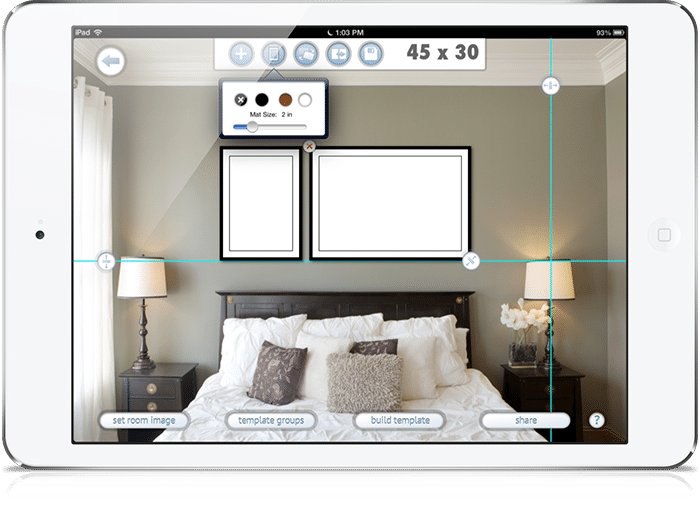
Preveal Version 3 | Guides & Frames

Here is an example of finished canvases in a bedroom:
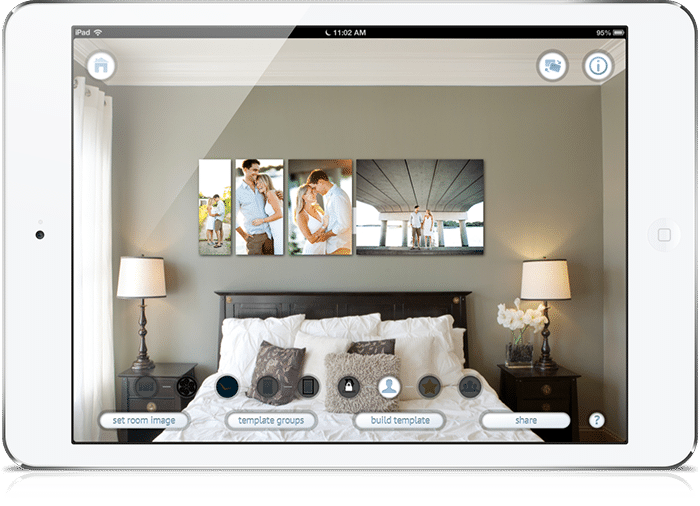
Preveal Version 3 | Finished Canvases In Bedroom

If you ever get stuck, help and support is built right into the application (yes, with links to videos showing you how to use the features):
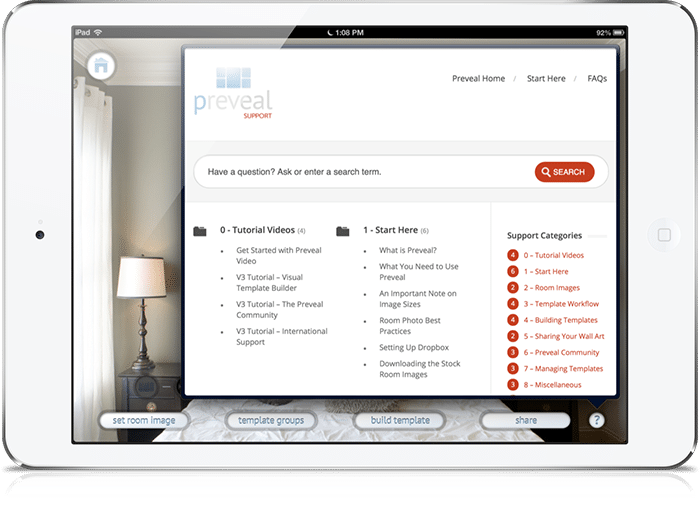
Preveal Version 3 | Extensive Help & Support In Application

I twisted Chris' arm to give away two redemption codes for two lucky commenters below. Before you race off to type anything below, please first vote for Preveal on PPA Magazine‘s website.

Preveal Hot One Award

As a pioneer in this industry, I feel it is Preveal that totally deserves to win the Hot One Award for Best Mobile Business App. Voting ends on July 7th and you can vote daily.

Preveal LogoOnce you have voted, come back here and tell me a little bit about yourself and why winning one of two redemption codes will mean the world to you and your business. Please do not forget to include your email address as that's the only way we are going to be able to notify you. Good luck!

And do remember, version 3 of Preveal launches on July 8th. If you buy Preveal today, updates via iTunes are always included.


Filed Under: Business, Photography, Web/Tech Tagged With: Chris Scott, client, iPad, Photographers, Sell Images

How Photographers Can Get A Grip On Their Expenses And Create A Profitable Business

June 25, 2013 by Jason Aten

Jason Aten is a photographer and the author of Starting Out Right: Building a Profitable and Sustainable Photography Business. In addition, he is the CEO of NinetyNine Beans, which provides Full-Service Accounting for Photographers. You can read more posts like this on his blog: www.startingoutright.net

Some of the most common questions asked by photographers are: how much should I charge? How do I set up packages? Should I do packages or a la Carte pricing? These are all great questions. They are important questions. Often, though, the problem is that this is the first question a photographer is asking – before they ask some other, very important questions.

Numbers

The first question I encourage people to ask themselves is this: how much does it cost you to be in business? I know it's not necessarily as sexy a question – and it's a hard one to answer – but it's impossible to really start figuring out things like pricing and packages, without a good grasp on the answer.

Do you know how much it costs you to be in business? Do you have a system in place to track your expenses? Surprisingly, even though they are running a small business, many photographers don't have a good system in place. In my business, I TRACK EVERYTHING. I want to know where my money is coming from, how I spend it, and whether or not it helps – or hinders – the business.

Start by tracking your expenses. Start with the expenses you have, whether you photograph anything or not. These Fixed Expenses include things like Administrative Expenses (insurance, supplies, training and education, etc), Capital Expenses (new gear, large purchases that you depreciate, real estate, etc), Advertising Expenses (website, business cards, marketing materials, bridal shows, etc), Overhead Expenses (utilities and expenses related to a physical space like electricity, gas, etc), and Employee Expenses (wages and benefits for all non-sales related employees).

Next, track all of the expenses that go into the products and services you offer. In addition to what the lab charges you for an 8×10, this includes all of the expenses that go into SELLING and PRODUCING a product. These are your Cost of Sales Expenses, and include things like the wholesale cost from your lab, design charges, editing and processing expenses, shipping, sales related labor, retouching and travel.

Understanding these two types of expenses will give you a good idea of what it will cost you to be in business – which gives you a good idea of where to start when thinking about pricing for a profit. It seems like a lot of work, and it is, but its worth it.

Second, develop a system to help you keep track of revenue and expenses on an ongoing basis. Even if it's just a simple spreadsheet – that's better than nothing. There are some great tools available, including Quickbooks (and their online version). My personal favorite is Kashoo, which makes it super easy to input transactions, track expenses and generate really useful reports you can use to make decisions about your business. Many of the photographer-specific Customer Relationship Management tools (like ShootQ and others) have features that make it easy to keep track of your revenue and expenses.

Whatever system you choose, using it will only be as useful as the effort you put in. Make a commitment to understanding the financial health of your business by getting a grip on your numbers. Understanding what it takes to be profitable and sustainable means that you can make decisions that help your business grow – and add value to your life.

By the way, once you're using a system to track your expenses, it becomes easier to measure your performance. The Professional Photographers of America publishes benchmarks to help you measure the financial health of your business. Those benchmarks are designed to help every photographer take home 35% of their gross revenue as owners compensation and profit, and can help you evaluate where you may need to make changes in your expenses.

Finally, it's worth it to hire a good accountant that understands your needs. Someone who knows small businesses and can help you set up a plan – and stick to it. Accountants aren't just for saving money at tax time! A good accountant can make you money all year long by helping you know exactly where you stand. Having an accountant can mean having a trusted financial advisor on your team, helping you make the right financial decisions for your business.

Want to know more? We're hosting a free webinar this Wednesday designed to help photographers “GET A GRIP ON THE NUMBERS: Bookkeeping Basics for Photographers.” Simply visit www.ninetyninebeans.com/webinars to sign up for FREE.

Filed Under: Business, Photography Tagged With: Administrative Expense, Capital Expense, Expense, Expense Insurance, Fixed Expenses, Overhead, Overhead Expense, Photographers, Pricing, Track Expenses

Striking Balance: Juggling Life & A Photography Business

April 2, 2013 by Angela Pointon

Angela Pointon is an inspirationalist and advocate for professional photographers. She is a monthly columnist for Professional Photographer mag and offers Photo Business Renovations to photographers everywhere. Her brief e-book, “The Art Of A Photo Business: what every photographer wished they knew before starting their photography business” is available for download in all digital formats. Follow Angela on Twitter or Facebook.

DesignAglow recently posted a question to the photography community on Facebook:

“What is something you still want to learn how to do?”

The overwhelming majority of responders who said “how to juggle life and a photo business” snuffed out the occasional “learn Photoshop techniques” or “how to pose newborns”.

I firmly believe that if you're talking about struggling to juggle, there is something concretely wrong with your business. It might be something huge, or it might be something small. I suppose it all has to do with the severity of the needing-to-juggle feeling.

So I figured I'd put together a few tips. They're just plain old things that have helped me. Hopefully you'll find them extremely simple and adoptable.

Juggling Life & Photography Business
1. Figure out your desired lifestyle, first.

I follow a ton of entrepreneurial business leaders, and I feel bad about not being able to credit the single person who gave me this advice early on.

Because the advice was awesome and impacted the decisions I make greatly.

What they said was, “figure out the lifestyle you want, first. Then build the business to match it.”

As I was personally contemplating my own business, I was ever so grateful to have had the advantage of learning this right from the beginning.

For me, my weekends were sacred. They were focused on family, and, since both my husband and I work, it's the only time that we can all be together. Work, therefore, is off limits on the weekend. I could not build a business that required working on the weekend, or it would break a fundamental lifestyle rule for us.

I also wanted one day per week where I could focus on something mandatory for my family or me. I have one day set aside for cleaning, organizing, doctor's appointments, or whatever else is required to keep life moving, in general. This day is reserved for these types of activities so I don't feel guilty for doing them when I “should” be working.

2. Crunch the numbers and build a budget.

Jumping into a business headfirst is awesome, and in some cases, really exciting. However, not knowing how much you need to make and how the business will impact your ability to juggle it all is a huge mistake.

As I started crunching numbers for my business, my first pass included a plan for only working two days per week. That first pass, however, proved to not make me enough money. I either had a pricing problem, a frequency of work problem, or both. I eventually struck a balance and figured out how much money I had to make per day I worked.

This exercise greatly assisted me in a few ways:

a) I could see (quickly) how pricing myself too low was going to kill me. I was just going to have to work too much to make what I needed to make.

b) I could play around with working 2 days vs. 3 days vs. 4 days per week, and see what lifestyle sacrifices would gain me, financially.

c) I knew exactly why I couldn't make less than my final scenario illustrated. It made turning down business that was priced at a lower rate way easier.

3. Plan to occasionally turn it all off.

I highly value driving, reading, shooting and watching videos. More times than not, when I allow myself pockets of time to do these things, grand business ideas or ideas for books I can write myself, come to be.

Without pre-planning time to think, shoot for no reason, read or just plain think, I'd never get to do those things and my business would ultimately suffer from a lack of creativity.

There is a misnomer that if you're so busy juggling, you have no time for time off.

Wrong.

Constantly juggling is going to get you nowhere. Taking time off (albeit carefully planned time off) can take you to amazing places with your business.

4. Know what works, what doesn't, and continuously refine.

Nothing is more meaningless and wasteful than doing things that have little impact on the greater good of your business. Whether it's pushing a service that isn't profitable, a marketing exercise with a low return, or being a member of a group you don't gain anything from.

If there is something in your business that isn't getting you to your goals, stop it or change it. Quickly.

Don't be shy or scared to hurt someone's feelings, either. If it isn't working, be upfront and take the time to explain why. As fellow business people, we should all be able to understand this.

5. Let go and know what to outsource.

You cannot do it all.

Yes, we're all perfectionists. Yes, no one edits like we do. Yes, no one handles client calls like we do.

But it's possible to train people, and you might be surprised. If you pick the right person to outsource to or take the time to hire the right person, they might actually do it better.

What things have you found or done in your business to help you juggle it all?

Filed Under: Business Tagged With: a photography business, Juggling Life, photo business, Photography Business, Striking Balance

3 Tools To Power Your Photography Business

March 25, 2013 by Seshu | Editor & Publisher

It's almost April and taxes are due. Trust me, I am feeling your pain. Well, almost. This year, for my new portrait business, I chose to work with a bookkeeper and an account. You see, numbers and I are like oil and water. We rarely mix, so outsourcing something I didn't like to do simply made sense.

While I fought with myself and said I could take care of tracking my mileage, reconciling my books and itemizing my receipts, letting go really felt liberating. I could now return my focus back on making images.

But if you are just starting out, or you have attempted to keep your own accounting straight and you are disciplined, I have something for you that might quickly ease your frustration.

QuickBooks For Photographers | Solar Powered Business ToolsMost of us have to keep accounts somehow. Some resort to Excel spreadsheets and some use online or offline software programs. If the word: “QuickBooks” makes you shudder in fear, consider QuickBooks For Photographers, a series of step-by-step video tutorials that will walk you through the program, setting you up and bringing you peace of mind.

Jenny and Josh Solar are the brains behind this and the other programs I am going to tell you about today. Not only were they super helpful through the video series, they also resolved the questions I had after I had watched the program. The reason I am recommending this and their other programs is because they are well organized and useful from the get go. While I had off-loaded my QuickBooks work to my bookkeeper, I still went back to my desktop program to see if I could follow along and set things up as I was instructed. It was super easy and the fact that I could see the results right away made it all the more useful to me.

QuickBooks For Photographers is available for both Macintosh and Windows users. So, rest easy people!

Master Tax Time | Solar Powered Business ToolsMastering Tax Time E-Book for Photographers is also something I would recommend to you, so that you can be prepared for next year's taxes. Right now Mastering Tax Time E-Book for Photographers is on sale for $19.00, saving you $10 right off the bat. If you are a pack-rat like me, hoarding receipts for years (but not being able to track them), you will get much relief in hearing how the Solars keep track of everything and can easily find all those pesky bits of paper when you absolutely must (that is, during tax time).

“This guide is designed to help you get organized and stay organized with all things tax related. It covers everything from bookkeeping to mileage, home office deductions to equipment lists and more!”

Lastly, there would be no numbers to plug in if you didn't have any sales, right? Well, you may have a ton of expenses, but it's always nice to run a business in the black, not red.

The Solars have a product called In-Person Sales. If you have been posting your images to an online gallery and haven't seen an uptick in sales, this 29-page guide book is for you. In Person Sales | Solar Powered Business ToolsGiven Jenny and Josh's long experience as wedding and family portrait photographers, I trust what they have to teach me about this topic. In fact, In-Person Sales is one of the books I am consulting right now as I structure my portrait business in Connecticut.

Here's the deal: If you Solar power your business and buy all three products mentioned above, I'll give three (3) of you 1/2 hour of my time ($150 value each) via a Skype video call. We can talk about your business. We can talk about specific photography issues you are encountering. We can talk about how you are using social media. I am not promising you that I know everything, so if you stump me, I'll either figure it out and let you know or will direct you to someone who does. So, come back here and tell me you bought QuickBooks For Photographers, Mastering Tax Time and In-Person Sales. I'll confirm with the Solars and then I'll pick three names out of the hat. Deal?

My photography business is Solar powered. Is yours?

Filed Under: Business, Photography Tagged With: Business, Business Tools, Photography Business, Power Your Business, Solar

3 Factors That Influence Photography Pricing

March 13, 2013 by Bryan Caporicci

Bryan Carporicci dives into three influencing factors when it comes to pricing your photography. If you have read his first article on pricing, you are in for a treat again. He co-wrote a book for photographers with fellow photographer Robert Nowell called “Pricing for Profit.”

In the book I co-wrote with Robert Nowell, titled “Pricing for Profit”, we share our belief in the idea of calculating your prices based on Cost of Sales. Certainly this is the best starting point, but there are other factors that must be considered when calculating your prices, most importantly quality, perceived value and confidence.

Quality

The quality and artistic measure of your work will have a healthy influence on how you can price your photography. In order to sell something to someone, you have to provide a quality of service or product that the client couldn’t produce on their own. If your photography resembles the basic snapshot-style of images that anyone could take with their own point-and-shoot camera, chances are you cannot charge anything in the neighborhood of what we are suggesting. If, on the other hand, your photographs exhibit a quality of light, posing and finesse that makes your work stand above the competition, then you certainly can demand a premium for your creative fees.

Perceived Value

We have all heard the saying that beauty is in the eye of the beholder, and this is true of the professional photography industry. The way that a client perceives a product or service is directly related to the price that they are willing to pay for it. People buy things not necessarily for the thing itself, but rather for the way that the thing makes them feel. This has been proven to be true time and time again in all kinds of business environments.
Perceived value can come from things such as how we package the goods that we deliver our clients, to the length that we will go to to provide exceptional customer service. If you create a higher perceived value for your photography and your products, then you can demand a higher price for those products and services.

Confidence

Confidence is a photographer’s ability to sell him or herself and his or her products or services without any hesitation or apology. It is especially important for starting out photographers, to disassociate themselves from their own price list. We have often heard photographers saying that they would never buy photography at the prices that they themselves charge. As a result of that thinking, they find it extremely difficult to sell to others when they don’t believe in their own pricing system.

You need to be confident and sure of your pricing structure, and you need to present it in such a way that instills confidence in your client. If you don’t believe that they will buy, it is likely that they will sense that. If you don’t believe that what your selling is worth the price you’re charging, they will see that as well. This is why it is important to be extremely confident in the prices that you are asking for your photography.

Next week, I’ll be going into detail about the last “influencing factor” for pricing – the Cost of Sales model. This is the only measurable way to calculate your pricing, and it’s where things start to get fun!

How do you arrive at your photography pricing? What factors do you use to arrive at your numbers? Discuss below!

Filed Under: Business, Photography Tagged With: Photography, photography industry, price, Pricing Strategies, your photography

  • « Previous Page
  • 1
  • …
  • 13
  • 14
  • 15
  • 16
  • 17
  • …
  • 29
  • Next Page »

Subscribe To Tiffibox Treats!

Looking for a well-curated email newsletter that will leave you inspired and motivated about your photography business? Sign up below!

About Seshu

Seshu creates relaxed portraits of families and high school seniors in Avon, Connecticut. He also leads a successful headshot photography studio in Connecticut, helping professionals from a variety of disciplines project the very best versions of themselves. He created Tiffinbox as a way of inspiring photographers, to create better images and successful businesses. [Read More]

Email Templates For Headshot Photographers

Email Templates for Headshot Photographers

Recent Posts

  • How Capture One Changed My Event Photography
  • 10 Steps To Stay Positive In Times Of Great Stress
  • Why You Need To Read “Personal Branding For Photographers” Now
  • How To Master Your Website Content Step By Step?
  • Tony Taafe’s TNT Method For Headshot Photographers

Recent Comments

  • Stephen Davison on Are You A Business Owner Who Is Smart, But Stuck?
  • Ben A. on Don Giannatti Clinches The 8th Annual Tiffinbox Award
  • Dan on Don Giannatti Clinches The 8th Annual Tiffinbox Award
  • Donald Giannatti on Don Giannatti Clinches The 8th Annual Tiffinbox Award
  • Stephen Davison on G.E. Masana’s 6 Strategies For Wedding Photography Success
  • Naveen Kumar on Weddings In India Are More Than Being At The Right Place And At The Right Time
  • kartick on Weddings In India Are More Than Being At The Right Place And At The Right Time
  • Leonid Farbman on 6 Uncommon Trends To Grow Your Photography Business
  • Willow and Finch Wedding Photography on 11 Reception Tips To Help Your Wedding Photography
  • Web Designer Malaysia on How To Optimize Your Squarespace Website For Search Engines
  • Creastan on An Interview With Photojournalist G.M.B. Akash
  • Cindy Brown | Atlanta on An Open Letter To A Local Photographer

Become a Patron!

Copyright © 2026 · Tiffinbox · Site Design by Heather Mackan Creative · Built on Genesis