• Photography
  • Interviews
  • Business
  • Reviews

Tiffinbox

Inspiring Photographers

  • Home
  • About
  • Blog
  • Contact

Visiting With Mr. Rai

March 14, 2011 by Seshu | Editor & Publisher

Raghu Rai is India's most famous photojournalist. A retrospective of his work opened at Aicon Gallery, in New York City on February 18 and wraps up on March 19.

This is an invitation for you to join me and a small group of image makers interested or curious about India. Meet us on the 19th (this Saturday) at the gallery at 10.30 am, to take in the body of work Mr. Rai has created over the last 40 years. We will also meet up for a cup of chai or coffee afterwards. It's essentially a very loosely structured networking event that I want to start doing more often either in New York, Hartford (where I live) or in Boston. If you are interested in photojournalism or documentary photography, you might find kindred spirits among us to trade stories, referrals or more.

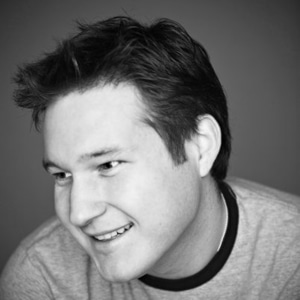
Raghu Rai Portrait

Shreeya Sinha, a multimedia journalist and producer, will also join us as well. Having lived and worked in India, for Undesired, I felt she might provide us the right perspective on Raghu Rai's own mostly domestic work.

Aicon Gallery is located at 35 Great Jones Street, New York, NY 10012. If you are lost, please call 212-725-6092. Take the #6 Subway line to Bleecker Street and walk North on Lafayette Street for two blocks, then a right onto Great Jones Street. Aicon Gallery should be on your right hand side.

Meanwhile, check out the recent podcast SAJA hosted with Mr. Rai. Also view his work on the Magnum website. If you are inclined to buy one of Raghu Rai's books, I recommend Raghu Rai's India: Reflections in Colour. [aff]

So, tell me … are you already a fan of Raghu Rai's work? What can you tell me/us about him? Although I am familiar with some of his work, I know little about the man so I am interested in seeing this exhibit in hopes that it will reveal something about him.

I hope to see many of you there. It would be great to know of a headcount before hand so that there are no surprises. Would you please comment below if you are able to make it? Thank you!

If anyone knows who photographed Mr. Rai in the above photograph, please let me know. I would like to credit the image, if it is still ok to display the image.
Filed Under: Photo Exhibit, Photojournalism Tagged With: aicon gallery, arts, gallery, human interest, image maker, magnum photos, New York, new york city, nyc, photojournalist, raghu, raghu rai, rai, retrospective, visual arts

Gary Vaynerchuk’s The Thank You Economy

March 11, 2011 by Seshu | Editor & Publisher

When my friends Rebecca Mead and Kathy Hokunson mentioned Gary Vaynerchuk‘s stop at R.J. Julia's Bookstore in Madison, CT, I jumped at the chance to go see and hear him yesterday evening.

First impression – this dude is the real deal. Down to earth, even if he has made millions of dollars selling wine in his family business or starting Vayner Media, a marketing consulting company. Just check out the way he presents wine on his extremely popular Wine Library TV. When we met he was approachable and extremely generous with his time.

He was obviously at the bookstore to chat about his second book, The Thank You Economy. I had just received it through Amazon yesterday and had not had a chance to read it yet. His first book, Crush It!: Why NOW Is the Time to Cash In on Your Passion, made a phenomenal impact on me. I recommend you get that book as well if you are just starting to explore social media.

The synopsis of his new book is this – our economy is changing to a point where we better become a whole lot more customer-centric, if we want to survive in the business we are in. Once I have read the book, I promise to post an online review. If you want to know more about it, check out The Thank You Economy.

As I said, Gary was extremely gracious when I asked him if he would spare two minutes to speak to you, my fellow photographers, about how the message in his book pertains to what you are now doing in your business. His is a terrific message and I welcome you to watch the video below. Then post your thoughts about what he said. Are you going to be making changes to the way you run your photography business? Share your thoughts with other photographers here.

Thank you, Gary, for your time and for launching this new feature on Tiffinbox called 2 Minutes WIth Tiffinbox. I welcome other authors, artists, photographers to contact me about being featured here as well.

UPDATE: For a quick review read my friend Scott Wyden's review of The Thank You Economy.

Filed Under: Books, Business Tagged With: book launch, books, bookstores, Crush It, Economy, gary, gary vaynerchuk, human interest, new books, selling wine, The Thank You Economy, wine library

Only You Can Be You

December 13, 2010 by Guest

Dustin MeyerDustin Meyer is an internationally acclaimed wedding and portrait photographer with clients across the country. WPPI speaker, owner of MpactPhoto Blog, Collages.net CLASS leader, and contributor to the Pay It Forward Blog, Dustin is all about giving it back when it comes to marketing, social media, Lightroom, and sales techniques.

You’re nervous. As the barista brings you your latte, you glance at the clock in apprehension. The sound of your heartbeat fills your ears as you inspect your outfit yet again. Questions like “What if she doesn’t like me?” and “What if I sound like an idiot?” race through your mind as the door to the café opens and in walks the woman you came to meet.

Take a deep breath. You’re not on a date. You’re meeting with a potential bride. However, many times as we get prepared to meet with clients for the first time, it can feel just like your first date. Except, in the dating world, booking brides would be the same as competing on the Bachelorette. You’re not the only one hoping to shoot this wedding and therefore being yourself is more important than ever.

In most major cities, the wedding photography industry is pretty oversaturated. Everyone is grabbing a camera and calling themselves photographers. The frustration builds as the photo community begins to collapse on itself as we all try to compete with each other on pricing, style, and products.

In the beginning, our studio had booths at bridal shows and advertised in local wedding magazines. However, I couldn’t help but feel like a number as the overwhelming sea of brides passed our booth again and again. Identity can get lost as the crucible of marketing boils everything we have down to the numbers game. “How many images do you shoot per wedding” and “The guy three booths down can shoot my wedding for X dollars, how good can you do on that price” are questions that become so common it makes you want to just put down your camera and walk away.

But you’re not a number. You’re a photographer. Pricing and even photographic style don’t have a face attached to them. This is why it’s most important to get your personality out there.

Your personality is the one thing that other studios cannot copy. It’s who you are, along with the style and portfolio you’ve developed over the years. By letting go of the copycat game (mimicking another photographer’s Photoshop effects or stealing someone’s price sheet at a wedding expo) you free yourself to just be you. And that’s exactly what brides are looking for.

It’s easy to feel like the guy next to you must be doing it better than you, hence why so many people are doing the same thing. However, it’s far easier to just stand out by being yourself. By putting as much of your personality on your site, in your work, or in your presentation, you’ll find that the quality of your clients will increase dramatically.

As we all probably know, it was much better to be yourself back when you were dating. It’s the same when it comes to booking brides. The more you just act like you, the more compatible you are with your clients. So relax, have another sip of your latte, and be a pro at being you.

Got something on your mind after reading Dustin's blog post? Sound off below in the comments. We love to hear from you.

Filed Under: Business, Photography Tagged With: adobe photoshop lightroom, be you, dustin, dustin meyer, human interest, photographer, Photographers, portrait photographers, unique, Wedding, Wedding Photography

Hard Light, Soft Light For Photographers

December 1, 2010 by Guest

David Robertson, AvatarThis week, we'll have two blog posts from my friends from “down under.” Can you tell I've always wanted to use that expression? In all seriousness, though, this first one up is a guest post by David Robertson, a Canberra Wedding Photographer. Follow him on Twitter.

As photographers we’re fed this basic message that a bigger lens = better photos. Don’t get me wrong, I love shooting with good quality equipment but as soon as you replace a passion for knowledge with a passion for equipment you’ll find yourself frustrated when your photos aren’t improving and will get burnt out. As a young photographer I bought the gear that I had lusted after and spent thousands of dollars without even realizing that I can make some amazing photos when equipped with the right knowledge and understanding of light.

Lighting in photography is one of the most overlooked aspects by today’s photographers and even the ‘professional’ photographers. Amateurs and professionals alike are completely oblivious to the effects of light of the human body and how different lighting can reveal or hide things, tell a story and bring your subject to life. Through this article I’ll go over some very simple and basic natural lighting techniques that I use for 90% of the work I do.

David Robertson

David Robertson Bridal Party

Many photographers over chop their images to try to make up for their lack of ability to understand light. We’ve all seen those ‘professional’ wedding photos that really just make you cringe and die a little inside. The aim of my work is to provide a very exclusive and high end photography experience, not just great images and being able to utilize the available light to the best measures is absolutely essential to that.

Amateurs and professionals alike are completely oblivious to the effects of light of the human body and how different lighting can reveal or hide things, tell a story and bring your subject to life.

There are a few different factors to consider when you’re lighting for portraits; size, diffusion (hard or soft), color and angle. Before I take a single photograph I analyze the scene and choose one of the below based on the factors above.

David Robertson

David Robertson

David Robertson

Hard light – shoot into the sun with the subject in front of you. This prevents squinting, gives a great wrap around light and if exposed correctly can give you amazing results. If possible try avoid shooting with midday sun. I always get a few wedding clients every season boasting about how they’ve planned to have the ceremony at midday and how good the light is then. Truth is that it’s very hard to avoid making people look likes pandas when the sun is at its apex.

Soft Light – The easiest light to work with, there is usually no squinting of the eyes (important) and it gives really nice warm, soft skin tones. The clouds act as a massive softbox; it’s my preferred light to shoot with. Shoot with the subject facing the light source (sun behind clouds) to get the most of all the color in the eyes, catchlights from light source (sun) and the best skin tones.

Sounds too easy? Well, it kinda is really :)

I encourage you to buy a small mannequin or get a willing model and study the effects of light on the person in a room with a nice big window. Rotate around the model as you’re shooting and very carefully observe with your eyes all the subtle differences that occur when you change the angle of the light and position of yourself and the subject. You’ll soon find yourself being able to get familiar with the effects of light and in no time you’ll be a light connoisseur.

If I had known all the things I do now when I first started I could have saved myself a lot of stuffing around, I hope it helps you :)

Do you have a preference for hard or soft light? Sound off below and let us know. Tell us also why you like one over the other. What challenges do you face when photographing in different types of light.

Filed Under: Lighting, Photography, Weddings Tagged With: available light, david robertson, hard light, human interest, Lighting, lighting techniques, photographer, Photographers, photographic lighting, Photography, professional photographers, science of photography, soft light

An Interview With Photojournalist G.M.B. Akash

November 11, 2010 by Seshu | Editor & Publisher

G.M.B. Akash, AvatarThis is a very special interview with an international, award-winning photojournalist G.M.B. Akash. He is based in Dhaka, Bangladesh and represented by Panos Pictures. Wrangling him into finding the time to answer these questions took some doing because he was always on the road working on one project or another. So, I am truly honored to host his images and his responses to a few of my questions here on Tiffinbox. If you have any questions or comments for him, please do submit them at the end of this post!

1) Tell us a little bit about yourself. Where are you from? How old are you?

I grew up in a home far removed from my profession. Throughout my childhood I did not have access to photographers, their work, or even a camera. Photography did not exist for me in theory or in practice. Then a decade ago I found my father’s old camera and my life took a different turn. My fascination for the captured image was uncontainable and overcame everything — even my inexperience. Not knowing what I was doing or why, I went everywhere shooting anything and everything that caught my attention. The only thing I was certain of were the subjects I photographed. I concentrated on people living on the edge of society because their faces, lives, and living conditions held a particular fascination for me. Gradually I became absorbed in their daily lives for months on end, learning from their experiences. My desire to capture it all on film pushed me to go to places and to meet people I never would have encountered otherwise. Each visit gave me a deeper understanding of humanity.

I am from Narayangonj, a city which is 200 km away from Dhaka. I come from a middle class, very ordinary family. I was born in 1977. I was always a last bencher in my school. I always felt inside that I have no talent like other kids. But photography gave me a new life.

G.M.B. Akash, A Photojournalist

2) Some would consider you Bangladesh's best known photojournalist. What has led to that success?

Hard work, honesty and respect towards the people whom I photograph.

G.M.B. Akash, A Photojournalist

3) Where were you trained as a photographer? And why, photojournalism? Why not advertising or travel?

My passion for photography began in 1996. I attended the World Press Photo seminar in Dhaka for 3 years and graduated with a BA in Photojournalism from Pathshala. I believe that the formal study of photography is necessary to survive in the industry today. But most important things are to be really passionate and dedicated.

The formal study helped me a lot but most of the time I learned from other photographers. I have learned from painting, songs and movies as well. Everyday I go through the work of other photographers and I learn from them. I have learned from many photographers.

Photography pushed me to go to places and to meet people I never would have encountered otherwise. Each visit gave me a deeper understanding of humanity. Today, I count myself blessed, having become a photographer. To be able to articulate the experiences of the voiceless, to bring their identity to the forefront, gives meaning and purpose to my own life.

In 1998, I saw a photo exhibition on AIDS victims, titled ‘Positive Lives’ at gallery in Dhaka. And realized for the first time how images can influence social perception. My first reaction, on seeing the exhibit was a complete subversion of my original perception of AIDS patients. It struck me how patients with AIDS are alienated and scorned by us because of social misconceptions, and I realized how I as a photographer could help dispel these misconceptions. I discovered the power that images have over us.

To me, photojournalism is a huge responsibility and a tough job. A photojournalist must be honest, hard worker, punctual, and he or she must respect other people.

I believe photography can bring lot of changes in our life. It can bring positive changes. In my case, “my images are my voice, I want to show the things that should be corrected or should be appreciated.”

G.M.B. Akash, A Photojournalist

G.M.B. Akash, A Photojournalist

G.M.B. Akash, A Photojournalist

4) What drives you to make images? Do you see it as a job or as a calling?

What I find most amazing about the work I do is that it opens my eyes to all these little pleasures of life. There is great pleasure in meeting people who are despised by the world, in sharing a cup of tea with them, and discovering that they are still capable of affection, though they themselves go unloved.

This is not a job about making money or succeeding; it is about pursuing art, and opening people’s eyes. That is the responsibility of every photographer.

G.M.B. Akash, A Photojournalist

G.M.B. Akash, A Photojournalist

5) How do you take on projects? Are they self-financed or do you write grants?

Most of my projects are self–financed. I keep saving my money from other assignments to keep doing my personal projects. I do not like using my camera for begging. Each of my projects usually lasts over a year or even two and I begin to use my camera only when I have earned the trust of the people whose lives I want to document.

To portray a community or a way of life, you first need to understand it well yourself, otherwise the images become superficial, and neither you, nor those who look at your photographs, will be touched or moved. In fact, I let the year pass in regular visits to a small community of transvestites in Dhaka, before I eventually started taking their photos. I like to mingle with my subjects, I visit them often, and I invite them to my house, to get it across that I see them as people rather them mere subjects of photography.

G.M.B. Akash, A Photojournalist

G.M.B. Akash, A Photojournalist

6) There is great sensitivity to people in your images? How did you cultivate it? How do you approach people when you are doing stories?

With every picture you take, you enter a space that is unknown to you as a photographer. In the beginning it feels like forbidden territory, a place you are not supposed to enter surrounded by borders of privacy you are not supposed to cross. You, the photographer, are there at a factory, an old home or a brothel with your simple black bag hanging from your shoulder, eying everything around you as you are eyed by the people there. The first days following these intrusions I never take pictures because they would not be good. I wouldn’t know the people I met, wouldn’t understand the place I had just entered – my photography would be stale and meaningless. But there is always that moment when it feels completely natural to open that bag. And also there is no way of telling why it comes. Suddenly, I have a friendly conversation, or the afternoon light makes everybody around me relaxed and mellow, or someone looks at me in a trusting yet familiar way.

Then I take out my camera, and for me and everybody around me it is the most natural thing to do. There is consent. People don’t accuse me, or reject me or pose in unnatural ways. They are just there, doing what they normally do. Then I click away, and it feels like a conversation, a conversation between me and the people, between me and the location, between me and the light, between me and the souls that make this place alive. In such moments a landscape becomes a soulscape.

After such moments, life where I am working becomes trivial again, and the next day everybody asks for their photographs, and there is no difference if the people are girls from a brothel, children who work in a factory or farmers from the countryside. But these little exchanges bring us closer to each other, and the ties between us, which started with small talk and conversation and continued with the first pictures I took, will begin to become deeper and more meaningful, and so will the pictures I take. And the closer I get to them and the deeper our friendship becomes, the simpler my photography gets. I am no longer looking for special angles or artistic points of views; I just open myself to these people, take a good look, frame and wait for the right moment. When I walk home, I have all the moments that I missed in my head, and they will become my source of inspiration in the days to come.

I see the beauty of people and the human soul in the pictures I take. And though the circumstances of some of the people I portray may be grim, back-breaking, depraved, the people themselves are always remarkable characters and souls. And it is my duty as a photographer and artist to point with my pictures at every aspect of existence in the society and world I live in, to show what can be shown, to go deep into every milieu and also into every aspect of poverty, deprivation and hardship that I encounter – because the only sin for a photographer is to turn his head and look away.

G.M.B. Akash, A Photojournalist

7) You keep winning award after award and you are very good about making it known that you were either nominated or you won. Where did you learn such a basic marketing strategy – that is, to be in forefront of everyone's mind when it comes to photography? What or who inspired you to follow that template?

I am very much alone in the Bangladeshi photography industry. I do not even have photographers as friends. I learned everything for my survival. I keep doing the hard work. And my God was always so kind to me and my friends and family.

G.M.B. Akash, A Photojournalist

G.M.B. Akash, A Photojournalist

8) What is the photo world like in Bangladesh? Does most of it revolve around Dhaka? Are Pathashala and Drik still the only resources for emerging photojournalists?

Lot of people are getting interested in photography in Bangladesh. It is becoming a very popular art form. Pathshala is one of the main photography schools. But there are many other schools which also
give a very good education.

It is very tough to survive as a freelancer now days. Especially in Bangladesh. Wire services like AFP, Reuters, AP, EPA capture all the markets. They are very fast and very powerful. They have a huge investment and network. They have their staff everywhere. It is really hard to publish your work as a freelancer.

But what I believe is this: “if you remain true to your work then your work will remain true to you”

G.M.B. Akash, A Photojournalist

9) Do Bangladeshi photojournalists have a network? Is there a sense of camaraderie and competition between photographers?

We have huge competition and huge politics in Bangladeshi photography. Lots of groups and nepotism. Few people control the whole system and they only favor their own people.

G.M.B. Akash, A Photojournalist

10) What challenges do you face when you are commissioned by magazines or newspapers around the world?

Every assignment is a new experience to me. Till today, I have received more than 40 international awards from all around the world and my work has been featured in over 50 major international publications including: National Geographic, Time, Sunday Times, Newsweek, Geo, Stern, Der Spiegel, The Fader, Brand Eins, The Guardian, Marie Claire, Colors, The Economist, The New Internationalist, Kontinente, Amnesty Journal, Courier International, PDN, Die Zeit, Days Japan, Hello, and Sunday Telegraph of London.

It is challenging to work with so many international magazines. Bangladesh is not an internationally important country. I've met so many people who even don’t know where Bangladesh is. Magazines seem to only want photographs from Bangladesh when there are big floods or big disasters.

We have also lot of problems in acquiring travel visas. If something happens in India or Pakistan, we cannot go there instantly. It takes a few days for getting the proper visa. It is so easy for a photographer from a developing country to get a visa but that's not the case for Bangladeshi photographers; it is almost impossible to go into a conflict zone.

But all these awards and publications bring lot of attention on those issues that I have been working. After seeing my work, so many individual people and organizations have shown their interest to help/improve the situation of child labor in Bangladesh and other issues.

My work on “home for elderly people in Nepal” has been printed in a German magazine. After it got printed so many individuals and organizations came to help them. We raised lot of money for this old home. The situation at that old home was very bad and the elderly people who lived there found it hard to get food three times a day.

G.M.B. Akash, A Photojournalist

11) Are you mentoring anyone interested in pursuing a career in photojournalism? Have you considered conducting workshops in South Asia?

I am trying to help a few of my friends. But no workshops at this time. I am very busy with assignments, traveling and working on my personal projects. And I really want to keep taking lot of photos. I need more time for organizing and giving workshops.

G.M.B. Akash, A Photojournalist

12) Have you ever been tempted to work with video? Will still photography always be your main mode of communication?

I have never tried video but I really want to start making short videos. I mainly concentrate on still photography now.

13) What are you trying to say with your photography?

I see the beauty of people and the human souls in the pictures I take.

G.M.B. Akash, A Photojournalist

Filed Under: Interviews, Photojournalism Tagged With: akash, bangladeshi, dhaka, g.m.b. akash, human interest, international award, interview, Journalism, meeting people, News, optics, people, photographer, Photography, photojournalist, photojournalists, positive lives, shahidul alam, world press photo

  • « Previous Page
  • 1
  • 2
  • 3
  • 4
  • Next Page »

Subscribe To Tiffibox Treats!

Looking for a well-curated email newsletter that will leave you inspired and motivated about your photography business? Sign up below!

About Seshu

Seshu creates relaxed portraits of families and high school seniors in Avon, Connecticut. He also leads a successful headshot photography studio in Connecticut, helping professionals from a variety of disciplines project the very best versions of themselves. He created Tiffinbox as a way of inspiring photographers, to create better images and successful businesses. [Read More]

Email Templates For Headshot Photographers

Email Templates for Headshot Photographers

Recent Posts

  • How Capture One Changed My Event Photography
  • 10 Steps To Stay Positive In Times Of Great Stress
  • Why You Need To Read “Personal Branding For Photographers” Now
  • How To Master Your Website Content Step By Step?
  • Tony Taafe’s TNT Method For Headshot Photographers

Recent Comments

  • Stephen Davison on Are You A Business Owner Who Is Smart, But Stuck?
  • Ben A. on Don Giannatti Clinches The 8th Annual Tiffinbox Award
  • Dan on Don Giannatti Clinches The 8th Annual Tiffinbox Award
  • Donald Giannatti on Don Giannatti Clinches The 8th Annual Tiffinbox Award
  • Stephen Davison on G.E. Masana’s 6 Strategies For Wedding Photography Success
  • Naveen Kumar on Weddings In India Are More Than Being At The Right Place And At The Right Time
  • kartick on Weddings In India Are More Than Being At The Right Place And At The Right Time
  • Leonid Farbman on 6 Uncommon Trends To Grow Your Photography Business
  • Willow and Finch Wedding Photography on 11 Reception Tips To Help Your Wedding Photography
  • Web Designer Malaysia on How To Optimize Your Squarespace Website For Search Engines
  • Creastan on An Interview With Photojournalist G.M.B. Akash
  • Cindy Brown | Atlanta on An Open Letter To A Local Photographer

Become a Patron!

Copyright © 2026 · Tiffinbox · Site Design by Heather Mackan Creative · Built on Genesis