• Photography
  • Interviews
  • Business
  • Reviews

Tiffinbox

Inspiring Photographers

  • Home
  • About
  • Blog
  • Contact

Portrait Photography With Simple Gear

September 10, 2012 by Don Giannatti

Today's guest post is by Don Giannatti. In 2011, PDN named him one of the best photography workshop instructors.If you didn't catch his CreativeLive programs, read on. You can find Don on Twitter, his websites: Lighting Essentials, Learn To Light, Now This Is Cool … and Project52. He is thoughtful, opinionated, controversial and funny. Check out Don's first guest post as well.

Portraits.

Photographs of people. People in spaces. People in environments. People in places where the light doesn’t cooperate.

People in studio settings where the photographer has ALL the control – and all the responsibility – to make the light the way it must be to capture the subject.

People.

One of the most interesting and fleeting of all photographic subjects, the portrait can show us a beauty unseen, a glimpse into the soul of the subject, or a simple smile that will last a lifetime.

Or more.

The good folks at UDEMY.com asked me to discuss portaiture on their education site and it became a full course in no time. That sort of thing happens to me when it comes to teaching.

I absolutely love to teach.

This course is for the beginners – the guy who wants to do more fashion like headshots or the gal who wants to make better location photographs. Intermediate photographers who are a bit uncomfortable with their strobes may also find some choice nuggets in the class.

I want to help photographers see exactly what I see when I am planning a portrait. The goal is to not only understand how the light works, but WHY the light works the way it does. Knowing why the light works is the best way to figure out where the light goes in any situation.

The class is currently at 5.5 hours and will grow to nearly 7 hours of video by the end of the year. I am planning new shoots for each month until January, 2013. I hope to incorporate some of the questions and comments of the students in the next four shoots.

Portrait Photography With Simple Gear

We have also set up a Flickr page (currently invite only) where we will critique, offer suggestions, help deconstruct and have an open conversation with the students. In addition, UDEMY offers a way for live lectures and Q&A with the instructors. I plan on having a live show twice a month – two time slots so we can get involvement from folks who may be in way different time zones.

As I stated, the course is for beginners and early intermediate photographers. They should have a working knowledge of their cameras, and how to work the flash mechanically. There is a suggested gear list as well, but it is small and basic. No need to spend hundreds of dollars when simple gear can get the job done.

I am including the low-res version of the workbook as it currently stands. I expect it to nearly double as we answer questions, discover some new and interesting tricks, and add more shoots/demos/discussions to it. However, that workbook is for the students only.

Please feel free to download this low res workbook to see the images we are looking at in the course. If you are comfortable with the style, and would like to know how to repeat these lighting situations, this course is for you. If you are totally sure how to do these images, it is not the course for you. (I don’t want advanced shooters being disappointed. However, two pros who have reviewed it said they learned a couple of things … heh.)

Now understand that I am not a ‘video’ guy, and the small cameras are not broadcast quality. But we do have good video, and good sound, so the information is imparted … and that is the goal.

I hope you will take a look at the materials and if the course looks like something you would be interested in, check it out.

Tiffinbox readers get a discount of $20 off the regular price of $50. I have given Seshu 50 discounts for the readers of his blog. Simply follow the link or enter the code: “Tiffinbox” into the coupon code when enrolling.

Portrait Photography With Simple Gear - Tiffinbox Coupon Code

I attended Don's workshop some years back in Boston. He knows his stuff and his love for teaching is very obvious. I do hope you will take advantage of the discount and sign up for his course.
Filed Under: Photography, Workshops Tagged With: Don Giannatti, photographer, Photography, photography workshops, portrait photography, Portraits, simple gear, the portrait, visual arts

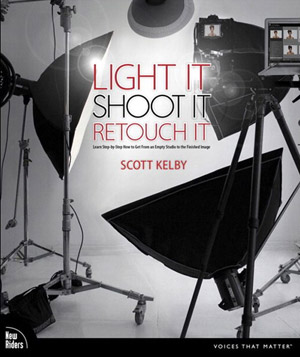
Light It, Shoot It, Retouch It by Scott Kelby

September 7, 2012 by Eileen Earnest

This guest blog is by Eileen Earnest, an expatriate photographer who lives in Abu Dhabi. Follow her on Twitter.

Light It, Shoot It, Retouch It is the latest in the Kelby Training Series. I am a fan of Kelby’s how-to books for several reasons. The first and best is that Scott Kelby is funny. I find it fairly impressive to make an instruction manual entertaining, and he does just that. His writing tone gives the impression that is just how he comes across in a conversation. Quite a skill to have and I gravitate to his books because of that ability to make me laugh now and then amongst fairly dry material.

I own two other Kelby books, one on Photoshop and the other on Lightroom. They both provide clear, easy to follow instructions and many, many photos. They are good books. But Light It, Shoot It, Retouch It is different-good. Here’s how: In any type of instruction book, typically the author starts with the most basic, foundational stuff. Then they build, build, build. If I am interested in a specific aspect of the program I am reading about, it might be page 193 before I get my answer. Light It, Shoot It, Retouch It gives photographers exactly what they need, each step of the process, and it’s complete from start to finish in under 20'ish pages. Some chapters are even shorter, but still chock full of all the information and detailed instruction on getting the best photo, during and after the shoot.

The Info Before the Info and the Info After the Info

Each type of shoot is described in the book as it’s own chapter. However, before we even start the first lighting set up, Kelby gives us eleven things we need to know prior to diving in. He has some equipment suggestions and points the reader to his online companion to the book.

Every chapter is accompanied with detailed photos of the background and lighting configuration so Scott also explains how to read these. These eleven tips are followed by an equally important list of ten tidbits that he wishes he had known before using studio lights. And yes, I also wish I had known these things, so thank you, Scott! On a personal note, I’ve only worked in a studio for the last 4 months. Setting up the lighting and making the transition from only natural light photography is no small task. This quick section of the book is well placed and very important to any photographer who is getting his or her own studio off the ground.

Towards the end of the book, there is a look at each of the setups with hot shoe flashes instead of strobes. In addition, there is a comprehensive gear list as seen in the different shoots. Scott Kelby shoots Nikon, which I have decided to not hold against him, but it is easy to figure out the comparative Canon equipment when necessary. (Also, he flip-flops between using a Nikon and Canon body for the back-of-camera photograph in each chapter so no one feels left out. The list of modifiers was incredibly essential to me as I find myself randomly buying gear at times. I would have made better choices with a little more direction before purchasing. This is a perfect wish list of studio equipment.

Chapter By Chapter, Shoot By Shoot

The next twelve chapters describe in thorough, but concise, detail each different style of photography he is shooting. We begin with a 3-Light Classic Beauty Setup, and continue through eleven other types of lighting. I imagine Scott started with the 3-Light Classic because it’s such a common set up in the studio. My favorite “style” in the book, however, is the 3-Light Sports Setup. It’s so simple but the final image is evokes a sense of strong, silent power. The full length set up was particularly helpful, as I tend to struggle with evenly lighting from head to toe. With each of the twelve set ups, we get to see Kelby actually shooting the subject and the light configuration, including the power settings on the strobes. There is literally no better way to explain how he took this photo than by showing us a photograph of how he took this photo. Actually, FOUR photographs for each lighting set up. Plus, each chapter starts with the final image placed next to the contact sheet from the shoot. Seriously, it could only be more helpful if Scott Kelby himself came to my studio, set up my lights and held my camera for me!

Wait! It Gets Better!

What comes next, however, was even more eye-popping. Scott details his retouching, step by step. Not in a general, “if you’d like to remove a blemish you might choose the spot healing tool…” but in a, “I am removing this blemish on this eyelid with this tool,” method of instruction. Combine this level of detail with Scott’s conversational writing tone, and it’s as if he’s standing over your shoulder pointing to the right keystrokes! I can only imagine the depth of his love of teaching and sharing of knowledge that Kelby must have to go into such detail as he shares his tricks of the trade. Even if you feel pretty confident in your lighting ability and your shooting is sharp, the quick, specific and step-by-step Photoshop aspect of this book is worth its weight in gold. Ok, this man is the President of the National Association of Photoshop Professionals, and he clearly knows Photoshop much more thoroughly than the rest of us mere mortals. Still, he makes it look so darn easy and intuitive! I came away from the book believing if I can read, I can make these edits happen.

Does It Work?

To test my “literacy is the only requirement” theory, I decided to choose a lighting set up and follow Scott’s directions as closely as my equipment will allow. My test will sample the 3-Light Classic Beauty Setup. I don’t have a beauty dish, so I am using a 24×24 soft box. My bottom light is a 24×34 soft box on a strobe.

Eileen Earnest Portrait Set Up

The first hiccup: No flexible arm on my light stands. To remedy this, I had to remove the boxes from the stands and prop them on the floor. My model would have to kneel … not ideal, but it worked! The photo [PHOTO 1] below shows the position of the lights and backdrop.

Ok, here is the straight out of camera (SOOC) image:

Eileen Earnest Portrait Straight Out Of Camera Image

I have a few disclaimers to make about following Scott’s steps in Photoshop.

#1. I am a self taught PS user. Before upgrading to CS6, I found everything (I thought) I needed in Elements. This is another reason why LI, SI, RI is the perfect tool at this stage in my learning process.

#2. I have a horribly unsteady hand and do not typically retouch this much because I do not shoot glamour or beauty shoots. Really, I am the perfect candidate for this test because I am basically a novice user. I followed step by step, skipping only that did not apply to my photo. The blemishes were removed, skin softened, dodged and burned, eyes brightened, unsharp mask applied.

Suzanne, my willing model, has long dark, wispy hair as you can see from the image below:

Eileen Earnest Portrait Enhanced Image

I didn’t remove as many wisps as Scott may have, but instead focused on smoothing down above her head and removing flyaway hairs on her face. Again, I think a more experienced user could do a better job. However, the question is, can someone follow along with the instruction in the book and get a decent result? I believe yes! The steps are there; the technique and ease will come with a lot of practice.

At the end of the day, we have so many books to choose from as photographers. Picking one that will literally come in handy on a weekly basis ensures my time and money is not wasted. I feel confident that Light It, Shoot It, Retouch It by Scott Kelby will not get dusty on my shelf nor will it on yours.

Filed Under: Books, Photo Books, Photography, Review Tagged With: 3 light, abu dhabi, eileen earnest, light photography, Lighting, national association of photoshop professionals, natural light photography, retouching, scott kelby, shooting, studio light, the shoot

Does More Discipline Equal A Successful Business?

September 5, 2012 by Angela Pointon

Angela Pointon loves photographers and artists. She studied photography, but had a love affair with business and marketing. She decided to combine all three together when she started Steel Toe Images. She coaches and inspires photographers and other artists to kick major butt through her one-on-one sessions, blog, emails, workshops and her first book (coming soon), called “ A Swift Kick In The Pants: Business Smarts For Us Creative Types”. Follow Angela on Twitter, Facebook or her blog.

When you're working by yourself for yourself, you're often left to your own (bad) devices. So how do you manage to pay attention, get stuff done and keep on keepin' on toward each one of your goals?

Make yourself accountable to someone.

If you’re anything like me, I value a bit of “nagging” in my life. I like when people ask me “what’s up with such and such for your business?”

For me, running my business is a lot like going to the gym. When I go by myself, I might not get the most sweat-induced workout in. But, if I am working out with a personal trainer, I am damn sure I do what I am supposed to (or I risk disappointing that trainer!). The same goes for my accountability coaches. My coaches happen to be my husband (he’s tough!) and some of my business heroes that I’ve connected with over the past few months.

Planning and perfection are just other words for procrastination.

Know yourself. Are you going to plan the bejesus out of everything you need to do? Are you obsessed with getting things “just right” before you move on? Have you ever said, “but it’s not perfect, yet.”

Some of us go over and over and over something so much that we get bored of what we’re working on and move onto the next thing before we even reveal anything to anyone. Being disciplined also means knowing when something is good enough to ship to the rest of the world.

Want to find out more about being disciplined?

Webinar Announcement with Tamara Lackey and Angela Pointon

Tamara Lackey, an unbelievably successful photographer and highly disciplined business owner, is joining Angela Pointon and Tiffinbox for a live webinar on Wednesday, October 3rd from 8:30 – 9:30 PM EDT. We’ll be discussing exactly what it takes to be disciplined in your photography business. Register for this webinar, along with three others in the series, here.

This webinar session is part of a series of four webinars, all available for just a $25 donation (all donations go to support Tiffinbox). This webinar series will sell out. Learn more here.

Can’t attend live? Don’t worry. All registrants receive a recording of each webinar.

Inside this webinar series you’ll get access to the brains and experiences of people who’ve worked with hundreds of businesses just like yours. In addition, the photographers speaking have published books, taught hundreds of photographers and have work featured in places like Vogue, O-The Oprah Magazine, Professional Photographer Magazine, and many more. Reserve your spot by registering immediately here.

Filed Under: Marketing, Photography Tagged With: a photography business, angela pointon, business and marketing, business heroes, business smart, discipline, oprah winfrey, Photography Business, pointon, successful business, tamara lackey, visual arts

3 Companies That Are Disrupting The Photography Industry

September 4, 2012 by Jimmy Moncrief

This is a guest post by Jimmy Moncrief, a wedding photographer in Chattanooga, Tennessee, and co-founder of Ciderr.

Every decade there is a new technology that usually disrupts an industry. Ten years ago, there was a max exodus from film to digital due to the rapidly falling prices of digital cameras and the rapidly declining costs of post-production in digital format. Yes, I understand digital photography was around earlier than this, but digital really gained traction about ten years ago.

A couple of days ago, I was very fortunate to speak with Mike Hanline, the President of WHCC. I was fascinated by the fact that his lab went completely digital in 2000. This prescient move, was well ahead of the industry. Now, WHCC is an industry leading lab provider because they embraced new technology ahead of their time. Below are three companies that are disrupting the photography business with new technology.

“The status quo sucks.” – George Carlin

Ciderr – big brands have always used wedding registries to increase brand awareness and to increase sales. Ciderr, now gives that power to photographers and other wedding vendors. Ciderr, lets businesses upload their products and services in a registry. All high-quality wedding vendors get some variation of this email: “I love your products, but can’t afford them.” Now they can! The wedding vendor, can offer the bride and groom a personalized registry. The bride and groom pick the products and services they want, and then create their personalized registry. Then the bride and groom share the link via email, facebook, and twitter and get their friends and family to help pay for that portion of the wedding!

Ciderr by Jimmy Moncrief

Pinterest – yes, it’s significantly smaller than Facebook and Twitter. The media reports traffic to be in a range of 10-15 million, while Facebook has over 850 million and Twitter has over 100 million. However, it has better referral traffic for your website. Shareholic.com reported in July that referral traffic from Pinterest was greater than Twitter, SumbleUpon, Bin and Google! Essentially, this means Pinterest might bring a smaller amount of traffic to your site, but it will be higher quality.

Pinterest Screen Shot

I love how Melisa Jill organizes and displays her photography on Pinterest.

Sticky Albums – Sticky Albums lets you create digital photo album – which your clients can save to their iPhones and iPads as a separate app. This is how the vast majority of clients want their app anyway, so it is a great convenience for the client. The best part however, is how this service helps your marketing. All the photographs include your logo! So when the client shares these pictures, your brand is being marketed.

Sticky Albums

In summary, photographers are in a great position to embrace new technology for marketing and establishing a competitive advantage. I would love to hear in the comments how photographers are using the above mentioned resources for their photography business. Also, please let me know of any other innovative businesses out there helping photographers grow their business.

Filed Under: Business, Photography Tagged With: Business, ciderr, digital media, digital photography, disrupt, jimmy, moncrief, photo sharing, Photography, Photography Business, photography industry, pinterest, Wedding Photography

Announcing The 2nd Annual Tiffinbox Award!

August 23, 2012 by Seshu | Editor & Publisher

A year ago, I announced the 1st Annual Tiffinbox Award. That award went to David DuChemin, a Canadian photographer whose passion for the industry is imbued with his craft and vision.

The 2012 awardee is no stranger to the business of photography. He runs a successful photography studio in New York City. If you look at his work, I am sure you will be struck by how his wedding photography transcends the obvious. Beyond simply documenting an event, the images are heartfelt and genuine.

His understated but confident presence among his peers, inspires those around him or who have come in contact with him. He teaches other photographers through his blog, Ground Glass, and his workshops, which he unapologetically calls, “I Will Make You Suffer.”

The 2nd Annual Tiffinbox Award goes to Spencer Lum.

Tiffinbox ImageSpencer exemplifies this award for being more than an expert photographer. He has a deep and authentic concern for the industry and is willing to chart a course that runs counter to popular trends. While that may make him appear like a maverick, the industry is in great need for revolutionaries like Spencer. Photographers – new or experienced – easily mesmerized by poseurs and “rock stars,” will find that Spencer talks the talk and walks the walk. Read his blog posts or follow him on Twitter and Facebook.

Here are some of his recent blog posts:

Do your clients trust you or are you just clicking a button?

You Are Not A Misery Sponge

The Secret of Success

If Everyone Is A Photographer, What Makes Us So Different?

Power To The People – Put Your Clients First

A Case For True Authenticity in Photography

Here are a few images to give you a taste of his work:

Spencer Lum

Spencer Lum

Spencer Lum

Spencer Lum

Spencer Lum

Spencer Lum

Please join me in congratulating by friend and colleague Spencer Lum. Feel free to post your comments below.

Filed Under: Awards, Photography, Tiffinbox Tagged With: author, Awards, based in new york city, blogging, david duchemin, ground glass, new york city, spencer lum, teacher, Wedding Photography, Workshops

The Most Critical Element To Running A Photography Business

August 22, 2012 by Angela Pointon

Angela Pointon loves photographers and artists. She studied photography, but had a love affair with business and marketing. She decided to combine all three together when she started Steel Toe Images. She coaches and inspires photographers and other artists to kick major butt through her one-on-one sessions, blog, emails, workshops and her first book (coming soon), called “ A Swift Kick In The Pants: Business Smarts For Us Creative Types”. Follow Angela on Twitter, Facebook or her blog.

I’m here to prove one thing and one thing only: that every photographer and artist can be a good businessperson, too.

You probably haven’t led dozens of successful businesses.

You probably don’t have an MBA.

Heck, you barely consider yourself a businessperson at all. An artist? Yes. A business person, sales person and marketer? Humph.

But guess what? I’ve got good news.

There is an undeniable truth that you might not know. There is a secret the world has been hiding from you until now. There is something so unbelievably amazing; you’re going to smile when I tell you. Many really awesome artists who earn loads of money aren’t trained or academically educated in the fundamentals of business, either.

So how do they do it?

There are four things that an artist must have in order to be a good—no make that great—businessperson. And the very first thing is the most critical element you must have: Gut Instinct.

I’ve got more good news for you. We all have gut instinct.

We all have something innate in us that tells us what decisions are good, and what decisions are bad. You can choose to listen, or you can choose to ignore it to the point where you don’t recognize or even hear it anymore.

So what makes some photographers successful and others not so much?

Understanding how to listen to your gut instinct, how to decipher between instinct and fear and how to make wiser decisions in your business using gut instinct is the most critical measure of whether your business will succeed or not.

Join me on Wednesday, September 19th from 8:30 – 9:30PM east coast time for a FREE live webinar to learn all about how to listen to, understand, and utilize your gut instinct. Can’t make it on that date? Register anyway and we’ll send you a recording of the event whether you attend or not. Space is limited. Reserve your space and register now.

Want to really kick some butt? Join me for the entire series of four webinars where you’ll learn about each of the four critical elements you must have in order to succeed. Learn more and find out how to register here.

Angela & Tiffinbox are combining forces on a four part webinar series starting in September 2012. Learn more here. All money raised goes to support Tiffinbox.

Filed Under: Business, Photography Tagged With: angela pointon, business person, business smart, critical element, instinct, Photography, Photography Business, successful business

How To Explore The Urban Landscape

August 10, 2012 by Brett Stoddart

Today's featured photographer and guest blogger is Appleton, Wisconsin based Brett Stoddart. He shoots abandoned buildings. He shoots people. Sometimes he combines the two. He is a husband. A father. A traveler. An art and music lover. He says he has a wicked sense of humor, albeit an odd one. Check out his blog. Follow him on Twitter and or friend him on Facebook.

Forsaken Beauty - Brett Stoddart

I have only been ticketed once.

I have only met a crackhead once.

I have only had an assault rifle pulled on me once.

Wish i could say the same about falling through rotten floors.

What would drive a person to put themselves into these situations? The answer is simple yet complex.

It is a love for capturing unique situations, locations, architectures, and going places most others would avoid at all costs.

My photographic passion involves exploring abandoned buildings. Modern parlance calls this urban exploration or urbex for short – though that is not a term I tend to throw around, mostly because urban encompasses only a small portion of what I capture.

These structures are the modern day equivalent of Greece's ancient ruins, or Europe's medieval ruins. While the rest of the world protects their treasures of days [eons even] gone by, we tend to reclaim, remediate or flat out knock down these treasures.

While most people would just see the decay and filth, I see beauty and uniqueness that only time and nature can create. These are my own little slices of ‘life after man'. I see first hand what happens when man no longer intervenes in nature's affairs and spaces are left to be reclaimed by their rightful owner.

[blogshow id=9ce0 player=1 autoplay=0 toolbar=1]

As a kid we thought nothing of going into old buildings that were no longer used. It was just another playground in the concrete jungle. We didn't know that there were risks and dangers. We were fearless. In college we would hang out in abandoned mines and think nothing of it. We were having fun and shrugged off the thought of danger.

Today I am a lot more cautious. The dangers are real; clear and present if sometimes unseen. Lead paint, asbestos and mold are among some of the ‘unseen' dangers. Some of the more apparent being rotten floors, unstable stairs and missing walls. All of these are equally dangerous in reality and one must protect themselves. Many of these buildings are 100 or more years old and have been subjected to the decaying forces of nature for 20 years or more.

I cannot pinpoint one singular event in my life that sparked my interest in exploring and photographing this subject matter. Rather, it was many small things that culminated and brought me to my present position. I was never without a camera and spent many hours on the road driving thru rural areas to and from work, never taking the same way twice, just to break up the boredom. Old farms and barns offered unique landscapes that I truly enjoyed.

I had always been attracted to textures, lines and colors and these old structures had them all. From there I was starting to notice more and more houses, farms, buildings, factories, etc., that were wide open and empty. Curiosity piqued, I ventured up and into them camera in hand. The interiors held more colors, more lines and more textures along with small little crusty details; peeling paint and wallpaper, forgotten furniture, electrical sockets and switches, clothing, etc.

I started out documenting these locations through a photojournalistic approach, taking it all in and showing everything. Eventually I transitioned into creating fine art from the ruins. Over the years my style has evolved and has been heavily influenced by a bevy of talented photographers before me, most notably my close and dear friend, Dave Jackson.

How exactly I find these locations is a question I am asked over and over again.

The answer: getting out and driving. Taking the ‘road less traveled'. Often new highways have cut off access to older areas, thus hastening the decline. It is important to take your time and look. If you are speeding down a country road at 80 miles per hour, you will miss most of what you pass. Winter is a good time for scouting, as everything is less concealed and it is more obvious when a place is no longer cared for.

Another big aspect is networking with other photographers and explorers – we trade locations like young kids trade baseball cards. And of course the Internet is a great resource tool if you know how and where to look!

Now I travel far and wide to see and shoot unique locations across the country. My first priority when planning any trip is finding abandonment to shoot. One could call it an obsession. I just call it a love of photography, and a slight case of eccentricity.

Shooting these types of locations has afforded me a greater appreciation of the technical and compositional aspects of photography. I have learned over the years to see the light as it plays across a scene. I never artificially light my scenes, rather I rely on the natural light. Everything is hand held as I prefer the grittiness that a higher iso gives me.

I was shooting abandonment for many years before I ever pointed my camera at a human subject. The last few years I have ventured into shooting portraits. I love combining the beauty of a fashion shoot with a dirty and decayed location. To me it is the perfect juxtaposition.

I will never stop shooting abandoned buildings, no matter where my photographic journey takes me. It has become that much a part of who I am as a photographer.

Do you photograph abandoned buildings? Does the urban landscape inspire you to create images? Share your thoughts below!

Filed Under: Photography Tagged With: adventure travel, beauty, brett stoddart, dave jackson, exploring abandoned buildings, human interest, jackson, psychogeography, subterranea, urban, urban decay, urban exploration, urban landscape

I’m Young, But I Can Shoot Too! How to Start Building Your Reputation

August 9, 2012 by Ferina Santos

Ferina Santos is part of the team behind Open Colleges, Australia's provider of photography courses. A feisty nerd at heart with an obsession for media and vanity, she captures all her random musings with daily photographs in her blog, A Pink Banana.

“Sorry, but you just don’t have enough experience.”

As a photographer just starting out, you’ll probably hear that kind of thing a lot – I know I did! The problem is that art galleries and publishers are afraid of wasting their time with someone who’s not ready, and regular people who would hire a photographer are doing so for things like weddings and other special one-time events, so they really need to believe you can get it right the first time.

What you need is to start building a reputation and finding people who will recommend your work. But how can you even get to that point? How do you start to make a name for yourself if no one will give you a chance?

There’s no one way to make it in photography, because no two photographers are the same. Do you want to go the more artistic route and try to make it into galleries and publish books of your work? Or are you more interested in just providing quality professional shots and making a few bucks?

Either way, what I learned the hard way is that there are several common things that every budding photographer needs. And by the way, if you’re having a problem with people dismissing you because you’re too young, there’s a way around that, too.

Figure out who you are as a photographer. This is one of those things that sounds super simple and incredibly hard at the same time, but it’s important to decide (to a certain degree, at least) if you’re going to have a focus or just shoot whatever interests you. Having a focus (say, you shoot events like weddings) can help when you’re trying to get hired by people because you should have the specific kind of photos they are looking for and that will help them to see that you can do what they need. Speaking of which …

Build a portfolio. If there’s one way to “prove” to people that you can do it, it’s by actually doing it. Don’t be afraid to take chances, and never give up on a particular kind of shot or subject just because one shoot doesn’t go well. Unless you just know that you’re going to be a wedding photographer and that’s it, the best thing to do is take a wide variety of shots (of anything that interests you) so that you can show your range.

The nice thing about this, too, is that you can pick and choose what you show different people. Up for that wedding job? Here are your photos of people and events.

Be an apprentice. Want to learn a lot and make a great relationship that can potentially help you a lot? See if there are any working photographers who would be willing to show you the ropes in exchange for you essentially being their intern. If you find the right person and they like your work, this can be a fantastic way to start getting jobs and building your reputation if they throw a few jobs your way.

Work for free. No one wants to do work and not get paid for it, but when you’re starting out, unfortunately that’s often the reality. Instead of thinking about it like you’re not getting money you deserve, looking at it as training and getting your name out there. Doing a few free jobs is one of the best ways to get portfolio-ready photographs – and meet people who may actually want to hire you for pay in the future!

Take a class. Just like becoming someone’s apprentice, deciding to take a class can help you to improve your skills, learn new techniques, and forge helpful relationships. Not only will you be meeting other people who share your interests and might know about jobs or other opportunities, instructors can often be great resources. Much of the time, they are photographers themselves, and may be able to take you under their wing or introduce you to other professionals who can help.

Let your work speak for you. So now we come to that whole age thing. If you’re fresh out of college – or even younger! – you’ve probably been told that you’re too young or too inexperienced, but think back on those situations where this happened. Did you approach someone in person or lead with your personal history?

If someone has the option of hiring a baby photographer (meaning you’re young, not that you photograph babies) or getting someone with a decade of experience, chances are they will go with the person who’s been working longer. That’s why you can’t start by talking about yourself. If possible, mail in your portfolio or start a website and post it online so that people can see your work first.

This way, they’ll see you first as a photographer and judge you by your work before they even think about age and how long you’ve been working. Most people, if they see evidence from your portfolio that you can do the work, won’t even ask how old you are!

What would you add to Ferina's list of suggestions? Chime in below!

Filed Under: Business, Commentary, Photography Tagged With: building reputation, ferina, photo industry, Photographers, santos

Obsessing Over The Competition

August 6, 2012 by Angela Pointon

This is Angela Pointon‘s third guest post on Tiffinbox. Read her first post and second post too. Follow her on Twitter and don't forget to scroll all the way down to sign up for a special event with Angela.

Arguably, visual artists are able to see the work of their competitors easier than any other industry in the world. You waltz onto their website and boom. There’s their latest stroke of brilliance.

Your Competitors and You | Angela Pointon

Do you poke around the competition’s websites from time to time?

If your competitors are making a big impact using their creativity and their own marketing skills, and it’s killing your morale and confidence, I’m here to help.

There are two critical things you’re learning by looking at your competition. You just don’t realize it.

1. Blending In More.

The only thing looking at competitor sites will do is cause you to be MORE LIKE THEM. The world doesn’t want more of them. They want to be able to find unique differences between businesses. The world actually wants you to be more like yourself. Because if you’re more like them, then why should a buyer choose you over them when you’re practically identical? You have untapped talents to offer the world, and we need to start exploring and strengthening those talents.

2. Morale Deprivation.

You are your own biggest critic. Rather than cultivating a defeatist attitude by seeing things they’re doing that you’re not, challenge yourself daily to do something new… something more creative than you did yesterday. It will cause you to be introspective and to grow your own creativity. Most importantly, it will boost your self-confidence because you did it!

Limiting yourself by judging your own success against the competition is stunting your creativity’s future potential. The more you can be yourself, the more you can look at yourself, the more you can challenge yourself… THAT is what will make your business shine.

Register for a rare webinar with Angela Pointon.

Tiffinbox is presenting a rare chance to register for a three-part webinar series. Angela of Steel Toe Images will present A Swift Kick: Three Things Every Photographer Should Know About Business. Space is limited and will sell out. Learn more and register.

Filed Under: Business, Photography Tagged With: angela pointon, creativity, educational psychology, obsessing over the competition, Photographers, Photography, positive psychology, problem solving, swift kick, the competition

How To Concentrate On Your Photography

August 2, 2012 by Seshu | Editor & Publisher

We've all been there. At the beginning. Where we didn't know anything, or we knew a few things about photography but were awfully rough at the edges.

Sure, we were proud of those first images but didn't know an f/stop from a door stop, didn't know our way around Lightroom or Photoshop, our wedding photography business was complicated and our album designs looked more like a quilt, a hodgepodge of images thrown onto a page.

Look, even I'll admit I have been there.

We all had to start somewhere. With practice and the right tools things just came together for me. One more thing helped – having the right mentors walk with me on this journey. I am sure you've felt this way as well – you wanted, no needed, somebody to hold your hand.

For me, Rob and Lauren of Photography Concentrate have done just that through their photography tutorials.

Photography Concentrate Relaunches With 30% Off Sale

To celebrate the relaunch of their site they're having a mega sale! For a very limited time you can get any of their four tutorials for 30% off!! The sale is starting right now, so you can grab them today! They have:

• Simple Wedding Photography [affiliate link] (Reg. US$39.95, On Sale for only US$27.97)? An e-book that teaches you everything you need to know about photographing weddings, and the business behind it.
• Extremely Essential Camera Skills [affiliate link] (Reg. US$49.95, On Sale for only US$34.97)? A multi-media tutorial designed to help you get control over your camera, and get creative and confident with your photography. 
• Super Photo Editing Skills [affiliate link] (Reg. US$79.95, On Sale for only US$55.97)? A video tutorial that teaches you how to bring the best out of your images using Adobe Lightroom 4.
• Awesome Album Design Skills [affiliate link] (Reg. US$79.95, On Sale for only US$55.97)? A video tutorial that shows you how to quickly design beautiful albums using Adobe InDesign.

All of their tutorials are digital products available for immediate download, so you can start learning right away. The sale prices are automatically applied, so it's nice and easy to save big!

Thankfully, the photography industry has changed over the last 10 years where sharing information has become more of the norm. It's rather rare for Photography Concentrate to hold a sale like this, so, if you have been eyeing their tutorials, this is the time to get it.

Oooh, before I forget, you could win a $200 gift card to Amazon.com if you comment here.

If you buy any of the Photography Concentrate tutorials now through August 9th (when the sale ends), please come back here and let me know in the comments section below what you thought of them.

As always, I will never recommend anything to you unless I have given the products or services a try myself. Please do note that you should safely assume that all links in this post are affiliate links.

Filed Under: Photography, Tutorials Tagged With: adobe photoshop lightroom, concentrate, photo manipulation, Photography, Photography Business, photography industry, photography tutorials, relaunches, tutorial, Wedding Photography, wedding photography business, your photography

  • « Previous Page
  • 1
  • …
  • 37
  • 38
  • 39
  • 40
  • 41
  • …
  • 198
  • Next Page »

Subscribe To Tiffibox Treats!

Looking for a well-curated email newsletter that will leave you inspired and motivated about your photography business? Sign up below!

About Seshu

Seshu creates relaxed portraits of families and high school seniors in Avon, Connecticut. He also leads a successful headshot photography studio in Connecticut, helping professionals from a variety of disciplines project the very best versions of themselves. He created Tiffinbox as a way of inspiring photographers, to create better images and successful businesses. [Read More]

Email Templates For Headshot Photographers

Email Templates for Headshot Photographers

Recent Posts

  • How Capture One Changed My Event Photography
  • 10 Steps To Stay Positive In Times Of Great Stress
  • Why You Need To Read “Personal Branding For Photographers” Now
  • How To Master Your Website Content Step By Step?
  • Tony Taafe’s TNT Method For Headshot Photographers

Recent Comments

  • Stephen Davison on Are You A Business Owner Who Is Smart, But Stuck?
  • Ben A. on Don Giannatti Clinches The 8th Annual Tiffinbox Award
  • Dan on Don Giannatti Clinches The 8th Annual Tiffinbox Award
  • Donald Giannatti on Don Giannatti Clinches The 8th Annual Tiffinbox Award
  • Stephen Davison on G.E. Masana’s 6 Strategies For Wedding Photography Success
  • Naveen Kumar on Weddings In India Are More Than Being At The Right Place And At The Right Time
  • kartick on Weddings In India Are More Than Being At The Right Place And At The Right Time
  • Leonid Farbman on 6 Uncommon Trends To Grow Your Photography Business
  • Willow and Finch Wedding Photography on 11 Reception Tips To Help Your Wedding Photography
  • Web Designer Malaysia on How To Optimize Your Squarespace Website For Search Engines
  • Creastan on An Interview With Photojournalist G.M.B. Akash
  • Cindy Brown | Atlanta on An Open Letter To A Local Photographer

Become a Patron!

Copyright © 2026 · Tiffinbox · Site Design by Heather Mackan Creative · Built on Genesis