• Photography
  • Interviews
  • Business
  • Reviews

Tiffinbox

Inspiring Photographers

  • Home
  • About
  • Blog
  • Contact

Musea: Online Proofing, Lab & Gathering For Photographers

July 17, 2014 by Seshu | Editor & Publisher

Michael Howard, a wedding photographer based in Nashville, Tennessee founded Musea, an online proofing solution for busy photographers.

Instead of establishing the same old basic business model that tonline proofing systems have followed, where a photographer pays the host a monthly sum and also surrenders a portion of the sales profits as commission, Michael chose to dedicate 2% of the 16% commission he receives towards Water.org. Plus, he eliminated monthly fees!

Among the topics Michael and I covered when we recently spoke were his intentions to start Musea, the new offering called Musea Lab and lastly the intimate conference he calls Musea Gathering that will take place from February 22nd through February 25th in San Francisco.

Want to learn more about how Musea is serving serious photographers like you? Listen to the many podcast interviews Michael has conducted with industry leaders.

MUSEA Gatherings are for those photographers that want to bring more intimacy into their work. Weddings and portraiture photography trends currently put much of the focus on amazing locations and the people are often interchangeable. Gatherings take a different approach by encouraging photographers to find vulnerability, connection and humanity in those we document.

PLEASE NOTE: For the next 24 hours, you can apply to win a seat at the Musea Gathering. Enter the scholarship giveaway now!
Filed Under: Business, Home Middle Right, Interviews, Photography

Using Sexy Light On The Beach

July 14, 2014 by MP Singh

Behind The Scene Look: How I Got That Shot

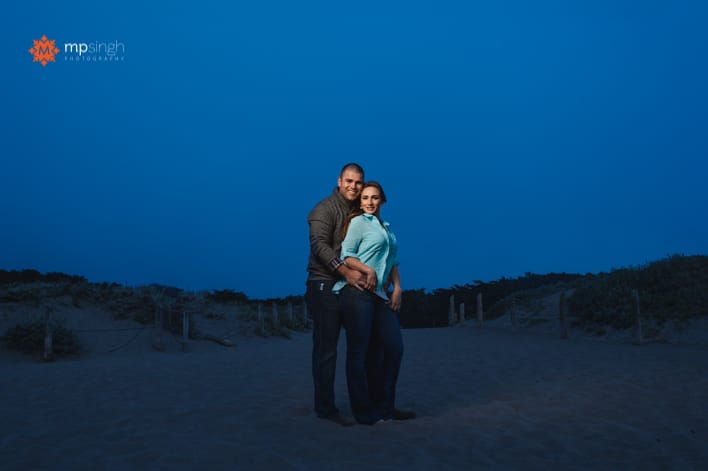
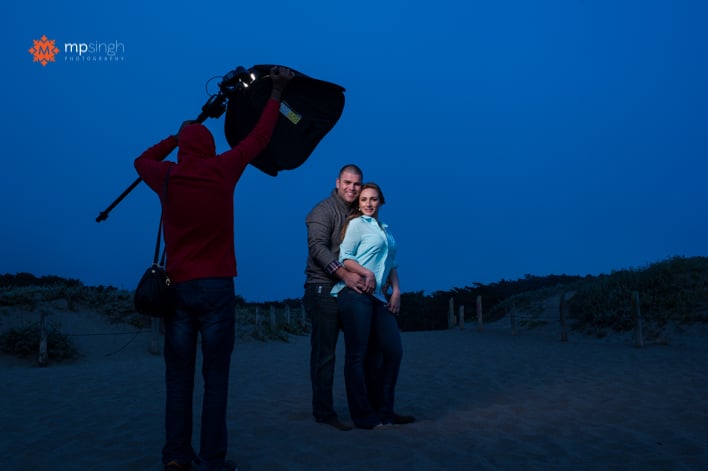
The image you see below was created as part of an engagement session. It was towards the end of shoot when we were at a beach and sun had already gone down. The park visiting hours were already over and there was a cop driving everyone out. And it was cold, the chill factor in the wind was sending shivers down our spines. We quickly grabbed couple of shots and drove out of the park.

MPSingh Photography - Couple On The Beach

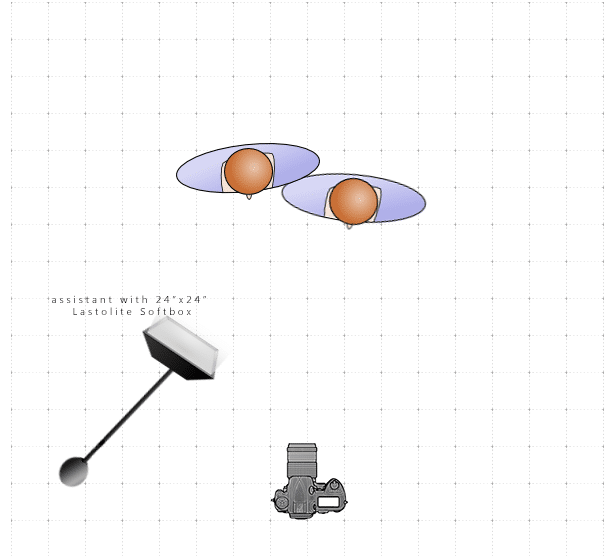
This shot was taken with the help of an off camera flash, Nikon SB900 inside a Lastolite 24″x24″ softbox, triggered with my trusted Pocket Wizards. The following is a lighting diagram showing the set up for this shoot.

MPSingh Photography - Couple On The Beach Lighting Diagram

The flash had a full cut CTO (color temperature orange) gel on it. I wanted to give the feel for the post dusk bluish night sky. So I turned my camera to tungsten white balance. This gives the blue tint to the whole image. To compensate the blue tone on the subjects and bring the skin color back to normal yellow/orange tones, the flash had the orange gel on it. The full cut CTO gel fully compensates for the tungsten white balance.

Another challenge was that we required the light to be very close to the couple and we wanted wide angle shot to include more of the background for context. So the assistant was in the picture.

MPSingh Photography - Couple On The Beach

The Photoshop Work

To fix that we took two shots, one with assistant lighting the couple and in the shot. Before the second shot, the assistant ran out of frame and switched off the light. So the second shot was taken with the couple without any light. Once we take these two shots it is very easy to do a composite in Photoshop:

1. Open both the images in Photoshop as layers, with the image with assistant as the top layer.

2. Auto align layers (Edit –> Auto-Align). When we don't use a tripod there is always a slight movement of the camera and the frame changes. To compensate for that, we have to align the layers.

3. Once the layers are aligned, select the top layer and use layer mask to mask out the assistant. Now we are using everything else from this layer except area where assistant was. That area is picked up from the layer beneath.

4. Make other changes as required.

And, voilá, we have our final image. Do you have any questions? Feel free to ask below!

Filed Under: Home Middle Right, Lighting, Photography Tagged With: adobe photoshop, camera flash, Color Gel, digital photography, Flash, image processing, Layers, off-camera flash, Orange Gel, photographic lighting

Working With Your Designer & Life After the Launch

July 9, 2014 by William Bay

This is the third guest post by William Bay, in a short series about customizing your website. Here are part 1 and part 2 of the series. You might want to read those first before jumping into this last part of the series. Thank you!

Even though developers and photographers get paid to do something artistic and technical, there can be communication pitfalls along the way. You can learn all about it in my new book entitled: Photographers are from Venus and Developers are from Mars. Just kidding. But in all seriousness, language-wise, photographers tend to be more on the artistic side of the spectrum, and developers tend to be on the technical end of things.

Photo by: Cory M. Grenier

Photo by: Cory M. Grenier

Another important aspect is that most designers and developers just want be in front of their computer coding, and not dealing with clients and business issues.

Does that sound familiar, photographers? Yep, you just want to do what makes you happy: photograph, and not deal with clients either.

The reason I’m telling you this is so you can remember these pointers when you feel some level of frustration coming on. All you need to remember is that you’re talking two different languages. The best way to communicate is to use a common language. So, be clear in your speaking and writing. Think before you send a set of instructions. A good thing to ask is “would a 10-year-old understand what I’m asking?” Use diagrams or screenshots if necessary.

Remember, this is your future website. It’s your responsibility to ensure that it turns out the way you want it to. A web developer is your facilitator to help make your dreams come into being, not your punching bag when you can’t understand each other. You’re on the same team.

Whatever you do, don’t “try” to speak the developer’s language. Mistakes will be made, and you’ll look silly. You know when Uncle Bob comes up to you at a wedding and tries to get into a technical conversation with you? Yeah, it’s kinda like that.

The Process

There are different phases to building your custom website. Below is a list of the phases that work for Flaunt Your Site. These are not hard-and-fast rules, and not every developer will go through all these steps. But I’ve found that, for me, utilizing these steps encourages more communication along the way, and minimizes the amount of errors that pop up.

* Wireframe: This is a very simple line drawing of the layout: what content will be on the page, and where it will go i.e. slideshows, content, videos, etc.

* Design Comp or Mock-up: An JPG or PNG image file of what the site will look like. This is usually done in Fireworks or Photoshop, so you can see what the site will look like before the building process starts.

* Scope: The mock up is then looked at very carefully and each element is examined to see if there is a function that it's supposed to perform, like what element links where, are pictures static or part of a slideshow, what things have rollover behaviors, etc.

* Development Site (the Building Process): Usually performed on the developer’s computer, offline. This is where the design comp is turned into an actual website. It’s best to build this offline so clients don’t see “how the sausage is made.” It’s not as disturbing as a slaughterhouse, but you don’t need to see the build process. It’s actually boring and slow.

* Staging Site: When the site is finished and you can actually see it up and running, we put it on a staging server. Many developers have their own server that they’ll use (e.g. client1.flauntyoursite.com). It’s online, so the owner can see the actual site in use. Final changes and bugs are found and fixed. This is also a good opportunity to import any existing content that you have on your site or blog.

* Soft Launch: I like to include what’s called a soft launch phase (not everyone does this, though). This is when the site is pushed onto your server in place of your old site. I know you’re really excited to have everyone come look at your new site, but before you invite the masses, it’s good to test everything in its final live environment. It’s a good practice to have just a couple friends with keen eyes look for mistakes, typos, and any final web gremlins that need to get squashed.

* Hard Launch: The pièce de résistance! All the hard work and months of waiting come to this point where you can blast the whole world, Facebook, and your email list that your new website is open for business. This is when you pop the bubbly.

A Word On When Design Happens, And When Design Changes

Design happens during the design phase. To drive the point home: Design does not happen during the build process or after the Soft Launch.

If you want to change the design that you’ve approved, we will charge you for going back and changing it (frequently called a Change Order). A small tweak might not be a problem, but don’t be surprised if we tell you that you’ll be billed for the change, or that you have to wait till after the site is completed and initiate a Phase 2 on the site. So if you’re on the fence about something in the design, get it resolved right away during the design phase. You can even ask for an extra week to sit with the design to see if you’re 100% happy with the design, or if additional tweaks need to be made.

Again, I’ll remind you that it’s your responsibility for the project turning out the way you want it. But if you’re looking for a quick way to make a developer go from an overweight nerd into a full-on, enormous green rage monster, just tell them that you’d like a design change while they’re in the middle of actually building the site.

Payments

What I’ve found that really works for my clients and myself is to base the payment structure on certain phases from the above list. This is how I typically work (again, all developers are different):

* Initial 1/3 payment: Upon signing contract. (This pays for my time to design a concept).

* Second 1/3 payment: Upon client approval of Design Comp. (This mean that the client likes what they see and they’re committing to building the site).

* Final 1/3 payment: Upon completion of website and prior to Soft-Launch. (This indicates that the developer has done his job and it’s ready to go live).

I do ask for final payment before launch. It’s just the preferred method of ensuring final payment for many developers. It’s our version of “delivery on payment.”

When Problems Arise

Yes, there will be problems. We’re not launching a rocket, but there are still a lot of things to juggle in launching a website. Web developers are people, and occasionally, we make mistakes, so try to be understanding. We’re on your side, and mistakes are just that: mistakes. We’re not intentionally trying to screw up your day.

If multiple mistakes are happening, and it becomes a competency issue, the developer isn’t willing to be open about the cause, or you’re just getting excuse after excuse, then you do have cause for concern. If you’re not sure what you’re dealing with, please feel free to call me. I have no problem helping disputes so feelings don’t get hurt, or people have to revert to legal actions (which is the absolute worst for both parties involved).

Photo by: Randy Merrill

Photo by: Randy Merrill

Life After Launch

This is not the time to make design changes! Okay, just checking to see if you were paying attention.

I say that tongue-in-cheek, but there is the occasional client that waits until after the launch to raise design issues or concerns they’ve had. And while it’s a rather frustrating phenomenon for developers, it’s really just going to end up being costly to you – not to mention, you’ll probably end up at the back of the line of the developer’s client list, since they have promises to other clients. So, again, get your design done during the design phase.

Once you’ve launched, your focus should be on the content – this usually means blog posts and/or photo galleries. If you have existing posts, you may think about going back and figuring out what the best keywords for each post are, and re-optimizing them for search engines. If you have questions on that, Flaunt Your Site offers one-on-one SEO training and we can teach you.

For new content, I would suggest a regular schedule. Every week or every other week depending on how much you shoot. Again, you’ll want to focus on the right keywords for your blog posts (And I guarantee you, it’s not “Your City Wedding Photographer”).

Here Are Some More Tips On How To Take Care Of Your Site:

* Keep WordPress and your plugins updated! Part of the reason WordPress releases updates is because they increase the security measures constantly. Don’t lose all that hard work because you’re running an old version of WordPress.

* Keep the plugins to a minimum. Plugins are really great, but too many will bog down your site. And the wrong ones will open up your site for vulnerabilities.

* Use Google Analytics to track the effectiveness of your site. This includes things like:

o How many visitors do you get?
o What content is the most popular?
o What is your bounce rate for important pages?
o Where are most of your visitors coming from?

* Use the information from Google Analytics to make decisions about the content on your site.

* Visit Google Webmaster Tools every two to three months to ensure that your website is in good standing, and that the Sitemaps are being submitted properly.

* If you have questions about the usage of your site, ask your developer. It’s a good practice to stay in communication about things. I can’t speak for others, but I’m fairly available to my clients afterwards.

Above all else, be proud that you have something custom and unique. You totally deserve to give yourself a high five when you get compliments on how easy to use, or how beautiful your new website is.

Filed Under: Home Middle Right, Photography, Web/Tech Tagged With: Custom Websites, Soft Launch, Web Designer, Web Developer, William Bay

What The Sharing Economy Means To The Wedding Industry

July 3, 2014 by J Sandifer

The sharing economy is disrupting industries throughout around the world! Companies like Airbnb, Relay Rides, Task Rabbit, Uber, Lyft and dozens more companies are changing the way people think and consume.

What is sharing economy?

The sharing economy is a consumer paradigm in which a person is willing to share his or her time or asset with another person. The paradigm enables people to maximally utilize the assets that they own or decide to use someone else’s assets. Airbnb helps people share apartments, Relay Rides helps people share cars, Task Rabbit helps people share their services.

Why does this matter to the wedding industry?

As a professional wedding photographer, you’re accumulating a trove of wedding images. Traditionally, the value of your wedding images has ended when you deliver them to a newlywed couple. Today, if this is all you’re doing with your wedding images, you’re leaving value on the table!

Other vendors need access to professional images of their work now more than ever. In the past other vendors could get by with a handful of nice images on a website. Today, in the age of Pinterest, Twitter, Facebook and Instagram, engaged couples have a heftier appetite for images. Today, vendors need to share a regular stream of fresh professional images on social media to stay relevant among engaged couples. You’re sitting on these images, and you can get something for them.

The current image share paths from photographers to other vendors are fragmented, cumbersome and, most unfortunately, do not enable the photographer to capture the full value of his or her images. I’m fixing this problem with LulaWed.com. Our new wedding directory helps photographers easily share wedding images with other vendors and capture real value from sharing.

How LulaWed helps photographers.

LulaWed allows photographers to upload albums of real wedding images and tag the venue and other vendors who participated. We find the contact info for vendors you tag in albums, email them a link to your album and encourage them to share your branded images of their work on social media.

LulaWed provides easy one click access for other vendors to share your wedding images to their Pinterest, Twitter and Facebook accounts. The images shared are branded with your logo or watermark and lead back to your listing on LulaWed. The end value to photographers is more exposure among unique social media networks and more referrals from other vendors. The end value to the other vendors is they get to share professional images of their work online.

Your marketing dream team.

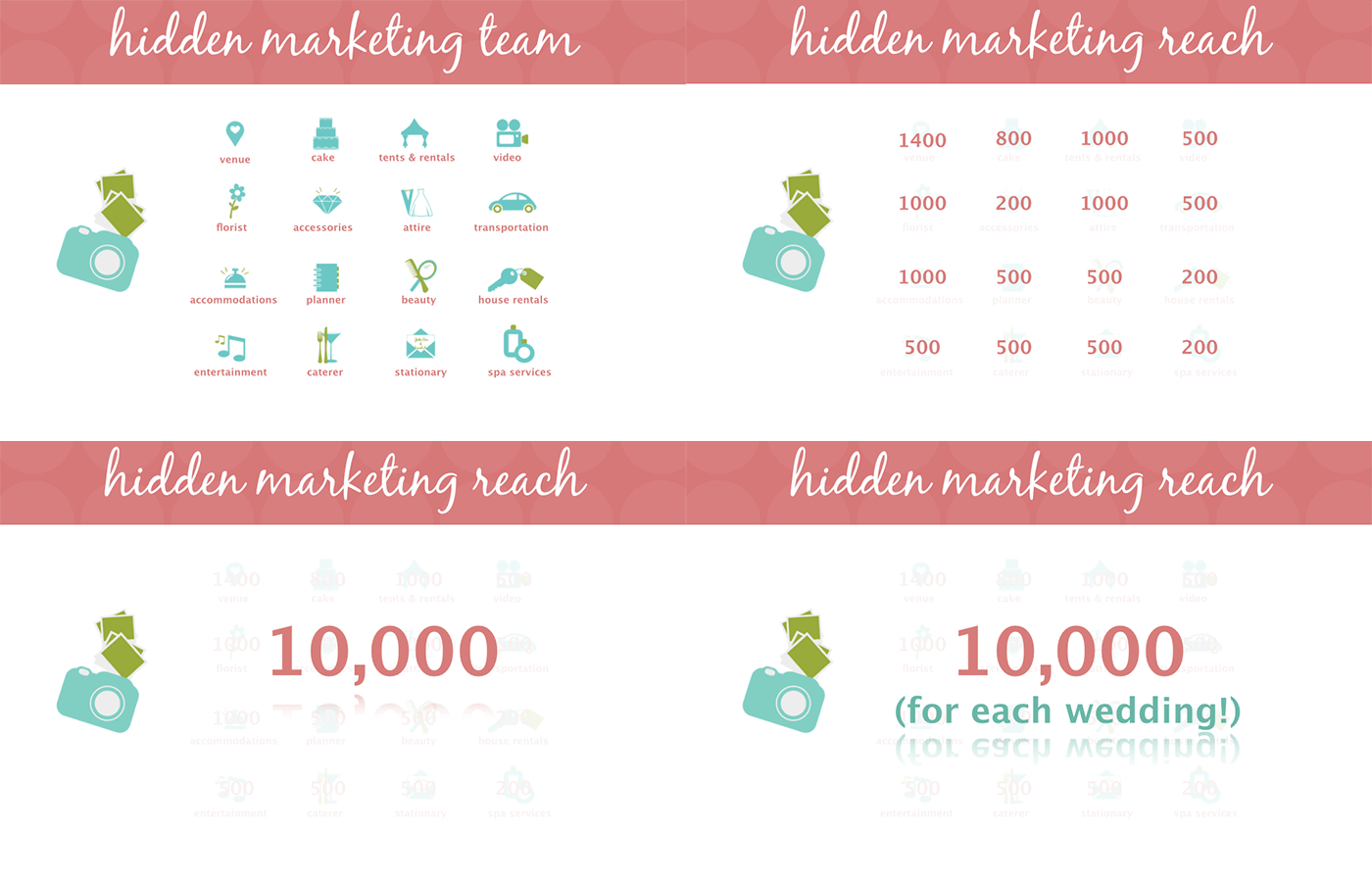
Imagine if you had a marketing team of 10, 20 or even 100 people working to promote your business to engaged couples. This would be amazing and really expensive! You don’t need a marketing team promoting your business, you need other wedding vendors promoting your business.

Today's social channels allow savvy wedding businesses to build successful online followings across multiple platforms. Sharing your images on LulaWed allows other wedding vendors to market their business and yours simultaneously to unique social media networks. For example, when a couple sees your image shared on Pinterest by another vendor, the couple can click on the image back to your LulaWed listing. You keep all the credit, and you get the referral.

You never know which vendor your tagging will have a huge following on Pinterest.

LulaWed Marketing Reach

By a photographer, for photographers

I worked as a professional wedding photographer for the past 12 years in California and Maine. I’ve shot over a hundred weddings and my wife’s current photography company shoots 60+ a year. I understand that brides come and go, but the industry will always be there. Take care of the individuals who can refer you and you will build a business that thrives!

Our platform is designed to require minimal effort by you to get your images shared by other vendors! We’re constantly adding new features and partnerships that make it easier for you to share images with other vendors. Recently we launched a new feature that allows you to skip the image upload process completely when you integrate your blog RSS feed. LulaWed can pull real wedding images right from your blog.

Free listing offer for Tiffinbox readers!

Tiffinbox has been a valued resource to me as a professional photographer, so I want to share the love with other readers. Right now, when you create an Enhanced listing on LulaWed, use promo TIFFINBOX to get 6 months free!

I hope LulaWed helps you get more value from your wedding images. Signup, upload weddings, tag vendors, and let me know how it goes!

Sign Up Today

Filed Under: Home Middle Right, Marketing, Photography, Weddings Tagged With: photographer, professional wedding photographer, Share Economy, Shooting Wedding, Wedding, Wedding Businesses, wedding images, Wedding Industry, wedding industry in the united states, Wedding Vendors

Win The Craft & Vision Grant At Inspire Photo Retreats

June 27, 2014 by Seshu | Editor & Publisher

I love winning contests, especially if money is involved. Money, that I can put towards my business in some way. I just got word that Inspire Photo Retreats and ShootDotEdit are working together in offering a special grant for photographers just like you.

So this is the email I received:

“We are happy to announce Inspire Photo Retreats is collaborating with one of our Community Sponsors, Shoot Dot Edit, to offer a business professional, Craft & Vision grant at our 2015 retreat!

Inspire Photo Retreats is committed to helping professional photographers at all levels, grow their business and master their craft. Shoot Dot Edit shares these same values and we couldn't be more excited to offer this unique opportunity with them!

We will be funding the grant by the amount of purchases of Shoot Dot Edit's “Unlimited Plan”. They will generously allocate a portion of the proceeds to funding the grant which will be given to one of our attendees in 2015. The grant will be awarded at Inspire Photo Retreats 2015 in Portland, ME, at The Westin Portland Harborview Hotel. Please feel free to share this with your colleagues. We hope you take advantage of this amazing opportunity. We look forward to seeing you in 2015.”

Inspire Photo Retreats - ShootDotEdit Grant

Please note that this special offer ends on June 30, 2014 … that's 3 days from now folks! To be eligible you must be an Inspire Photo Retreats? ticket holder and be present at the event in Portland.

To enter the drawing for this grant, click the graphic above and use the code “Inspire2014”. I hope to see you at Inspire, to congratulate you on your winning this grant!

Filed Under: Contests & Grants, Featured Post of the Day!, Photography Tagged With: Community Sponsorship, Shoot Dot Edit

  • « Previous Page
  • 1
  • …
  • 37
  • 38
  • 39
  • 40
  • 41
  • …
  • 164
  • Next Page »

Subscribe To Tiffibox Treats!

Looking for a well-curated email newsletter that will leave you inspired and motivated about your photography business? Sign up below!

About Seshu

Seshu creates relaxed portraits of families and high school seniors in Avon, Connecticut. He also leads a successful headshot photography studio in Connecticut, helping professionals from a variety of disciplines project the very best versions of themselves. He created Tiffinbox as a way of inspiring photographers, to create better images and successful businesses. [Read More]

Email Templates For Headshot Photographers

Email Templates for Headshot Photographers

Recent Posts

  • How Capture One Changed My Event Photography
  • 10 Steps To Stay Positive In Times Of Great Stress
  • Why You Need To Read “Personal Branding For Photographers” Now
  • How To Master Your Website Content Step By Step?
  • Tony Taafe’s TNT Method For Headshot Photographers

Recent Comments

  • Stephen Davison on Are You A Business Owner Who Is Smart, But Stuck?
  • Ben A. on Don Giannatti Clinches The 8th Annual Tiffinbox Award
  • Dan on Don Giannatti Clinches The 8th Annual Tiffinbox Award
  • Donald Giannatti on Don Giannatti Clinches The 8th Annual Tiffinbox Award
  • Stephen Davison on G.E. Masana’s 6 Strategies For Wedding Photography Success
  • Naveen Kumar on Weddings In India Are More Than Being At The Right Place And At The Right Time
  • kartick on Weddings In India Are More Than Being At The Right Place And At The Right Time
  • Leonid Farbman on 6 Uncommon Trends To Grow Your Photography Business
  • Willow and Finch Wedding Photography on 11 Reception Tips To Help Your Wedding Photography
  • Web Designer Malaysia on How To Optimize Your Squarespace Website For Search Engines
  • Creastan on An Interview With Photojournalist G.M.B. Akash
  • Cindy Brown | Atlanta on An Open Letter To A Local Photographer

Become a Patron!

Copyright © 2026 · Tiffinbox · Site Design by Heather Mackan Creative · Built on Genesis