• Photography
  • Interviews
  • Business
  • Reviews

Tiffinbox

Inspiring Photographers

  • Home
  • About
  • Blog
  • Contact

Do You Have Any Pixel Cents?

October 28, 2015 by Seshu | Editor & Publisher

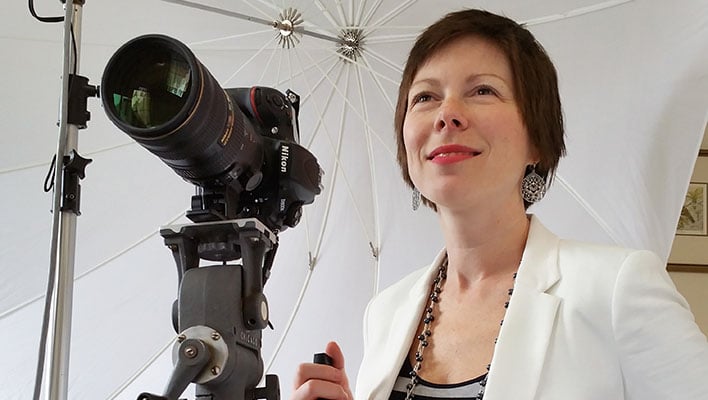
Melissa Welsh, Victoria, British Columbia Photographer

Melissa Welsh is a lot more than a photographer. She is a problem solver. Especially, if it is a problem photographers are having.

One major topic of contention among photographers is how to respond to clients who ask for digital files. If you are reading this post, I know you have had a client who has asked or demanded for “their” digital files. And, you have struggled to find the right words that will satisfy both them and you.

Am I right?

Most of the wedding industry now “gives” the files to the couple. Some portrait photographers sell the files. Some photographers bundle it with other products. There isn't one industry standard that makes everyone happy. Either the clients are miffed because they were expecting or assuming the files would be included in the fee, or the photographer is upset because she or he is now having to deliver more value with no or a negligible monetary return.

Something had to be done and Melissa Welsh, a Victoria, British Columbia photographer with 20 years of experience as a photographer set out to find a solution that will be a win-win for all. Information about the Pixel Cents app is available here.

So what is this elixir? It's called Pixel Cents. It's both an ebook and a iOS application. The ebook is smartly bundled together with a few other tools you will find useful.

Photographers can use our industry standard cents per pixel (cpp) rates and calculate the value of their photos for all types of personal, commercial, editorial and advertising photo use.

A few weeks back, when Melissa was about to launch Pixel Cents, she emailed a bunch of her friends to introduce the idea to us. Some of us received the Pixel Cents ebook to read in advance and to possibly review.

Most often, I download an ebook, I let it sit for a few days before reading it. Pixel Cents was different. I dove in and couldn't stop reading it. If you could have seen me then, I was nodding in agreement to what Melissa has written. It's a well-crafted, lucidly written alternative to the craziness that is currently our lives. I quickly wrote back to her and asked if she would spend a few minutes speaking to us about her big idea – Pixel Cents. So click the video below and watch the interview:

Pixel Cents is bringing both efficiency and profitability to my family portrait photography business. And, I am no longer struggling to explain whether digital files are or are not included. Who wins? Everyone. Clients receive their files and I am compensated fairly. Hand wringing is history.

Need more convincing? Here in a nutshell is Melissa's solution.

The Pixel Cents Formula is the simple, easy way to value your photographs for personal, advertising, editorial and corporate use.
Pixel Cents by Melissa Welsh

I trust this post will stir a pot a bit and we are all open to having a healthy dialogue here. So, comment below. We would love to hear from you. If you buy Pixel Cents, let us know what you think. Could this business model be the new industry standard? I really think so.
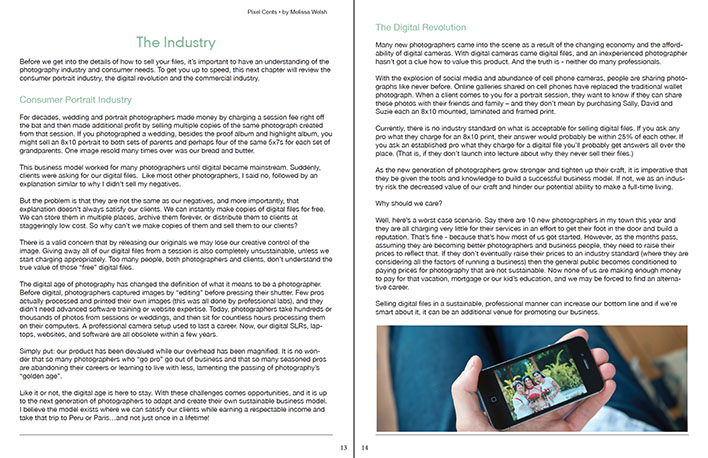
Pixel Cents by Melissa Welsh

So, let me ask you again, do you have any Pixel Cents?

Filed Under: Business, Featured Post of the Day!, Interviews, Photography Tagged With: digital imaging, digital photography, Industry Standards, Melissa Welsh, Pixel, portrait photographers

Nope, Film Is Not Dead

March 18, 2011 by Seshu | Editor & Publisher

I've loved Utah-based Jonathan Canlas‘ wedding photography for quite some time. I must have come across his website quite randomly about four or five years ago. His images continue to inspire me. The moments are real and the processing is just right.

Little did I know back then that he was a wholly film-based photographer. Yes, film. Some of us may remember that medium. With digital being all the rage – I mean who isn't addicted to chimping, right? – why would a photographer eschew Photoshop actions (that can make your digital images look like they were shot on film) and other “bells and whistles.” The answer is simple. Because he can, he wants to be different and his clients love him for it.

So, take a moment to look at his work again.

Now that you are back, do you see anything different? Do the images just appear more tactile, or have more depth to them? Or, is it my imagination? I believe it is the former.

Whichever way your answer sways, if you are curious about how Jonathan Canlas photographs weddings or portrait sessions using film, you have three options to learn from him.

You see, in addition to being a successful photographer, Canlas is a wonderful teacher. For several years, Canlas has offered the Film Is Not Dead workshops for those photographers looking for a solid foundation in film photography.

Canlas has also very patiently answered questions via Formspring. You should follow him on Twitter where most of these responses show up.

The last option, is a resourceful guidebook called FIND (Film Is Not Dead). There is a dedicated website where you can order this truly comprehensive offering. Jonathan generously offered me a review copy and I just got done reading it. As a photographer who cut his teeth on Tri-X and TMAX 3200, a lot of what he had to say in the book was not new to me. As a mostly 35-mm film photographer, though, I learned a great deal about medium-format cameras. So much so that I am now actively looking for a used Yashica-Mat 124-G.

Here is a breakdown of the table of contents:

Jonathan Canlas' Film Is Not Dead PDF Table Of Contents

This is a 95-page e-book that is sprinkled with great wisdom and some jaw-dropping images. If you are clueless about working with film, because you simply never had the opportunity or were too intimidated, then you need to run out and get this hefty PDF. Unlike other PDFs that may discuss a particular type of digital technology that is sure to change over time, I feel what Jonathan Canlas has produced for us will be as timeless as his own work. Indeed, its his generous spirit that allows us to share his vast knowledge about a medium long thought of as “old,” or worse, “dead.”

Thanks to companies like Kodak and Ilford, who continue manufacturing film, Canlas feels strongly that he will be working in that medium for a very long time and now so can you.

Buy the Film Is Not Dead guidebook by using the code “SESHU” and receive $45 off the final price. All I ask in return is that you subscribe to the Tiffinbox newsletter. Goodies like this will only be available in the future for my newsletter subscribers so you may want to get a headstart.

Full disclosure – I received a review copy of this PDF, but I don't make a dime for mentioning it here on Tiffinbox. If you liked this review and bought the PDF, please come back here and post your comments. I'll try and have Jonathan swing by and answer any questions you may have.

Filed Under: Books, Film, Photography Tagged With: camera, dead, digital imaging, Film, film formats, film photography, jonathan, jonathan canlas, mass media, medium format, photographer, Photography, Portraits, resource guide, resource guides, used film, Wedding Photography, yashica

Please Don’t Just Give Your Clients The CD or DVD!

September 9, 2010 by Guest

Alethea Cheng Fitzpatrick, AvatarThis is a guest post by Alethea Cheng Fitzpatrick, NYC based architect, interior designer, photographer AND mom! Alethea has her own business, alethea cheng fitzpatrick photography.

I hear photographers talking about digital images all the time.

I've noticed that portrait photographers tend to be the ones bemoaning the fact that their clients “just want the CD”. Mostly it's because those same clients also think that the CD should be really inexpensive, because it “didn't cost the photographer much” to make.

Alethea Cheng Photography

Wedding photographers, on the other hand, often celebrate the fact that their clients don't really want albums any more. They claim that it's hard to make money off albums because they take so long to design and cost so much to make. They are quite happy to wow their brides and grooms by having an iPad pre-loaded with all their photos waiting on their doorstep when they return from their honeymoon.

The different perspectives are interesting, and there's a simple reason for the difference – wedding photographers typically charge up front for a package and include the high resolution files because they are already assured of the sale. Portrait photographers depend on post-session sales and, unless properly priced, high res files undercut their other products.

Alethea Cheng Photography

But regardless of the type of photographer you are, in both cases I strongly believe that you are doing your CLIENT a disservice if you only give them the CD. It is not in their best interest!

Here's why.

Fifty years from now, where is that iPad going to be? Where is that CD going to be?

What about a hundred and fifty years from now? Or longer?

Technology is going to COMPLETELY change, I don't need to tell you that, but have you thought about how your super fancy high resolution digital images of today… might not look so good on technology down the road, or might not be viewable at all? Now, I do not have any expertise in “future proofing” digital files, but then, you probably don't either, and nor do your clients. And a quick Google search seems to show that … no one really knows, and one recommended strategy is to make hard copies of important documents and photos!

Yes, your clients may upwardly convert their files, but do you want to depend on that?

Alethea Cheng Photography

Prints and albums (of archival quality – which of course you are going to provide) are your most future proof medium. They can sit on a shelf for years and still be viewed with no additional effort required by anyone.

But even aside from the future proofing issue, even assuming that the format you pick for your digital images is readable forever, is that really the only way you want your clients to experience your images?

Forget 50 years from now, even tomorrow, does viewing a digital images come anywhere close to the experience of holding viewing an actual physical piece of artwork in person?

Honestly? If you think it does then, seriously, you are not getting your prints made at the right lab!

Alethea Cheng Photography

I love my prints – love love LOVE them, and so do my clients. In fact, some of my clients start out thinking they just want the high resolution files but after they see the artwork products I offer (including museum quality framed and bamboo mounted prints, custom designed heirloom photobooks on presentation stands and beautiful notecards), they “get it”. Often they end up with everything BUT the high resolution files they started out so concerned about and are very happy about it.

Why?

Well, first of all, don't get me wrong, I'm not saying DON'T offer digital files. I absolutely understand the importance and value of digital files and I offer them to all my clients. I'm just saying that to ONLY provide digital files is doing your clients a disservice. I follow the recommendations that Alicia Caine makes in Easy As Pie (I highly recommend this resource by the way – well worth the investment). I offer high resolution files but a la carte, they are the most expensive item on my price list, and it's actually less expensive for clients to purchase high resolution files AND a proof box. I also offer low resolution web-sized watermarked files but only after a minimum purchase of other artwork has been made. Basically, my pricing is structured in a such a way that no client ends up with only digital files.

So how do clients end up changing their mind about the high resolution files?

Well, first of all, a big reason people want digital files is so they can share them online and via e-mail, and the low res web files take care of that. It helps that I offer my low res web files in the form of a finished product – an online digital storybook that is a cohesive presentation, designed and paced to tell a story, and set to licensed music. It can also easily be shared in a matter of clicks.

Secondly, they want them for archival purposes, but as we've discussed, hard copies are better for that.

Finally, they want the freedom to make their own prints in the future … and those that are really motivated to have this option available are willing to pay for it (or I am just not the right photographer for them). But most clients, when it comes down to it, and presented with the beautiful artwork options I offer, plus the fact that I sit with them and help them select their images and put together their order, not to mention frame, deliver and install their custom designed wall gallery, know deep or even not so deep down that they will not make such beautiful artwork themselves, and even if they had the resources and knowledge to do so, probably would never get around to it.

Alethea Cheng Photography

Think about it. If you hand your client a CD, they have to put it in their computer, open it up, download them to their desktop, sort through the images, select the ones they want to print, upload them to a printing service, collect or receive their prints, get them framed, buy the hardware to hang them, and then hang them.

Yes, some clients are very motivated and will do this. But most of my clients are busy professionals and they want to spend their spare time hanging out with their kids, not traipsing to a framer or a hardware store.

And how many clients can design an album? How many will?

Alethea Cheng Photography

My high resolution digital files are my highest priced a la carte product, because if they were any less, I would be underselling all my other products. But I feel that my clients get a LOT more value out of ordering artwork and albums from me, and after a certain spend level, I actually throw in the high res files at what works out to be pretty much for free as part of a collection.

Many photographers follow a “shoot and burn” model I know, and if it works for you, great. But if you're doing it because you think that is what clients want, consider whether it really is in their best interest, not to mention yours. You know how I feel about it – please don't just give them the CD!

How do you handle high resolution files for clients? How about low resolution files? What is your take on delivering just the digital images and nothing else to clients? Who wins and why do your clients almost always lose?

Filed Under: Most Popular Posts, Photo Biz Tagged With: alethea cheng fitzpatrick, cds, client, client expectations, clients, compact disc, customer service, digital file, digital imaging, digital media, electronics, filing, image processing, image resolution, Photographers, Photography, Photography Business, portrait photographers, storage, Wedding Photography

Subscribe To Tiffibox Treats!

Looking for a well-curated email newsletter that will leave you inspired and motivated about your photography business? Sign up below!

About Seshu

Seshu creates relaxed portraits of families and high school seniors in Avon, Connecticut. He also leads a successful headshot photography studio in Connecticut, helping professionals from a variety of disciplines project the very best versions of themselves. He created Tiffinbox as a way of inspiring photographers, to create better images and successful businesses. [Read More]

Email Templates For Headshot Photographers

Email Templates for Headshot Photographers

Recent Posts

  • How Capture One Changed My Event Photography
  • 10 Steps To Stay Positive In Times Of Great Stress
  • Why You Need To Read “Personal Branding For Photographers” Now
  • How To Master Your Website Content Step By Step?
  • Tony Taafe’s TNT Method For Headshot Photographers

Recent Comments

  • Stephen Davison on Are You A Business Owner Who Is Smart, But Stuck?
  • Ben A. on Don Giannatti Clinches The 8th Annual Tiffinbox Award
  • Dan on Don Giannatti Clinches The 8th Annual Tiffinbox Award
  • Donald Giannatti on Don Giannatti Clinches The 8th Annual Tiffinbox Award
  • Stephen Davison on G.E. Masana’s 6 Strategies For Wedding Photography Success
  • Naveen Kumar on Weddings In India Are More Than Being At The Right Place And At The Right Time
  • kartick on Weddings In India Are More Than Being At The Right Place And At The Right Time
  • Leonid Farbman on 6 Uncommon Trends To Grow Your Photography Business
  • Willow and Finch Wedding Photography on 11 Reception Tips To Help Your Wedding Photography
  • Web Designer Malaysia on How To Optimize Your Squarespace Website For Search Engines
  • Creastan on An Interview With Photojournalist G.M.B. Akash
  • Cindy Brown | Atlanta on An Open Letter To A Local Photographer

Become a Patron!

Copyright © 2026 · Tiffinbox · Site Design by Heather Mackan Creative · Built on Genesis