• Photography
  • Interviews
  • Business
  • Reviews

Tiffinbox

Inspiring Photographers

  • Home
  • About
  • Blog
  • Contact

3 Considerations When Photography Turns Into Passion

October 27, 2010 by Guest

Pavithra Ramasubramanian, AvatarThis guest post is by Pavithra Meera Ramasubramanian, a San Diego-California based photographer turning passion into profession by photographing Nature, Portraits, and Lifestyle. Learning is the key and you can see her work progress by following her on Twitter and seeing her work on her blog.

Learning photography as an art and becoming a professional is a hard balance to understand. I just began my journey towards becoming a professional and this is the biggest lesson that I am still learning.

I love photography and my passion drives me towards it. So after finishing my Biology degree this past year I set myself to becoming a professional photographer. The one question that keeps running through my mind when I’m learning the ins and outs of this industry is: Are you working for yourself or someone else as a Professional Photographer?

Morning Bath

Coming from a culture that strongly believes in biology or engineering as the career of choice, it has been very hard to endure the numerous questions and advice on why I shouldn’t pursue this field. Although career changing is not so uncommon these days, it has been hard for me to convince not only my family but also my friends that this is what I want to do. It was bestowed on me, a South Asian woman, that I should pursue a normal life with a safe job. And Photography, as I have learned, is not the normal or safe job according to the people I encounter.

I say this because I have had to sit through many birthdays and parties where people just hand me their point and shoot camera and say something like: “since you want to become a pro photographer … take our picture.” More than a compliment it had been said in a condescending manner. I go home thinking wait is that all I get to do? Where is the art or vision in photography if there seems to be little respect or little satisfaction of having composed something beautiful? So photographers just work to please others but not themselves?

These moments in the past really have brought me to ground to rethink photography and my vision. In that period, I started forming a huge gap between my camera and me. It was very difficult understanding what people want and what I want out of me. It wasn’t bad that I was questioning myself but the fact that I was questioning what I am passionate about was something I wasn’t ready for.

The Push

Everyone needs a good support system to be successful in what we do. Whether it is our family, friends or the best of all a good audience for our photography, we all need some kind of push to help us love our work. It was at my low point that my family gave me the right push. They began to truly believe in me by being right by my side and pushing me to take the next step. They guided me to start asking some serious questions to myself and to listen to my heart. I started to find my inner peace to know that you win some and you loose some. It was tough to deal with people who didn’t appreciate my work but it was even more grateful to know that I have a good group of viewers enjoying my photographs. It was these viewers who helped me understand that I have the ability to find beauty in everyday life.

Gratitude

Lonely Rock

For those of you who are just entering into this field and changing a hobby to a passion here are some things that you should consider and understand:

1. Take both forms of advice, good and bad – but apply what you know and feel is right, the one that helps you move forward.

2. Don’t do it alone- take all the support you can get- this is the biggest key to help you succeed.

3. And remember at the end of the day you have to answer to yourself- your thoughts and your happiness- if you do something you love, you will work hundred times harder at it and prove many people wrong.

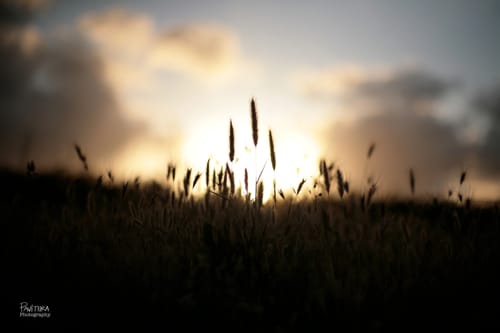
Moonrise Over The Dunes

Live In The Sunshine

You will soon find yourself in a place where you will know how to combine both the artistic world of photography and see that others are also pleased with your work. And learn that you have a clear complete vision of who you are and what your photography means to you.

Filed Under: Photo Biz Tagged With: albums, consideration, considerations, learn photography, love photography, outline, passion, photographer, Photography, professional photographers, pursuit, san diego california, social history, turns

Photographer’s Conundrum: To Charge Or Not Charge

October 18, 2010 by Guest

Sean Low, AvatarThis is a guest blog by Sean Low, President of The Business of Being Creative which “provides practical business advice to those in the business of being creative.” You have got to follow Sean on Twitter.

Of all the issues confronting creative businesses, photographers included, pricing tops the list. Always. What to charge? How to charge? Can you charge? When to charge? If only there were a right answer. Unfortunately, there is not. However, there is definitely a wrong answer.

If you are not transparent and do not have a pricing model that supports your philosophy, you will go broke in a hurry. Why? You will never be able to create the trust with your client necessary for you to do your best (or even adequate) work. If you are trying to “bury” expenses and/or profit in a single number or “package”, your clients will sense it and will (rightfully) question your integrity. They will be waiting for the other shoe to drop, even if there is no shoe. So the better question to ask yourself is: have I communicated the value of my art and does the way I do things support that value.

You can earn a fair return if you a transparent with your pricing and your business model.

Fundamentally, photographers are in two businesses: 1) selling the act of creating the image; and 2) selling the products derived from the image (i.e., prints, albums, etc.). In a perfect world, a photographer would be able to make money on both businesses. However, in the digital age and with competition the way that it is, it is increasingly difficult to earn a fair return on your investment of time and energy in either business.

The pricing pressure on the act of creating the image has never been greater. You need only take a look at Groupon offerings by photographers to witness the price of creating an image approach zero. On the other hand, services like the Album Boutique make it very difficult to extract value from selling products associated with an image. Moreover, many clients are placing photographers in the very difficult position of having to give up control of their art and just turn over a CD of hi-res images. Just say no.

To move forward, you have to bring integrity to your process. You can earn a fair return if you a transparent with your pricing and your business model. You should be able to say to your client that this is what you need to create your images. If it means having a second or third shooter, then you should lay this out too. Despite what you might think, clients do know you are in business and have to pay things like rent, utilities, payroll, etc., so if you do tell them that you charge say fifty percent on your and your staff’s time they will probably accept it. Likewise, if you require a certain quality of album be purchased (it is the legacy of you and your art after all), they will likely accept that too. Again, you are entitled to earn a fair return on your investment of time and energy – enough to sustain your business. The key is to be transparent to what that is with your clients. Transparency builds trust and is really the only currency you trade in.

Ignore those that would compete with you solely on price. Focus on what you offer and why you do things the way you do. Be uncompromising when it comes to the integrity of your art and completely transparent in what it takes for you to create it. Your ultimate value has nothing to do with the price you charge and everything to do with how you communicate. Those clients who need (read: not just want) your vision will pay for it. It is up to you to move them from want to need.

It's your turn to sound-off. What are your challenges when presenting pricing to your clients? How do you approach pricing – is it transparent or do you make it difficult for your clients to get a good read on you and your business? What issues do you encounter when discussing pricing with your clients?

Filed Under: Photo Biz, Weddings Tagged With: Art, Business, business models, business transparency, charge, competition, conundrum, creating trust, creating value, Marketing, photographer, Photographers, photogrpahy, Pricing, pricing models, sean low, transparent, value, Wedding Photography

Control & Chaos: Two Genres Of Photography

October 5, 2010 by Guest

Paul GeroThis is a guest post by Paul Gero, a wedding photojournalist based in Orange County. Paul is also known for being a terrific writer, speaker and teacher. He, his wife Nicki and now two kids are wonderful people to know.

Having been in photography for a little while, I find that the work falls down into basically two approaches: Control and Chaos.

Doing Control type work is about setting up, posing, lighting and forging a bond that elicits the desired response.

Much of the commercial world and a lot of the wedding and portrait world is in that category of Control.

A few reasons why it might be so popular:

a) The desire to create an image that looks familiar (and with the web more images are shown and seen than ever before).

b) The desire to create an image that you know will be client pleasing and you know will sell.

c) A newer photographer with new found skills and less certain about capturing things “on the fly”.

The Chaos approach has been around for decades practiced by many of the greats including Henri Cartier-Bresson, Josef Koudelka, Larry Towell and others.

Many of the great photographers from the famed photo agency Magnum work in this manner. These are some of my favorites primarily because of the way the see the world, the moments they capture and the way they structure their photographs.

It’s a style that takes practice to master. It's about looking, watching, spending time in the field with a camera, and anticipating — it's not always reproducible, but it will always be interesting. Serendipity is a huge part of the equation of Chaos photography — that can be scary but also hugely rewarding.

It takes thinking about how you'll approach a situation from where you position yourself in relation to your subject, where they are in relation to the background and what focal length you'll use to make this type of photograph.

I recommend to my students is they watch people especially as they gather at a mall, for example. Notice how they stand, how they greet people (and cultures are different).

Then when watching those interactions think about where you would need to be to make a great photograph of that situation. What lens would you use? How far would you be from the subjects?

Selecting a spot to stand in relation to your subject in the Chaos realm is important. This location along with your focal length determines how much context will be revealed in the photograph. And typically you’ll want to see that subject’s face in order to capture emotion (the eyes reveal the soul, as they say). That often means being in front of or to the side of your subject.

When I worked in Washington DC and covered events with the President, it was interesting to watch how the Associated Press determined their coverage and would station a photographer front and center of the President. That was a safe angle, and often times the best angle.

They would position another photographer off to the side for most events — that 45 degree or called the “cut away” angle.

This angle adds depth to the photo as the subject to the right or left of the President would often be slightly out of focus (with a telephoto lens). It would be a good angle if the President was looking in the camera direction, and perhaps less successful if he were to look to the opposite side.

Selecting the angle behind your subject is a lower percentage choice, but can be useful as this position gives the viewer a sense of “walking into the sunset”, or leaving. That aspect makes it useful and can help creating a natural looking end to a story.

While observational skills and camera position are critical to successful Chaos photography so is being in control of your technical skills.

Knowing light, knowing exposure, knowing when to trust or not trust your meter all play into that role.

Many photographers use the auto modes on a modern camera to “set it and forget it” and while that can work and does in many cases, there are times when it can get you in trouble especially if you’re not paying attention to the choices made by the camera or get sloppy in where you meter and hold the exposure value.

When I choose my working settings, I start from selecting aperture first, in order to create the look and depth of field on the scene (especially using wide or normal lenses).

My shutter speed choice then coincides with a good exposure for that scene based on the ISO (typically using the lowest ISO for optimum quality while still being able to get the desired shutter speed). I also consider the amount of movement in a scene in order to select the appropriate shutter speed to stop the action.

Lens selection is critical for Chaos photography.

Much of what I call the inspirational photography in this genre is often made with simple focal lengths, either slightly wide or normal (i.e. 28mm, 35mm, 50mm lenses on 35mm cameras). Rarely do you see a lot of this work done with extreme wide angles and extreme telephotos.

These lens choices also force an intimacy with your subjects in terms of your position to them. It’s much tougher to hide when you’re using a wide or a normal focal length lens, as is possible when using long zooms or telephotos.

When you’ve become really disciplined using one, two or three focal lengths, you begin to see the world taking place on the stage for those lenses. You get comfortable framing with the the imaginary lines of those focal lengths.

Zooms are popular and can be useful tools, though I find that primes often help photographers hone their vision especially when learning. It forces you to move to frame, rather than zoom to frame.

I know for me when using zooms I have to be very disciplined to not just zoom out when I should be moving my feet to frame. In fact, I try to use the zoom like a prime and determine the focal length I want to use, set it on the zoom and then move to frame but not zoom unless I absolutely must (especially with a zoom such as the 24-70mm; less so with a long lens such as the 70-200mm).

Metering light which then translates to a great exposure is critical especially in fast-moving situations.

I find that using an old school incident meter is great in this area. It allows me to dial in the exposure so that helps exposure consistency from frame to frame. Even if you only use an external meter for a while as you learn the patterns of lighting, I think it can be extremely useful.

This gives you one less thing to think about because you’ll know that exposure is handled.

Look at the scene and anticipate what would happen if you change position or your subject’s change position. Think ahead and pre-visualize where the subjects might go can help you successfully handle any change in exposure.

I can’t stress it enough: Exposure is a critical component to successful photography — and especially digital photography.

To paraphrase my instructor, famed National Geographic photographer William Albert Allard: You have to get your exposure dialed in because you’d hate to lose a portfolio photograph due to a lousy exposure.

He was right when he told me (and we were shooting transparency film) as he is today if you’re shooting digital.

What I enjoy most about Chaos photography is that it’s more about capturing life as it happens, as opposed to having it set up by me. It takes more time for this to work, because you have to be able to witness things — having a five minute window with a subject often precludes that and reduces you to do Control work.

I find that life is so much more fascinating and people do much more interesting things than I could ever set up.

I loved to be surprised when looking through the lens and use that as a guide to know if I'm in the presence of an interesting photograph — if it moves me, excites me, or causes an emotional response in me while I'm photographing, it will usually translate in the actual photograph.

Perhaps folks who prefer Control photography are not certain that good or great photos will even materialize therefore they want to ensure that they do.

All I can say from years of experience is to trust that they will — if you have time. Wherever people gather there is a potential for great photographs. And you will often be surprised by the photographs these subjects give you.

The human element makes that happen. The energy from an event makes it happen. You just have to have faith that you’ll see those moments when they happen and using your skills acquired from practice and observation, you’ll be in the right place at the right time.

Knowing how to create nice Control images is a part of the modern photographer’s tool box, no doubt, but I think it should be a piece of the box, not the whole thing.

Practice your observational skills and your technical skills and be prepared to be surprised with the beautiful and incredible chaos that is life and then capture that feeling with your camera.

What kind of photography do you practice? Do you agree or disagree with Paul? Your comments below will create a dialogue that I will welcome here on Tiffinbox. So please take a moment to tell us what is on your mind. We're listening to you!

Filed Under: Photography Tagged With: aperture, camera, chaos, control, controlled chaos, controls, digital photography, exposure, focal length, genre, genres, optics, paul gero, photographer, Photographers, photographic lens, Photography, physics, science of photography, shutter speed, telephoto lens, wide angle lens

Flash Forward Festival In Toronto, October 6-10, 2010

October 4, 2010 by Seshu | Editor & Publisher

Flash Forward Festival runs from October 6-10, 2010 in Toronto. It's a biennial festival for emerging photographers from Canada, United States and the United Kingdom.??

“Ultimately we want to see photographers making connections, getting jobs, having dialogue with some of their international counterparts.” – Emily McInnes, Co-Director, Flash Forward Festival

Filed Under: Art, Conferences, Photography Tagged With: biennial, Canada, canadian, emerge, festival, festivals, flash forward, meeting, patron, photographer, Photographers, showcases, united kingdom, united states

Is Travel Photography Your Calling?

September 30, 2010 by Guest

This blog post is by Taiwain-based culture & travel photographer Craig Ferguson. You should follow him on Twitter.

One step forward and two steps back seems to be the pattern for a lot of photographers lately, particularly in the area of cultural travel photography. Falling editorial rates and increased competition make things tougher for all. For me personally, potentially beneficial long-term opportunities in the world of travel photography have recently opened up (one step forward) but at the cost of tougher times in the short-term (two steps back).

Jane Goodall

Pingxi Sky Lanterns

Thaipusam Festival, Batu Caves, Malaysia.

Choosing to forgo immediate gain in order to focus on the medium and longer term future isn't always easy. I recently sent off the last of a series of photographs to a publisher. It's unlikely that I'll see any licensing fees from this until 2011 at the earliest, even though putting it all together took the best part of the summer. Other than a couple of small and quick portrait shoots and a little bit of editorial travel photography for a regional magazine, the past couple of months have been lean. In the long run, it will be worth it but that doesn't necessarily make it easier to stomach now.

2010 was always going to be a year of major transition for me as I move my photography business away from the general and into a much more specialized direction. That transition is still ongoing and becomes frustrating at times, as the bulk of my time is now spent in front of a computer rather than behind a lens. This recent project was a vital step in that process but it was only a step. Completing one major task would, in a perfect world, be cause for celebration and signify time to take a break. In reality though, it's just another box to tick and task to cross off the list. Almost as soon as the DVD's full of photographs were dropped off at Fedex, it was back to the grindstone. Seeking out, researching and reaching out to new potential clients. A day full of crafting individualized, cold email introductions to a market that is not covered by Agency Access and the like. When that day is over, I end up with a stack of further possibilities for the future to investigate and approach. It's not a task for the impatient but at the same time, it's a task that must be done sooner rather than later.

So why do it? Why not take travel photos for fun and work in something else, something that provides a regular salary? I know plenty of photographers who have done just that. They work a full time, salaried job and save photography for the weekends. For some people, that's the best thing to do. Not for me however. Why? It's quite simple.

I am a photographer. More accurately, I am a cultural travel photographer. It's what I do. It's who I am. It gives me more than I could ever hope to repay. It's a passion. I have no choice. I can't not do it.

Short term pain may well be necessary for long term gain, and if that is the case, then so be it. Photography is a calling and when you've been called, you have no other options.

Pingxi Sky Lanterns

Shalun Beach, Taiwan

Cosplay, NTU, Taipei

2010 Taiwan Tattoo Convention

Filed Under: Commentary, Photography, Travel Tagged With: craig ferguson, cultural travel, Culture, News, photographer, Photography, Photography Business, travel photographer, travel photography

  • « Previous Page
  • 1
  • …
  • 14
  • 15
  • 16
  • 17
  • 18
  • Next Page »

Subscribe To Tiffibox Treats!

Looking for a well-curated email newsletter that will leave you inspired and motivated about your photography business? Sign up below!

About Seshu

Seshu creates relaxed portraits of families and high school seniors in Avon, Connecticut. He also leads a successful headshot photography studio in Connecticut, helping professionals from a variety of disciplines project the very best versions of themselves. He created Tiffinbox as a way of inspiring photographers, to create better images and successful businesses. [Read More]

Email Templates For Headshot Photographers

Email Templates for Headshot Photographers

Recent Posts

  • How Capture One Changed My Event Photography
  • 10 Steps To Stay Positive In Times Of Great Stress
  • Why You Need To Read “Personal Branding For Photographers” Now
  • How To Master Your Website Content Step By Step?
  • Tony Taafe’s TNT Method For Headshot Photographers

Recent Comments

  • Stephen Davison on Are You A Business Owner Who Is Smart, But Stuck?
  • Ben A. on Don Giannatti Clinches The 8th Annual Tiffinbox Award
  • Dan on Don Giannatti Clinches The 8th Annual Tiffinbox Award
  • Donald Giannatti on Don Giannatti Clinches The 8th Annual Tiffinbox Award
  • Stephen Davison on G.E. Masana’s 6 Strategies For Wedding Photography Success
  • Naveen Kumar on Weddings In India Are More Than Being At The Right Place And At The Right Time
  • kartick on Weddings In India Are More Than Being At The Right Place And At The Right Time
  • Leonid Farbman on 6 Uncommon Trends To Grow Your Photography Business
  • Willow and Finch Wedding Photography on 11 Reception Tips To Help Your Wedding Photography
  • Web Designer Malaysia on How To Optimize Your Squarespace Website For Search Engines
  • Creastan on An Interview With Photojournalist G.M.B. Akash
  • Cindy Brown | Atlanta on An Open Letter To A Local Photographer

Become a Patron!

Copyright © 2026 · Tiffinbox · Site Design by Heather Mackan Creative · Built on Genesis