• Photography
  • Interviews
  • Business
  • Reviews

Tiffinbox

Inspiring Photographers

  • Home
  • About
  • Blog
  • Contact

3 Sizzlin’ Summer Specials From My Favorite Photographer Friends

July 25, 2013 by Seshu | Editor & Publisher

Some of my favorite photographer friends are having some time-limited special offerings that I felt I needed to share with you.

6-Week Photography Marketing BootcampWe all want to market our photography in a way that provides value to our clients and to us. That's called running a business. Some are assertive about it, while some others are passive. I believe you reap what you sow, but I also know frequency and consistency is key. One of the best products I've seen that teaches marketing for photographers is Jamie Swanson's e-book, 6-Week Photography Marketing Bootcamp. But this book is going away on Friday (yes, tomorrow). She is retiring it and rolling the information in the ebook into a new, more expensive course that should make its appearance in the Fall. But why wait until then? Get it now for only $49.
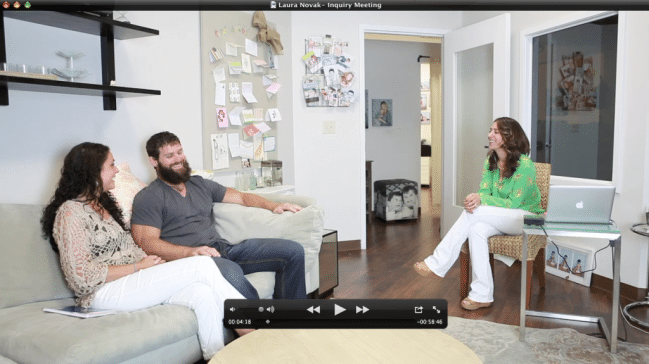
Laura Novak's Wedding Inquiry CourseEver wanted to see how a photographer consistently books wedding clients? Laura Novak's Wedding Inquiry Course just launched. Laura is not only a savvy business woman but she is a versatile photographer whom I respect a great deal. Now through July 31st, get 25% off her new course (use: “JULYINTRO”) that takes you literally by the hand to show you how she books wedding clients. She had a video crew record her interactions with a real wedding couple. No actors were involved!
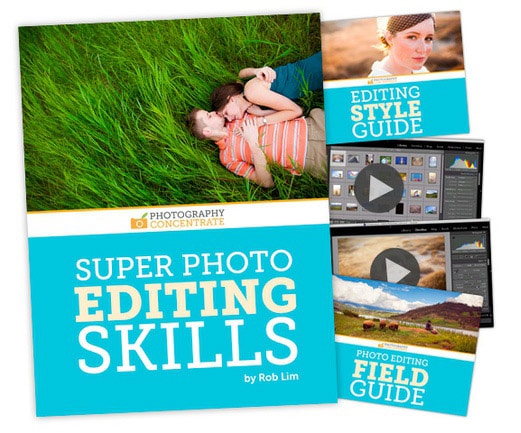
Super Photo Editing Skills By Photography ConcentrateLastly, my friends Rob & Lauren Lim of The Photography Concentrate have relaunched their terrific tutorial, Super Photo Editing Skills, with new videos that address the new features in Lightroom 5. This is the one course I keep recommending to all my friends because it is so comprehensive, but not overwhelming. Plus you get a ton of bonuses like a style guide and presets that you can deploy right away. Super Photo Editing Skills is usually $79, but starting today through August 2nd, it will be $55. Ever wanted to learn how to edit your images in Lightroom? This is your ticket! Get it punched.

Full disclosure: I carefully pick the very best products and services for you. All are affiliate links that help support this site. So do the right thing!
Filed Under: Photography, Sales Tagged With: Education, Jamie Swanson, Laura Novak, lauren lim, Learning, Photography, photography concentrate, rob lim, skills, Specials, summer, Teaching, The Modern Tog, Tutorials

Why You Should Buy Angela Pointon’s E-Book – “Worth More: A Simple Way To Create The Photography Brand, Pricing and Packages That Command The Money You Deserve”

June 18, 2013 by Seshu | Editor & Publisher

Do you ever wonder what your value proposition is to your potential client? In other words, what do you bring to the table that your “rightest” client will eat up and then thank you for it by paying you what you are really worth?

It's a simple question. But it's not so easy to answer or explain. Thankfully, Angela Pointon of Steel Toe Images has a new book out called “Worth More: A Simple Way To Create The Photography Brand, Pricing and Packages That Command The Money You Deserve.” [affiliate]

Long title, I know.

I just got done reading an advance review copy and I have to tell you the worksheets and exercises she puts you through are the very first steps any photographer must take to create a sustaining and successful business. It's critical that you define who your clients need to be and then work through your pricing and packaging that meets your target client's expectations. There is really no better way to synchronize your values with those of your clients.

From Worth More: “So we’re going to figure out your ONE awesome thing by conducting another written exercise. And honestly, there’s a chance you’re not doing anything awesome right now.”

When things are in sync, you get to make a living at something you love to do. No one can or should deny you that, especially you. So, here is what I am urging you to do. Watch this video below. Based on what you hear from Angela, figure out if you ant to be a thriving photographer or a struggling photographer. If it is the former, buy Angela's book. It's on sale from today through June 23 for $79. It goes up to $99 after that date.

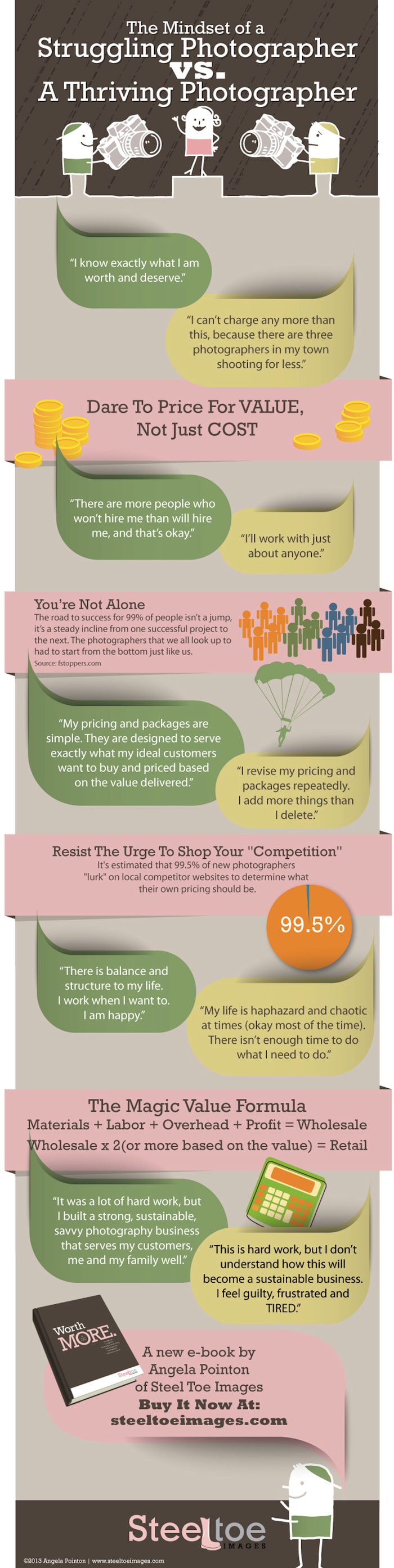
Angela also sent me this infographic that allows you to compare the two different photographers in the world: thriving or struggling –

Worth More By Angela Pointon

Now, let me be very clear about one thing. As I read through the e-book, Angela wants you to complete exercise after exercise so that the answers guide you to some startling and positive conclusions. If you are the type that buys info products and just sits on them, don't buy this book. That would be a sheer waste of money. However, if you are open to trying new things and actually doing what Angela prescribes, I'll guarantee that you will see incredible results.

So, why should you buy Angela Pointon's e-book? Very simply, reading it and doing the exercises will be transformative (with a little elbow grease) for your bottom line. Imagine not having to struggle to find the “rightest” clients. Imagine having time to spend with your loved ones. Imagine being able to create a nest egg that keeps growing. All because you spent a few hours gaining some much needed clarity on whom you want to serve and why.

For me saving $20 is still something. I'm going to bet it is for you too. So, get the book before the price jumps on June 24th.

Filed Under: Books, Marketing, Photography, Photography Business Tagged With: Angela, brand, Photography, pointon, Prices Packaging, Pricing, Worth, Worth More

David Jackson’s Photography & Lighting Workshops On June 10th & 11th, 2013

May 13, 2013 by Seshu | Editor & Publisher

If you have read David Jackson's two mega posts on Tiffinbox, you already know what his photography and lighting workshops are going to be like: Raw and real.

Haven't read the posts yet? Here you go: An Open Letter To A Photographer and On Chasing Rainbows And Unicorns.

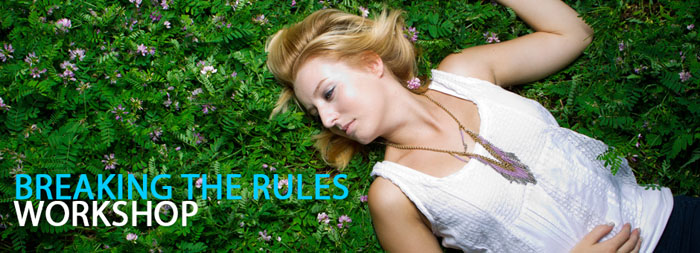
I have had the pleasure to visit his Appleton, Wisconsin studio twice in one year – once to attend his Breaking The Rules workshop and the second time to attend his then new f/what? workshop.

Breaking The Rules Workshops | David E. Jackson | Appleton, Wisconsin

“The Breaking The Rules workshop is essentially designed to give emerging photographers a fresh, new start on re-evaluating the way we approach creating dynamic images by examining the struggles faced in finding our unique voices.”

f-what? Workshops | David E. Jackson | Appleton, Wisconsin

“Whether you’re looking to expand your current approach to location lighting or create dynamic lighting effects, we will move toward re-inventing the way we use studio strobes to spark a new level of creativity in our portrait shooting process.”

If memory serves me right, at both workshops, the number of students were limited to between eight and 10. The level of instruction and demonstration was high. I recall working late into the night until David had answered everyone's questions about photography, business or lighting. We also played a lot. By that I mean, we experimented with lighting scenarios. If something didn't work, we moved quickly to some other set up that did. We were challenged. We were asked to discuss our “why's” and “how's.” On the whole, a lively group of people joined me; all inspired to make better images for themselves and their clients.

David and studio manager, Trevor Nackers, made me feel at home. There was always something to munch on, when I got hungry. The lunches were simple and fast, but healthy. The dinners were truly communal and welcoming as well.

I've been asked before why I attend so many workshops. Trust me when I say I am hyper-selective when I choose to go to one. I've done my homework. I've often reached out and badgered the workshop instructor with questions (just as David!) and I've made darn sure there will be a return on investment. From what I experienced in the two workshops I have attended, David put his heart and soul into making this a successful workshop for each attendee. If you have specific questions about lighting, David goes to great lengths to address them and provide you with a solution. One isn't left wondering about how to approach a portrait session.

The other bonus is meeting other photographers. Often they become friends of mine who contribute to Tiffinbox. Amanda Reesburg and Brett Stoddart are both fine examples.

It was also such a thrill to meet and get to know Brandon and his wife (and photography blogging phenom) Jamie Swanson.

Ok, so you are probably wondering why I decided to post this now. Here are a few reasons:

1) In my opinion, beginner or advanced photographers can always learn to light better (read this interview with Joe McNally about why lighting matters the most to us) and this is an awesome opportunity

2) David and his crew have incredibly large hearts and want to help you become better photographers today

3) The cost of each of these workshops – $250 – is laughably low (and yes, I have told David this), so you are getting tremendous value. Sign up for both and David's going to save you an additional $50!

4) These workshops will be the last ones David is offering for 2013

5) Tiffinbox is sponsoring / partnering with David and will be responsible for the bagels and cream cheese for both workshops (how appropriate, eh?)

Please know that I am not getting paid to promote David's workshops. In fact, I am planning to be at the June 10th & 11th workshops and am footing my own bill to get there. So, yes, not only is Tiffinbox sponsoring the workshops, but I am solely responsible for my hotel, flight and rental car. I intend to be at the workshop only as an observer/participant. It is one of the handful of workshops I truly believe in and I look forward to seeing you there. If you are interested, register for them here.

Filed Under: Lighting, Photography, Workshops Tagged With: Breaking The Rules, david, david jackson, Dynamic Lighting, Lighting Workshop, Photography, Workshops

Photography Equipment Buying: A Business Perspective

March 14, 2013 by Travis North

Travis North is a Landscape Architect and freelance fine art Photographer out of Philadelphia, Pennsylvania with over eighteen years of experience. He is the founder and editor of Shutter Photo Magazine, which has been a source of photography inspiration and wisdom since 2008. Follow him on Twitter.

Photography as a medium can be described a great number of ways. It’s a creative release, inspiring and emotional. For many, it’s a source of income or a private business where you are your own boss. And Photography is expensive. It doesn’t matter how you cut it down, by the time you add up the cost of all your equipment – and let’s not forget the accessories right down to the camera strap – the bill would make your accountant cringe. Now it’s one thing if you’re been lucky enough to make a substantial income from your art. But every photographer I know (even the most successful) is always talking about the next product they’re thinking about buying. If money wasn’t the object, there would not be “thinking”, you would already have that new $1,400 USD lens. So in this article I’d like to focus on a very businessman’s term: ROI, or Return On Investment. Worry not, we’re not going to talk strict numbers – we’re going to talk gear. We’ll talk about where you get the biggest returns and what gear is ultimately important. But most of all, we’re going to talk about where you can cut corners for the sake of ROI.

Focusing on the Deliverable

When it comes down to determining the value of something, you ultimately need to focus on what is expected in the end: What is the deliverable? If you are working as a fashion photographer and your works are expected to be posted on billboards throughout the urban landscape, then you might have a case for buying yourself a high-end medium format camera. But if photography is more of a hobby and your supplemental income is in the form of post card sales, that would be the opposite end of the spectrum. Now I’m not trying to simplify the context too much, but the end product ultimately drives what type of equipment you have and use. It’s a simple philosophy, really: Use only the tools that you need to use.

There’s an interesting story about the space race back in the 1960’s. The problem was that a traditional ink pen does not write in zero gravity, and so NASA allegedly spent thousands, if not millions, of dollars researching and developing a pen that can write in zero gravity. In contrast, the Russians used a pencil. Now the story may not be true, but it makes the point: The simplest tool that does the job is the one you ultimately should use. On a personal note, I use a Nikon D80. It is not the best camera on the market. And to be fair, it’s not the best camera that I could be using for the type of photos that I create. But photography is not my primary income and so I have to weigh the ROI vs. my gear lust, and I couldn’t justify spending the money on the camera I really wanted. Instead, I took the money I saved and funneled it into gear that gave me the better ROI; like better flashes, better tripods and better lenses. Of course as my income from photography increases – or if my photography business moves in a direction that warrants it – then I may revisit the camera body upgrade down the line. But my current deliverable demands do not require such an upgrade at this time.

Planning for Upgrades

Bolted In | D. Travis North | Cellblock 4, Eastern State Pennitentiary

If this is your studio, the best return on investment will come in the form of tripods and lighting equipment. A better lens won't necessarily have as much impact here as you would think.

The hopes are, of course, that your work and your scope will evolve. Your client base will grow larger, your income from photography – be it primary or secondary – would increase and then you will be able to revisit the ROI considerations again a year from now or two years from now. Ultimately, the hope is that you will be looking to upgrade your photography equipment down the line. You’ll need an upgrade plan. You probably have some idea of where you would like to go with your photography, and you should create your upgrade plan to compliment your photography goals. You can expect that the plan will change as you evolve or as new products come to market. But every upgrade, every accessory, needs to be thought of in advanced. I have three simple rules when considering gear upgrades:

1) Avoid proprietary features that would channelize my upgrade path.

2) Quality is worth extra cost, but it must be justifiable.

3) I must have immediate and continued use for the product.

These three rules apply to every product I consider, from the camera body all the way to my camera bag.

The first rule is the most abstract, so let's speak on that briefly. Basically, I don't want to be locked into any single proprietary format, nor do I want to limit my options down the line. The exception is camera systems because that's unavoidable. There’s a very strong reason why I most often recommend Canon or Nikon products: Between the two companies, they control more than 70% of the market. Both manufacturers make great products, and they tend to be neck-and-neck in terms of advancement. In short, you couldn’t go wrong with either brand. But the real reason I suggest those brands more than any other is the simple fact that every other photography-related company on the planet wants to tap into Canon and Nikon’s market. That means that you can find compatible products – from remote triggers to lenses – for either brand. Not only does that yield a massive amount of options, but when companies compete, you and your ROI win.

So let's talk about where you get the biggest bang for the buck. The answer could be different for each photographer. A photographer specializing in landscape photography may want to look at a more premium, full-frame camera to take advantage of wide-angle lenses. Sports photographers are going to want to spend their money on lenses. Macro photographers may be interested in bellows systems or extension tubes. Personally, I shoot a lot of ruins and work indoors very often. While I would love to have a camera body with better high-ISO support, the reality is that the best investment for me happened to be off-camera flashes and accessories. Your case will be unique to your own style of photography. So you'll need to evaluate and weight your options to determine where's the best place to spend your money.

Quality vs. Cost: Taking Advantage Of Small Margins To Save Costs

The most innovative and best products are not always from one of the big brands. And even if they are, the cost difference is in many cases beyond the point of diminishing returns. In other words: If the quality differences between two products is not discernible without the use of a testing lab, go for the more economically priced product. Because the truth of the matter is that if you can’t tell the difference, your client certainly won’t be able to either. To illustrate my point, let's talk about lenses.

Lens Choices

It’s at this point that I would like to remind everyone that Ansel Adams was working with lens technology far inferior to whatever you’re using right now. With the advancements in lens technology over the past twenty years, the quality comparisons have gotten so tight that the margins aren’t even measurable without adding extra decimal places. We fixate on these tiny details and make exaggerated claims that one lens’s sharpness is “far superior” to another when in truth, we’re arguing about a 0.1% difference. Is it really worth it? No. And it certainly isn’t worth the cost difference.

Twenty years ago, when Canon and Nikon were the clear front-runners in the lens market, third party lenses weren’t a consideration to pros. Third party lenses were a consumer product. They weren’t built as well and the image quality wasn’t strong. But they were significantly cheaper. Pros could justify the cost, but a consumer could not. Fast forward to 2013. In my opinion, some of the strongest innovation comes from the third party lens manufacturers, and their still carry a significantly more economical price tag. My favorite comparison is the Sigma 24-70mm F/2.8 vs the Nikon or Canon version. On paper, they are all essentially the same lens. All have great image quality, all yield the same amount of distortion at the wide end and all are built very well. The images created with either lens are interchangeable. The quality differences between them is immeasurable outside of the lab. The primary difference between these two lenses is not image quality, it’s price. The Nikon (about $1,700 USD) and the Canon (about $1900 USD) are each more than twice the cost of the Sigma (about $825 USD). And so I ask, is the Nikon or the Canon worth the extra cost? The cost difference is simply beyond the point of diminishing returns. Is that fraction of a percent in image quality worth twice the cost? I would say no. Not even for the full-time professional.

And the discussion could go into any topic, from remote triggers (Pocket Wizards vs. Radio Popper) to Tripods (Gitzo vs. Manfrotto – they’re even under the same parent company) or hot-shoe flashes (Nikon vs. Nissin or better yet, Nikon SB-950 vs. a used Nikon SB-60). But if you can keep that point of diminishing returns in focus, and if you can clearly keep an eye on how tight the quality margin is between two products, you have an advantage. You don’t need to buy the Nikon 24-70mm or a Gitzo tripod when the Sigma and Manfrotto versions will serve you just as well at half the cost. Simply knowing about what options are out – and knowing that the ROI is going to be much greater – could really change your gear upgrade plan a great deal. Heck, you may even be inclined to start with a different camera body from the start.

Final Thoughts

Of course the purpose of this article is not to take business away from the giants, nor do I intend to promote specific third-party brands. My hope is that this article got you thinking about justifying your equipment purchases. I would encourage you consider my three rules every time you contemplate product purchases. Ultimately, what I really want for you is to have a better return on your investment. And that starts with buying smarter. So continue to analyze your options beyond a reasonable doubt because, let’s face it, we’re all gear nerds. We find joy in reviewing such data. But keep the quality differences in perspective with your ROI and buy the product that makes the most sense for your needs and budget. Good purchasing habits will only help you and your business.

Filed Under: Commentary, Photo Gear Tagged With: Business Perspective, lenses, Photography, Photography Business, photography equipment

3 Factors That Influence Photography Pricing

March 13, 2013 by Bryan Caporicci

Bryan Carporicci dives into three influencing factors when it comes to pricing your photography. If you have read his first article on pricing, you are in for a treat again. He co-wrote a book for photographers with fellow photographer Robert Nowell called “Pricing for Profit.”

In the book I co-wrote with Robert Nowell, titled “Pricing for Profit”, we share our belief in the idea of calculating your prices based on Cost of Sales. Certainly this is the best starting point, but there are other factors that must be considered when calculating your prices, most importantly quality, perceived value and confidence.

Quality

The quality and artistic measure of your work will have a healthy influence on how you can price your photography. In order to sell something to someone, you have to provide a quality of service or product that the client couldn’t produce on their own. If your photography resembles the basic snapshot-style of images that anyone could take with their own point-and-shoot camera, chances are you cannot charge anything in the neighborhood of what we are suggesting. If, on the other hand, your photographs exhibit a quality of light, posing and finesse that makes your work stand above the competition, then you certainly can demand a premium for your creative fees.

Perceived Value

We have all heard the saying that beauty is in the eye of the beholder, and this is true of the professional photography industry. The way that a client perceives a product or service is directly related to the price that they are willing to pay for it. People buy things not necessarily for the thing itself, but rather for the way that the thing makes them feel. This has been proven to be true time and time again in all kinds of business environments.
Perceived value can come from things such as how we package the goods that we deliver our clients, to the length that we will go to to provide exceptional customer service. If you create a higher perceived value for your photography and your products, then you can demand a higher price for those products and services.

Confidence

Confidence is a photographer’s ability to sell him or herself and his or her products or services without any hesitation or apology. It is especially important for starting out photographers, to disassociate themselves from their own price list. We have often heard photographers saying that they would never buy photography at the prices that they themselves charge. As a result of that thinking, they find it extremely difficult to sell to others when they don’t believe in their own pricing system.

You need to be confident and sure of your pricing structure, and you need to present it in such a way that instills confidence in your client. If you don’t believe that they will buy, it is likely that they will sense that. If you don’t believe that what your selling is worth the price you’re charging, they will see that as well. This is why it is important to be extremely confident in the prices that you are asking for your photography.

Next week, I’ll be going into detail about the last “influencing factor” for pricing – the Cost of Sales model. This is the only measurable way to calculate your pricing, and it’s where things start to get fun!

How do you arrive at your photography pricing? What factors do you use to arrive at your numbers? Discuss below!

Filed Under: Business, Photography Tagged With: Photography, photography industry, price, Pricing Strategies, your photography

  • « Previous Page
  • 1
  • …
  • 11
  • 12
  • 13
  • 14
  • 15
  • …
  • 34
  • Next Page »

Subscribe To Tiffibox Treats!

Looking for a well-curated email newsletter that will leave you inspired and motivated about your photography business? Sign up below!

About Seshu

Seshu creates relaxed portraits of families and high school seniors in Avon, Connecticut. He also leads a successful headshot photography studio in Connecticut, helping professionals from a variety of disciplines project the very best versions of themselves. He created Tiffinbox as a way of inspiring photographers, to create better images and successful businesses. [Read More]

Email Templates For Headshot Photographers

Email Templates for Headshot Photographers

Recent Posts

  • How Capture One Changed My Event Photography
  • 10 Steps To Stay Positive In Times Of Great Stress
  • Why You Need To Read “Personal Branding For Photographers” Now
  • How To Master Your Website Content Step By Step?
  • Tony Taafe’s TNT Method For Headshot Photographers

Recent Comments

  • Stephen Davison on Are You A Business Owner Who Is Smart, But Stuck?
  • Ben A. on Don Giannatti Clinches The 8th Annual Tiffinbox Award
  • Dan on Don Giannatti Clinches The 8th Annual Tiffinbox Award
  • Donald Giannatti on Don Giannatti Clinches The 8th Annual Tiffinbox Award
  • Stephen Davison on G.E. Masana’s 6 Strategies For Wedding Photography Success
  • Naveen Kumar on Weddings In India Are More Than Being At The Right Place And At The Right Time
  • kartick on Weddings In India Are More Than Being At The Right Place And At The Right Time
  • Leonid Farbman on 6 Uncommon Trends To Grow Your Photography Business
  • Willow and Finch Wedding Photography on 11 Reception Tips To Help Your Wedding Photography
  • Web Designer Malaysia on How To Optimize Your Squarespace Website For Search Engines
  • Creastan on An Interview With Photojournalist G.M.B. Akash
  • Cindy Brown | Atlanta on An Open Letter To A Local Photographer

Become a Patron!

Copyright © 2026 · Tiffinbox · Site Design by Heather Mackan Creative · Built on Genesis