• Photography
  • Interviews
  • Business
  • Reviews

Tiffinbox

Inspiring Photographers

  • Home
  • About
  • Blog
  • Contact

Are You Really A Professional Photographer?

November 16, 2011 by Andy Bondurant

Some of you may recall Andy Bondurant's steamy blog post from almost a year ago called “What's Too Sexy For High School Seniors?“. Well he is back, with more advice for photographers. He is the co-founder and director of Senior Portrait Artists. You can find him on Twitter and Facebook.

I recently ran across a question on the question/answer/information site Quora. Here was the question, “How can I dress like a professional photographer?”

I can hear some of the responses some of you have come up with already. “Great, another amateur, jumping into photography taking more of my clients.” But wait just a minute more, because what I found truly disturbing was the first response.

You can visit the site for the full response, but here is the first line:

“This is an awesome question. In my experience shooting events, it's less important how you dress and more important how your equipment looks.”

What?

The right equipment for the right job can make a huge difference in getting the shot you want and need. By no means does it make you a professional. In fact, it may put you out of business quicker than anything else you could do. Professional equipment is expensive, and much of it is not necessary to begin a business.

Over the past 8-10 years, I've had the blessing of having multiple opportunities each year to watch great, professional portrait photographers work on location shoots. Most of the time they have exactly what they need, when they need it. However,many times I would hear things like, “Oh, I wish I had …” Then they move on to get a great shot without the piece of equipment they just mentioned.

So what is that makes GREAT photographers GREAT? It's not the equipment, and it goes beyond just training. Here are 3 qualities I've found seems to be similar among photographers who are professional.

1. Relationship.

The best photographers seem to be able to connect with their clients quickly and efficiently. If you want to get images that truly portray a subject's personality you need that person to trust you. You need them to believe you are going to make them look incredible.

If the client doesn't trust you it shows in their eyes. It shows in their body posture.

Personality is not necessarily the biggest factor in this either. Having a fun, outgoing personality helps, but I've seen more reserved photographers do just as well as larger than life photographers.

The key to building relationship is caring. Building trust means truly and genuinely caring for the client and how they look and feel.

2. Time.

Above, I mentioned greatness is more than equipment or training. Having the right equipment and training only take you so far. Having the right equipment without enough time using it will result in sub-par images. Having the correct training without time to practice and perfect that training will lead to a less than perfect product.

Malcolm Gladwell in his book Outliers calls this the 10,000 hour rule. His premise is anyone who excels in their field has spent 10,000+ hours perfecting it before they become “known” for their skill. He references The Beatles, Bill Gates and others who fit this theory.

There is no substitute for time in photography. The more time you spend shooting, editing and perfecting, the better photographer you will be.

3. Consistency.

John Pyle wrote an article for The Collective arguing that this one point is what truly makes a professional photographer professional.

The ability to get a great shot no matter the circumstances, time of day, or the not having the “right” equipment is what sets the pro apart from the amateur.

Consistency is directly related to #2. The more time you have doing photography the more consistent product you will create.

Let me wrap up by telling you one more thing.

I'm not a photographer. Before you completely forget what I've written based on that statement, think about this: Each one of the above points (relationship, time, consistency) applies to any profession.

I don't care if you are a doctor, lawyer, lock-smith, banker or pizza maker all 3 of these qualities will be found in the great ones. It will have nothing to do with the equipment they do or don't have.

It will be about creating relationships, having time invested in their profession, and consistently giving great service and/or creating a great product.

What do you think? Is Andy right on the money about this? Discuss below!

Filed Under: Business, Photography Tagged With: andy bondurant, consistency, factors, photographer, Photography, professional, professional equipment, professional photographer, professional photographers, professional portrait photographer, relationship, senior portraits, visual arts, visual journalism, Wedding Photography

Delicious Dereliction, An Exploration Of Urban Decay Through Photography

November 15, 2011 by David Wares

This guest post is by David Wares. He is Based in the South East of England UK. He loves to photograph nature, landscape and over the last couple of years has become fascinated with the subject of Urban Exploration and dereliction. This year, he says,”I was lucky enough to win ‘The Portman Cup' for Best Image of 2010 at the Sussex Photographic Federation's Digital Projected Image competition.” He also writes the ‘Scenic Outlook' column for Current Photographer. Follow him on Twitter.

There’s something about places and objects that have fallen into disrepair that really intrigue me. I’m no historian by any means but I’ve always had an interest in visiting old ruins, such as the many medieval castles found across the UK. I can’t say exactly what it is that I find so fascinating; sometimes it starts me thinking about what may have gone on and sometimes it is merely the look of these old ruins. Again, it is hard to explain why something that is old and broken may be aesthetically pleasing, all I know is that it is.

So how does this all relate to me and my photography? When I started out I took the route that many others take, that of landscape photography. Quite often I love to visit the very picturesque Bodiam Castle, a classic castle ruin that is very well preserved and has an air of mystery about it during the early morning when shrouded by mist. It wasn’t until about three years ago that my interest in dereliction would take a new direction; Urban Exploration.

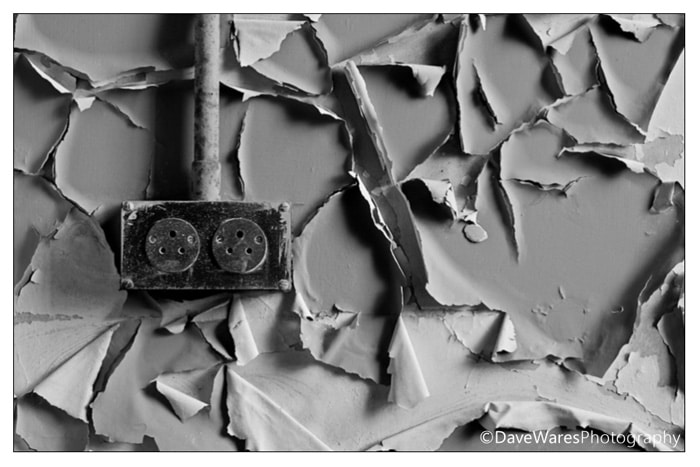
Urban Decay by David Wares

Urban Decay by David Wares

Far from the picturesque ruins I and most others are familiar with, Urban Exploration (or UrBex) involves going into more modern places that have been abandoned and become derelict for various different reasons. These tend to include old factories, hospitals, gas stations, fair grounds, manor houses and mansions; the list goes on and on. The term Urban Exploration itself is a bit vague but usually refers to people that frequent said abandoned buildings and tunnels (usually dangerous and off limits), however it could also be applied to places that the general public just don’t go to all that much, such as a junk yard or back alley for instance. Sometimes I take a trip down to our local beach where a small fishing fleet resides; you can find all sorts of rotten and rusty old worn out objects there.

Urban Decay by David Wares

Urban Decay by David Wares

The theme of dereliction will often result in your pictures having a much more sombre look and feel which in itself can be a really interesting avenue to explore. Not all pictures have to be bright and colourful. :)

Urban Decay by David Wares

Urban Decay by David Wares

I’m by no means advocating that everyone go out and start trespassing; that is something you need to take very careful consideration over, for both health and legal reasons. However, I do encourage everyone take the time to look in places that others avoid as there are so many artefacts that you can find and in the most accessible of areas that can and will make wonderful and interesting subjects for your pictures. Another great thing about dereliction is that in my view it’s an all weather activity. Whereas some other genres of photography can benefit from the ‘right’ kind of light, dereliction seems to lend itself to almost any lighting situation you can think of. Sunlight can bring out colours in rust etc while overcast or dull light can give bring an eerie or solemn feel to your pictures.

Urban Decay by David Wares

Have you explored your neighborhood? Does Urban Exploration intrigue you? Can you give yourself an assignment to photograph a place that has been abandoned in your neck of the woods? Come back here and share your images.

Filed Under: Photography Tagged With: david, dereliction, England, exploration, landscape photography, medieval castles, Photography, Sussex, urban decay, urban exploration, wares

Allen Murabayashi, CEO Of PhotoShelter On Photography & The Photo Industry

October 17, 2011 by Seshu | Editor & Publisher

For editorial photographers, looking to archive and sell or license their images, PhotoShelter offers a solution that is hard to pass up.

I caught up with Allen Murabayashi, the company's CEO last week and spoke to him briefly about the state of the photography industry, what we can expect to see out of PhotoShelter in the coming years and why those meaty guide books the company publishes helps to educate photographers about the current marketing trends.

PhotoShelter Home Page

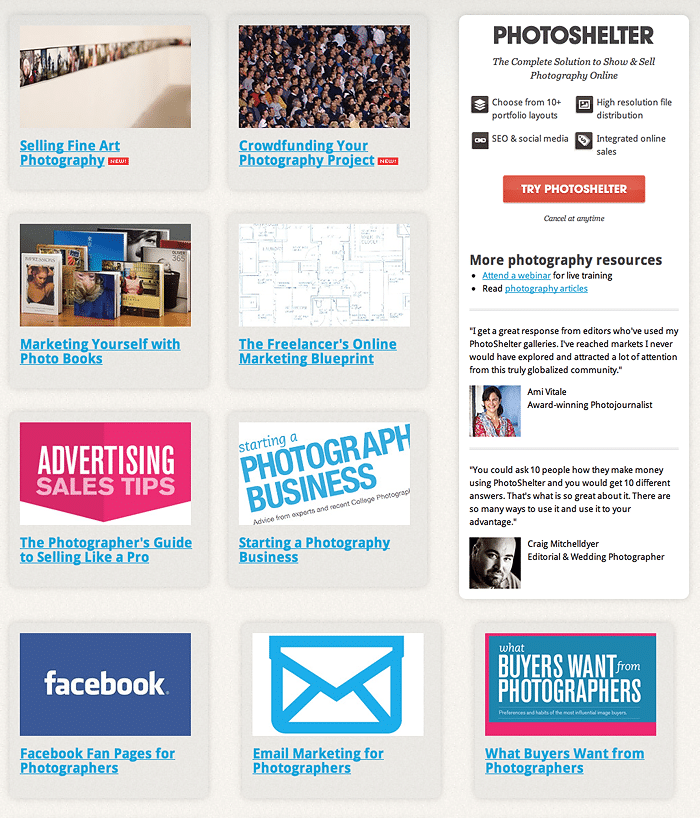
The complimentary guides help you grow your photography business:

PhotoShelter Free Guide Books

PhotoShelter is offering all Tiffinbox readers the following discount when you sign up for PhotoShelter before midnight on October 31st. When your readers sign up at www.photoshelter.com, they can enter the promotion code TIFFINBOX1110. The code entitles readers to the following discounts:

1) Annual Standard Account for $305.00/year – a $55 savings versus a monthly plan.
2) Annual Pro Account $529.00/year – a $70 savings versus a monthly plan

I am told that as of today, all new and existing standard accounts will receive 60 GB of secure storage (it used to be only 35gb), providing all standard accounts a safe space to store thousands of extra files. This increase comes at no additional cost.

Now that you have watched the video, can I ask a favor of you? Post a comment below & tell your friends. You have a variety of options below to spread the word. Thank you!

Filed Under: Business, Photography Tagged With: allen murabayashi, books, editorial photographer, editorial photographers, educational, guide books, Industry, photo, photo industry, photographer, Photography, photography industry, photoshelter, video interview, visual arts

You Got Extremely Essential Camera Skills?

August 22, 2011 by Seshu | Editor & Publisher

Right around the holidays last year, just about everyone I know bought or received a camera. No, these weren't the point & shoot variety (hey we have our iPhones for that right?). These were DSLR‘s or digital SLR's. The excitement over opening the camera was palpable. I know because I received several emails soon after asking me … “So, I got a DSLR, but my images still suck. Why?”

My first response was always, “did you read the manual?” The silence at the other end was quite telling. Most of us, I know fail to read our manuals. When I bought my first Nikon DSLR, which I believe was the D70, I don't remember diving into the manual either. On the one side, there is a new toy to play with and on the other, my ego was saying to me: “Yeah, I can figure this out. No problem.” That's until I started seeing images I'd be ashamed to show my mom.

Essential Camera Skills TutorialSo, if the manual is way too daunting, or even boring, what do you do? Until today, you could have scoured the interwebs and patched together a bunch of the info that may have helped elevate your game. That too is time consuming and unless you are nuts about photography or pursuing as a professional, chances are slim you would be inclined to curate that information, digest it and then deploy it on your next go around with your DSLR.
Rob & Lauren Lim, the duo behind Photography Concentrate, have just published Extremely Essential Camera Skills. I was one of the few lucky ones to receive a review copy gratis. Having seen some of their earlier tutorials – Photo Editing Skills and Album Design Skills, I knew this one was going to be special.

Think of Extremely Essential Camera Skills as the foundational course you forgot to take when you started experimenting with your camera. It's exquisitely designed – consistent with their other tutorials and extremely engaging website (which you must bookmark). When you open up the PDF, you are presented with a set of colorful tabs for the different chapters such as: The Camera, Focusing, Exposure, Lenses, Depth of Field and Camera Settings. I found the built-in navigation to be very helpful as it makes it easy to skip pages or navigate back to the ones you want to read again.

Extremely Essential Camera Skills Navigation

Unlike other tutorials that teach but fail to train, what I loved about Rob & Lauren's latest offering is that they are serious about making sure you get the concepts they have just taught before moving on to the next chapter. They do this through tips, exercises, videos (more on this in a bit) and pop quizzes. Though it is incredibly thorough, Extremely Essential Camera Skills is not a read it and forget it kind of manual. The lessons you will learn, each one at your own pace, will stick with you for a lifetime. The definitions and demonstrations are easy to understand and absorb.

As a professional, most of the concepts were familiar to me. But that's only because I use my camera every day, so it does become intuitive. Having a guide like Extremely Essential Camera Skills will help you get to that point where you too can easily make images you are proud to show your family and friends.

If there was one area where I could see the authors develop more content, it's the section on using an alternative to that pesky flash that everyone insists on deploying. To their credit they do say this: “The built-in flash on cameras generally sucks.” So true. May we see a sequel to this guide that will dwell on off-camera flash? I hope so, but I do believe this guide will lay the foundation for better images using flash. So, I do urge you to get this one first.

Extremely Essential Camera Skills Videos

The 7 videos by Lauren are fantastic. Her even, conversational tone and excellent examples helped me better understand the concept behind exposure compensation. So, the take aways are many. With Rob & Lauren's permission, I am considering using this guide book for photographers (I really don't want to call it a manual) in the beginning photography class I teach high schoolers. Yes, it's that good and it is perfectly fitted to meet the demands of amateurs and semi-professionals too.

As I have already stated, I received a review copy Extremely Essential Camera Skills and loved it. If you are struggling to use your DSLR, this guide book will help you get comfortable. For the next two weeks starting today, Rob & Lauren are offering a launch sale. You can get Extremely Essential Camera Skills for $29.97, that's 40% off the regular price of $49.99. In addition to the 89-page PDF and videos which you can view on your computer or your iPad, you will receive the Extremely Essential Camera Skills Field Guide, which you can print and tote around while you are photographing.

Full disclosure: As an affiliate, I receive a commission on the sale of this PDF to support Tiffinbox. If you enjoy the content on this site, I ask that you use the links in this post to buy Extremely Essential Camera Skills. Thank you!

Filed Under: Books, Photography, Tutorials Tagged With: camera, camera flashes, camera settings, cameras, digital photography, digital single lens reflex camera, dslr, ebook, essentials, extremely essential camera skills, Flash, guide books, guides, manual, PDF, Photography, photography concentrate, rob & lauren lim, skill, technology, tutorial

Keep It Simple Photo Workflow

August 15, 2011 by Seshu | Editor & Publisher

I've described my photography workflow before. At its core is the belief that by keeping things simple, my workflow will cut short the time I spend in front of the computer and allow me to return to making images or spending more time with my family.

Fortunately, I am not alone in this line of thinking. Paul Gero, a friend and fellow photographer based in Orange County, California has published a lucid, step-by-step guide for a vast majority of photographers who have no clue about post production or who are frazzled by all the tools and options presented to them. The guide book is called Simple Photo Workflow.

Paul Gero's Simple Photo Workflow

With over 20 years of experience as a photographer – first at newspapers and then documenting weddings and portraits – Gero is one photographer whose words and work I trust. You may recall his excellent guest blog post on Tiffinbox – Control & Chaos: Two Genres of Photography.

Now, go on check his blog out. It's a source of weekly inspiration for me. Set aside for a moment the way Gero expresses the light and life he sees in front of him. I think he is a master at photographing the unguarded moment. However, take another look at the way the images are processed.

To my eyes, there is nothing complicated about them, yet they are brilliant. I see natural skin tones, just the right amount of grain, light vignetting that draws your eyes to the main subject of the frame and the black & white images that have both depth and drama to them. With Photoshop and other image processing tools, it's much too easy to go crazy and drop layer after layer of actions, until your vision of the final image is not only blurred, it's obliterated.

Getting back to saving time, the post production work Gero introduces us to in his new e-book, is simple, yet elegant. It won't stress you or your computer out. Gero expresses his thoughts simply as well. Chapters on exposure, editing, raw processing, using Lightroom and photo finishing (retouching) are all punctuated with exceptional examples and step-by-step instructions, so you'll never falter. As a bonus, Gero has a “cheat-sheet” at the end of the book that walks you through all of the processes he goes through when he is editing his own images! This is like looking over his shoulder and watching him work, except you'll be doing it yourself and learning from it.

If you already use Photomechanic, Lightroom and Photoshop and use them well, then this ebook isn't for you. However, if you do use these programs in your post-production work and you are just stumbling along, I urge you to . Yes, I called it an ebook before, but it's much more than that. You'll want to print it out (as I have) and use it as you edit your images. Once your post production become intuitive, then you can go in and customize the system.

Full disclosure – I received a complimentary copy of the ebook to review but I am not an affiliate and I do not make a dime off of the sale of this wonderful book. I am recommending it here solely on its merit.

Want your own copy? Use “seshu” between today and August 29 to buy it for $47 (regular price is $77). I am sure you want to save $30.

Filed Under: Photography Workflow Tagged With: adobe photoshop, adobe photoshop lightroom, computer graphics, graphics software, guide books, images, keep it simple, orange county, paul gero, photo manipulation, photographer, Photography, process imaging, simple photos, vignetting, Workflow

  • « Previous Page
  • 1
  • …
  • 19
  • 20
  • 21
  • 22
  • 23
  • …
  • 34
  • Next Page »

Subscribe To Tiffibox Treats!

Looking for a well-curated email newsletter that will leave you inspired and motivated about your photography business? Sign up below!

About Seshu

Seshu creates relaxed portraits of families and high school seniors in Avon, Connecticut. He also leads a successful headshot photography studio in Connecticut, helping professionals from a variety of disciplines project the very best versions of themselves. He created Tiffinbox as a way of inspiring photographers, to create better images and successful businesses. [Read More]

Email Templates For Headshot Photographers

Email Templates for Headshot Photographers

Recent Posts

  • How Capture One Changed My Event Photography
  • 10 Steps To Stay Positive In Times Of Great Stress
  • Why You Need To Read “Personal Branding For Photographers” Now
  • How To Master Your Website Content Step By Step?
  • Tony Taafe’s TNT Method For Headshot Photographers

Recent Comments

  • Stephen Davison on Are You A Business Owner Who Is Smart, But Stuck?
  • Ben A. on Don Giannatti Clinches The 8th Annual Tiffinbox Award
  • Dan on Don Giannatti Clinches The 8th Annual Tiffinbox Award
  • Donald Giannatti on Don Giannatti Clinches The 8th Annual Tiffinbox Award
  • Stephen Davison on G.E. Masana’s 6 Strategies For Wedding Photography Success
  • Naveen Kumar on Weddings In India Are More Than Being At The Right Place And At The Right Time
  • kartick on Weddings In India Are More Than Being At The Right Place And At The Right Time
  • Leonid Farbman on 6 Uncommon Trends To Grow Your Photography Business
  • Willow and Finch Wedding Photography on 11 Reception Tips To Help Your Wedding Photography
  • Web Designer Malaysia on How To Optimize Your Squarespace Website For Search Engines
  • Creastan on An Interview With Photojournalist G.M.B. Akash
  • Cindy Brown | Atlanta on An Open Letter To A Local Photographer

Become a Patron!

Copyright © 2026 · Tiffinbox · Site Design by Heather Mackan Creative · Built on Genesis