• Photography
  • Interviews
  • Business
  • Reviews

Tiffinbox

Inspiring Photographers

  • Home
  • About
  • Blog
  • Contact

11 Ways You Can Improve Your Photography

December 1, 2011 by Seshu | Editor & Publisher

There are several phases of being a photographer. The obvious ones are beginner, amateur, professional and, perhaps at a stretch, “master.” You may disagree with that progression and that's fine. But I suspect you will agree with me when I say that at every level (yes, even if you self-proclaim yourself the Grand Poobah of photography), you are constantly learning.

Yes, that's right. Educating yourself never ever stops. It's what I find most exciting about photography. Every day, I am learning something new about the art and also ultimately about myself.

Several weeks back, I announced the 1st annual Tiffinbox Award winner. That photographer is David DuChemin, an author, blogger, teacher and foremost a visual explorer. I urge you to check out his blog and his books.

David is also the visionary behind Craft & Vision e-books for photographers of all stripes. Each of these books is $5. They are a fast read and are chalk-full of great tidbits of useful information that you don't just save in your head but are forced to go out and try out for yourself. To say that I have fallen in love with these e-books would actually be a bit of an understatement. They are exquisitely designed and of course contain some of the best photography I have seen. I eagerly wait for each new e-book because they are so remarkable.

Craft & Vision Free E-Book | 11 Ways To Improve Your PhotographyToday, Craft & Vision is doing something different. They are actually giving away their latest e-book, 11 Ways You Can Improve Your Photography.

So, why is this 69-page e-book free? What's the catch, you wonder? There is none. Think of this book as a sampler. The authors of these chapters are representative of the breadth and depth of the topics you will find on the Craft & Vision website. The writing is lucid and engaging. The images are spectacular. If you are even remotely inclined to educate yourself or even elevate your photography, these e-books are a must. Being e-books, I carry them around on my iPad 2 and flip through them when I want a quick burst of inspiration.

I bet you are curious to know what those 11 ways are right? So here they are, in the order they appear in the free e-book (yeah, download it now):

1) Make Your Images More Dynamic by Piet Van Den Eynde
2) Tame Your Digital Exposures by David DuChemin
3) The Power Of The Print by Martin Bailey
4) Learn To Direct The Eye by Michael Frye
5) Understand The Stages by Alexandre Buisse
6) Create Projects And Collaborate by Andrew S. Gibson
7) Refine Your Composition by Nicole S. Young
8) The Power Of The Moment by Eli Reinholdtsen
9) Forget Lens Stereotypes by Piet Van Den Eynde
10) Slow Down And Learn To See by Stuart Sipahigil
11) Make Stronger Portraits by David DuChemin

Buy one or two, or better yet, buy them all (and save 20%). With the Christmas season around the corner, I don't think there is a better set of gifts than these e-books for the budding or experienced photographer in your life. I know I would appreciate it, if I was presented this incredible opportunity to learn from the very best in the industry.

Disclosure Of Material Connection

Filed Under: Books, Photography Tagged With: better photography, books, david duchemin, e book, E-books, educate, imaging, improve, photographer, Photography, vision, visual arts

Are You Really A Professional Photographer?

November 16, 2011 by Andy Bondurant

Some of you may recall Andy Bondurant's steamy blog post from almost a year ago called “What's Too Sexy For High School Seniors?“. Well he is back, with more advice for photographers. He is the co-founder and director of Senior Portrait Artists. You can find him on Twitter and Facebook.

I recently ran across a question on the question/answer/information site Quora. Here was the question, “How can I dress like a professional photographer?”

I can hear some of the responses some of you have come up with already. “Great, another amateur, jumping into photography taking more of my clients.” But wait just a minute more, because what I found truly disturbing was the first response.

You can visit the site for the full response, but here is the first line:

“This is an awesome question. In my experience shooting events, it's less important how you dress and more important how your equipment looks.”

What?

The right equipment for the right job can make a huge difference in getting the shot you want and need. By no means does it make you a professional. In fact, it may put you out of business quicker than anything else you could do. Professional equipment is expensive, and much of it is not necessary to begin a business.

Over the past 8-10 years, I've had the blessing of having multiple opportunities each year to watch great, professional portrait photographers work on location shoots. Most of the time they have exactly what they need, when they need it. However,many times I would hear things like, “Oh, I wish I had …” Then they move on to get a great shot without the piece of equipment they just mentioned.

So what is that makes GREAT photographers GREAT? It's not the equipment, and it goes beyond just training. Here are 3 qualities I've found seems to be similar among photographers who are professional.

1. Relationship.

The best photographers seem to be able to connect with their clients quickly and efficiently. If you want to get images that truly portray a subject's personality you need that person to trust you. You need them to believe you are going to make them look incredible.

If the client doesn't trust you it shows in their eyes. It shows in their body posture.

Personality is not necessarily the biggest factor in this either. Having a fun, outgoing personality helps, but I've seen more reserved photographers do just as well as larger than life photographers.

The key to building relationship is caring. Building trust means truly and genuinely caring for the client and how they look and feel.

2. Time.

Above, I mentioned greatness is more than equipment or training. Having the right equipment and training only take you so far. Having the right equipment without enough time using it will result in sub-par images. Having the correct training without time to practice and perfect that training will lead to a less than perfect product.

Malcolm Gladwell in his book Outliers calls this the 10,000 hour rule. His premise is anyone who excels in their field has spent 10,000+ hours perfecting it before they become “known” for their skill. He references The Beatles, Bill Gates and others who fit this theory.

There is no substitute for time in photography. The more time you spend shooting, editing and perfecting, the better photographer you will be.

3. Consistency.

John Pyle wrote an article for The Collective arguing that this one point is what truly makes a professional photographer professional.

The ability to get a great shot no matter the circumstances, time of day, or the not having the “right” equipment is what sets the pro apart from the amateur.

Consistency is directly related to #2. The more time you have doing photography the more consistent product you will create.

Let me wrap up by telling you one more thing.

I'm not a photographer. Before you completely forget what I've written based on that statement, think about this: Each one of the above points (relationship, time, consistency) applies to any profession.

I don't care if you are a doctor, lawyer, lock-smith, banker or pizza maker all 3 of these qualities will be found in the great ones. It will have nothing to do with the equipment they do or don't have.

It will be about creating relationships, having time invested in their profession, and consistently giving great service and/or creating a great product.

What do you think? Is Andy right on the money about this? Discuss below!

Filed Under: Business, Photography Tagged With: andy bondurant, consistency, factors, photographer, Photography, professional, professional equipment, professional photographer, professional photographers, professional portrait photographer, relationship, senior portraits, visual arts, visual journalism, Wedding Photography

A Review Of Acrylic Print Panels From Pictage

October 24, 2011 by Seshu | Editor & Publisher

Let me start with two very public disclosures – 1) I received a 24×36 Acrylic print of one of my own images from Pictage to help in this review and 2) I simply love it.

Here is the image I submitted to Pictage (I shot this at The Westin Boston Waterfront, when I worked with Nabil Kapasi):

Indian Wedding At The Westin In Boston

I am sure you are wondering why I feel so passionately about this one product. I recall hearing a photographer at Mystic Seminars say that if you want to stand out in the crowd, you've got to offer unique products to your clients. Well, let me tell you, these Acrylic prints will definitely be something I offer to my clients moving forward because the sample I received is STUNNING.

The combination of extremely clear and flawless elements and ultra smooth (transparent) finish sets these materials apart from more common Acrylic materials. The material, I am told, is extremely hard and is therefore difficult to scratch. (but not impossible). The edges are flame polished (melted if you will), to a smooth, safe, finish. It may take some knocks but why experiment, eh?

From Pictage's CEO, Jim Collins:

“The print affixed to the acrylic panel is not a silver halide photographic print. It is a giclee’ print quite similar to a fine art print. (just on different paper). As you are probably already aware, this process yields a print that carries intense colors, blacks and contrasts and this is responsible for some of the increase in detail that you can see in the print.

The acrylic serves two purposes. I guess you could say it’s not just a pretty face. The first purpose is obvious. Sex appeal. This is a very cool way to package a keepsake.  The second purpose may also be obvious to photographers, but I’m finding that this isn’t necessarily the case. In much the same fashion as a glass globe intensifies the output of a candle the acrylic actually intensifies the brightness of the print. The clear surface gathers light. This is one of the reasons why you really can’t take your eyes off of your new acrylic. That effect almost makes you want to study every detail in greater degrees.”  

Pictage Acrylic Panel Sample - Indian Wedding At The Westin Boston Waterfront

No doubt this is a premium product and it comes at what I would consider a very respectable wholesale starting price that Pictage has brokered for wedding and portrait photographers.

Acrylic pricing for photographers starts at $84.50 for a 12X18 (the smallest available size), and climbs to about $750 for a 40X60. Interestingly, due to the giclee’ process, images can be printed at significantly larger sizes than traditional photographic prints, so stunning clarity even at Wall Covering size is possible. This will be evident in the two 40X60 panels Pictage will have on display at PartnerCon. Square and panorama formats will also available.

Photographers interested in these Acrylic prints will have to become a member of Pictage.

These prints become available first to photographers via their wholesale catalogs and Direct Order Tool or DOT, and then to consumers via photographer opt in. Most photographers who have an account with Pictage would do well to offer these prints to their clients because I know they will love them.

The Acrylic panel I received has a “museum” or “gallery” mount, with aluminum studs. See the image below. The other hanging option will be a recessed standout frame. Personally, I prefer the museum mount due to its look and feel.

Acrylic Panel By Pictage - Museum Mount

I was going to post a video review of this product, including clips of me opening the box and picking my jaw off the ground when I saw how beautiful this print looks. I can't wait to install it on my home studio wall and show it off to my wedding clients. The Acrylic panel print from Pictage will complement my other product offerings like hand-made albums and museum quality canvases from the finest vendors in the world. And Pictage, I am told has other very interesting products launching soon. So, stay tuned and hopefully I'll get to review them as well!

Tell me below what marquee product or service you offer to stand out in the crowd? Has it helped your business? How?

Filed Under: Marketing, Photography Tagged With: acrylic, acrylic materials, acrylic panels, canvas, fine art prints, giclee printing, indian wedding, panels, photographic printing, pictage, print, printed panel, printing, printmaking, review, san diego, visual arts

Allen Murabayashi, CEO Of PhotoShelter On Photography & The Photo Industry

October 17, 2011 by Seshu | Editor & Publisher

For editorial photographers, looking to archive and sell or license their images, PhotoShelter offers a solution that is hard to pass up.

I caught up with Allen Murabayashi, the company's CEO last week and spoke to him briefly about the state of the photography industry, what we can expect to see out of PhotoShelter in the coming years and why those meaty guide books the company publishes helps to educate photographers about the current marketing trends.

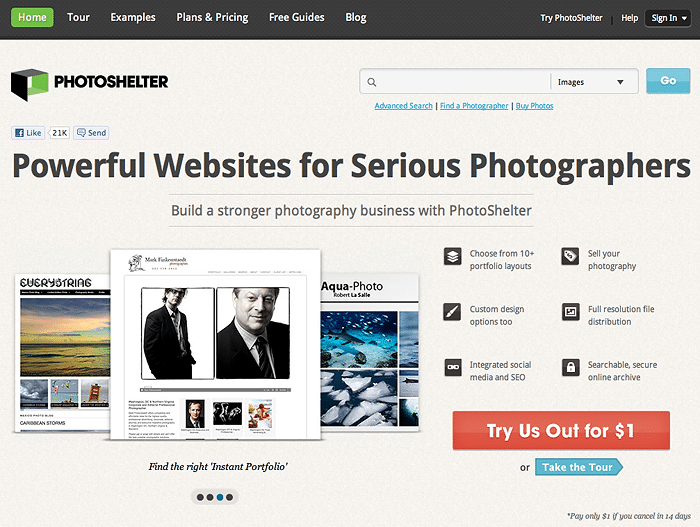
PhotoShelter Home Page

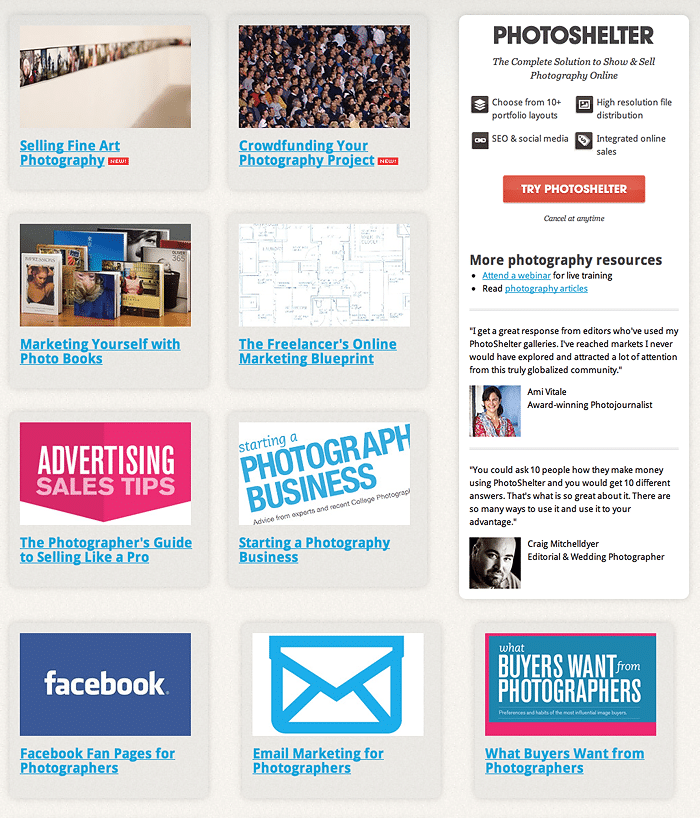
The complimentary guides help you grow your photography business:

PhotoShelter Free Guide Books

PhotoShelter is offering all Tiffinbox readers the following discount when you sign up for PhotoShelter before midnight on October 31st. When your readers sign up at www.photoshelter.com, they can enter the promotion code TIFFINBOX1110. The code entitles readers to the following discounts:

1) Annual Standard Account for $305.00/year – a $55 savings versus a monthly plan.
2) Annual Pro Account $529.00/year – a $70 savings versus a monthly plan

I am told that as of today, all new and existing standard accounts will receive 60 GB of secure storage (it used to be only 35gb), providing all standard accounts a safe space to store thousands of extra files. This increase comes at no additional cost.

Now that you have watched the video, can I ask a favor of you? Post a comment below & tell your friends. You have a variety of options below to spread the word. Thank you!

Filed Under: Business, Photography Tagged With: allen murabayashi, books, editorial photographer, editorial photographers, educational, guide books, Industry, photo, photo industry, photographer, Photography, photography industry, photoshelter, video interview, visual arts

How To Grow Your Photography Income?

April 22, 2011 by Rosh Sillars

Today's guest blog post is by Rosh Sillars, a veteran photographer with a photojournalism background specializing in people, food and interiors. He earned his BFA in photography at the College of Creative Studies (CCS), Detroit. Rosh offers his services to traditional media, new media and corporate clients. He owns the creative representation firm The Rosh Group, Inc. and teaches photography at two universities and serves as a marketing and social media consultant for Synectics media. Rosh is also the coauthor of the book Linked Photographers guide to marketing and social media.Please visit his new project The Driven Business.

Is it really possible to increase dramatically your photography income?

Yes.

Photography has changed over the last 10 years. Digital cameras have made everyone a photographer; many of the basic point-and-shoot jobs have been lost. But, that doesn’t mean the opportunities are gone.

The truth is, there are more opportunities than ever. The secret is to make your competition irrelevant.

How?

Great photography and your creative ideas are the answer. Photography can be combined with writing, video, Photoshop, and other digital technologies to help you create unique offerings.

You must find your niche.

If you don’t have a good website, you are not in business. Make sure it is easy to use and well-optimized (If you don't know what that means, find out.) to attract the people who are searching for what you do. Don’t take search engine optimization lightly. Make sure you have a blog that is updated weekly with great images and text.

Get out of your home, office, or studio. Business is about people and developing relationships. Go to at least one networking event a week. Make sure you have business cards, portfolio cards, and your freshest images ready to share on your smart phone or tablet. Always have a portfolio available. You never know when opportunity will come knocking.

Follow up using the social web. Keep your new connections alive through social media. Develop new relationships using Facebook, LinkedIn and Twitter. Don’t sell to your followers, educate them. Teach them how to find leads for your business and you return the favor with opportunities and valuable introductions.

Create partnerships with companies that focus on the same target market. Develop packages and market your products in cooperation.

Don’t just sell your product. Sell the experience of working with you. You can’t hide behind your products. Photographers today need to understand that if they are going to be successful they are part of the product. Customers, in many cases, are buying the photographer more than the photography.

Make it easy for someone to do business with you. It is important to protect your copyrights. If copyrights were not important, people wouldn’t be working so hard to take them from you. Keeping your copyrights will increase your income by providing more opportunities to resell your images at the appropriate time. But, the issue of copyright, business practices, and contracts doesn’t have to be an us versus them battle. Keep it simple.

Unless you photograph events, you should be using the per-image-pricing model. Your rates should be based on the value of each image, not your time. It is much easier for customers to justify a few hundred dollars per commercial image than $1,500 a day for the photographer's time. This model can easily be adjusted and applied to portraits and family photography. Each image has value; never give away a valuable CD full of images.

Don't forget to follow up.

Communicate regularly with past clients. They are the best referral sources you have, so make sure you collect e-mails and addresses. Don’t let them forget what a great experience they had working with you. Keep them up-to-date with you newest images. Give them the tools and the opportunity to refer you.

The best marketing campaign you can participate in is to regularly send hand-written thank-you notes. People like to be appreciated. Your appreciation is often rewarded with additional income.

What strategies will you employ to grow your photography income? What are you trying now? Willing to share so that can learn from each other? Post your thoughts below!

Filed Under: Business, Photography Tagged With: business cards, digital cameras, family photography, grow, how to grow, income, News, photographer, Photography, rosh sillars, search engine optimization, stock photography, teaching photography, visual arts, Wedding Photography

  • « Previous Page
  • 1
  • 2
  • 3
  • Next Page »

Subscribe To Tiffibox Treats!

Looking for a well-curated email newsletter that will leave you inspired and motivated about your photography business? Sign up below!

About Seshu

Seshu creates relaxed portraits of families and high school seniors in Avon, Connecticut. He also leads a successful headshot photography studio in Connecticut, helping professionals from a variety of disciplines project the very best versions of themselves. He created Tiffinbox as a way of inspiring photographers, to create better images and successful businesses. [Read More]

Email Templates For Headshot Photographers

Email Templates for Headshot Photographers

Recent Posts

  • How Capture One Changed My Event Photography
  • 10 Steps To Stay Positive In Times Of Great Stress
  • Why You Need To Read “Personal Branding For Photographers” Now
  • How To Master Your Website Content Step By Step?
  • Tony Taafe’s TNT Method For Headshot Photographers

Recent Comments

  • Stephen Davison on Are You A Business Owner Who Is Smart, But Stuck?
  • Ben A. on Don Giannatti Clinches The 8th Annual Tiffinbox Award
  • Dan on Don Giannatti Clinches The 8th Annual Tiffinbox Award
  • Donald Giannatti on Don Giannatti Clinches The 8th Annual Tiffinbox Award
  • Stephen Davison on G.E. Masana’s 6 Strategies For Wedding Photography Success
  • Naveen Kumar on Weddings In India Are More Than Being At The Right Place And At The Right Time
  • kartick on Weddings In India Are More Than Being At The Right Place And At The Right Time
  • Leonid Farbman on 6 Uncommon Trends To Grow Your Photography Business
  • Willow and Finch Wedding Photography on 11 Reception Tips To Help Your Wedding Photography
  • Web Designer Malaysia on How To Optimize Your Squarespace Website For Search Engines
  • Creastan on An Interview With Photojournalist G.M.B. Akash
  • Cindy Brown | Atlanta on An Open Letter To A Local Photographer

Become a Patron!

Copyright © 2026 · Tiffinbox · Site Design by Heather Mackan Creative · Built on Genesis