• Photography
  • Interviews
  • Business
  • Reviews

Tiffinbox

Inspiring Photographers

  • Home
  • About
  • Blog
  • Contact

Is Travel Photography Your Calling?

September 30, 2010 by Guest

This blog post is by Taiwain-based culture & travel photographer Craig Ferguson. You should follow him on Twitter.

One step forward and two steps back seems to be the pattern for a lot of photographers lately, particularly in the area of cultural travel photography. Falling editorial rates and increased competition make things tougher for all. For me personally, potentially beneficial long-term opportunities in the world of travel photography have recently opened up (one step forward) but at the cost of tougher times in the short-term (two steps back).

Jane Goodall

Pingxi Sky Lanterns

Thaipusam Festival, Batu Caves, Malaysia.

Choosing to forgo immediate gain in order to focus on the medium and longer term future isn't always easy. I recently sent off the last of a series of photographs to a publisher. It's unlikely that I'll see any licensing fees from this until 2011 at the earliest, even though putting it all together took the best part of the summer. Other than a couple of small and quick portrait shoots and a little bit of editorial travel photography for a regional magazine, the past couple of months have been lean. In the long run, it will be worth it but that doesn't necessarily make it easier to stomach now.

2010 was always going to be a year of major transition for me as I move my photography business away from the general and into a much more specialized direction. That transition is still ongoing and becomes frustrating at times, as the bulk of my time is now spent in front of a computer rather than behind a lens. This recent project was a vital step in that process but it was only a step. Completing one major task would, in a perfect world, be cause for celebration and signify time to take a break. In reality though, it's just another box to tick and task to cross off the list. Almost as soon as the DVD's full of photographs were dropped off at Fedex, it was back to the grindstone. Seeking out, researching and reaching out to new potential clients. A day full of crafting individualized, cold email introductions to a market that is not covered by Agency Access and the like. When that day is over, I end up with a stack of further possibilities for the future to investigate and approach. It's not a task for the impatient but at the same time, it's a task that must be done sooner rather than later.

So why do it? Why not take travel photos for fun and work in something else, something that provides a regular salary? I know plenty of photographers who have done just that. They work a full time, salaried job and save photography for the weekends. For some people, that's the best thing to do. Not for me however. Why? It's quite simple.

I am a photographer. More accurately, I am a cultural travel photographer. It's what I do. It's who I am. It gives me more than I could ever hope to repay. It's a passion. I have no choice. I can't not do it.

Short term pain may well be necessary for long term gain, and if that is the case, then so be it. Photography is a calling and when you've been called, you have no other options.

Pingxi Sky Lanterns

Shalun Beach, Taiwan

Cosplay, NTU, Taipei

2010 Taiwan Tattoo Convention

Filed Under: Commentary, Photography, Travel Tagged With: craig ferguson, cultural travel, Culture, News, photographer, Photography, Photography Business, travel photographer, travel photography

Small Business Marketing Requires Strong Sales Skills

September 27, 2010 by Guest

Sarah Petty, AvatarThis is a guest blog by Sarah Petty, a marketing whiz, who grew her photography studio to one of the most successful in the country in only five years. She eats, sleeps and breathes marketing. You can now learn from her and many other talented photographers at The Joy Of Marketing.

Clients have needs too.

Would you go into a hair salon and sit down in the chair and let them go to town? Of course you wouldn’t! The stylist typically asks you many questions. “Did you like what we did last time?,” “Do you like the color?,” “What length do you want?,” Do you want layers?” And what do you do? You tell him/her in as much detail as you can, exactly what you want! Sometimes, you even bring photographs or magazine clippings.

Sarah Petty On Sales and Marketing

So, now you are a photographer and you had someone call and want portraits of their children. They come in, you photograph them and then a few weeks later you are in the sales room fielding objections like crazy. “I was hoping for two vertical images,” “I don’t hang photographs on my walls,” “I really wanted the two kids together and you only photographed them separately.” All three of these objections could have been eliminated had you simply ASKED THE CLIENT WHAT THEY WANTED!

If you ask, people will tell you their needs.

One of the most important elements of having a successful sales session is to conduct a needs analysis in the very beginning. Like in the haircutting example, people want to tell you what they want because they want you to please them. They called you for a reason and it is your job to extract that reason from them.

So where do you start? Well, for me, I do everything in my power not to have a session without having an in-person consultation. That is where I can ask all of the right questions and discover what the client wants. Sometimes, the client doesn’t even know what they want until I help uncover it. Sometimes they come in wanting one thing and they leave with clarity after discovering that they really wanted something else. Many times, until they see it, they have no idea that they even want it. Whenever I get the objection “I really can’t come in because of my schedule or because I live far away,” I tell them that others have tried that but what they found was that they would come in on the day of their session, see something on the wall that they love yet they are dressed in the wrong clothing. That usually gets them in because they don’t want to miss out on an opportunity to have something they love!

For me, I would rather do fewer sessions where I can spend more time with my clients finding out what they want and then creating it for them. It makes the sales presentation go so smoothly and it helps increase sales averages. In turn, this means you work fewer hours and have an increased quality of life!

Because the sales process is SO incredibly important to running a successful small business, we have created an event at thejoyofmarketing.com called 10 10 10. This is a free, online event on October 10, 2010 from 10 am – 10 pm CST where you can learn from 10 industry leaders about how to increase your sales. The topics will start at the first phone call, through the in-person consultation, how to shoot to sell, managing the sales presentation and follow up after the sale to create loyalty and generate referrals. Here is a list of the speakers: Julia Woods, Jessica Claire, Joy Bianchi Brown and Jules Bianchi, Sandy Puc, Kia Bondurant, Scott and Adina Hayne, Tim and Beverly Walden, Kevin Kubota, Ron Nichols and Sarah Petty.

Register for the event.

Joy of Marketing: Sales on 10/10/10

We will also be trying to generate enough money to provide clean drinking water for 1010 people so be sure to check back at our thermometer and grab some free speaker resources while you are there!

The event is sponsored by White House Custom Colour and we will be giving away 10 FREE things from them so be sure to Tweet #101010 and read our daily blog!

Sarah is giving ONE recording of this event to a lucky Tiffinbox reader. This is what you need to do to win. 1) Tweet the following message: “I'll be listening to @SarahPetty and 9 other speakers for FREE on 10/10/10 about SELLING. http://tjom.cc/a/322 #Tiffinbox #101010” 2) Comment below and include your Twitter handle in your message. Tell me WHY and HOW the Salessummit on October 10, 2010 will help your business. If you post anonymously, you can't win. You need to be using a valid email address as well. And yes, there is an affiliate link associated with this giveaway.

Filed Under: Photo Biz Tagged With: needs analysis, objections, Photographers, sales, sales presentation, selling, Small business marketing

Flashing Is Not A Crime!

September 26, 2010 by Guest

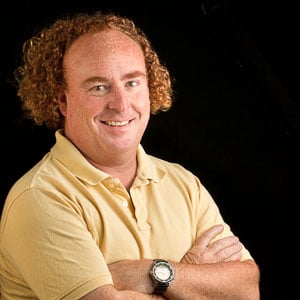
Syl Arena is known around the world as much for his colorful persona as he is for his colorful hair. He freely admits that he has long been obsessed with light.

For the past year, Syl has been writing and shooting the Speedliter's Handbook which will be published later this fall. His first book, LIDLIPS: Lessons I Didn't Learn In Photo School is a collection of micro-essays on the philosophy of photography.

Each spring and fall, Syl travels the country teaching Speedliting seminars and workshops. He is also the founder and director of the Paso Robles Workshops. You should follow him on Twitter especially because he is giving away one lucky Tiffinbox subscriber a seat at one of his lighting workshops. Scroll down to read details about that awesome opportunity.

In case we've not met before, you should know that I'm a flasher… a long-time flasher. And I'm not shy about it. I am not one of those only-flash-when-it's-dark flashers. I like to flash in broad daylight. In fact, I often flash when the sun is high overhead and everyone can see me. The fact that it's really bright outside has never stopped me from flashing.

Syl_Arena_Chelsea-outside-Pipers

If you're not a flasher, ask yourself “why?” Is it because you think that flashing is wrong, or because you're shy, or because no one has ever showed you how to flash, or because you tried flashing once and didn't like the experience?

“I don't flash because…”
I’m always amused (and often concerned) when a photographer says, blogs, or Tweets, “I don’t use flash because…

Syl_Arena_Gelled-Light-Thru-Window

“I'm a purist and only use available light.”
First, there is no such thing as pure photography. Every photograph is an abstraction. No photograph is a perfect record of the entire moment that passed in front of the photographer. The mere act of pointing the camera at one part of the scene and not another is artificial. The activation of the shutter at one instant over another is artificial. The conversion of light into long series of numbers or into layers of dye on a transparent substrate is artificial. The manipulation of digital files in a computer is artificial. The re-creation of the light on a computer screen or piece of paper is artificial. So, I see no reason to limit one's actions because of a philosophy that is as artificial as the actions it rails against.

“I don’t need flash because I can always turn the ISO up.”
Let's be honest about this one. Crappy light at ISO 12,600 is still crappy light. For a painter, having more colors does not automatically make one a better artist. It's knowing how to work the paint with a myriad of strokes that adds depth to the painter's ability to express herself. Photography is no different. A better digital sensor is no substitute for learning how to see and use light.

Syl_Arena_Buster_HSS

“I always shoot in bright light, so I don't need flash.”
If you think the main use of flash is to provide light when there is none, then you're missing out on half the world of flash. No camera today can record the full range of brights and darks that the human eye can see. Photographers often avoid shooting under full sun because details are often lost in the shadows. Even in full-auto mode, today's digital cameras and flashes are brilliant at adding just the right amount of fill light to reduce the contrast of the shadows. The brighter the ambient light, the greater the need is to add fill light to the shadows somehow.

Syl_Arena_Smashin_Pumpkins

“Flash limits the shutter speeds that I can use. A sync speed of 1/250″ is too slow.”
High-speed sync (aka: Auto-FP sync if you're a Nikonian) is a Speedlite-only mode that enables you to shoot at virtually any shutter speed. So, lighting your subject with a Speedlite means that you can use a fast shutter speed to freeze high-speed motion or to saturate the sky by underexposing the ambient. Contrary to the popular myths, you can't do HSS with studio flash. Nor is a neutral density filter a good substitute. For more details on HSS, check out these articles: Simple Truths About HSS, Dimming The Sun – Part 1, and Part 2.

“Flash is unreliable. It changes from frame to frame”
Even among shooters who like to flash, there is the concern that the automatic flash modes (E-TTL for Canonistas and I-TTL for Nikonians) are unreliable because the flash power changes. Well that's exactly what E-TTL / I-TTL is supposed to do: change the power. When your flash is close to your subject, then you need less light from it than you do when your flash is farther from your subject. While these auto-flash technologies are not perfect, they can be amazingly useful in situations, like weddings, where the subject-to-flash distance is always changing. The real root the problem is a lack of understanding by the photographer about how the camera meters for flash — which is especially tough at a wedding where in one frame the bride in her white gown is the dominant element and in the next frame the groom with his blackhole of a tux is the dominant element. Learn how your gear works and the consistency from frame to frame will improve dramatically.

Syl_Arena_Jaime-on-off-camera-flash

“Flash always looks bad.”
This should be re-phrased as “On-camera flash often looks bad.” It's not the flash, it's the location of the flash that kills the shot. Anytime the dominant source of light goes right down the axis of the lens, then your subject will be lit equally on both sides. Without any shadows, there is no depth to the image — no shape to your subject. You don't need flash to flatten a shot; stand with the sun straight behind you and the same flat light will happen. When it comes to crafting great light with flash, the position of the flash and how you modify the flash is key. So, a bare Speedlite locked in your camera's hotshoe is a tough way to craft good light.

Syl_Arena_Mallory_gelled-not

“Flash looks artificial.”
Once you move beyond the issues with on-camera flash, another huge complaint against the look of flash is that it does not blend with ambient light. The color temperature of flash is about the same as daylight at noon. If you light your subject with flash indoors under tungsten light, the ambient-lit background will appear very orange or your subject will appear very cool. Likewise, if you are using flash to fill shadows at sunset, the fill light will be very cool and unnatural. In both of the situations, the use of a CTO gel on the flash will change the color temperature of the flash so that it blends into the ambient more naturally.

So, while I'm proud to be a flasher, I believe that flash is just another tool in my toolbox. My photos go out into the world without me. What matters to the viewer is the light that was captured within the frame — not how it got there.

Other Articles I've Written About Flashing (Particularly Small Flash)

15 Insights For A New Speedliter

It's Where You Put The One Speedlite You Have That Matters

Deciding How To Start With Off-Camera Speedliting

Consider ZOOM To Be A Speedlite Modifier

Deciding Between E-TTL and Manual

Shadowing and Other Revolutionary Ideas

Twitter Contest: Learn To Flash ByTweeting To Win A Seat

PRIZE

Win a seat at any of my upcoming two-day Speedliter’s Intensives (value $200)

• Seattle, Oct. 2/3
• Boston, Oct. 30/31
• Austin, Nov. 6/7
• San Francisco, Dec 4/5

RULES

1. Follow @Syl_Arena on Twitter.

2. Tweet this exactly:  Hey @Syl_Arena I want to learn to flash at the Speedliter’s Intensive http://bit.ly/coPPUC. Contest on Tiffinbox.org > http://bit.ly/dsGLsP

3. Contest ends at 1:00pm PDT, Thursday, September 30, 2010.

4. One winner will be selected at random by Tweetaways.com and announced via my Twitter account Thursday afternoon.

5. Multiple Tweets will disqualify you from the contest.

6. The prize is the ticket to the Speedliter's Intensive. Transportation, lodging, meals, that lens you've always wanted, etc. are on your own nickel.

7. You can give the registration code to a friend if you want to attend the Speedliter's Intensive yourself.

Filed Under: Photo Technology, Photography, Workshops Tagged With: ambient lighting, camera flashes, canon eos flash system, digital cameras, Flash, improve, Lighting, nikon sb900, off-camera flash, photographic lighting, Photography, shutter, speedlite 430ex, speedlite 580ex ii, studio flash, syl, use flash

Introducing ProofPress, A WordPress Photo Proofing Cart

September 24, 2010 by Guest

Iurie VlasovThis is a guest post by Iurie Vlasov, a Marketing professional at Vitriol Consult LLC specializing in SEO and Innovative web-marketing.

On August 23, the world of photographers was touched by a piece of news that created quite some buzz – a totally new and innovative proofing system was to be released in October – ProofPress. You may be wondering what is the point of another photo cart when there is a myriad of different other products for online proofing available out there. Read on and you will understand!

“Design is not just what it looks like and feels like. Design is how it works.” ~ Steve Jobs

The creators of ProofPress, two young dashing individuals from Florida with an extensive experience in web-development and who specialized for years in e-commerce systems have come with an idea to create something different for the photographer. There is nothing new when it comes to photo proofing systems, and most of them already out there are very similar in functionality, but different in quality and price. ProofPress on the other hand was created with the end user in mind. But there are two end-users to a photo cart system you will say. Indeed, there is the photographer on one end who has the task of managing the system and the customer on the other end. Many photographers today are just too busy to deal with all the “advanced” functionality their current photo proofing cart provides, and may give up on using one for the sake of saving time and use the old-school “on-the-phone” method to get their print orders from clients. So much for saving time.

Now back to those two guys in Florida. What they did is to have an idea that was revolutionary. Being developers and not photographers they got in touch with a few portrait and wedding photographers and spent time talking and understanding what their needs were and what is that they miss most in their current systems. After many hours and tens of pages of sketches and charts and mockups etc. they finally decided to give the modern photographer a system that would work directly out of their WordPress blogs. Not bad, because 85% of the photographers out there use WordPress for their photo blogs, because it's reliable, because it's easy to use, because it's safe, because it's constantly developing and updating, and yes because – Google loves WordPress.

Well, here we go, why not have a proofing system that will work as a plugin from your WordPress administration back end. No need to remember different passwords for different admin accounts, no need to have a multitude of admin urls to remember, but instead just one plain WordPress backend. And that is what ProofPress does, installs as a plugin in your WordPress and opens a whole new system in there. The guys jokingly call it, “a system inside a system.” But be aware that you need to have a self hosted blog on an actual domain that belongs to you and NOT one of those “johndoe.wordpress.com” blogs.

That is all good you will say, but what makes it so special? My answer is simple here, it will indeed offer what most of the systems out there do right now but will also be packed with other features:

a) Full front end customization, you as a photographer will be able to customize your proofing site by editing a multitude of options, like changing your logo, background, fonts, colors you name it… and the system will also be compatible with custom created templates. Now you will be able to apply your branding and design and have a unique photo cart.

b) Per client management. No more gallery grids. Each of your customers will be provided with his own client site where he will see only his galleries and information that you provide, including a text page which you can edit the way you want by adding a model release form, or maybe some what-to-wear information

c) A revolutionized way of managing collections (packages). ProofPress will offer the most flexible way of creating a collection. Managing print credit, discounts etc has never been easier and you know what, you can even let your clients create their own custom collections.

d) You will also be able to manage your financials and send invoices directly from your administration panel which gives you some basic accounting features and you will always know the state of your expenses and profits. A great feature for beginners who don't really need a bookkeeping system like Freshbooks etc.

These are some of the many features that ProofPress will offer. Stay tuned for the official press release the guys will publish in the beginning of October. Meanwhile you can contact them via email at info@proof-press.com and sign-up for a 30% discount at ProofPress.

The Front End:

ProofPress Front End Gallery

ProofPress Front End Options

The Back End:

ProofPress Back End Dashboard

ProofPress Back End Single Client

Win on 10/10/10! ProofPress is generously offering ONE free license to a Tiffinbox subscriber. Here is how you may be able to win this WordPress plugin: First, Tweet the following: “I just learned about a very cool WordPress plugin called @ProofPress on @PicSeshu's Tiffinbox. #ProofPress Please RT!” Second, comment below and tell me WHY you deserve to win. Don't forget to mention your Twitter handle so that I can make sure you have done both. I need to see a minimum of 50 real, honest, entries before I can give this away on October 10, 2010. So whatchawaitinfor?

WINNER ANNOUNCED – Kate McKenna – from Medford, MA has won ONE license of ProofPress, the forthcoming WordPress Plugin. Follow her on Twitter. Congratulations Kate!

Filed Under: Photo Biz, Web/Tech, Weblogs Tagged With: blog software, cart, content management systems, photo, photo cart, photo proof, photographer, Photographers, php programming language, PickPic, plugin, professional photographers, proof test, proofing, proofing system, RedCart, system, wordpress

How To Use Kickstarter To Fund Your Photo Projects?

September 13, 2010 by Guest

Robb Hill, AvatarThis guest post is by Robb Hill. Read his first post on Tiffinbox: “Homelands: A Documentary Project in Southern Indiana.” He is a Maryland-based documentary photographer. Connect with him on Twitter.

A few weeks ago I was here writing about a project I have on Kickstarter.com. Seshu and I have known each other since college and as a long time follower of his, this, blog I thought posting on it would be a good way to get the word out about my project. Now that the fund raising window has closed on my Kickstarter project (I was able to raise more than my goal!!) we thought it a good idea to write about my experience, hopefully for the benefit for all.

I had never heard of Kickstarter.com until a friend and fellow photographer, Nelson Chan, told me about it a few months ago. Nelson has watched me struggle with HomeLands over the years and has been supportive. He thought Kickstarter and my project would be good fit.

The first photos I took for HomeLands was back in March of 2005. When I began I lived in Chicago and my business was doing well. Which meant I had the time and money to get down to Southern Indiana to work. Now I live in Sliver Spring, Maryland and it has been a struggle the last two years to keep my head above water. As much as I wanted to return to Indiana to photograph, my priority had to be financial stability.

Since starting HomeLands I have applied to 15 different grants and received none. For a previous project I won three grants and felt confident about my understanding of the grant writing/application process. Now, for whatever reason, I was getting no traction in the grant world. Trying to secure funding via Kickstarter seemed like a good idea.

After reading all the FAQ and application pages I submitted a proposal. The first piece of advice I have is edit, edit, edit. The initial proposal to Kickstarter is only 1500 characters. Yes, that’s characters not words. It is very important to write as concisely as possible. I don’t think Kickstarter is looking for a certain kind of project, if you look around on the website you’ll see a wide range of projects. What I think they are looking for is clarity of thought in the proposal and uniqueness of project. But I don’t know for sure.

If you are accepted – I am curious to see what they turn down – you next have to create your Kickstarter page. This is a longer written proposal, video, and whatever else you can get on a web page. Here is where you have to start selling your project.

For my video I decided to use still images, music, and voice-over. I did not want to be on camera because, although I was looking for support, I wanted people viewing the video to think of the project not me. For me this is key. Get people interested in what you’re doing not yourself. This may be obvious but the tone and feel the video should match the tone and feel of your project.

For the written portion Kickstarter recommends not only describing your project but explaining how you plain to spend the money you raise. I didn’t publish a specific budget but did generally explain how I plain to use the money. It could be helpful to be very specific about your expenses but for my project I didn’t see it as necessary.

Even if you don’t publish a budget it’s very important to create one because it’s completely up to you to set the dollar amount you want to raise. I set my goal at $7,000, an ambitious amount but not overly so. I examined budgets from various grants proposals I’d written and calculated a comfortable amount of money that would allow me to work unrestricted. By unrestricted I mean I will be able to cover materials like, film (yes, I’m shooting my project on film), processing (doing it myself), scanning, flights, etc. as well as meet my financial obligations at home while I’m away photographing. The only real advice I have about the budget is; be thorough and honest about your costs. And don’t be afraid of the total.

Look around on Kickstarter and you’ll see people who successfully raised far more and far less money than I did. Kickstarter is very up front about the fact they are an all or nothing proposition. This means if you don’t meet your dollar goal, you don’t get any of it. Which I think makes sense because it forces two things to happen. The first is, as I alluded to above, artists are forced to really think about what they need financially to do their project. The second is, it makes the larger public aware of how expensive the creation of art can be.

There is no cost to post your project on Kickstarter. But, and Kickstarter is very upfront about this, they take 5% of your goal as their fee, but only if you reach your goal. This is completely reasonable. Also be aware Kickstarter uses Amazon Payments as their money handler and Amazon takes 4.5% as their fee. This is also clearly stated but was a little harder to find. If you need a very specific amount for things like, studio rental, printing, etc., make sure you factor in the 10% you’ll loose in fees.

Then you need to set how long the pledge window will be open. The FAQ’s have much to say about this. But it boils down to this; the maximum length of time to pledge to a project is 90 days and longer isn’t necessarily better. I set my window at 45 days.

Once I had my project page ready I nervously hit the Launch Project button.

After the Launch Project button is hit you are far from done. Now it’s very important to do the one thing almost every artist I know is horrible at, selling yourself. While people do search Kickstarter for projects that interest them, you cannot rely on Kickstarter alone to raise your funds. I can’t stress this enough, it’s very very very very very very very important for you to get the word out about your project.

Immediately after hitting the launch button I posted a link on Facebook and sent emails to damn near everyone in my contact list. In the first week a good number of people, mostly family and friends, pledged to my project. Also, many people reposted my link on their Facebook page, some I asked, and some just did.

As the dollar amount in the pledged column increased that first week I was pretty happy about how the fund raising was going. When the first complete stranger pledged to my project I suddenly felt the power of Kickstarter. Here was someone I don’t know who pledged $250. I was very touched. With this person’s pledge I felt I could reach my goal.

Then it was time to get the word out even farther. I asked Seshu if I could post about it on his blog. I asked an old high school friend who is a booster for our hometown to talk up my project on his website. I have close connections to the digital media staff at NPR and they were kind enough to feature my project on the NPR Picture Show blog, with links to my site and Kickstarter page.

With all that attention I didn’t see the amount of pledges I thought I would. Because of my personal real estate situation I am very aware of how bad the economy is. But bad economy or no, I had to keep putting the word out. I then started trying to get posted on other photography oriented websites. Most sites I contacted posted a link. But I still wasn’t seeing much of an increase in pledges. This was partly because in today’s world asking photographers for money is like expecting Bob Cratchit to come up with the Christmas goose by himself. It’s not that we aren’t a supportive, generous bunch; it’s just that the industry as a whole is in a tough way.

As the days passed there was little movement towards my goal. With two weeks left I was less than half way to my goal. I talked to my sister, a professional grant writer, about things I could do. Her advice to me was very simple. “The only way to get people to give you money is to ask.”

With just over a week left I started a direct email campaign. I went through my Facebook friends and wrote a personal email to everyone I thought would donate to my project. Like everyone, I have Facebook friends who I’ve not actually spoken with in twenty years. But I really wanted to make my goal and I didn’t let that stop me from asking for donations.

It worked. Pledges started coming in immediately. Also, something of the ebay effect happened, meaning strangers also pledged to my project in the last few days. With 72 hours left I had done all that I could think of, the only thing to do now was wait and see what happened.

With 48 hours left checked the total before going to bed and notice it had gone down. Someone, who I don’t know, reduced his pledge from $250 to $5. Kickstarter allows people to reduce or cancel their pledge. Here is what they’ve written about it on the website, “By pledging, you are committing to supporting that person’s project; canceling that commitment is discouraged.” But it does happen and I went to bed crestfallen.

For some reason at 4:30 the next morning I was awake. I read for a little while and decided to check the status of my project. It was $7,131 dollars. I rolled over and told my wife the good news. But knowing that people could reduce or cancel their pledges I didn’t allow myself to celebrate until Kickstarter told me it was over.

In the end I had 110 backers, 24 of whom are total strangers to me. Two weeks earlier I felt there was no way I was going to reach my goal. But by taking the bull by the horns and asking people to help me, I raised $7,326.

I was happier than I’ve been in a long time.

Kickstarter encourages you update backers about your project. Which can be done from you project page. Here is the last paragraph of a thank you letter I posted on my blog:

Even in good economic times it’s hard for artists to find the money that allows us to create. Watching the number in the pledged column on my Kickstarter page grow was exciting, gratifying, and very moving. I am incredibly thankful and honored that so many of you out there respect me and or my work enough to donate to my project. Last Sunday when the pledge window closed with my goal being exceeded I was happy beyond measure. I feel a responsibility that goes beyond making good work. I feel responsible to the 110 of you who helped me be the artist I want to be. Thank you for giving 105%.

Are you inspired to use services like Kickstarter? Comment below to tell us about your efforts to raise money for your photography project.

Filed Under: Contests & Grants, Photography Tagged With: documentary photographers, documentary photography, fund, fund raising, funding, grant writing, how to use, human interest, kickstarter, projects, raising funds, secure funding, write proposal

  • « Previous Page
  • 1
  • …
  • 3
  • 4
  • 5
  • 6
  • 7
  • …
  • 12
  • Next Page »

Subscribe To Tiffibox Treats!

Looking for a well-curated email newsletter that will leave you inspired and motivated about your photography business? Sign up below!

About Seshu

Seshu creates relaxed portraits of families and high school seniors in Avon, Connecticut. He also leads a successful headshot photography studio in Connecticut, helping professionals from a variety of disciplines project the very best versions of themselves. He created Tiffinbox as a way of inspiring photographers, to create better images and successful businesses. [Read More]

Email Templates For Headshot Photographers

Email Templates for Headshot Photographers

Recent Posts

  • How Capture One Changed My Event Photography
  • 10 Steps To Stay Positive In Times Of Great Stress
  • Why You Need To Read “Personal Branding For Photographers” Now
  • How To Master Your Website Content Step By Step?
  • Tony Taafe’s TNT Method For Headshot Photographers

Recent Comments

  • Stephen Davison on Are You A Business Owner Who Is Smart, But Stuck?
  • Ben A. on Don Giannatti Clinches The 8th Annual Tiffinbox Award
  • Dan on Don Giannatti Clinches The 8th Annual Tiffinbox Award
  • Donald Giannatti on Don Giannatti Clinches The 8th Annual Tiffinbox Award
  • Stephen Davison on G.E. Masana’s 6 Strategies For Wedding Photography Success
  • Naveen Kumar on Weddings In India Are More Than Being At The Right Place And At The Right Time
  • kartick on Weddings In India Are More Than Being At The Right Place And At The Right Time
  • Leonid Farbman on 6 Uncommon Trends To Grow Your Photography Business
  • Willow and Finch Wedding Photography on 11 Reception Tips To Help Your Wedding Photography
  • Web Designer Malaysia on How To Optimize Your Squarespace Website For Search Engines
  • Creastan on An Interview With Photojournalist G.M.B. Akash
  • Cindy Brown | Atlanta on An Open Letter To A Local Photographer

Become a Patron!

Copyright © 2026 · Tiffinbox · Site Design by Heather Mackan Creative · Built on Genesis