• Photography
  • Interviews
  • Business
  • Reviews

Tiffinbox

Inspiring Photographers

  • Home
  • About
  • Blog
  • Contact

What is Bounce Rate, And Should Photographers Care?

November 12, 2013 by Zach Prez

If you have been using Google Analytics for any length of time to measure your photography website’s performance, then first of all, congratulations. Google Analytics is a free metrics tool and the industry standard for measuring how visitors use your website including how many people come, how often, and to what pages. You may have noticed a data point called bounce rate, and gently ignored it (no offense bounce rate).
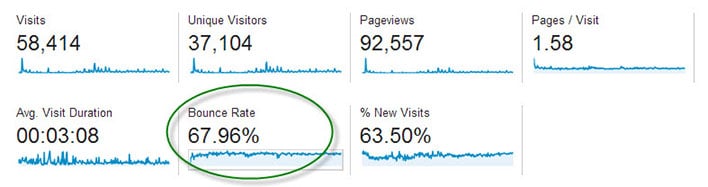
Bounce Rate

The main dashboard of Google Analytics shows the average bounce rate for your whole site.

Bounce Rate is the percentage of single-page visits (i.e. visits in which the person left your site from the entrance page without interacting with the page).

Should Bounce Rate Be High or Low?

Bounce rate should be as low as possible, indicating potential customers are viewing multiple pages of your site and therefore more likely to hire you.

It’s hard to quantify what is a high bounce rate since that depends on many factors including the type of page, how users came to that page, and what is on the page. If you’re only sharing your page with family and friends, you may have a low 25% bounce rate but are not really growing your business. You may have a high 90% bounce rate, but are getting nationwide press and converting a lot of sales from those visitors. Thus, it boils down to relative bounce rate. How does the bounce rate of your homepage compare to that of your pricing page or an individual blog post? What actions can you take to improve one page to increase the click through that your other pages are getting?

Bounce Rate for Individual Pages

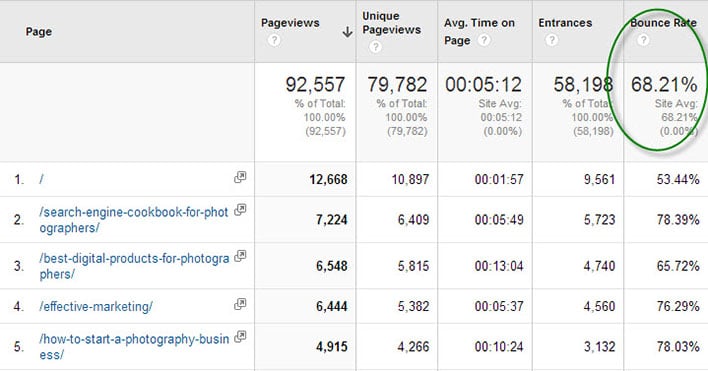
Google Analytics displays bounce rate data for every page of your site. Find this report in the left navigation under Behavior > Site Content > All Pages.
Bounce Rate Pages

The Pages report in Google Analytics shows bounce rate data.

In the above report for my business articles blog we see that the homepage has a 53.44% bounce rate. That means over half of my audience reaches my homepage but does not click on an article. This bounce rate is lower that the site average of 68.21% bounce.

Item #2 in the above list is a product page and has a higher bounce rate than Item #3, an article containing lots of links. I may conclude that adding more links to my product page can help retain customers.

What Influences Bounce Rate?

Traffic comes to your website in three ways:

• Direct – 99% of direct traffic is from email, 1% is from bookmarks
• Referral – links from other sites on the Internet including social media
• Search Engines

Each of these ways can influence how visitors use your site, and if they will view multiple pages. If you have a large percentage of traffic from an email newsletter, then your bounce rate may be high. This is because people click on a link in your email, they see what they expected (like a recent photo session), then leave the page without clicking anything. This is not necessarily a bad thing.

Sites with a lot of traffic from Pinterest may have a high bounce rate since the user is simply browsing (perhaps for newborn poses) and might not even be in your target market or geographic location. I would not expect those people to click around to other pages of your site. Sites with a lot of blog posts ranking in search engines, the average visitor may check out the article they were searching for (like backyard wedding photo ideas) and then leave right away. Again, your webpage served its purpose.

How to Reduce Bounce Rate

Here’s the key to getting people to stick around your website, and click across multiple pages without bouncing off your site:

Give visitors additional links to click on every webpage

Here’s a little experiment to help you figure out what links to place across your site. Write down the top 3 pages of your site you want users to visit most. It may be a blog post you wrote exceptionally well, perhaps an important photo gallery that showcases your work wonderfully, and certainly it will be your contact and/or pricing page.

Now pick a random page from your website. How easy is it for users to get from that random page to one of your top 3 pages? Place links to these hot spots from the top, middle and bottom of the page.

Homepage – Many photography homepages have almost no text, and a single link to a gallery site or a blog site. That simply dumps users into a bunch of content, often times your most recent work and not necessarily your best work. Instead, display individual links to your most important blog posts right on the homepage. With this approach, users have a clear path to the best pages and are more likely to click.

Blog Post – Visitors find blog posts through many sources, especially search engines and social media. Since these potential clients didn’t navigate through the homepage, photographers need to reiterate important information like contact information and links to relevant pages. Orchard Cove Photography hired me to create a SEO-friendly blog post and you’ll see how I included tons of links at the end (and at the beginning) in order to keep interested customers from bouncing.
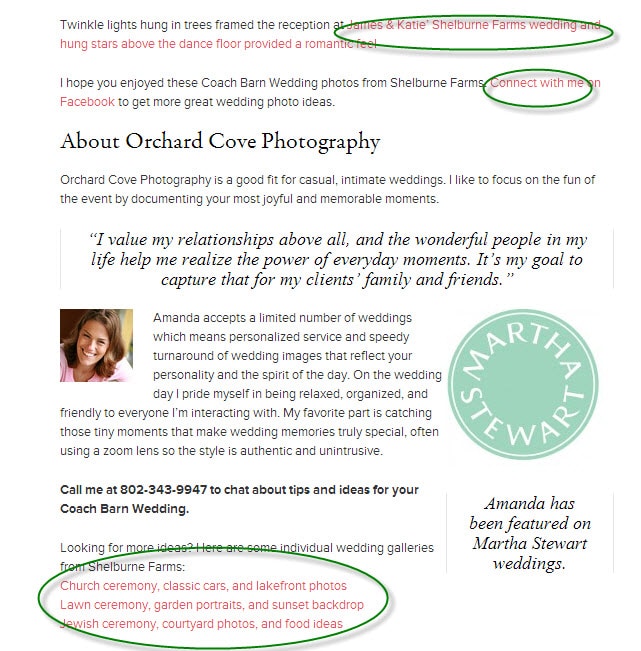
Sample Post

Does Bounce Rate Matter?

The very important question that comes out of all this is whether or not photographers should measure, monitor, and care about reducing bounce rate. I don’t ever look at my bounce rate.

The goal is to define clear customer paths from each and every page of your site. Start with your five top traffic pages. Pretend each page is the starting point for your potential customer because they came from Google or Facebook. Figure out what you want them to do next and make that a clear navigation point on the page. If you want them to hire you then add a big graphic that says “Book a Session Now” and link it to your contact page.

After making changes to your five top traffic pages, wait a week and see if the bounce rate declined. I hope you will be pleasantly surprised.


Filed Under: Home Middle Right, Photography, Web/Tech Tagged With: bounce rate, Business, google, google analytics, photography websites, search engine optimization, seo, web visitors

How The Affordable Care Act Is Changing Things For Freelance Photographers

November 11, 2013 by Michael Cahill

Being a freelance photographer means always staying on top of things. You have to get to certain places at certain times, take care of your equipment and make sure your software is up to date among other things. But, have you been staying on top of your health insurance options? It is no secret that freelancers end up paying more money than a lot of other people on this front.

Thankfully, it looks like things might be turning around because of the Affordable Care Act, or ACA. If you haven't heard how this legislation is going to help you as a freelancer, you are missing out. A number of the plan's refinements to the healthcare system are great news for freelancers such as yourself. If you want to learn more about these changes and how you can get an affordable plan, read on.

Affordable Care Act

Better Benefits, Better Plans

One of the most clear cut ways that the ACA is improving healthcare is through its mandated essential health benefits. These are ten categories of medical benefits that every plan will have to offer under the law. Even if you think that a cheap plan is your only option, the essential health benefits might not make it so bad. If you want to take a peek at what they are, visit this list at Healthcare.gov‘s glossary. Now, you have to be aware that these are categories of benefits, not exact medical services. What I mean by this is that the law does not actually list what medical services fall into these categories. The individual states are responsible for figuring those out.

A Range Of Coverage

Now that you know what the plans offer, it is time to look at the plans themselves. Most of the states have allowed their health insurance exchanges to be run by the federal government. The federal health insurance exchange can be found at Healthcare.gov. To see if your state runs its own exchange, take a look at the Kaiser Family Foundation‘s list here.

The exchanges have plans broken up into four levels known as Bronze, Silver, Gold and Platinum. Bronze plans have the lowest premium, but also pay for the lowest percentage of medical costs. The Platinum plans fill in the other end of the spectrum, giving more coverage of costs for a higher premium. The Gold and Silver plans help even things out by giving you some middle ground options.

What's The Deal With Tax Subsidies?

As long as you make between 100 percent and 400 percent of the Federal Poverty Line, you stand to receive a potentially hefty federal health insurance subsidy on your exchange plan. The actual amount of the subsidy varies widely across that range of FPL and is calculated based on a number of different factors. It can't be said for sure exactly how much money you’ll save on your plan's premium, but the Kaiser Family Foundation‘s subsidy calculator can help you get a number to help with your planning.

Learn More And Make The Right Choice

Before you jump into things and make a purchase, you have to take a step back. Don't go and buy an actual plan until you know how much money you have spent in the past on medical bills and health insurance. This way, you can actually have a reference point when you are comparing costs. Next, make sure to ask yourself what exactly you need from your plan. Conditions that you and your family have, as well as your overall health, should be taken into account.

As open enrollment on the marketplace will continue for a while (until March 2014), it might be best to wait and do some more research on the ACA. The more information you have on this complex law, the easier it will be to choose a plan. You may want to think about talking to a licensed insurance broker. They know this thing better than just about anyone. When you finally think you have a good handle on the ACA, make your choice.

Michael Cahill is the editor of the Vista Health Solutions blog. He writes about the health care system, health insurance industry and the Affordable Care Act. Follow him on Twitter at @VistaHealthMike

So that Tiffinbox does provide its audience at least two opposing viewpoints of this rather contentious topic, I'm inviting one of you to step in and guest blog an article about the Affordable Care Act's weaknesses. If you are interested, pitch me the post using the guest blogging form.

Filed Under: Home Middle Right, Photography Business Tagged With: Affordable Care, Freelance Photographers, Health Insurance, Health Insurance Exchange

On Being Present For Your Photography Clients

November 7, 2013 by Spencer Lum

Weddings are chaos.

No one listens to you. No one does what you want. Everyone will be in the wrong place at the wrong time, they won't stand the right way, they won't look the right way, they'll care too much or too little, and anytime you're about to get the perfect shot with the perfect mood, someone will step right into your frame and ruin it.

But if you believe in the power of a gaze, a glance, a curve of the neck, or a slope of a back – if you believe in warm bodies and beating hearts and living, breathing people, then know that this chaos is not only beyond our control, but it's really the best thing around, because it's the direct and inseparable result of people who are fully present.

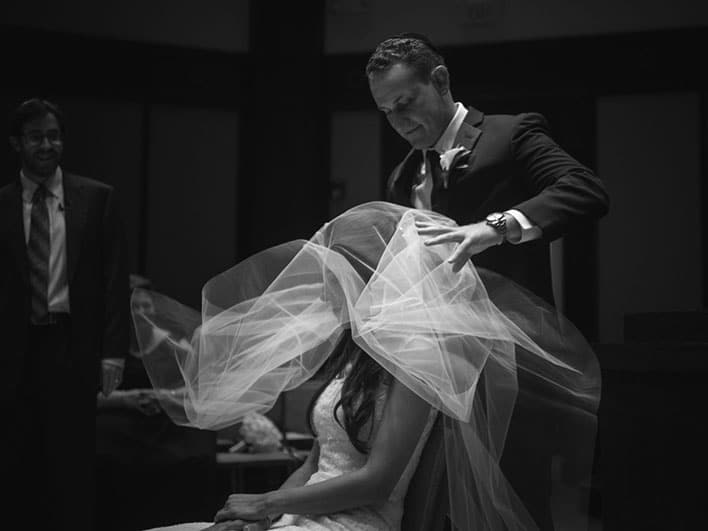
On Being Present For Your Photography Clients - Wedding Photography By Spencer Lum

And if you want images that live and breathe with people so full of life, they burst through the frame, here's the real secret: It's really about trust.

Not just your client's trust in you, though. Your trust in them. In yourself. In letting go and letting things happen and finding the something in the nothing and the perfection in the flaws. You have to accept what's in front of your eyes, because that's where you'll find the magic. The chaos is the surprise. The unexpected is the revelation. Presence is not the perfect look we've seen a thousand times before. It's the single expression we'll never see again.

Photographically, presence is as much a creation as it is found. In the simplest terms, it's matching. When the expression of the subject pairs effectively with the elements in the frame, our minds will fill in the gaps and flood the picture with meaning. It's not just about a good expression or a bad expression. It's about the right expression for the right circumstance. It's the effect of the entire picture. Sure, a lot photos capture the powerful and the evocative. But even more are about taking the ordinary and showing it in just the right way to make it resonate. Life, even at it's plainest, really is beautiful.

So if presence is more than some certain expression and any look can potentially be the look, then presence is life off script. Both for your subjects and for you, which takes us back to trust.

People say you need your clients to trust you. And you do need them to get along and go along. But that's only half of it. They may trust you enough to do the right thing. But do you trust them enough to go ahead and do it? You have to build the space to stumble. Even to fall. Because as much as we are building trust for our clients, we need to instill it in ourselves. We have to know we can take the chances living off script necessitates.

All too often, we undermine our own endeavors. From the moment we open our doors, launch our site, and start cashing the checks, we fall prey to a cycle of need. We sell from the mind and not from the heart. We show what we think will sell, and we say what we think people want to hear. Every time we do this, we build up the walls of doubt, severing our vision from the product we create, until the risk to take the road less traveled becomes too large a leap to make.

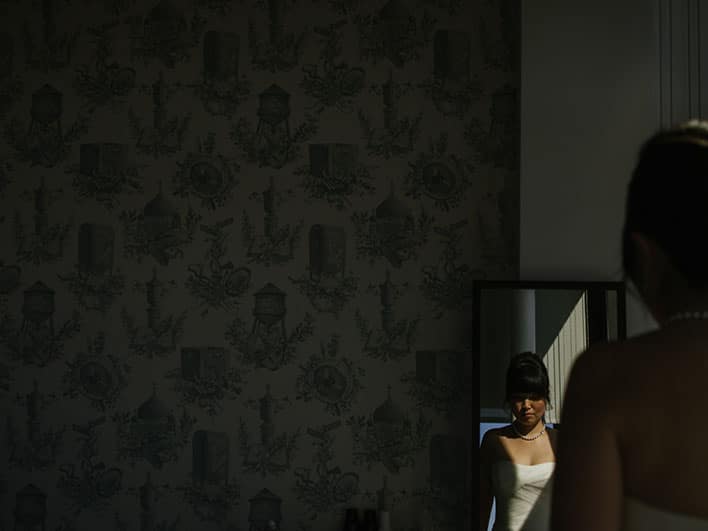
On Being Present For Your Photography Clients - Wedding Photography By Spencer Lum

Trust is necessary from the very start. You have to open yourself up and invite people into your world. You have to let them see their own potential and your own dreams. You have to be willing to accept the rejection, because as important as it is to fulfill the needs of others and get the sale, it is no less vital that we do it the best way we know how.

Here are nine ways to create images that are full of life:

1. Show What You Want To Shoot

Nothing makes a shot more lifeless than shooting moments you don't care about in a way that doesn't matter to you. If there's something you want to do, you're not going to get people to hire you to do it if you don't show it. And while you're at it, share a little bit about who you are and what you believe. Sure, go ahead and explain yourself in a way your client appreciates, but make sure it's something you can get behind.

2. Let People Know What You Need

No one wants to spend their days trying to figure out what you're after. In fact, they won't. They'll just get lost in the shuffle. It's up to you to make it work. If you don't want everyone mugging for the camera, tell your couples how you work. If you want people to ignore you, let them know. When you let clients understand what you need to get what they want, they'll be happy to spread the word.

3. If They're OK, You're OK

Never make people self-aware. Never make them self-conscious. Make it clear you like your clients for who they are, being the way they are. There's no such thing as wrong. Great images, after all, reflect the true character of the subject, and that doesn't happen if we try to squeeze them into a mold.

4. Create A Good Schedule

There is no way possible to get involved too early in the logistics. Bad logistics kill wedding days. If portraits need 3 hours, start talking about it early. If you want someone in the dress by a certain time or to wait to get into the dress until a certain time, let it be known. The better the day stays on track, the less time people will spend thinking about how to catch up and the more they'll be in the moment.

5. Troubleshoot Now

Write out every problem you run into and every reason you don't get what you want. Now write out a way to solve each one. Go try them. Some problems can't be fixed, but many can. You won't lose anything for trying, but you might gain everything. Great people make things work. If you don't take shot lists, saying it sounds a whole lot better before someone hands you one. If you want a groom to act naturally with the bride, keep the heckling groomsmen away. If you want to keep people from hugging your couple all through your photo shoot, keep them away from the crowd, and if you have to snake through a crowd, let your couple know to get through quickly. Keep working on the best solutions, keep thinking of the best phrases to use, and keep building your playbook.

6. Relaxed Is Good For Posing

There's a reason fashion photographers say “beautiful” all of the time. Have you ever stood in front of a camera? Time feels like molasses, your hands feel like unnecessary appendages, you keep wondering how you look, and moving naturally becomes the most self-conscious act in the world. But there's an easy way out. Talk. Stay as connected with your couples as you want them to be with you or each other. Need to buy some time, while you adjust your camera? Ask them some questions. Need them to look at you? Share a thought. Need them calm? Have them think about something. And let them know they're doing a good job. That's doubly true when they really are.

7. Find Out Who They Are And What They Need

They say better forgiveness than permission, but that doesn't mean you don't want to see what your couples need. Letting people know they're cared for and learning how they see the world lets you think about an approach you're comfortable with before you're put on the spot. Learning about your client doesn't make them your creative director. It means you can trust them, because you know you're on the same page, and they can trust you, because they know you care. Remember, people gravitate towards what they already believe. If someone has doubts, they'll see everything that goes wrong. That can spiral out of control fast. If they feel secure, they'll see everything that's right, and that will keep them relaxed and happy.

8. Look Broadly

The body is fantastically expressive. It takes the smallest of things to clue people in as to what's going on. It can be a dangling arm, crossed legs, a tilted head, or a hand on a face. A small gesture can say it all, so don't just look at faces. Watch for the way people move. Watch for any clue that lets you know how someone feels.

9. Watch For The Light And Mood

Light is full of mood. Think moody. Think heavy. Think dreamy. Think weightless. Each one is associated with a certain look. Very often, you only need a hint of expression if you have a lot of feel. A viewer doesn't see a picture like a judge at the Olympics. It's not a breakdown of each individual element to see how they stack up. It's the total effect that counts, and the right atmosphere can carry the day. With that said, it's also very possible to drown real emotion in a sea of visuals. Always be aware as to how powerful and engaging the expressions are. Sometimes, simple and tight can say it all. Other times, you need more.

On Being Present For Your Photography Clients - Wedding Photography By Spencer Lum

On Being Present For Your Photography Clients - Wedding Photography By Spencer Lum

Filed Under: Business, Commentary, Home Middle Right, Photography

An Online Image Proofing Solution For Wedding And Portrait Photographers

November 1, 2013 by Seshu | Editor & Publisher

Colin Breece co-founded ShootProof, an Atlanta, Georgia based company that is essentially an online image proofing solution for wedding and portrait photographers. Colin and his business partner Robert Swarthout are out to disrupt the current business model among online image proofing solutions. If you are using ZenFolio, Pictage or SmugMug, you may want to take a closer look at ShootProof.

Some of those other options charge you a monthly fee and a commission on any print sales. ShootProof levies absolutely no commission fees on what you sell. You get to keep 100% of your profits. There is, however, a set monthly charge depending on how many images you decide to store within the system. There are no contracts either. What's more, you get to customize the look of your gallery and online system based on your brand colors, logo and watermark. Wow!

ShootProof Gallery

Colin and I spoke briefly about the company, what it does for photographers and why it is significantly different from other online proofing solutions available in the market.

Full disclosure: This interview with Colin Breece was planned weeks before ShootProof decided to sponsor a special interview with entrepreneur/author/social media maven, Gary Vaynerchuk. I was really intrigued by how ShootProof approached online proofing: how they were more in sync with some of the best photo finishing labs such as ProDPI, Black River Imaging and Bay Photo Lab.

Incumbents are rarely disrupted by new technologies they can't catch up to, but instead by new business models they can't match. – Aaron Levie

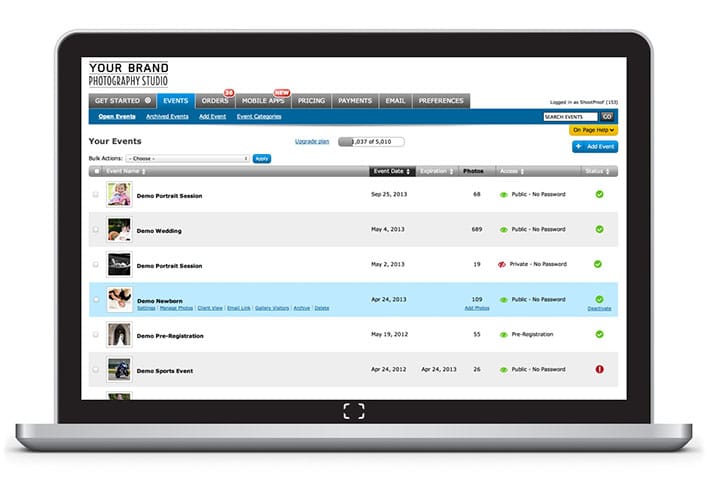
The StudioProof Events Panel:

ShootProof - Studio Panel Events

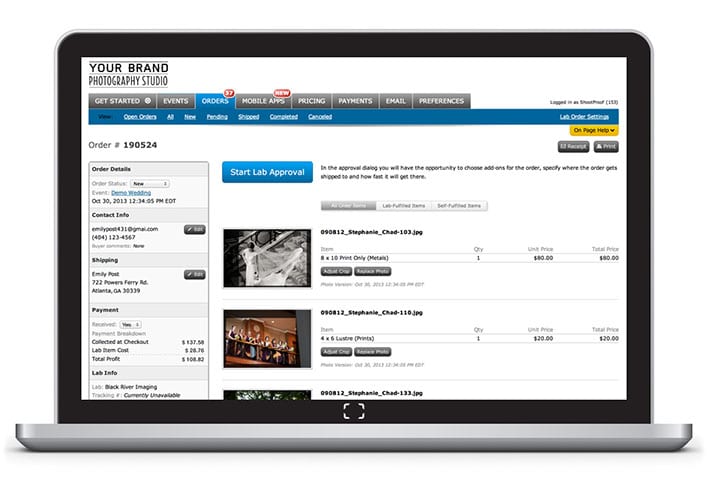
The StudioProof Orders Panel:

ShootProof - Studio Panel - Orders

You see, often for working photographers like myself, our roadblock (or time suck, however you want to approach it) is getting those images to our printers and for those prints to reach our clients in a timely manner. If that's you too, give this chat I had with Colin a listen and sign up for an account (yes, they even offer a full-featured FREE account … crazy, huh?).

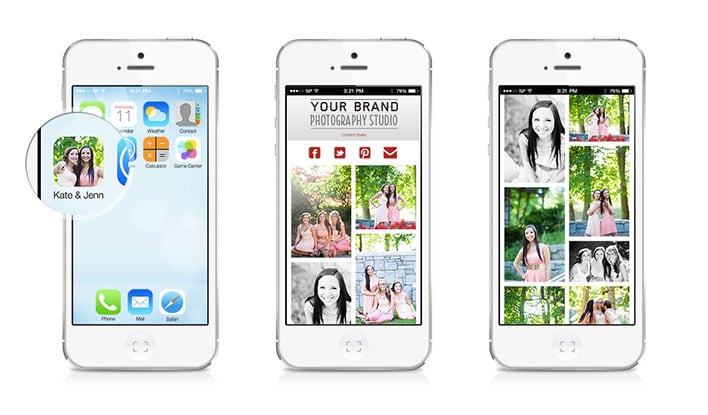
We talked about the application's integration with ShootDotEdit and their new mobile applications and how they in turn can bring more eyeballs to your galleries. We also talked about how ShootProof allows you to set your own prices and select the products that make your business special.

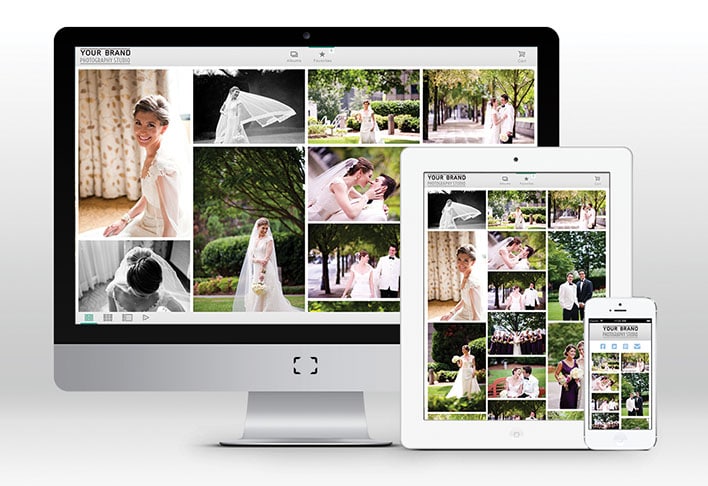
ShootProof - Mobile Apps

Got questions about ShootProof for Colin? Use the comment box below to ask. Don't be shy! Oh, also feel free to use “TIFFINBOX20” when you sign up and get 20% off for one year on any of the paid plans.

ShootProof Logo

Filed Under: Home Middle Right, Photography, Photography Business Tagged With: Colin Breece, Online Image, Online Proofing, Online System, portrait photographers, Print Production, proofing, Proofing Solution, Shootproof.com., Wedding And Portrait Photographers, Wedding Portrait Photographers

5 Key Laundry Detergent Takeaways That Will Help You Build Your Photography Brand

October 21, 2013 by Petronella Lugemwa

My name is Petronella Lugemwa. I own Petronella Photography, a boutique New York area wedding and portrait photography business that specializes in telling stylish multicultural love and life stories using photographs.

Before pursuing photography professionally, I worked in consumer brand management on big household brands including Pepsi, Advil, Avon and Splenda. As part of those brand teams, I had responsibility for developing campaigns to increase brand awareness, household penetration, usage, defend against generic imitator brands and general online and offline promotion strategies.

For a few years, I had loosely applied the branding strategies I’d learned in the corporate world to my photography business but never formally married the two experiences together until one day when it hit me, being a photographer in this saturated and competitive industry is similar to the work I’d done developing strategies to differentiate my brands versus generic brands. My mission is to help wedding professionals build authentic, distinct brands that are differentiable and price insensitive by sharing my branding insights and opinions.

So what do detergent brands have in common with photography brands?

In this article, I’ll explain how photographers can leverage 5 key insights from well-known detergent brands to begin to create distinct photography brands.

A good brand makes a distinct statement about who it is and what it stands for and then consistently reinforces that statement in everything it does offline and online.

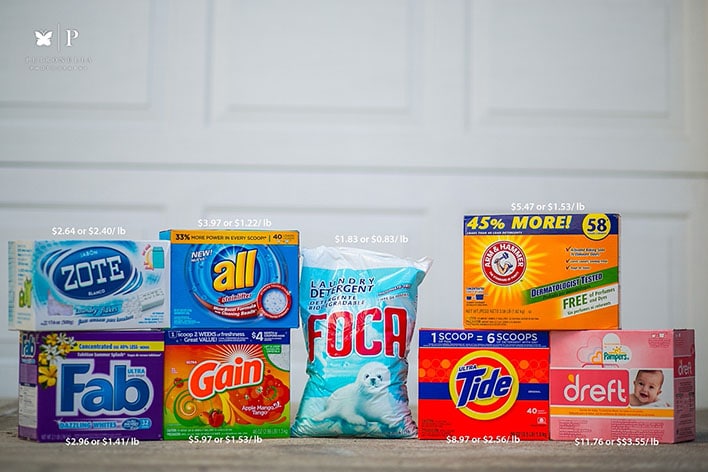
Walking through the store looking at detergent, I quickly noticed that the highest priced detergents have distinct messaging and positioning and therefore, they don’t have to compete on price, even though in general, there’s not a substantial difference between detergent ingredients. These brands know who they are and consistently perpetuate their value proposition in everything they do.

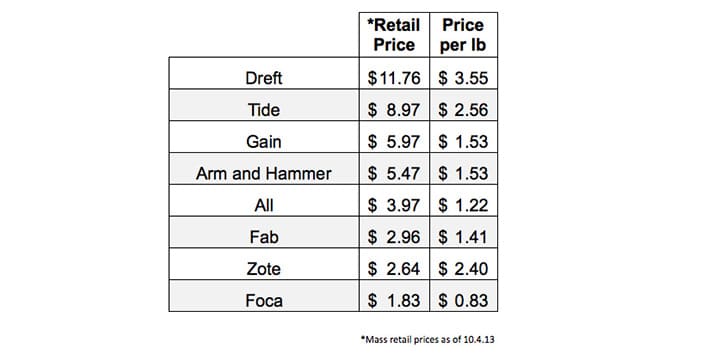
Below is the pricing for all the detergents I picked up: with the total price you see on the shelf and the calculated price per pound.

Detergent Branding - Petronella Lugemwa

Detergent Pricing Chart by Petronella Lugemwa

In this post, I’ll break down the two most expensive brands in the detergent category and share high level insights that you can apply to your photography brand and business.

Detergent Branding by Petronells Lugemwa

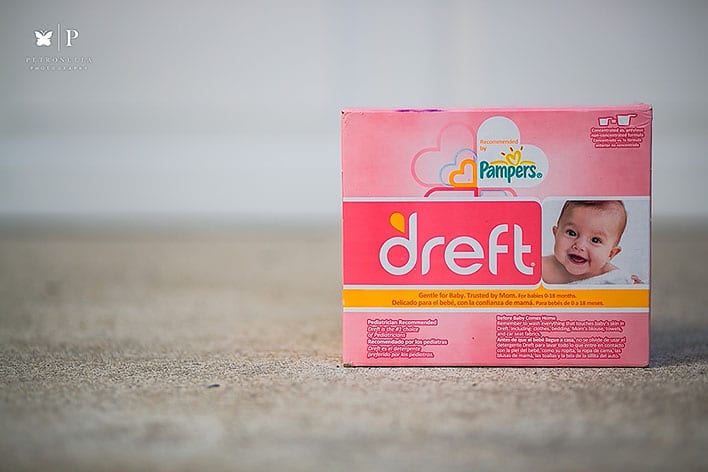
Dreft Detergent

Dreft is the most expensive detergent at $11.76 and is positioned as the detergent specially formulated for baby clothes and most recommended by pediatricians. Dreft has a very distinct positioning and target consumer. Among detergents made for baby clothes, it’s the market leader, so it’s a specialty niche brand that can command this high price. Additionally, it leverages the well known and trusted Pampers brand equity and has a pediatrician most recommended claim to further build trust with the consumer, very smart branding and marketing because these association are valuable to new parents.

Key Takeaways for Photographers

1. Don’t be afraid to target a clear specific client or niche

2. Stand for something and don’t try to be everything to everyone. Though they may not always agree with you, people respect brands that stand for something, not everything.

3. Borrow brand equity by aligning yourself with or partnering with a well-known and respected wedding vendor or brand to help your clients understand what you stand for. It's similar to how some photographers show Jimmy Choo shoes to convey a perception about their brand.

Detergent Branding by Petronella Lugemwa

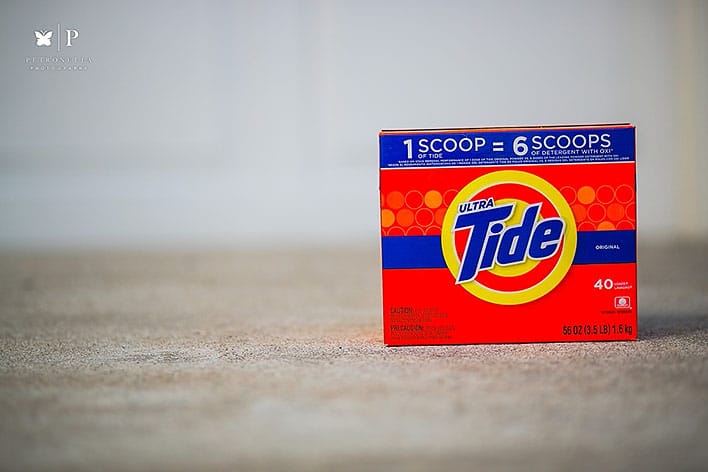
Tide Detergent

In the United States, when you think of detergent, Tide most likely comes to mind. Within the detergent category, it’s the clear market leader. Over many years, it has built a brand known for superior cleansing power using compelling cleaning technology claims and slogans that directly address what’s on every consumer’s mind: “if I spill spaghetti sauce on my white shirt, will it easily and effectively take the stain out?” In the past, Tide has used slogans and claims like “grease fighting technology,” “Keeps clothes looking newer 50% longer” and “if it’s got to be clean, it’s got to be Tide” to position itself as THE stain fighter. These claims are further highlighted by Tide’s bold orange and yellow bulls-eye logo.

In addition, Tide is a leader in its category, which has helped achieve its #1 detergent status including being the first to advertise detergent on television, the first to provide detergent samples inside new washing machines and the first with color safe bleach. Since then, Tide has continued to innovate more than any other detergent brand maintaining its #1 status in its category.

Key Takeaways for Photographers

1. It’s easy to just follow what others are doing, but being a follower will never make you stand out. Be a leader and constantly take risks and try innovative methods of marketing, shooting and delivering on your clients needs.

2. Identify what your business does better than others and create a compelling claim that you can share with your clients. An example of a compelling claim is this: our 2013 surveys show that 90% of our clients are satisfied with our photography service. That’s a compelling, distinct claim that few other photography studios could state.

Stay tuned for subsequent blog posts where I break down and share key branding tactics.

In the meantime, if you’d like to learn more, I’ll be speaking more about branding at the 2013 NYC Styled Bridal Shoot and Business of Photography Workshop together with Syed Yaqeen of SYPhotography, Segun Olotu of Sottu Photography on Sunday, Nov 3, 2013 from 11am to 3pm.

Tiffany of Tiffany Chalk Events has pulled together a glamorous styled shoot with the inspiring speaker, actor, model Johan Luis as the groom.

We’re also so excited to have Munaluchi Bridal Magazine on board as the media sponsor for this workshop, which gives all participants the awesome opportunity to have their photos featured in this premiere online wedding and bridal resource.

Please note: Petronella is also offering a special promotion to all Tiffinbox readers for 5% off the registration fee using code: Tiffinbox. For more details and to register, visit { HERE }

Filed Under: Home Middle Right, Photography Business

  • « Previous Page
  • 1
  • …
  • 20
  • 21
  • 22
  • 23
  • 24
  • Next Page »

Subscribe To Tiffibox Treats!

Looking for a well-curated email newsletter that will leave you inspired and motivated about your photography business? Sign up below!

About Seshu

Seshu creates relaxed portraits of families and high school seniors in Avon, Connecticut. He also leads a successful headshot photography studio in Connecticut, helping professionals from a variety of disciplines project the very best versions of themselves. He created Tiffinbox as a way of inspiring photographers, to create better images and successful businesses. [Read More]

Email Templates For Headshot Photographers

Email Templates for Headshot Photographers

Recent Posts

  • How Capture One Changed My Event Photography
  • 10 Steps To Stay Positive In Times Of Great Stress
  • Why You Need To Read “Personal Branding For Photographers” Now
  • How To Master Your Website Content Step By Step?
  • Tony Taafe’s TNT Method For Headshot Photographers

Recent Comments

  • Stephen Davison on Are You A Business Owner Who Is Smart, But Stuck?
  • Ben A. on Don Giannatti Clinches The 8th Annual Tiffinbox Award
  • Dan on Don Giannatti Clinches The 8th Annual Tiffinbox Award
  • Donald Giannatti on Don Giannatti Clinches The 8th Annual Tiffinbox Award
  • Stephen Davison on G.E. Masana’s 6 Strategies For Wedding Photography Success
  • Naveen Kumar on Weddings In India Are More Than Being At The Right Place And At The Right Time
  • kartick on Weddings In India Are More Than Being At The Right Place And At The Right Time
  • Leonid Farbman on 6 Uncommon Trends To Grow Your Photography Business
  • Willow and Finch Wedding Photography on 11 Reception Tips To Help Your Wedding Photography
  • Web Designer Malaysia on How To Optimize Your Squarespace Website For Search Engines
  • Creastan on An Interview With Photojournalist G.M.B. Akash
  • Cindy Brown | Atlanta on An Open Letter To A Local Photographer

Become a Patron!

Copyright © 2026 · Tiffinbox · Site Design by Heather Mackan Creative · Built on Genesis